
„Clio to Renault” powiedzieli przedstawiciele firmy podczas prezentacji VI generacji modelu pod koniec zeszłego roku. Nic dziwnego więc, że firma włożyła mnóstwo wysiłku i pasji w jego tworzenie. Najnowsze wcielenie francuskiego bestsellera jest na wskroś nowoczesne i niebywale dojrzałe.
To na pewno nie są łatwe czasy dla małych samochodów z silnikami spalinowymi. Coraz ostrzejsze normy w Europie powodują wzrost cen do wręcz nieakceptowalnych do niedawna poziomów i jednoczesne obniżenie rentowności. Na dodatek pojawiła się ostra konkurencja z Chin. Niektórzy uznani gracze, np. Ford Fiesta, już całkowicie zniknęli z rynku. Francuska firma twierdzi jednak, że małe auta nadal mają sens. Renault dostosowało Clio VI do współczesnych czasów i jest gotowe nie tylko przejąć oddane przez rywali pole, ale też zawalczyć o klientów marek premium.
Odważny styl
Znajomy styl zapoczątkowany przez czwartą generację Renault Clio w 2012 roku i kontynuowany z powodzeniem przez jego piąte wcielenie odchodzi w niepamięć. Szósta generacja Clio wyostrzyła się na tyle, że już w momencie debiutu wywołała kontrowersje.
Agresywne nadwozie pełne przetłoczeń, inspirowane prototypowym Emblème i zaprojektowane przez zespół pod kierownictwem Gillesa Vidala, podzieliło opinię publiczną. Jedni byli nim zachwyceni, inni uważali że jest brzydkie, przesadzone i…mało oryginalne.
Faktem jest, że to najodważniej narysowane Clio w historii wygląda o wiele lepiej na żywo, niż na zdjęciach. Nadwozie, szczególnie w jednym z nowych, jaskrawych metalicznych kolorów zieleń i czerwień absolutna, po prostu “żyje” kiedy na nie patrzymy w rzeczywistości. Zdjęcia tego zwyczajnie nie oddają. Nie da się jednak zaprzeczyć temu, iż nowe Clio faktycznie przypomina zlepek różnych nowoczesnych samochodów. Ile ludzi, tyle skojarzeń. Renault chciało, aby nowe Clio wzbudzało emocje i to się na pewno udało. Nikt nie przejdzie obok niego obojętnie.
W stronę premium
Nowym Clio, Renault bardzo chce zawalczyć również o klientów wybierających do tej pory marki premium. Dlatego auto przeszło metamorfozę nie tylko na zewnątrz, ale również w środku.
Wnętrze Renault Clio VI diametralnie różni się od tego z poprzednika. To mieszanka elementów znanych z innych nowych Renault. Kierownica wzięto z większych modeli firmy. Z kolei cyfrowy kokpit zdominowany przez dwa duże ekrany, przypomina te znane już z retroelektryków 4 i 5. Różni się jednak detalami oraz kolorystyką.
Clio chce być sportowe i premium, więc we wnętrzu królują ciemne barwy. Podświetlenie ambientowe kabiny dostępne w 48 kolorach do wyboru niestety niewiele tu pomaga. Miłym dotakiem jest środkowy pas deski rozdzielczej wyłożony miękkim, tekstylnym materiałem z recyklingu. W każdej z trzech wersji wyposażenia (Evolution, Techno i Esprit Alpine) Renault zastosowało trochę inny materiał. Na przykład w topowej odmianie Esprit Alpine kokpit pokryty jest zamszem.
Układ multimediów też jest podobny do innych modeli Renault. Jak wszystkie nowe modele marki, Clio korzysta z usług Google, które zintegrowano z własnym systemem multimedialnym Renault OpenR Link. Niedługo usługi Google mają być zaktualizowane, więc w Clio dostępny też będzie asystent AI o nazwie Gemini, pozwalający na głosowe wydawanie poleceń w dowolnym języku.
Nowe Clio zaliczyło też duży skok technologiczny pod względem aktywnych systemów wspomagającyh kierowcę. Teraz auto może być wyposażone w aż 29 różnych systemów, podczas gdy poprzednik oferował maksymalnie 18. Pomimo tego, testy Euro-NCAP wypadły dość rozczarowująco. Renault Clio VI zdobyło cztery gwiazdki na pięć możliwych, wypadając gorzej od swojego poprzednika.
Sprawdzone podzespoły
Pod tymi wszystkimi nowościami, kryje się dobrze znana platforma CMF-B, wykorzystana nie tylko w poprzedniku, ale również innych modelach koncernu Renault. W porównaniu do poprzedniego modelu, Clio 6. generacji jest o 67 mm dłuższe, o 39 mm szersze i o 11 mm wyższe. Z długością 4116 mm, to jest nie tylko największe Clio w historii, ale też dorównuje wymiarami 1. generacji Renault Mégane, czyli autu (w teorii) o klasę większemu.
Układ zawieszenia – kolumny MacPhersona z przodu i belka skrętna z tyłu – też jest taki sam jak w poprzedniku. Renault twierdzi, że dopracowało zawieszenie tak, aby każda wersja prowadziła się identycznie. Nie powinno mieć więc znaczenia czy wybierzemy model podstawowy czy topowy – prowadzenie ma być takie samo.
Rolę podstawowego silnika w gamie pełni trzycylindrowy benzynowiec 1.2 TCe o mocy 115 KM, dostępny z sześciobiegową przekładnią manualną lub automatyczną. Na bazie tego silnika, Renault stworzyło też odmianę ECO-G 120 KM z fabryczną instalacją gazową. Producent zapewnia, że dzięki niskiemu zużyciu paliwa oraz dwóm zbiornikom o łącznej pojemności 100 litrów (50 l benzyny i 50 l LPG) Clio Eco-G ma zapewniać rekordowy zasięg 1450 km!
Na szczycie gamy stoi 160-konna pełna hybryda Clio E-Tech Full Hybrid. Podstawowa konstrukcja jest taka sama jak w poprzedniku: silnik benzynowy współpracujący z dwoma silnikami elektrycznymi. Jednak w nowym modelu system jest o 15 KM mocniejszy, dzięki nowemu silnikowi.
Zamiast czterocylindrowego motoru 1.6 z pośrednim wtryskiem, Renault zastosowało o wiele mocniejszy wolnossący silnik 1.8 (148 KM) z bezpośrednim wtryskiem paliwa. Wzrosła także pojemność akumulatora trakcyjnego (z 1,2 do 1,4 kWh), więc samochód częściej może poruszać się na samym prądzie. Renault szacuje, że nawet 80% jazdy miejskiej może odbywać się w trybie całkowicie elektrycznym.
Baterie umieszczono przy tylnej osi, co zmniejsza pojemność bagażnika wariantu hybrydowego z 391 do 309 litrów. Na pocieszenie, próg załadunku obniżono o 40 mm względem poprzednika, co ułatwi korzystanie z bagażnika.
Kontynuacja sukcesu
To bez wątpienia najbardziej dojrzałe i dopracowane Clio w historii. Wypełnione najnowocześniejszą technologią i niebywale oszczędne, sprawia wrażenie auta kompaktowego, a nie miejskiego. Renault zaryzykowało wprawdzie odważną stylistyką, ale nie powinno mieć to wpływu na wyniki sprzedaży. Renault Clio VI prawie na pewno będzie kontynuowało pasmo sukcesów poprzednich generacji. Kto wie, może nawet z tytułem Samochodu Roku włącznie.
O miniaturze – Renault Clio VI
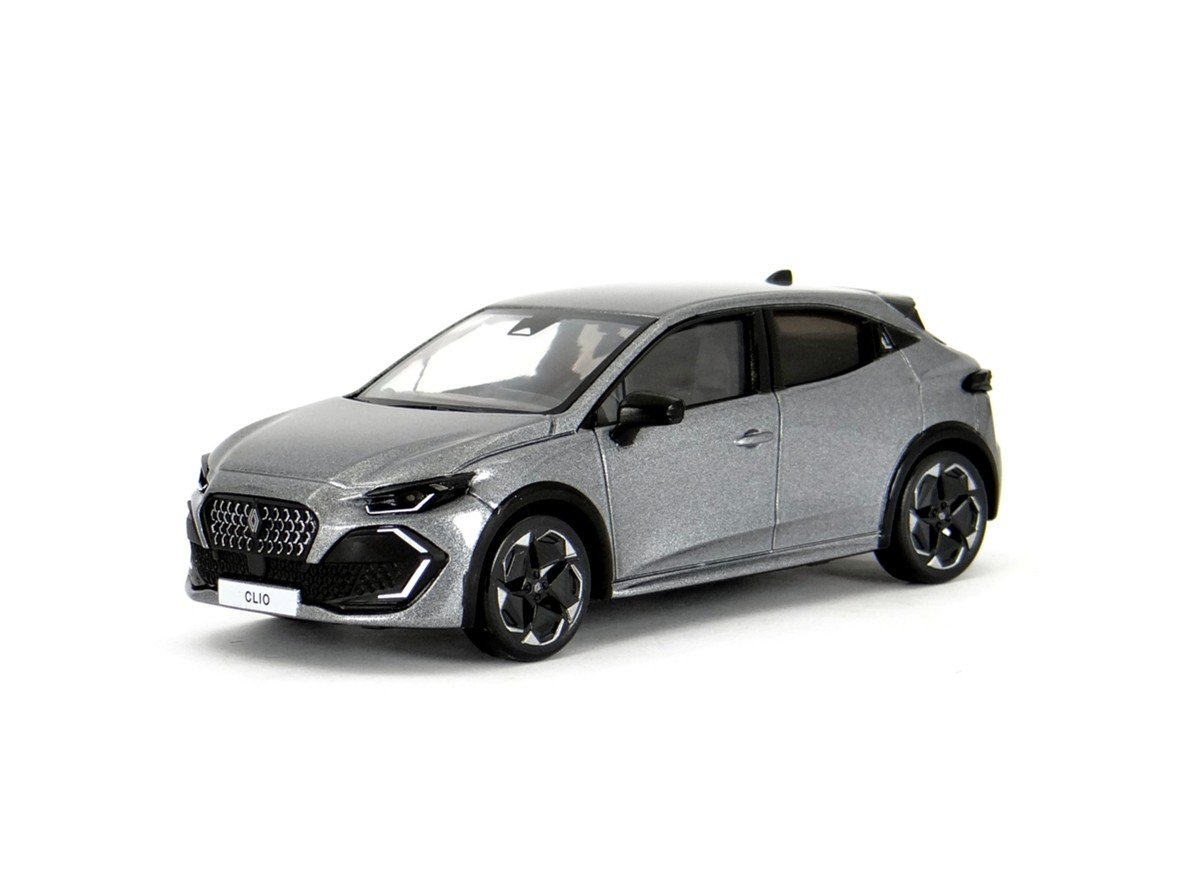
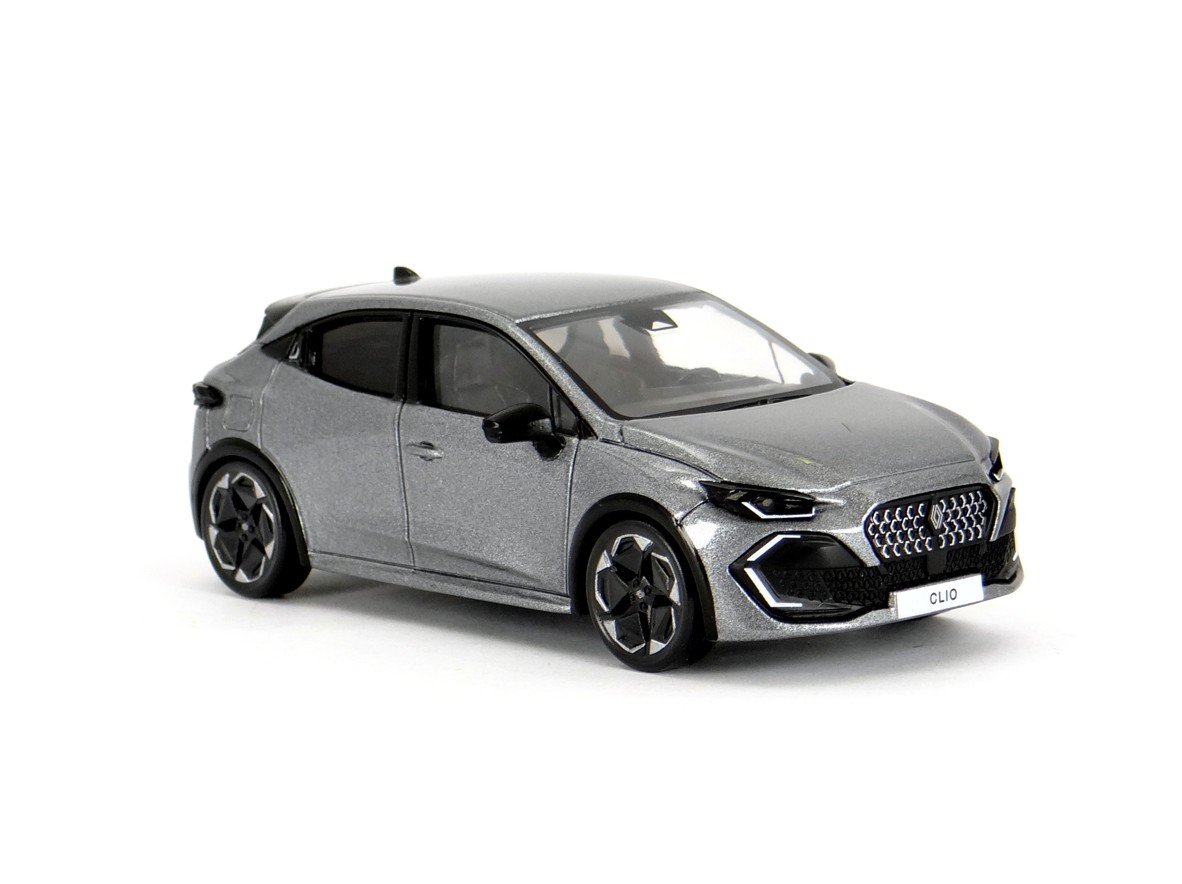
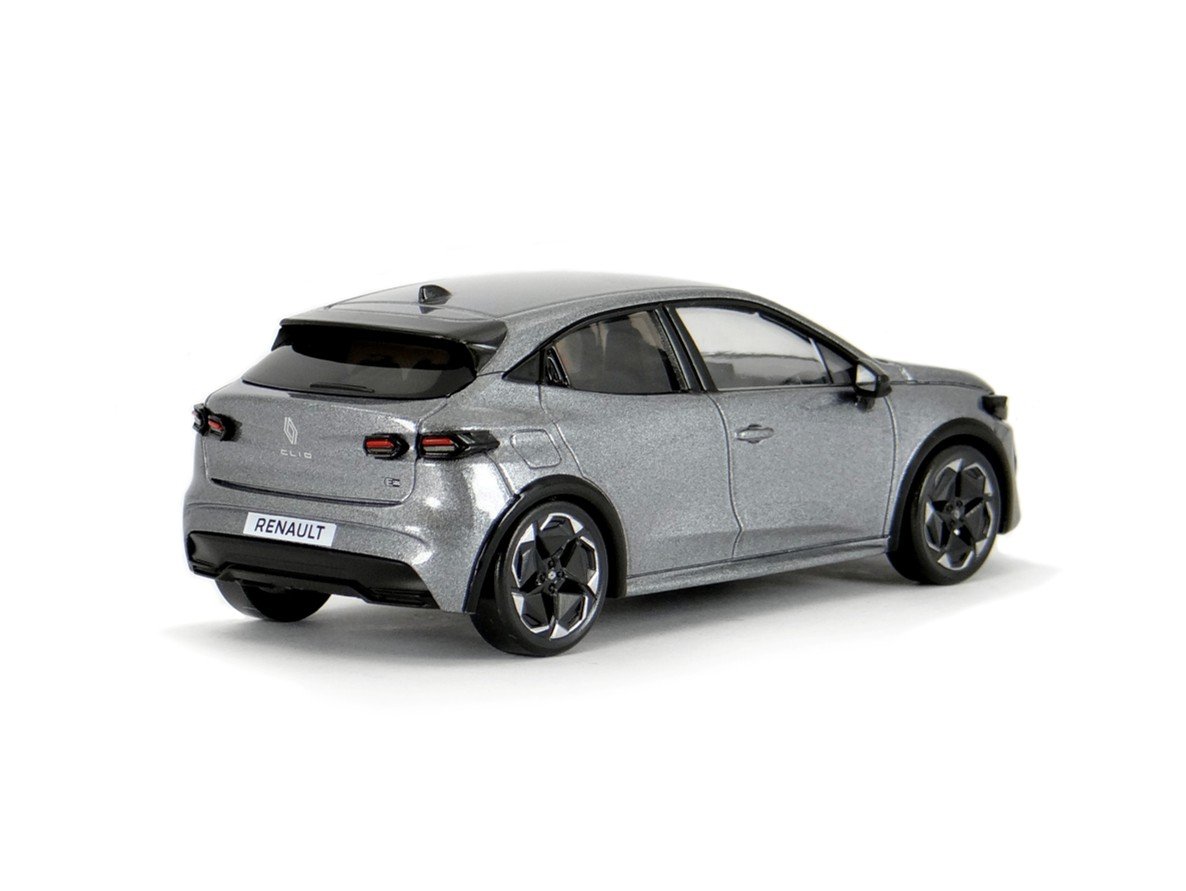
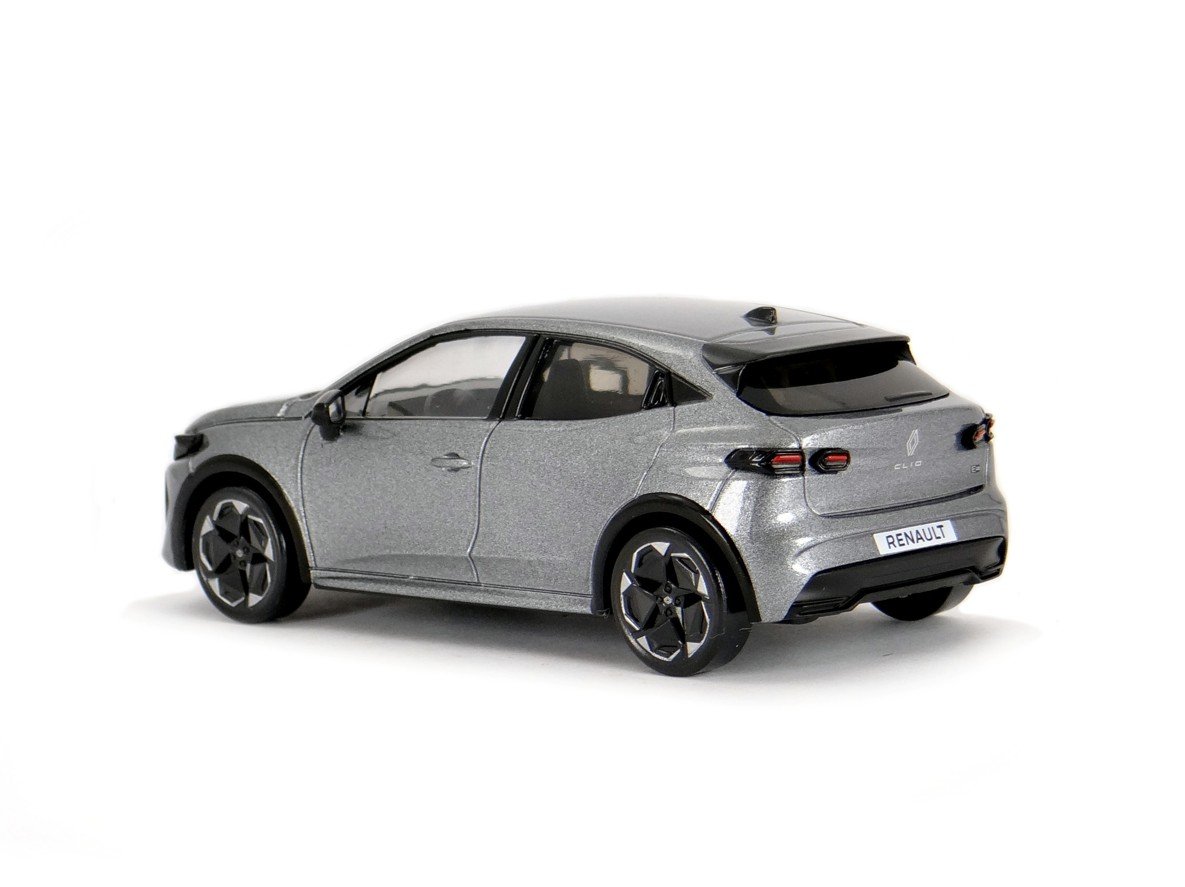
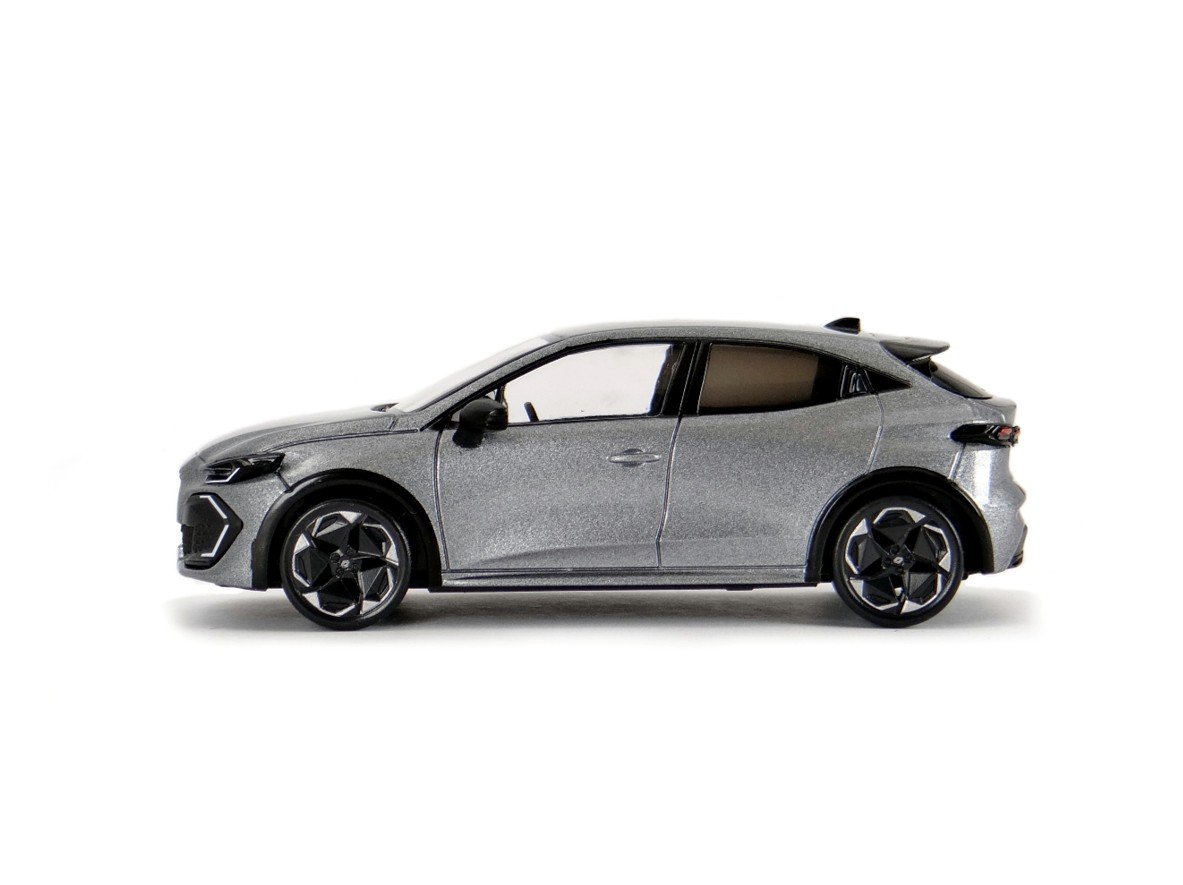
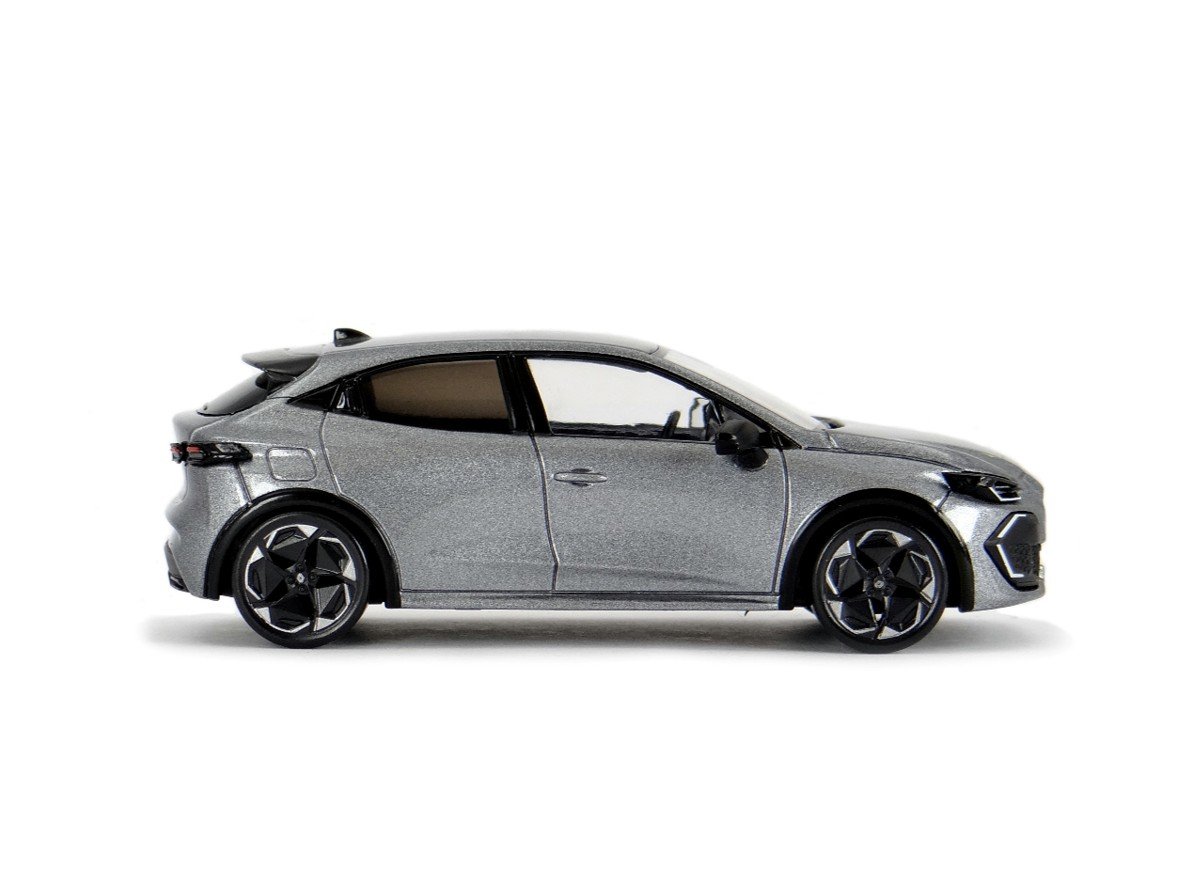
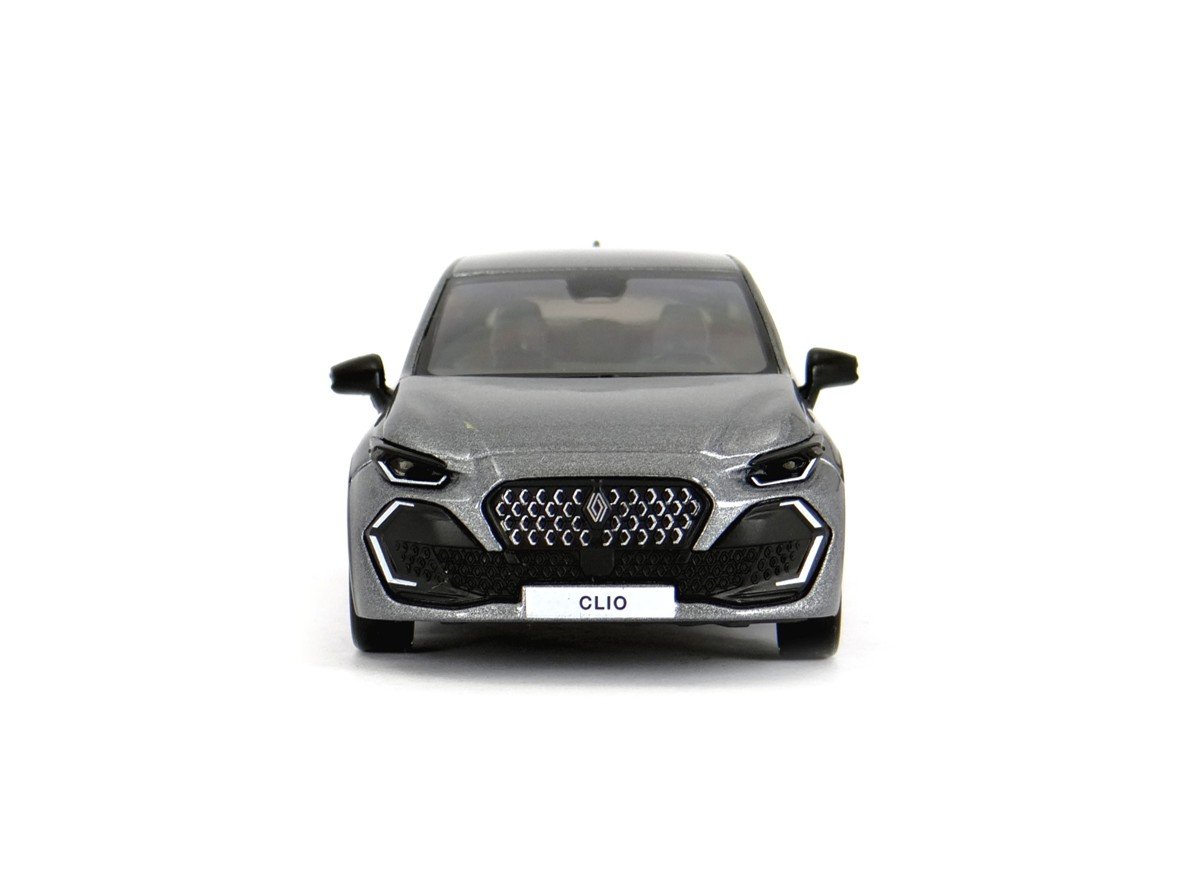
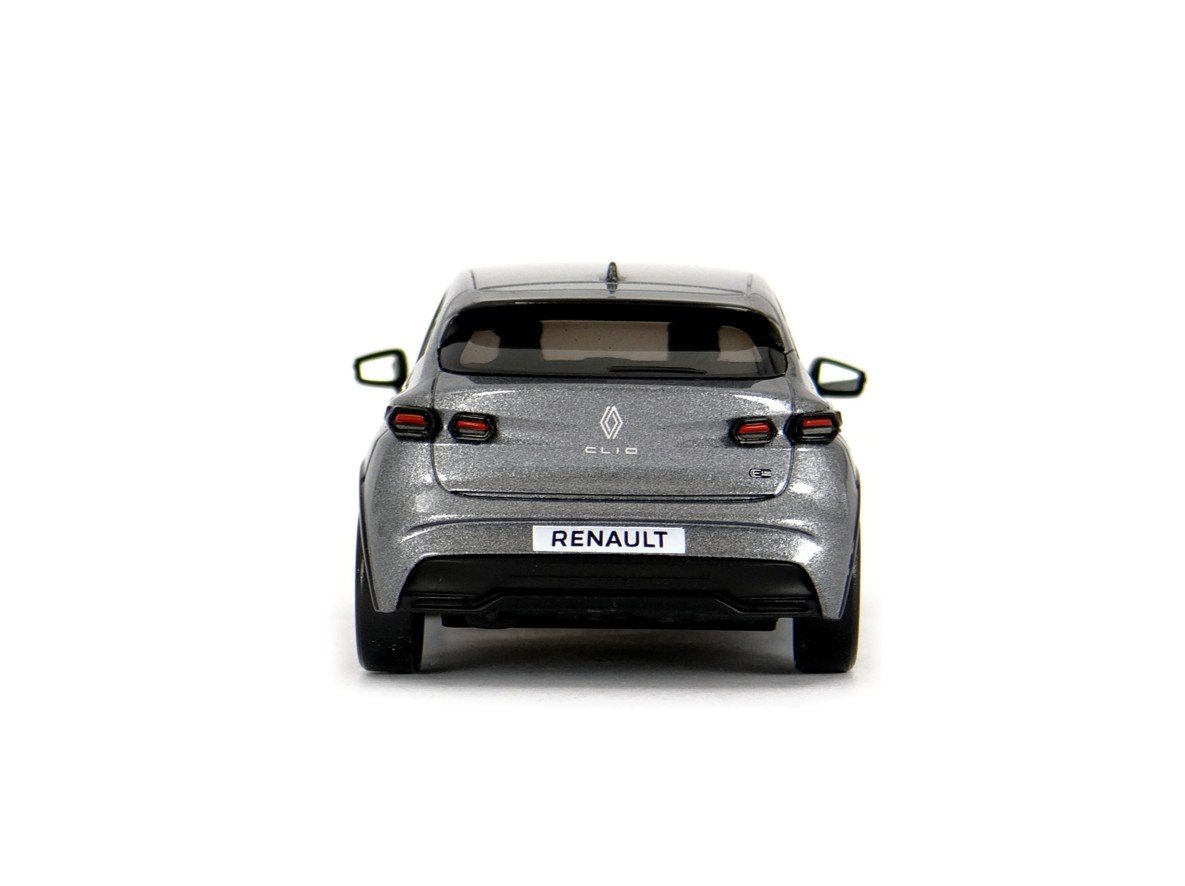
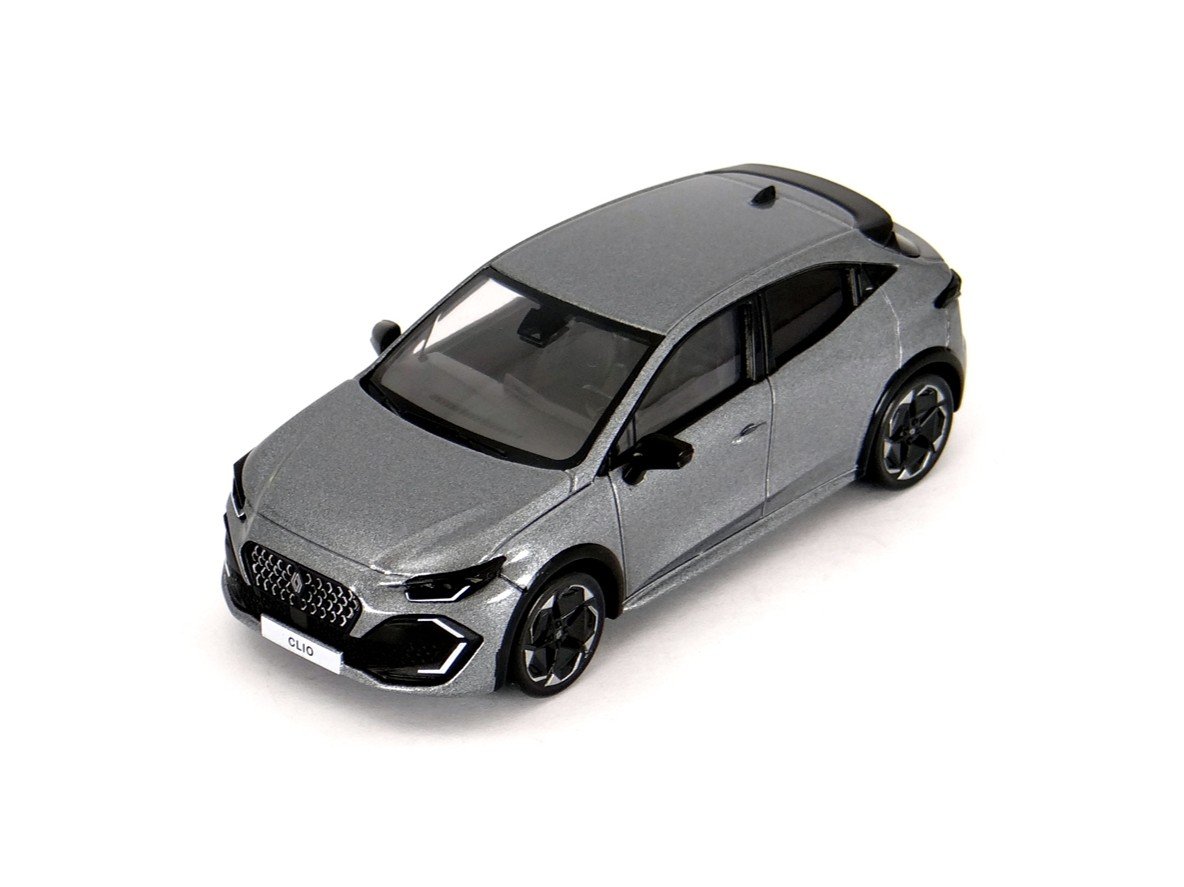
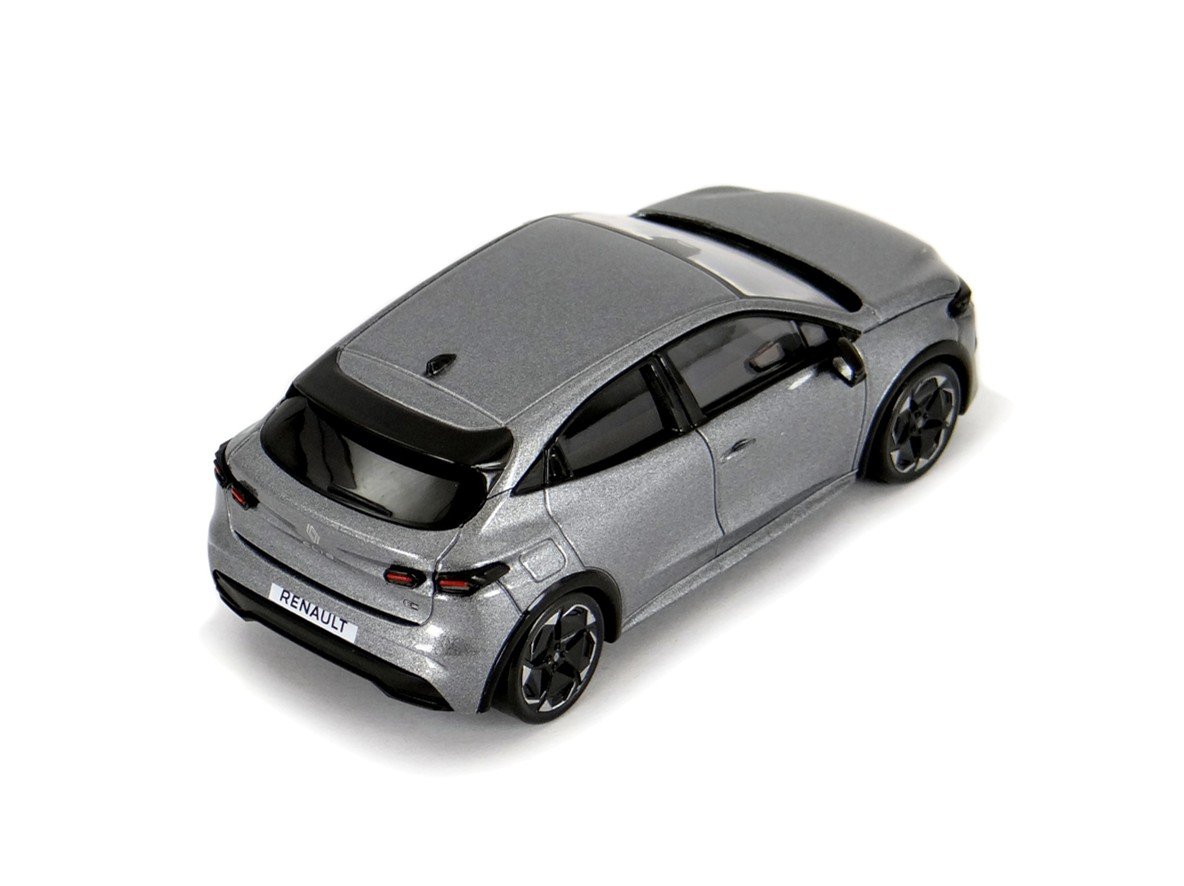
Pierwsze miniatury Renault Clio VI pojawiły się już w dniu debiutu prawdziwego samochodu, we wrześniu ubiegłego roku, na stronie Renault Originals. Modele w kolorach zieleń i czerwień absolutna opisałem na blogu niedługo potem. Było oczywiste, że po jakimś czasie Norev wypuści kolejne warianty kolorystyczne Renault Clio VI. Tak też się stało i w maju Norev wypuścił kolejne dwie odmiany w kolorach szary Schiste (zwany też też Shadow grey) oraz niebieski Iron.
Dzisiaj przyjrzymy się tej pierwszej.
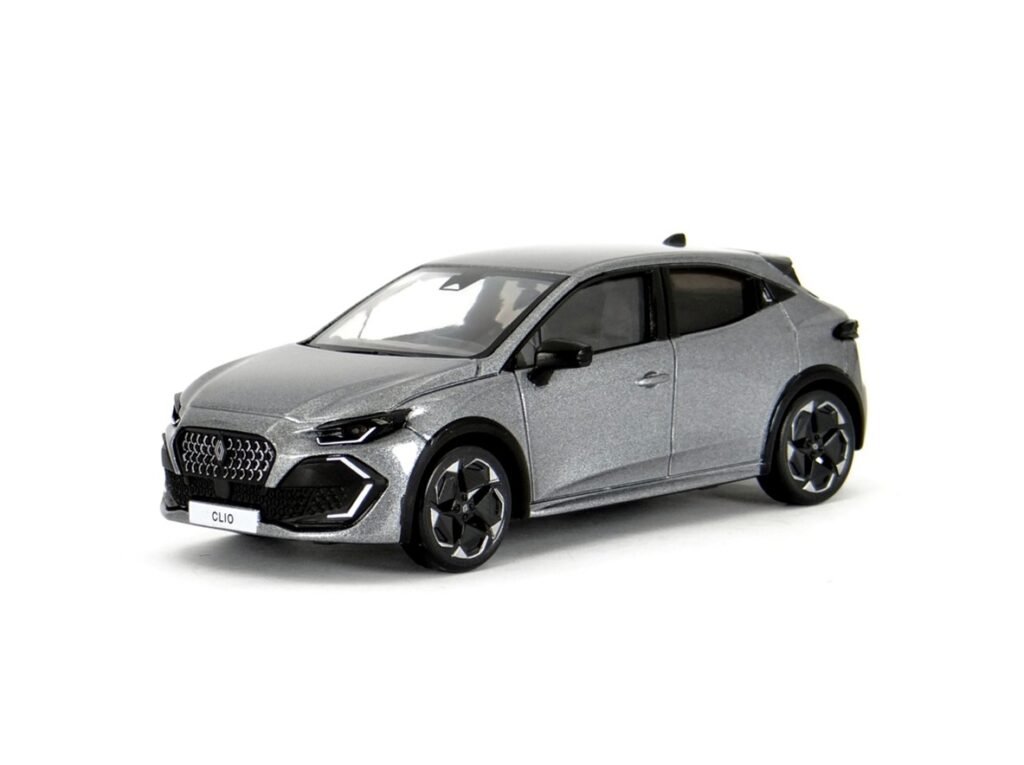
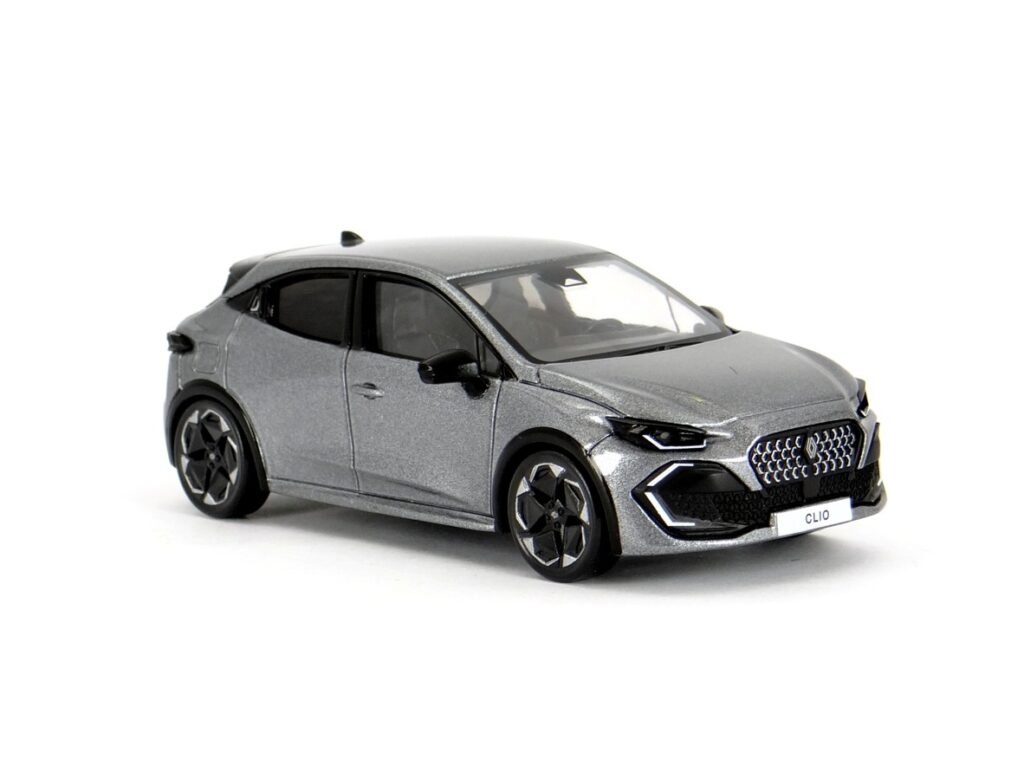
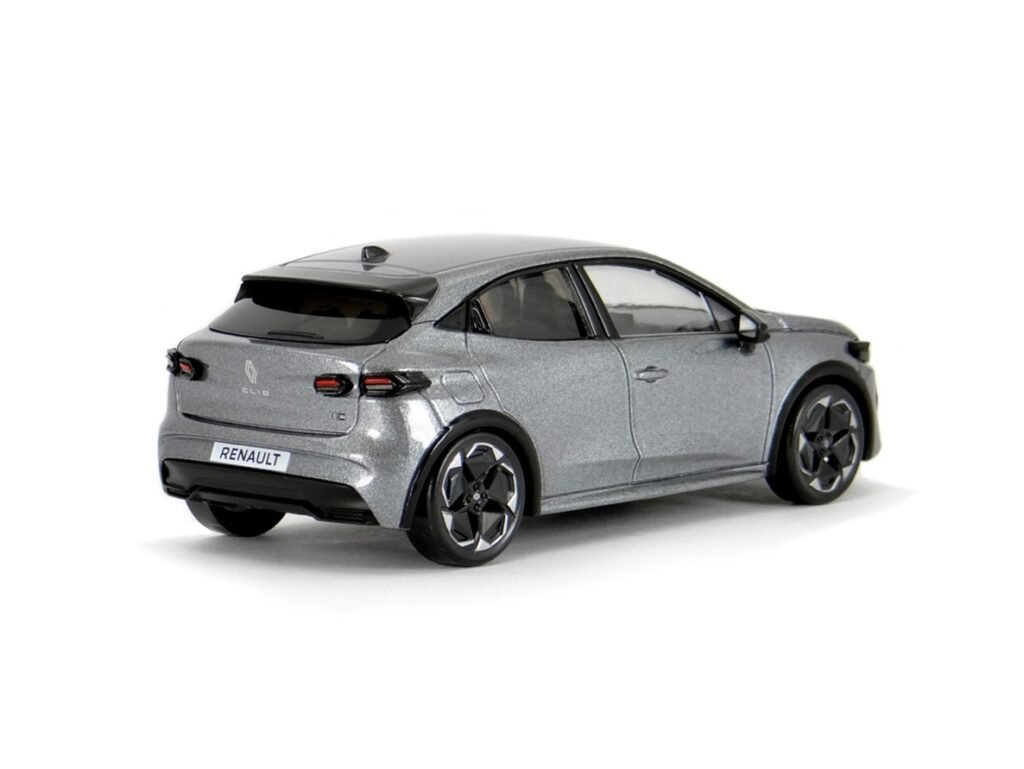
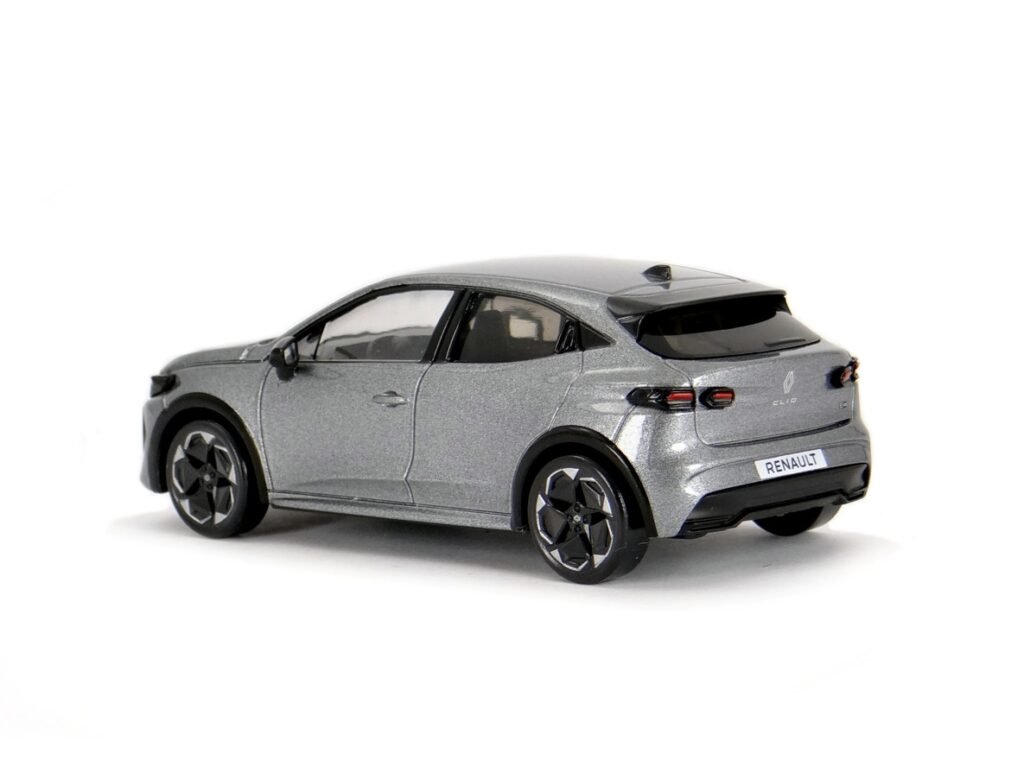
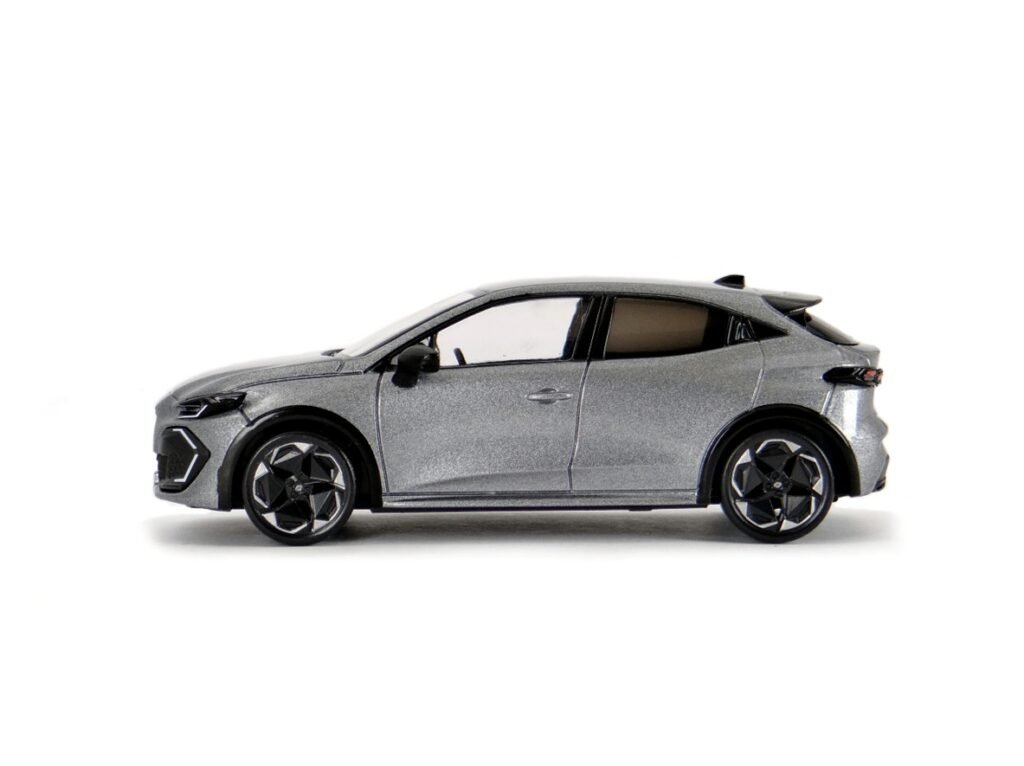
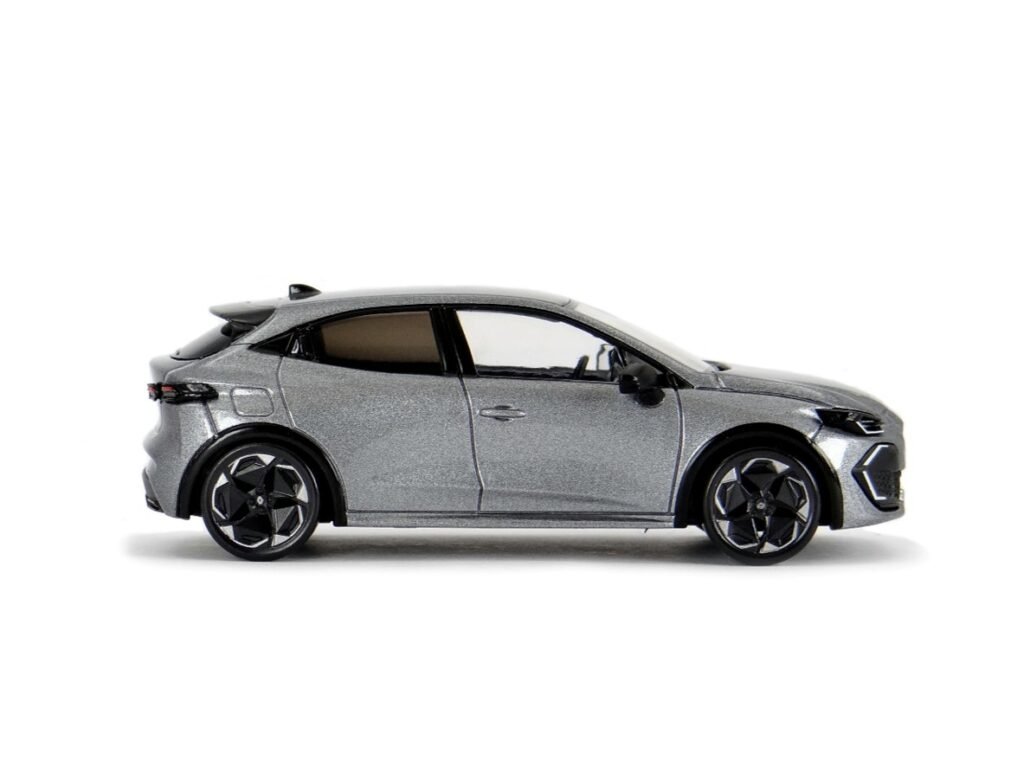
Jest to oczywiście ten sam odlew co w modelach dostępnych na stronie Renault Originals. Wszystkie wady i zalety są więc dokładnie takie same. Do pozytywów możemy zdecydowanie zaliczyć poprawne proporcje nadwozia, ładny lakier szary Schiste i ładne, oddzielne lusterka boczne ze szkiełkami. Kolekcjonerzy zaznajomieni z wypustami Noreva z ostatnich kilku lat dobrze wiedzą, że właśnie lusterka były jedną z największych bolączek modeli tego producenta. Na szczęście, już tak nie jest.
Niestety, model nie jest wolny od wad i nadal znajdziemy w nim inne grzeszki Noreva. Kółka i felgi odlane z plastiku przy bliższym spojrzeniu wyglądają bardzo zabawkowo. Szkoda, bo akurat felgi są wybitnie designerskie i wyglądałyby fantastycznie gdyby Norev dokładnie je odwzorował. Mieszane uczucia wzbudzają też wykonane z malowanego plastiku światła.
Kolejna rzecz która wizualnie pogarsza odbiór modelu to zbyt głęboko osadzone boczne szyby. Znowu, wygląda to niestety dosyć zabawkowo. Gdyby producent osadził szybki bardziej równo z drzwiami, wyglądałoby to realistyczniej. Niestety, to stała bolączka modeli Noreva od bardzo wielu lat i nie wygląda na to, aby w najbliższym czasie producent chciał ją naprawić.
Ogólnie, modelik jest całkiem fajny, ale przez ewidentne cięcie kosztów, pozostawia według mnie niedosyt. Na szczęście, nie jest drogi. Zapraszam Was do obejrzenia galerii zdjęć i wyrobienia własnego zdania na temat modelu oraz odwiedzania MiniAutomobili na Facebooku i Instagramie.
*** ENGLISH ***
“Clio is Renault” company representatives said during the presentation of the mark VI model at the end of last year. Unsurprisingly then, company put an enormous amount of effort and passion into its development. The latest incarnation of the French bestseller is thoroughly modern and remarkably mature.
These are certainly not easy times for small ICE cars. Increasingly stringent European regulations are pushing prices to levels that would have seemed unacceptable until recently, while at the same time squeezing profit margins. On top of that, fierce competition from China has emerged. Several established names, including the Ford Fiesta, have already disappeared from the market entirely. The French company, however, believes that small cars are still relevant. Renault adapted the Clio VI to modern-day demands and is ready not only to capitalize on the ground surrendered by its rivals, but also to tempt customers away from premium brands.
Bold styling
The familiar design first introduced with the fourth-generation Renault Clio in 2012 and successfully evolved for the fifth iteration, is now gone. The sixth-generation Clio is considerably sharper and more daring, sparking controversy from the moment it was unveiled.
Its aggressive, heavily sculpted bodywork —designed by a team headed by Gilles Vidal and inspired by the Emblème concept — has divided opinion. Some were delighted with it, while others thought it was ugly, over-the-top and…unoriginal.
The fact is, this boldest-ever Clio does actually look considerably better in flesh, than it does in photographs. The bodywork, particularly in one of the new vivid metallic colours Absolute red or Absolute green, seems to come alive before your eyes. Something that simply doesn’t translate into pictures. That said, there is certainly no denying that the new Clio does look like a mash-up of various modern cars. Everyone will see something different in it. Renault wanted the new Clio to evoke emotions and it has certainly succeeded. Nobody is going to be left indifferent.
Moving upmarket
With the new Clio, Renault is also keen to win over customers who have usually opted for premium brands. That’s why, the car has transformed not only on the outside, but inside as well.
The interior of the Renault Clio VI is dramatically different from that of its predecessor. It is a blend of elements familiar from other new Renault models. The steering wheel, for example, comes from the brand’s larger cars. Meanwhile the digital cockpit, dominated by two large screens, resembles those already found in the retro-inspired electric models, the Renault 4 and 5. However, it differs in terms of details and colour schemes used.
The Clio aims to be both sporty and premium, so dark colours dominate the interior. Unfortunately, the cabin’s ambient lighting, available in 48 colours, does little to change that. A nice touch is the central section of the dashboard, which is covered in a soft, textile material made from recycled fibres. For each of the available trim levels (Evolution, Techno, Esprit Alpine), Renault used a slightly different material. In the range-topping Esprit Alpine for example, the dashboard is covered in alcantara.
The infotainment system is also similar to those found in other Renault models. Like all of the brand’s latest cars, the Clio comes with Google services integrated into Renault’s own OpenR Link multimedia system. Google’s services are set to receive an update soon, which will also bring the Gemini AI assistant to the Clio, allowing drivers to issue voice commands in any language.
The new Clio also made a significant technological leap in terms of active driver-assistance systems. It can now be equipped with as many as 29 different systems, compared with a maximum of 18 in its predecessor. Despite this impressive increase, however, the results of the Euro NCAP tests were rather disappointing. The Renault Clio VI earned four out of five stars, scoring lower than the previous generation.
Tried-and-tested components
Beneath all these new features lies the well-known CMF-B platform, which was used not only in the previous Clio but also in other models across the Renault Group. In comparison to its predecessor, the sixth-generation Clio is 67 mm longer, 39 mm wider and 11 mm taller. At 4,116 mm in length, it is not only the largest Clio in the model’s history, but is also comparable in size to the first-generation Renault Mégane — theoretically a car positioned a class above it.
The suspension setup — MacPherson struts at the front and a torsion beam at the rear — is also carried over from the predecessor. Renault says it has fine-tuned the suspension so that every version of the Clio offers the same driving characteristics. In other words, it shouldn’t matter whether you opt for the entry-level model or the range-topping version — the handling should be identical.
The engine range kicks off with a three-cylinder 1.2 TCe petrol motor developing 115 hp, offered with either a six-speed manual or an automatic gearbox. Based on the same engine, Renault also developed the 120 hp ECO-G variant with a factory-fitted LPG system. The manufacturer claims that, thanks to its low fuel consumption and two tanks with a combined capacity of 100 litres — 50 litres of petrol and 50 litres of LPG — the Clio ECO-G can achieve a record range of up to 1,450 km!
At the top of the range sits the 160-hp Clio E-Tech Full Hybrid. The basic setup remains the same as in the previous model: a petrol engine working alongside two electric motors. However, the system is now 15 hp more powerful, thanks to a new petrol engine.
Instead of the previous 1.6-litre four-cylinder engine with indirect fuel injection, Renault has fitted a much more powerful naturally aspirated 1.8-litre unit producing 148 hp, with direct fuel injection. The traction battery has also grown in capacity, from 1.2 to 1.4 kWh, allowing the car to run purely on electric power more frequently. Renault estimates that up to 80% of urban driving can be carried out in fully electric mode. The battery pack is located around the rear axle, which reduces boot capacity in the hybrid version from 391 to 309 litres. However, there is some good news: the loading lip is 40 mm lower than before, making the boot easier to use.
Building on the success
This is undoubtedly the most mature and polished Clio ever made. Loaded with cutting-edge technology and impressively economical, it feels more like a compact family car than a conventional city car. Renault has taken a bold gamble with the styling, but it is unlikely to hurt the Clio’s sales. The Renault Clio VI will almost certainly continue the success enjoyed by its predecessors. And who knows — it may even do so with a Car of the Year title to its name.
About the miniature – Renault Clio VI
The first Renault Clio VI miniatures appeared on the Renault Originals website on the very day the real car was unveiled, back in September last year. I reviewed the Absolute green and Absolute Red versions on my blog shortly afterwards. It was only a matter of time before Norev added more colour options to the Clio VI range — and that is exactly what happened. In May, Norev released two more versions, finished in Schiste Grey (also known as Shadow Grey) and Iron Blue. Today, we’ll take a closer look at the former.
This is, of course, the same casting as the models available through the Renault Originals website, so all the strengths and weaknesses are exactly the same. On the positive side, we can definitely count the accurate body proportions, the attractive Schiste Grey paintwork, and the nicely detailed separate wing mirrors with proper mirror glass. Collectors familiar with Norev’s releases from the past few years will know that the wing mirrors were one of the biggest shortcomings of the manufacturer’s models. Fortunately, that is no longer the case.
Unfortunately, the model is not without its flaws, and there are still a few of Norev’s little sins to be found here. The plastic wheels and rims look rather toy-like when viewed up close. That is a shame, because the actual wheels have a particularly distinctive design and would look fantastic if Norev had reproduced them more faithfully. I’m also not entirely convinced by the painted-plastic lights.
Another detail that detracts from the model’s overall appearance is the side windows, which are set too far into the bodywork. Once again, this unfortunately gives the model a rather toy-like appearance. If Norev had fitted the glazing more flush with the doors, it would have looked much more realistic. Sadly, this has been a persistent issue with Norev models for many years and there is little indication that the manufacturer plans to address it anytime soon.
Overall, it’s a pretty decent model, but the obvious cost-cutting leaves me feeling somewhat underwhelmed. Fortunately, the model is reasonably priced. Be sure to check out the photo gallery and decide for yourself what you think of the model.
Lastly, don’t forget to follow MiniAutomobile on Facebook and Instagram!