

Debiut piątej generacji Forda Fiesty pod koniec 2001 roku był ważnym etapem w rozwoju modelu. Nowe auto stanowiło radykalną poprawę względem poprzedników.
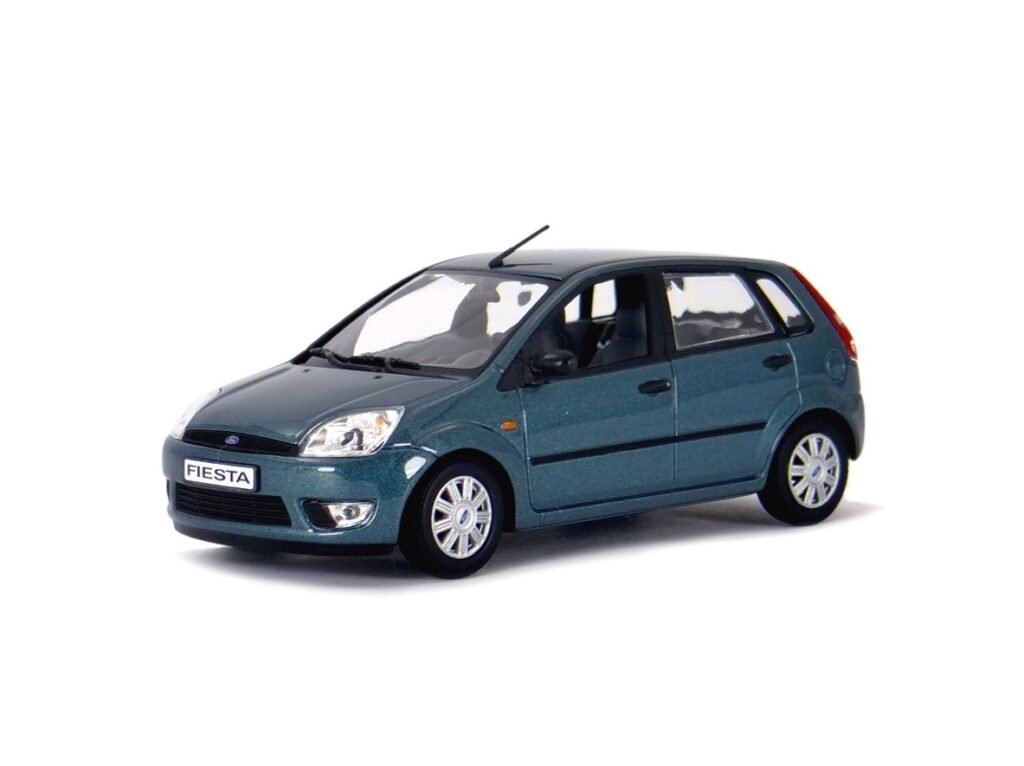
To była pierwsza prawdziwie nowa Fiesta od 12 lat. Owszem, Ford przedstawiał w międzyczasie kolejne modele, ale tak naprawdę były to tylko większe lub mniejsze modyfikacje trzeciej generacji z 1989 roku. Przy fantastycznym Focusie, dotychczasowa Fiesta zaczęła wypadać po prostu blado. Przyszedł najwyższy czas na zmiany, więc Ford zaprojektował piątą generację Fiesty (zwaną przez niektórych szóstą) całkowicie od nowa.
Co może być dla niektórych zaskoczeniem, Fiesta nie wygląda jak mini-Focus, pomimo, że reprezentuje ten sam motyw wzornictwa, czyli New Edge Design. W Fieście proces ugrzeczniania New Edge Design był już jednak bardzo zaawansowany, więc nic nie zostało z jego początkowej awangardy. Pudełkowate nadwozie Fiesty wygląda poważnie i dojrzale, wręcz nudno.
Podobnie sprawa ma się we wnętrzu. Postęp względem poprzednika jest niezaprzeczalny w każdym aspekcie; przestrzeń, jakość, styl. Projekt kabiny jest bardzo dojrzały, ale znowu – trochę nudny.
Ford “dowiózł” za to jeśli chodzi o prowadzenie auta. Wzorem innych modeli marki, Fiesta jest zwinna i daje dużo frajdy z jazdy. Ze względu na prostsze zawieszenie nie jest tak dobra jak Focus, ale mimo wszystko zapewnia najlepsze prowadzenie w swojej klasie. To po części zasługa zupełnie nowej płyty podłogowej opracowanej wspólnie z Mazdą, która zapewnia znacznie większą sztywność nadwozia.
W kwestii napędu, Ford zaserwował koktajl starego i nowego. Trzon oferty stanowiły benzynowe jednostki znane z poprzednika: 1.25 Duratec (75 KM), 1.3 Duratec (60/70 KM), 1.4 Duratec (80 KM) oraz 1.6 Duratec (100 KM) z Focusa. Na wybranych rynkach oferowano nawet przestarzały silnik 1.3 Endura-E z żeliwną głowicą, jednak został on przez Forda szybko wycofany. Nowością był natomiast silnik 2.0 Duratec (150 KM), zarezerwowany wyłącznie dla sportowej Fiesty ST. Nowością były też turbodiesle 1.4 TDCi (68 KM) i 1.6 TDCi (90 KM) z wtryskiem common rail, opracowane wspólnie z koncernem PSA.
Pod koniec 2005 roku Fiesta otrzymała bardzo delikatną kurację odmładzającą, zanim jej produkcja w hiszpańskiej fabryce Almussafes dobiegła końca w 2008 roku. Koniec produkcji i sprzedaży w Europie nie był jednak ostatnim rozdziałem dla piątej generacji Fiesty. Absolutnie nie, jej historia (i to chyba znacznie barwniejsza niż ta europejska), trwała w najlepsze w innych rejonach świata.
W Meksysku ten model Fiesty oferowano do 2010 roku. Wyróżnikiem meksykańskiej Fiesty, poza lekko zmienionym wyglądem, była też dostępność wersji sedan. W Ameryce Południowej Fiestę produkowano najdłużej, bo aż do 2014 roku, ale tam kolejne liftingi zrobiły z niej już prawie zupełnie inny samochód. Na bazie Fiesty piątej generacji powstał też zaprezentowany w 2010 roku Ford Figo, kierowany na rynki wschodzące. Samochód, poza lekko zmienionym przodem i tyłem, jest jednak prawie identyczny z europejską Fiestą.
O miniaturze – Ford Fiesta V
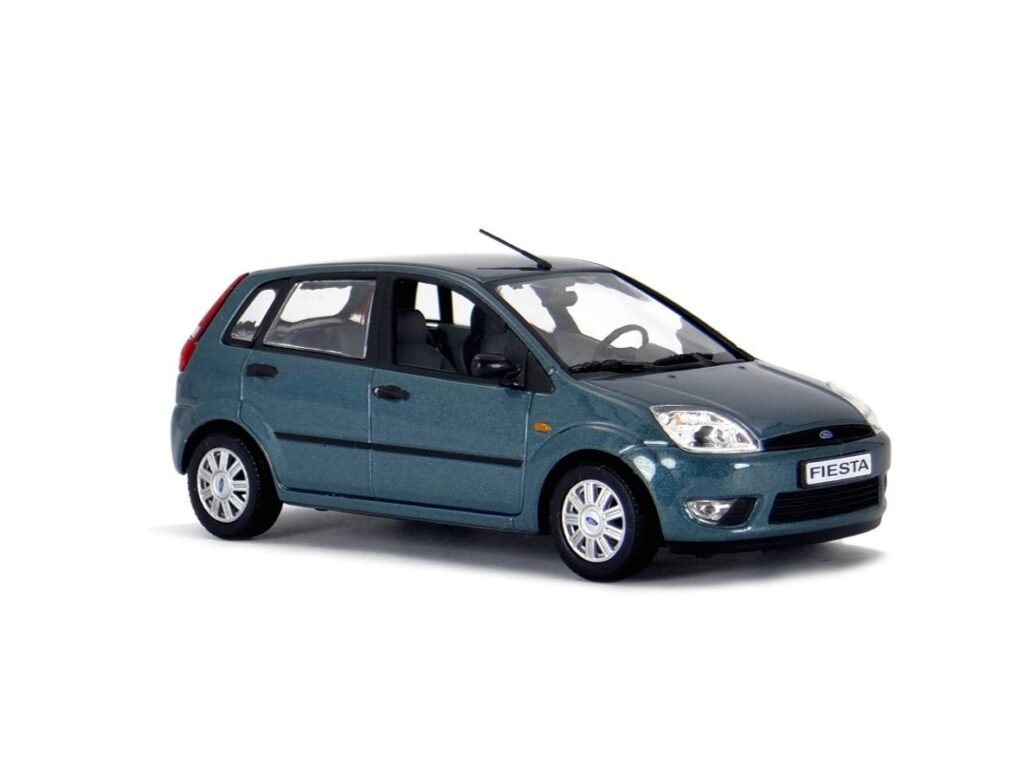
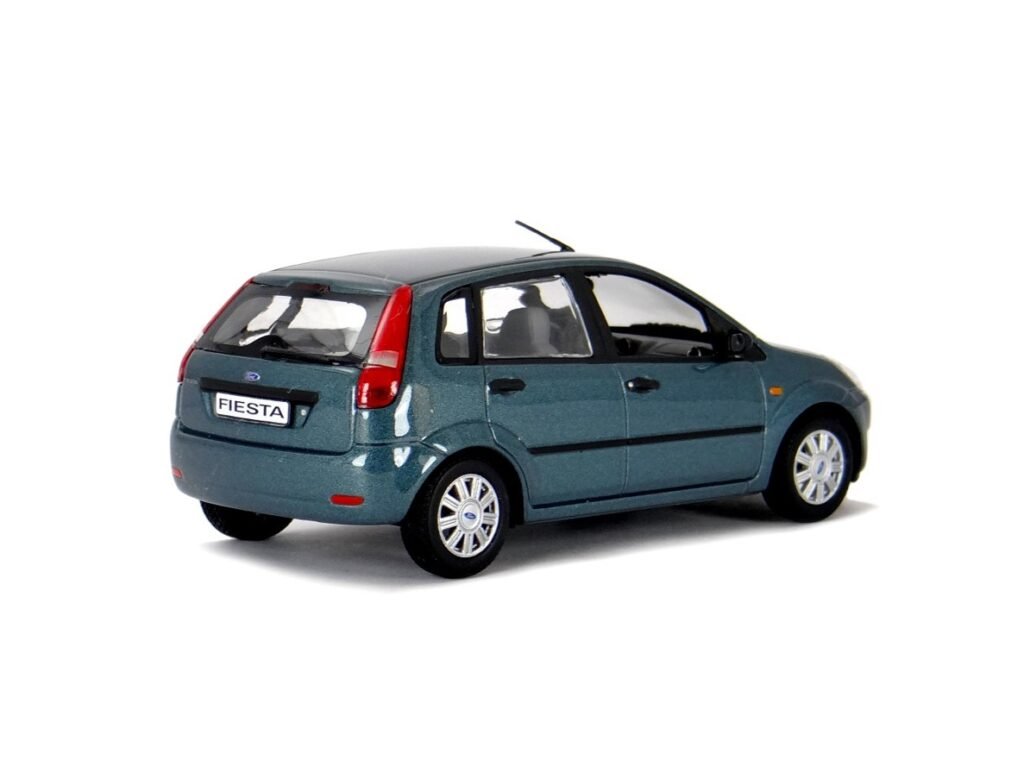
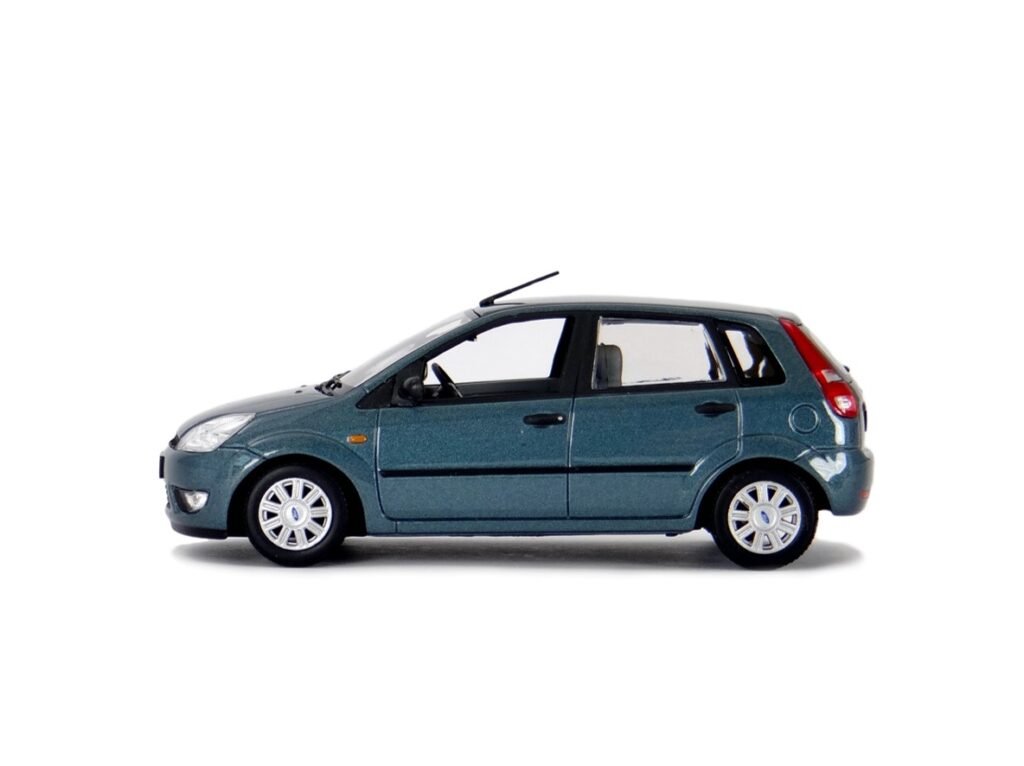
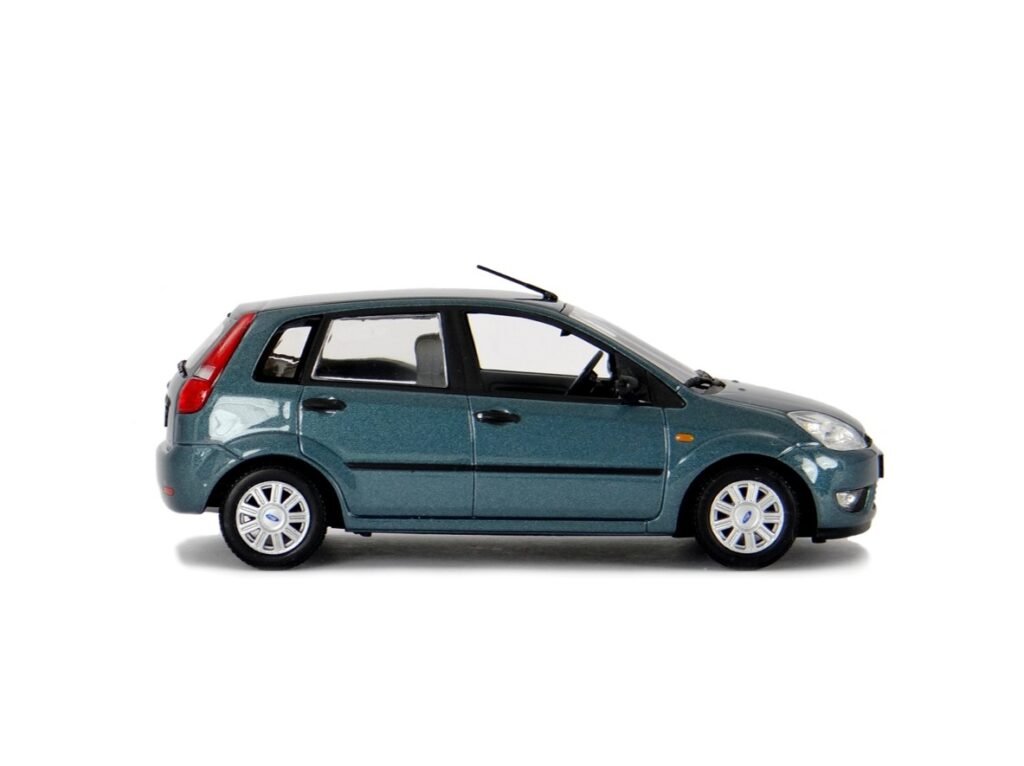
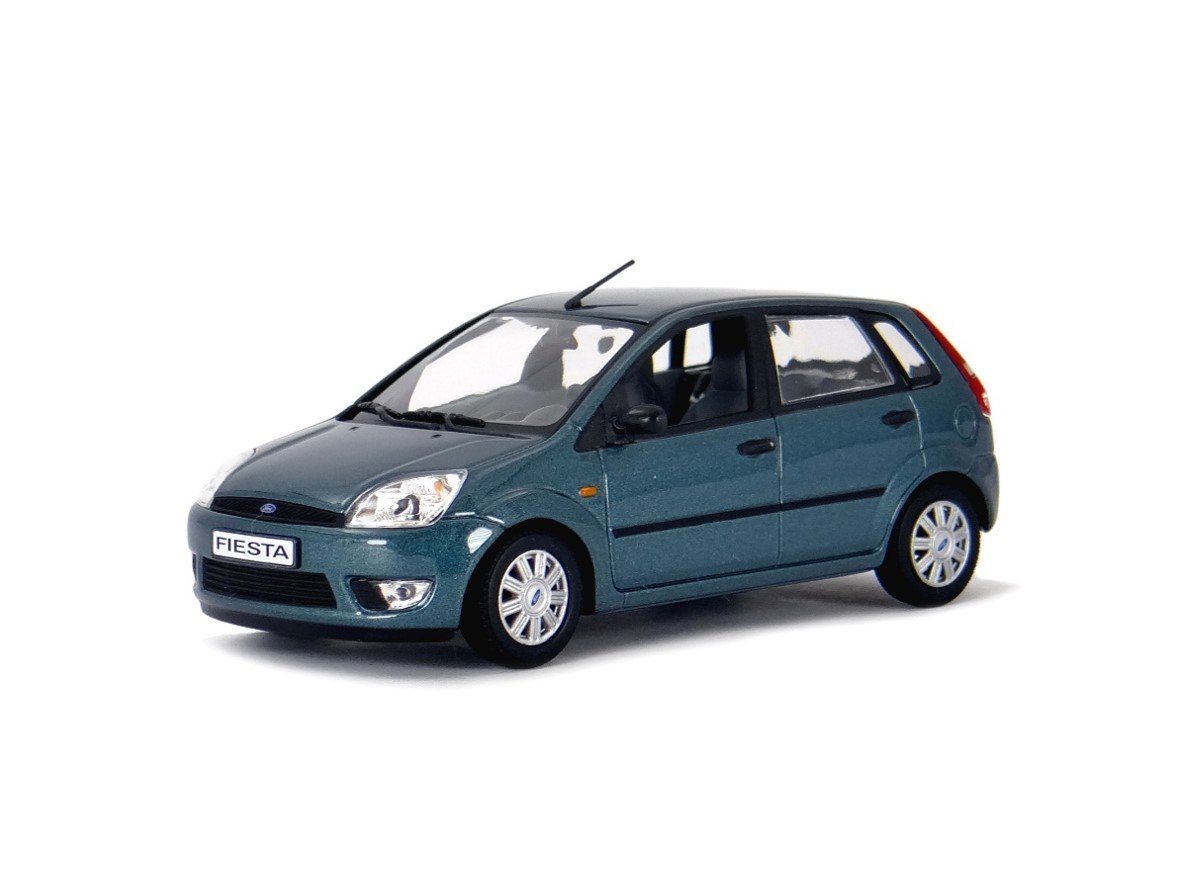
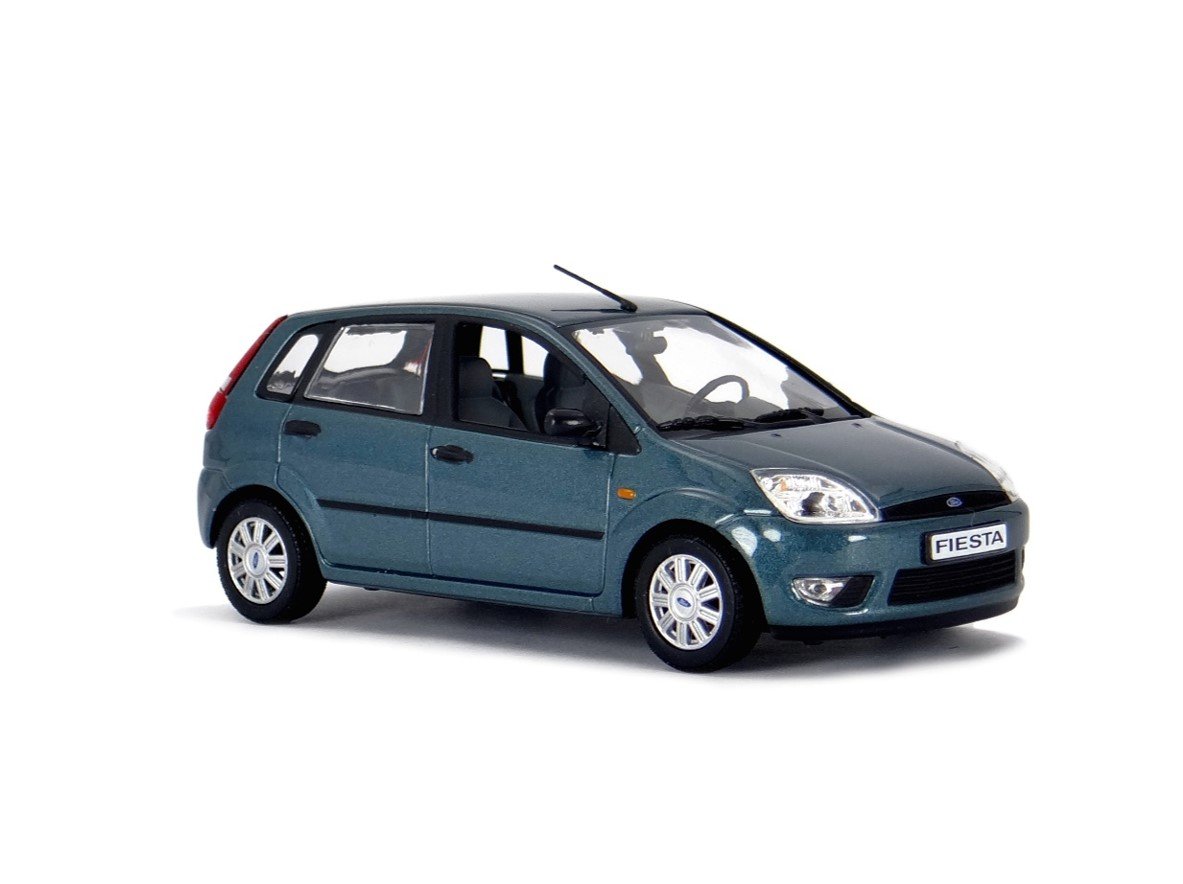
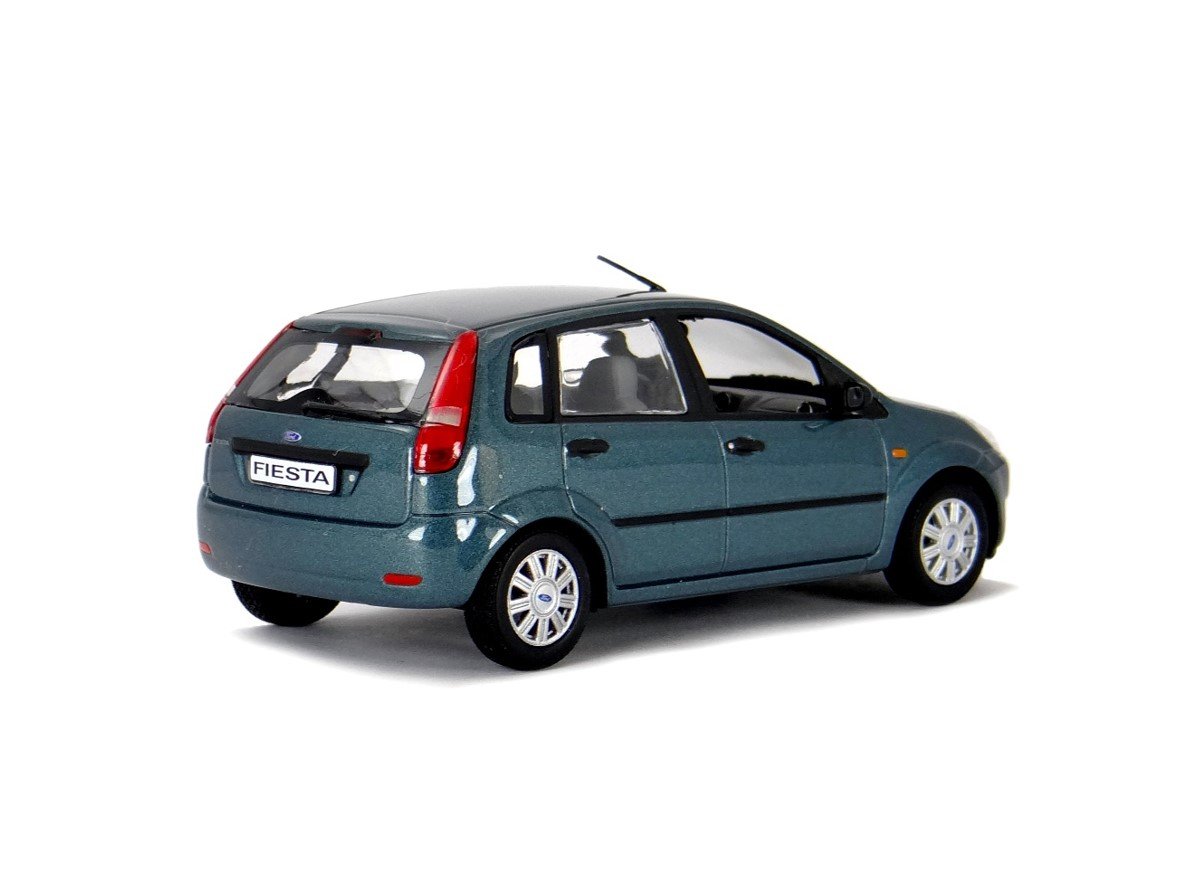
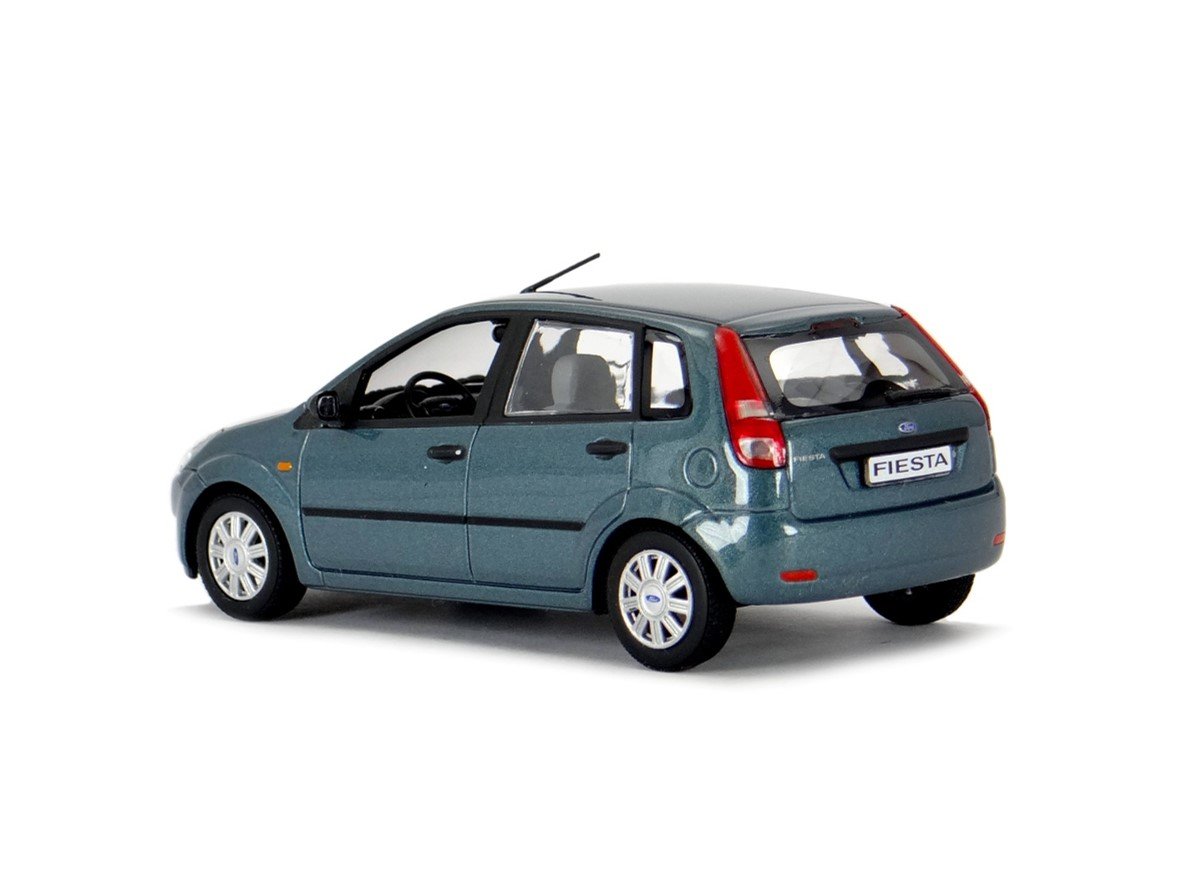
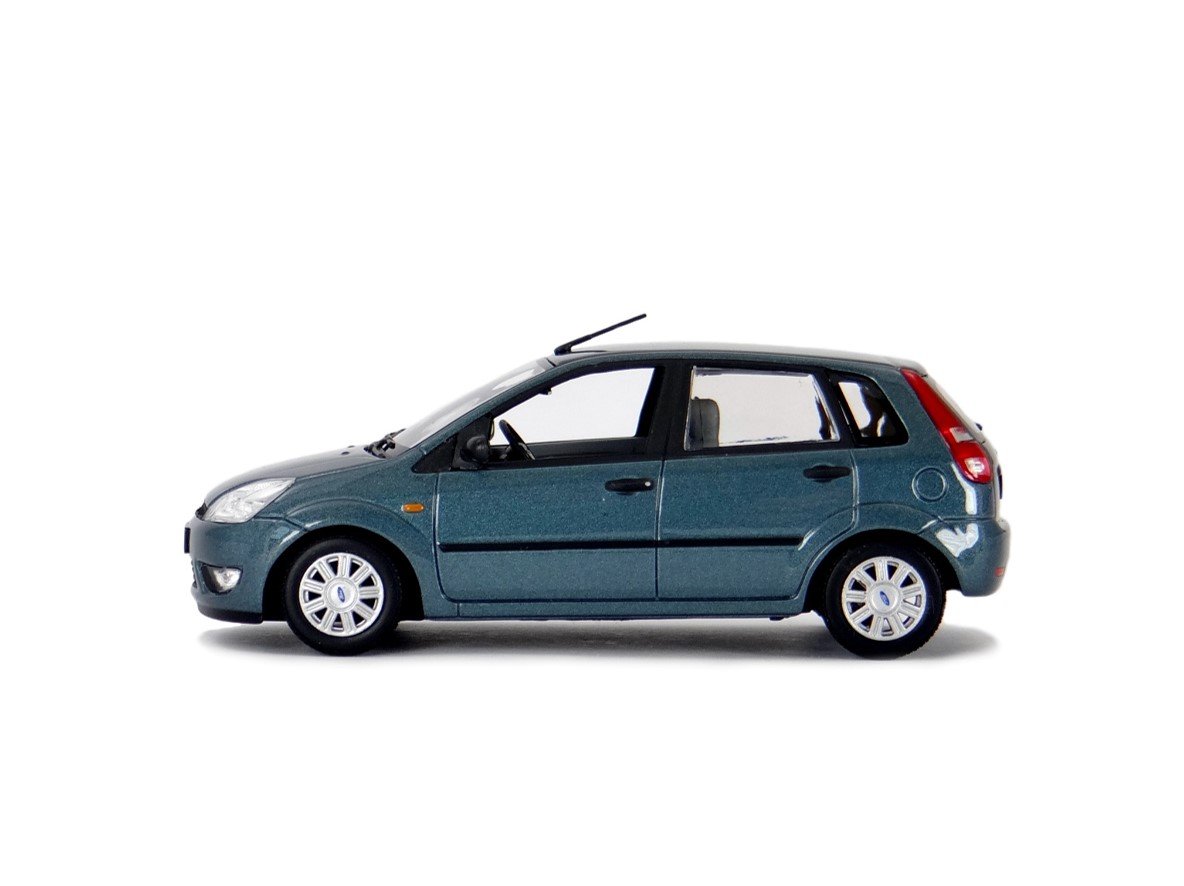
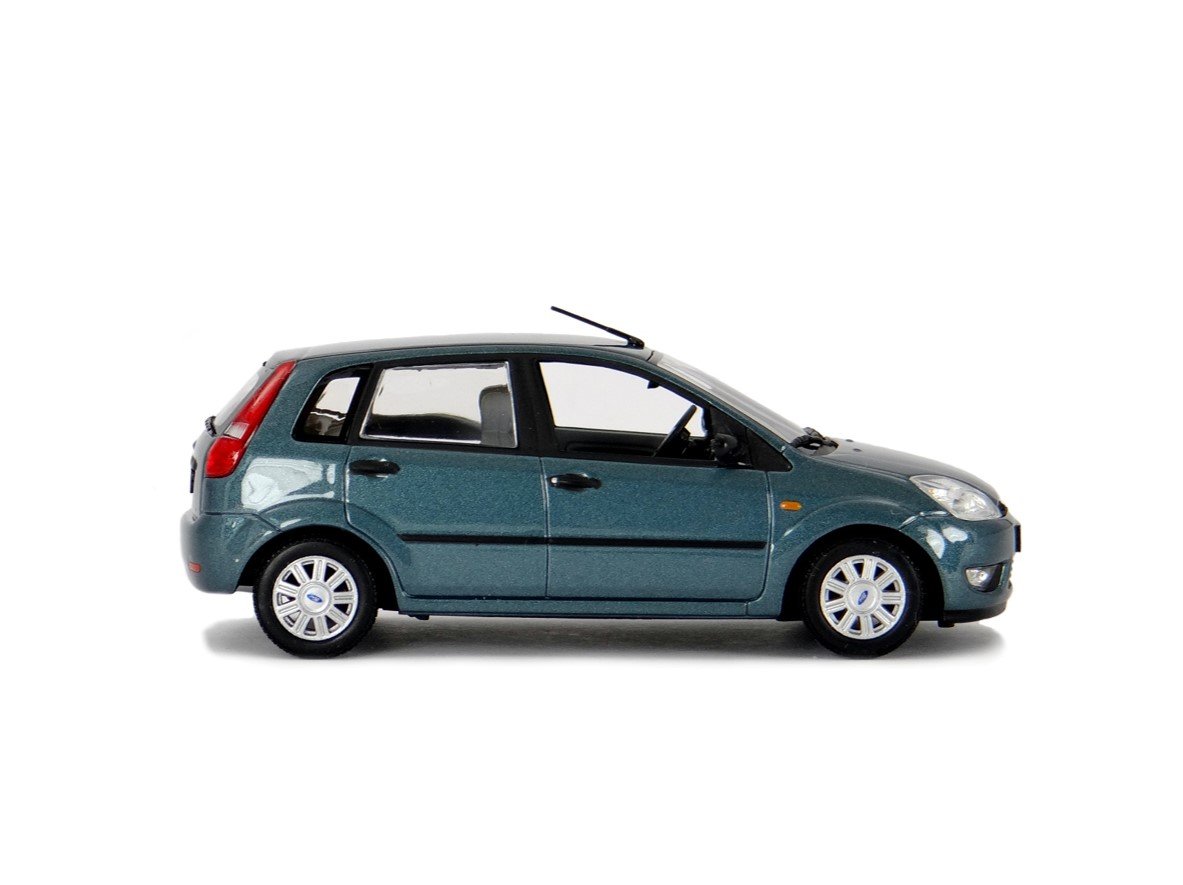
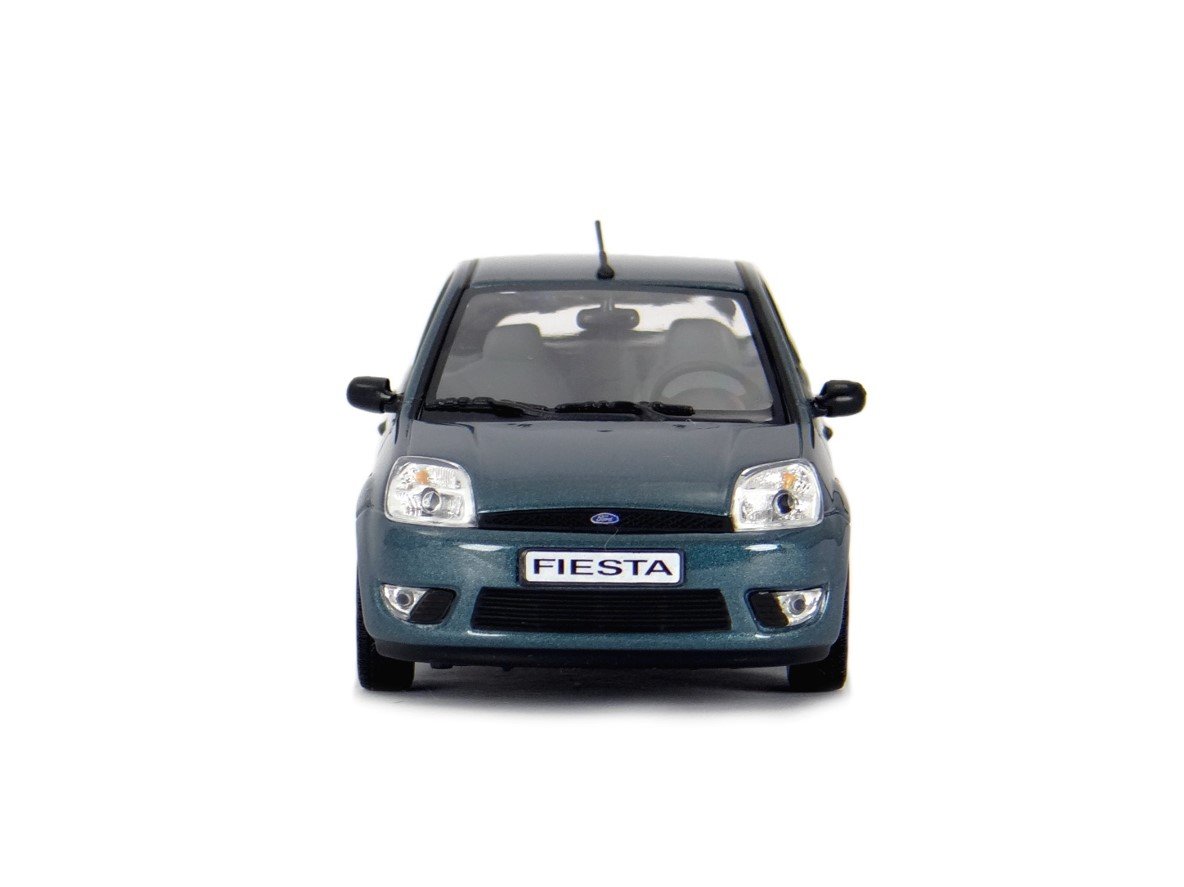
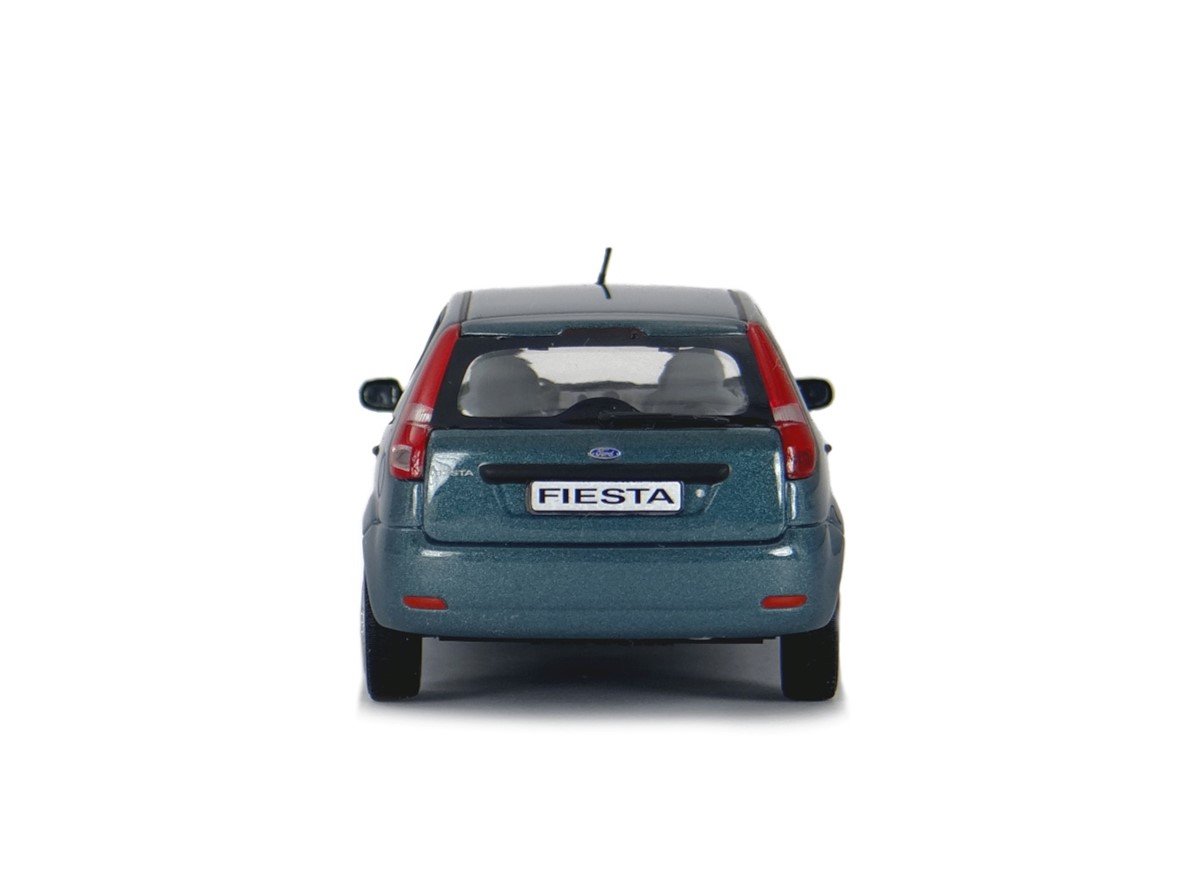
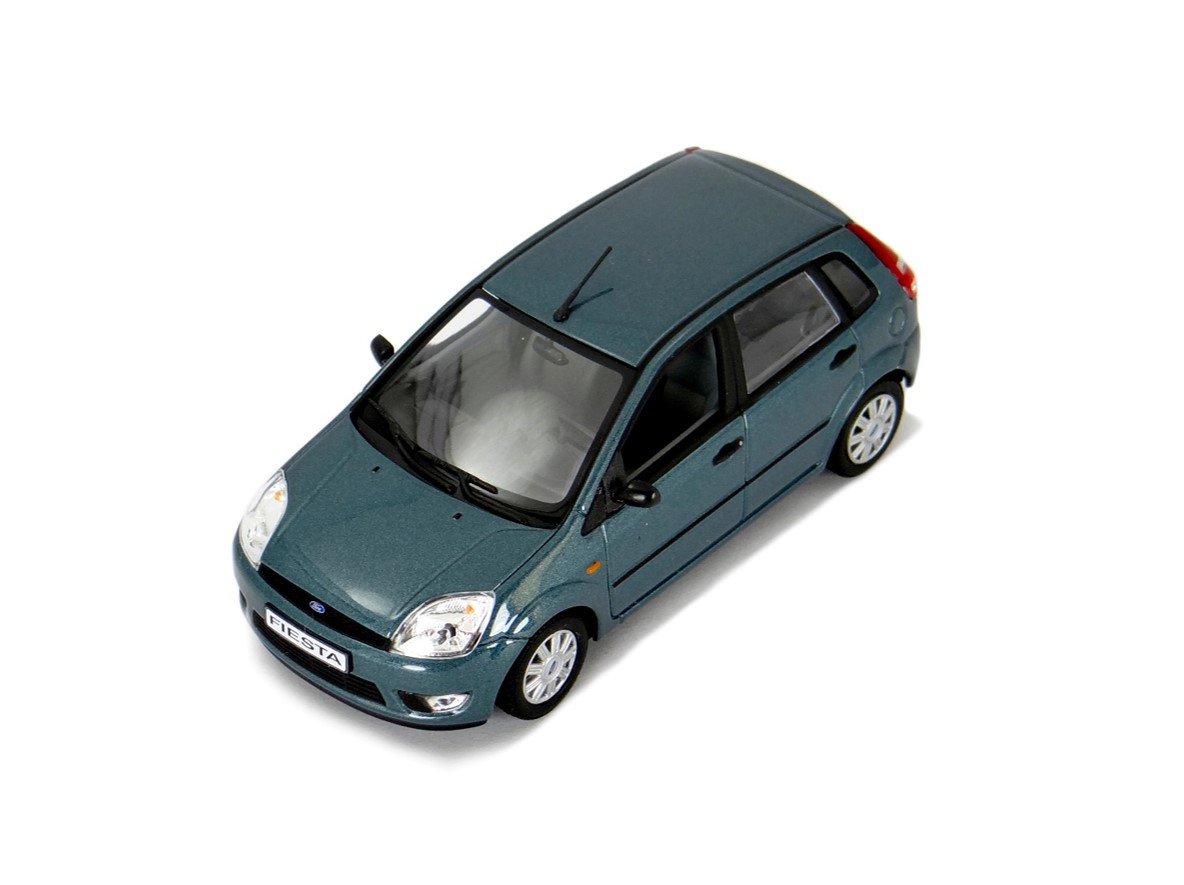
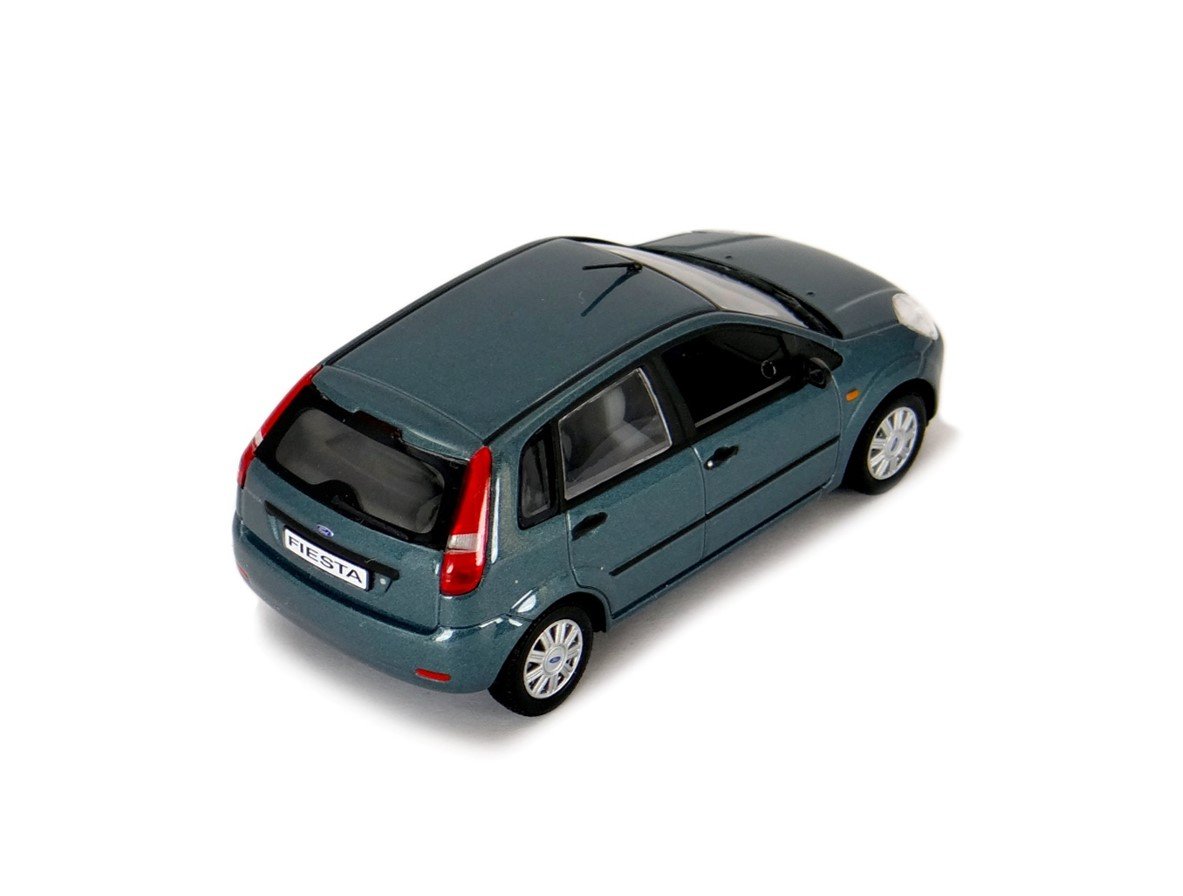
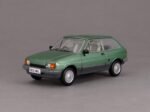
Ford Fiesta V w skali 1/43 to wyrób Minichamps. Modelik prezentuje pięcidrzwiową Fiestę w topowej wersji Ghia, co możemy poznać po unikatowym wzorze alufelg. Autko dostępne było zarówno w gablotkowej wersji Minichamps, jak i edycji dealerskiej w opakowaniu Forda – tak jak mój model.
Jak na Minichamps przystało, poziom odwzorowania modelu jest wysoki. Trudno znaleźć tutaj jakiekolwiek słabe punkty. Mamy odpowiednie proporcje oraz wiele detali. Elegancko wygląda szarozielony lakier, który jednak ciężko odpowiednio uchwycić na zdjęciach. Mnie szczególnie zachwycił poziom odwzorowania wnętrza, w którym odwzorowano nie tylko zegary i podświetlenie wyświetlaczy, ale również pasy bezpieczeństwa! A to wszystko w modelu, który ma prawie 25 lat!
Zapraszam do obejrzenia galerii Ford Fiesty V poniżej, oraz do odwiedzenia MiniAutomobili na Facebooku i Instagramie!
*** ENGLISH ***
The launch of the fifth-generation Ford Fiesta at the end of 2001 marked an important milestone in the model’s evolution. The new car was a major improvement over its predecessors.
This was the first truly all-new Fiesta in 12 years. Of course, Ford introduced successive models in the meantime, but they were really just more or less involved updates of the 1989 third-generation model. Next to the fantastic Focus, the aging Fiesta fared rather poorly. Change was long overdue, so Ford developed the fifth-generation Fiesta (which some consider the sixth) entirely from the ground up.
Surprisingly to some, the Fiesta doesn’t actually look like a mini Focus, even though it follows the same New Edge Design philosophy. In the Fiesta the process of toning down the New Edge Design was well advanced however, leaving little trace of its original boldness. The Fiesta’s boxy silhouette looks mature and grown-up, even somewhat dull.
The same is true of the interior. Improvements over the previous model are clear in every area: space, quality and styling. The cabin design is highly mature, but once again, a little boring.
However, Ford certainly delivered when it comes to handling. Much like its other models, Fiesta is very nimble and engaging. Because of the simpler suspension set-up, it’s not as good as the Focus, but it still offers the best handling in its class. This is partly thanks to a completely new platform developed jointly with Mazda, which provides significantly greater body rigidity.
In terms of powertrains, Ford served a cocktail of old and new. The core of the range consisted of petrol engines carried over from the previous model: the 1.25 Duratec (75 hp), 1.3 Duratec (60/70 hp), 1.4 Duratec (80 hp), as well as the 1.6 Duratec (100 hp) from the Focus. In selected markets, Ford even offered the outdated 1.3 Endura-E with a cast-iron head, though it was quickly dropped. The new addition was the 2.0 Duratec (150 hp), reserved exclusively for the sporty Fiesta ST. There were also new turbo diesels with common-rail injection: the 1.4 TDCi (68 hp) and 1.6 TDCi (90 hp), developed jointly with the PSA Group.
In late 2005, the Fiesta received a very light refresh before production ended in 2008 at Ford’s Almussafes plant in Spain. However, the end of production and sales in Europe did not mark the final chapter for the fifth-generation model. Quite the opposite — its story, arguably even more colourful than in Europe, continued in full swing in other regions of the world.
Mexico had this Fiesta on sale until 2010. Its distinguishing feature, aside from a slightly revised appearance was the availability of a saloon body style. In South America, production lasted the longest — all the way until 2014 — although repeated facelifts had by then transformed it into almost a different car. The fifth-generation Fiesta also served as the basis for the Ford Figo, launched in 2010 for emerging markets. Aside from lightly restyled front and rear sections, it remained virtually identical to the European model.
About the miniature – Ford Fiesta V
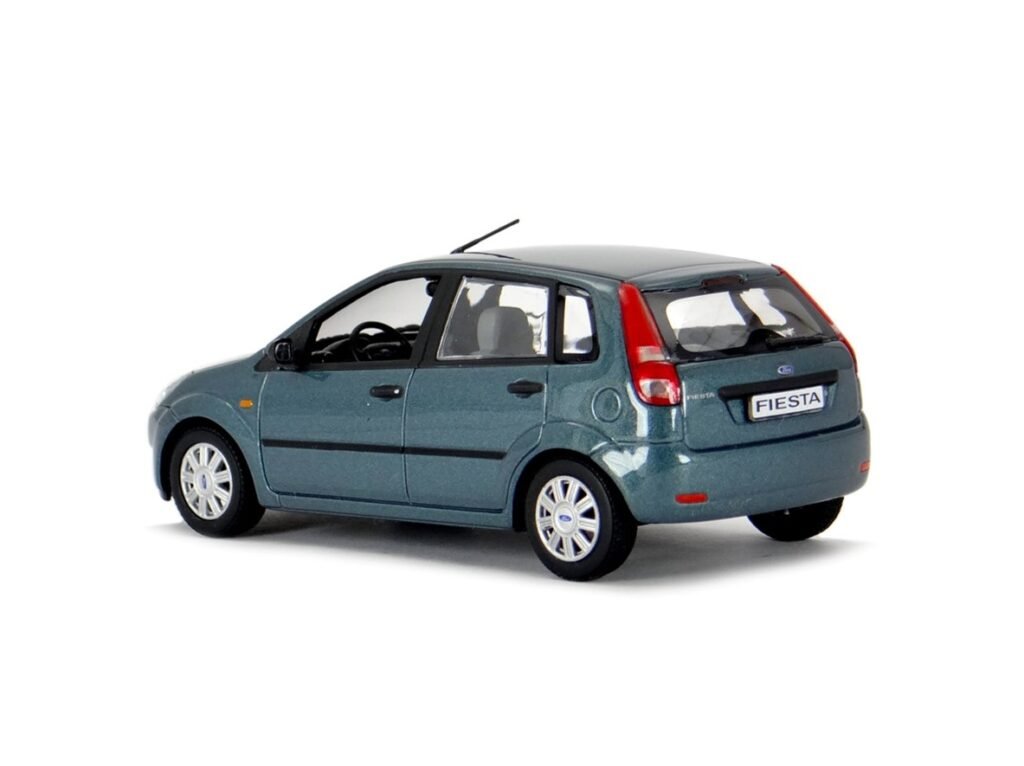
This 1:43-scale Ford Fiesta Mk V is a Minichamps model. It depicts the five-door Fiesta in the top-spec Ghia version, which can be identified by its distinctive alloy wheel design. The model was offered both in Minichamps’ standard display packaging and in a Ford dealer edition box – just like my model.
Typically for Minichamps, the level of detailing is high. It certainly is difficult to find any weak points here. We have good overall proportions as well as good detail. The grey-green paintwork looks particularly elegant, although it’s hard to capture accurately in photographs. What impressed me most was the interior detail, where not only the instrument cluster and illuminated displays were reproduced, but also the seat belts. All of this in a model that is almost 25 years old!
In any event, check out the Ford Fiesta Mk V gallery below. Remember to also visit MiniAutomobile pages on Facebook and Instagram!


Modelik tego auta kupiłem 2 razy) najpierw Cararama (kiedy była dostępna) a potem Minichamps (do remontu) . Bardzo podobała mi się sylwetka tego auta i zapragnąłem mieć jego modelik. Obydwa zresztą opisałem na blogu, już dość dawno temu.
Dziękuję za komentarz! Pozdrawiam