

Matiz pochodzi z drugiego rzutu modeli, którymi Daewoo pod koniec lat 90. chciało podbić Europę i świat. Ambitne plany skończyły się spektakularną klapą, ale marce udało się wpłynąć na nasz motoryzacyjny krajobraz jak na żaden inny.
Daewoo zawitało do Europy modelami Tico, Nexia i Espero, które poza tym ostatnim, były jedynie licencyjnymi wersjami modeli innych marek. Głównym atutem oferty Daewoo była niska cena. Choć ze względu na specyfikę niektórych rynków (głównie naszego), to wystarczyło do zdobycia popularności, to jednak w skali makro było to zdecydowanie za mało. Wykorzystując dobrą koniunkturę i gigantyczne wsparcie finansowe rządu koreańskiego, Daewoo błyskawicznie przeszło do kolejnej ofensywy modelowej. Nowa generacja aut marki pojawiła się już parę lat później. Lanos, Nubira, Leganza i Matiz były nowocześniejsze i bez wątpienia ładniejsze. Daewoo wiązało szczególnie duże nadzieje z najmniejszym Matizem. Koreańczycy liczyli, że dzięki ładnej sylwetce, praktycznemu pięciodrzwiowemu nadwoziu i konkurencyjnej cenie, nowy model mocno namiesza w zyskującej wtedy w Europie na popularności klasie miniaut.
Z Włoch do Korei
Początki Matiza sięgają roku 1992 i wcale nie są związane z Daewoo. Wtedy, podczas targów motoryzacyjnych w Turynie, słynne włoskie biuro stylistyczne Italdesign Giugiaro zaprezentowało swój koncept o nazwie Cinquecento. Rok później, podczas targów w Bolonii, Italdesign zaprezentował rozwnięcie projektu, pod nazwą Lucciola.
Auto było propozycją na następcę Fiata Cinquecento. Biały, trzydrzwiowy koncept z miękkim, otwieranym dachem korzystał z napędu hybrydowego. 2-cylindrowy diesel o pojemności raptem 0,49 litra i mocy 7,5 KM zbudowany przez firmę Lombardini, połączono z motorem elektrycznym o mocy 9,5 KM. Osiągi były wybitnie mizerne, ale chodziło o pokaz technicznych możliwości. Do tego, dochodziły aluminiowe panele karoserii, fotele wyposażone w obrotowy stelaż i wykończenie wnętrza z materiałów, które można poddać recyklingowi (rzadkość w tamtym czasie). Włosi opakowali te wszystkie innowacje w bardzo przyjemnie wyglądające nadwozie.
Niestety, Lucciola nie przekonała do siebie Fiata, albo nawet zraziła poziomem zaawansowania. Projekt został odrzucony, a Fiat w ramach oszczędności postanowił jedynie modernizować Cinquecento, co finalnie poskutkowało debiutem Seicento. Lucciola z kolei trafiła do szuflady.
W podobnym czasie, Daewoo planowało ekspansję modelową i potrzebowało następcy na swój najmniejszy model – Tico, będący licencyjną wersją starego Suzuki Alto. Sprytem wykazali się wtedy koreańscy biznesmeni z Daewoo. Zamiast projektować nowy model, w 1995 roku niespodziewanie zapukali do włoskich drzwi i kupili projekt Luccioli razem z pełną dokumentacją. Tak oto najtańsze Daewoo zyskało zgrabną sylwetkę ze słynną metką “made by Giugiaro”.
Od prototypów do premiery
Daewoo musiało oczywiście dostosować włoski projekt do swoich potrzeb. Intensywne prace inżynierskie odbywały się zarówno w koreańskim Pupyong jak i w Daewoo Worthing Technical Centre w Anglii. W ich trakcie, zrezygnowano z trzydrzwiowego nadwozia na rzecz znacznie praktyczniejszego pięciodrzwiowego. Inżynierowie pozbyli się też wszystkich innowacji technologicznych i zaadaptowali większość podzespołów z Tico.
W między czasie, podczas targów motoryzacyjnych w Seulu w 1997 roku, Daewoo pokazało Matiz Concept. Koreańczy zaprezentowali go chyba dla niepoznaki, bo opracowane razem z australijską firmą Millard Design auto, nie miało nic wspólnego z samochodem nad którym Daewoo faktycznie pracowało. Jedyną rzeczą którą finalnie przejęto z tego żółto-szarego prototypu okazała się nazwa, w wolnym tłumaczeniu oznaczająca – podobno – przyjaciela.
Rezultat prac międzynarodowej grupy inżynierów i faktyczna zapowiedź produkcyjnego modelu, pojawiła się kilka miesięcy później. Podczas targów we Frankfurcie w 1997 roku, Daewoo zaprezentowało trzy prototypy d’Arts. Auta różniły się od siebie detalami i dodatkami, ale ogólnie bardzo przypominały produkcyjnego Matiza (M100), który debiutował w Korei w marcu 1998 roku, a chwilę później pojawił się na targach w Genewie.
Choć Daewoo Matiz miał modny wtedy wygląd MPV, to technicznie nie wzbudzał już żadnych zachwytów. Prosta mechanika przejęta w niewiele zmienionym stopniu z Tico zdradzała bardzo budżetowy charakter samochodu. To samo tyczyło się silnika. Jedyny dostępny w Matizie M100 motor; trzycylindrowa, benzynowa jednostka 0.8 pochodziła z Suzuki Alto z lat 80. Na potrzeby Matiza inżynierowie trochę ją jednak zmodyfikowali i wzmocnili do 51 KM. Oczywiście, taka moc nie czyniła z auta demona prędkości: przyspieszenie do 100 km/h zajmowało 17 sekund a prędkość maksymalna wynosiła 144 km/h. Plusem jednostki było za to względnie niskie zużycie paliwa.
Na podbój świata
Niedługo po premierze, seryjna produkcja Daewoo Matiza ruszyła w koreańskim Changwon, ale bardzo szybko rozpoczęto ją również w innych krajach; Indiach, Rumunii, no i oczywiście Polsce. Daewoo od początku projektowało Matiza jako samochód globalny, więc rozmieszczenie zakładów produkcyjnych w różnych zakątkach świata nie dziwiło. Ponadto, ułatwiało zaspokojenie zainteresowania modelem, które początkowo było tak duże, że klienci czekali na niego kilka miesięcy. W Europie oraz Indiach z kolei, Matiz przez kilka lat był nawet najpopularniejszym modelem Daewoo!
Popularność była zrozumiała, bo nie dość, że Matiz łączył ładny wygląd z niską ceną, to jeszcze posiadał całkiem przestronną, jak na swoje niewielkie wymiary (349,5 cm długości), kabinę. Miał też jedną istotną przewagę nad konkurencją. Jako jeden z nielicznych modeli w klasie Daewoo Matiz oferował pięciodrzwiowe nadwozie, co szczególnie w biedniejszych krajach było argumentem nie do przecenienia.
Choć Matiz był samochodem globalnym, to jednak nie wszędzie sprzedawany był pod marką Daewoo. W Meksyku występował jako Pontiac Matiz/G2, w Tajwanie jako Formosa Matiz, a w Chinach jako Chevrolet i Baojun Lechi. Z Chinami związana jest zresztą dość głośna swego czasu afera o plagiat Matiza. W 2003 roku chiński producent Chery wprowadził do sprzedaży model QQ, który wyglądał łudząco podobnie do Matiza. Sprawa trafiła nawet do sądu w Chinach i oficjalnie zakończyła się ugodą, ale nieoficjalnie Chery musiało zapłacić miliony dolarów odszkodowania.
Smutny koniec
Raptem dwa lata po debiucie, w 2000 roku, Daewoo zaprezentowało Matiza po liftingu (kod M150). Auto wyróżniało się lekko zmodyfikowaną przednią i tylną częścią nadwozia a także nowym, czterocylindrowym silnikiem 1.0/67 KM.
Niestety, lifting Matiza zbiegł się z gigantycznymi problemami finansowymi Daewoo. Z tego powodu Matiz po liftingu sprzedawany był tylko na niektórych rynkach. Na innych, w tym Polsce i Rumunii, cały czas kontynuowano produkcję i sprzedaż wersji przedliftingowej. W końcu, Daewoo ogłosiło bankructwo. Koreańską markę kupił jej dawny partner – General Motors, a Daewoo Matiz stał się najpierw Chevroletem Matizem, a później przeistoczył się w Chevroleta Sparka.
Matiz w Polsce
Sprzedaż Daewoo Matiza w Polsce ruszyła 15 grudnia 1998 roku. Dzisiaj trudno to sobie wyobrazić, ale jego debiut wzbudził w kraju duże poruszenie. Nie dość, że Matiz był nowy i tani, to jeszcze produkowany u nas. Początkowo tylko montowany w systemie SKD z koreańskich części, ale pełnoskalowa produkcja w żerańskich zakładach FSO rozpoczęła się niedługo później, 18 października 1999 roku.
Polska oferta składała się tylko z jednego silnika (0.8) i czterech poziomów wyposażenia (Friend, Life, Joy i Top). O ile podstawowa odmiana Friend była absolutnie spartańska, to w najbogatszej Top dostępne były dwie poduszki powietrzne, ABS i klimatyzacja.
Na tle wszechobecnych wtedy Fiatów 126p i Cinquecento, Daewoo Matiz wyróżniał się nie tylko nowoczesnym wyglądem i lepszym wyposażeniem (o to nie trudno), ale również pięciodrzwiowym nadwoziem. W czasach, gdy nawet najmniejsze auto pełniło rolę rodzinnego, była to ogromna zaleta. Nie dziwi zatem, że przystępne cenowo Matizy bardzo szybko zaczęły wypełniać polskie ulice. Absolutnie rekordowy był rok 1999, kiedy to FSO wyprodukowała 79 993 Matizy, z czego aż 63 090 sztuk trafiło na nasz rynek. Entuzjazm podzielała polska prasa, która przyznała Matizowi wiele nagród i wyróżnień.
Niestety, sielanka nie trwała długo. Z czasem, zainteresowanie małym koreańskim hatchbackiem zaczęło słabnąć. Prawdziwa zapaść nastąpiła jednak w nowym millennium, kiedy rozeszła się wieść o bankructwie Daewoo. Produkcja i sprzedaż spadła do jedynie kilku tysięcy sztuk rocznie. Klienci bali się o ewentualne naprawy gwarancyjne samochodów oraz dostęp do części zamiennych. Paradoksalnie, przejęcie Daewoo przez General Motors wcale nie poprawiło sytuacji.
Od 2004 roku, żerański zakład produkował Matizy pod własną marką FSO. Modele te były przeznaczone jednak wyłącznie na polski rynek. Ze względu na znikomy popyt (kilkaset sztuk rocznie), FSO ostatecznie zakończyła produkcję w lutym 2007 roku. Przez niecałe 9 lat obecności Matiza na rynku, Polacy kupili w sumie 149 953 sztuki tego koreańskiego malca. Daewoo Matiz na zawsze stał się częścią krajobrazu z przełomu wieków i początkiem końca polskiej motoryzacji.
O miniaturze – Daewoo Matiz
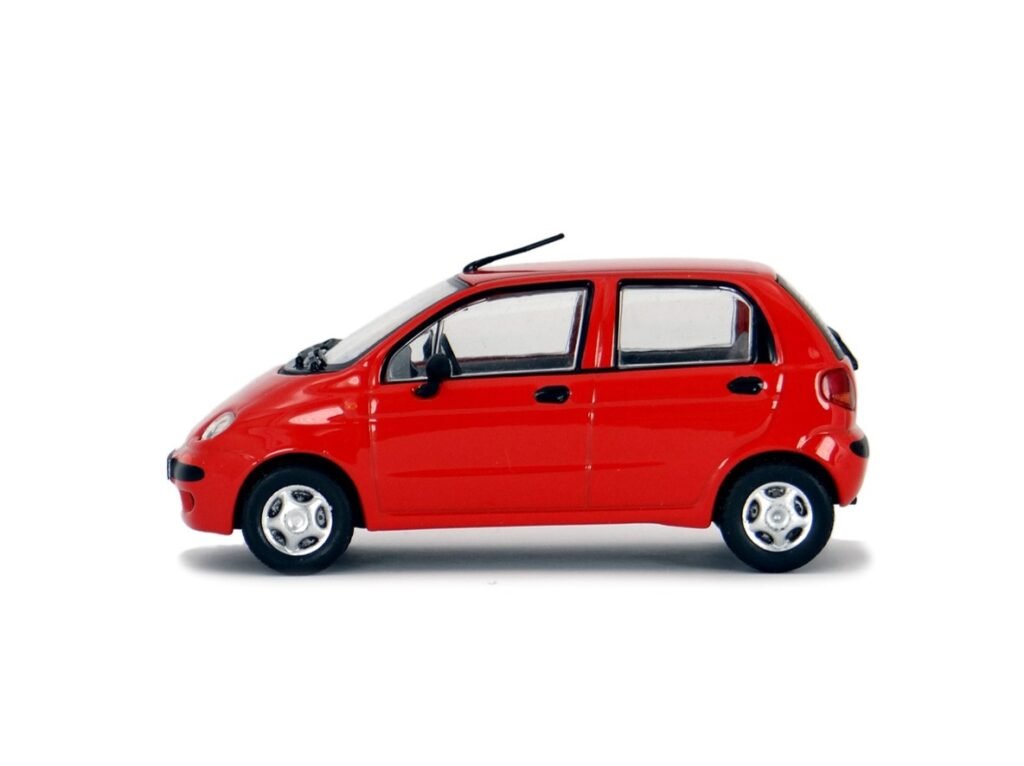
Czekaliśmy na niego niemiłosiernie długo, ale jest! Model Daewoo Matiza w końcu się pojawił. Pierwszy raz usłyszeliśmy o nim około roku 2012, kiedy na jednym z for modelarskich pojawiło się przeciekowe zdjęcie złotego Matiza. Model miał ukazać się w rumuńskiej serii “Maşini de Legenda”, ale problemy wydawnictwa spowodowały przedwczesne zakończenie serii i Matiz się nie pojawił. Nie pojawił się też w innych, trwających wtedy seriach deAgostini. Nadzieja odżyła z pełną mocą w 2022, kiedy startowała seria “Legendy FSO”. Przecież był w FSO produkowany, odlew modelu jest najprawdopodobniej gotowy od dekady, to musi wyjść! Jak się okazało, wcale nie musi. “Legendy FSO” się skończyły, Matiza nie było, a kolekcjonerzy zostali w szoku i żałobie.
Wtem! W reedycji rumuńskiej serii “Maşini de legenda”, ni stąd ni zowąd, w zapowiedziach pojawił się Daewoo Matiz! Planowana data wydania: 19 maja 2026. Niestety, i tym razem nie obyło się bez problemów. Z jakiegoś powodu na dwa tygodnie przed wydaniem, wydawnictwo zmieniło datę na 28 lipca. Trudno powiedzieć co się wydażyło, ale jedno jest pewne. Matizy gotowe były na pewno już dużo wcześniej, bo zaczęły się pojawiać na rumuńskich portalach nawet jeszcze przed pierwotnym terminem wydania!
Matizy z Rumunii dość szybko zaczęły się masowo pojawiać w Polsce, więc cały czerwiec upłynął rodzimym kolekcjonerom pod znakiem Matiz-manii. Ja zamówiłem swój egzemplarz w Rumunii dość wcześnie, ale dotarł do mnie prawie po trzech tygodniach, już w szczycie popularności.
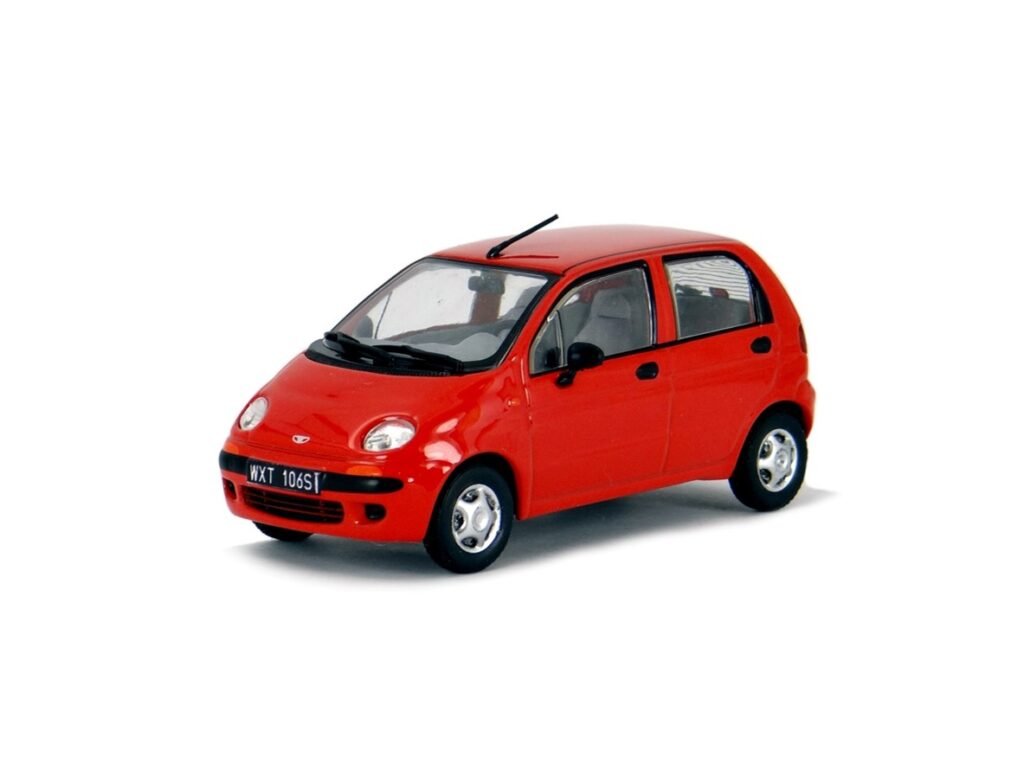
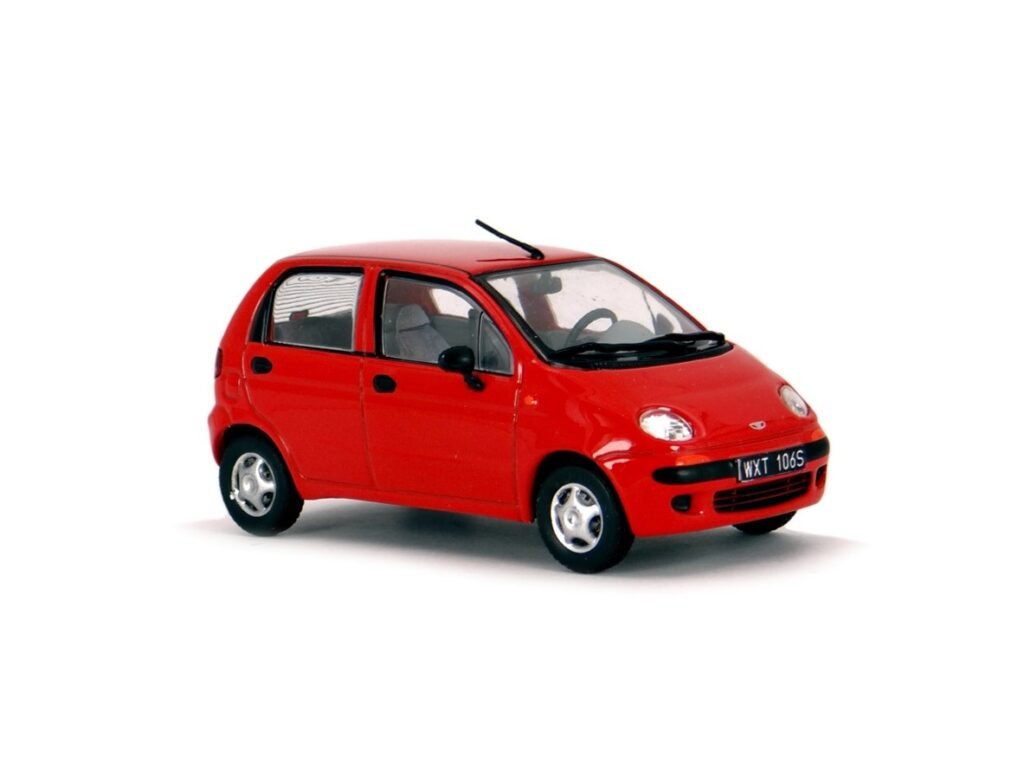
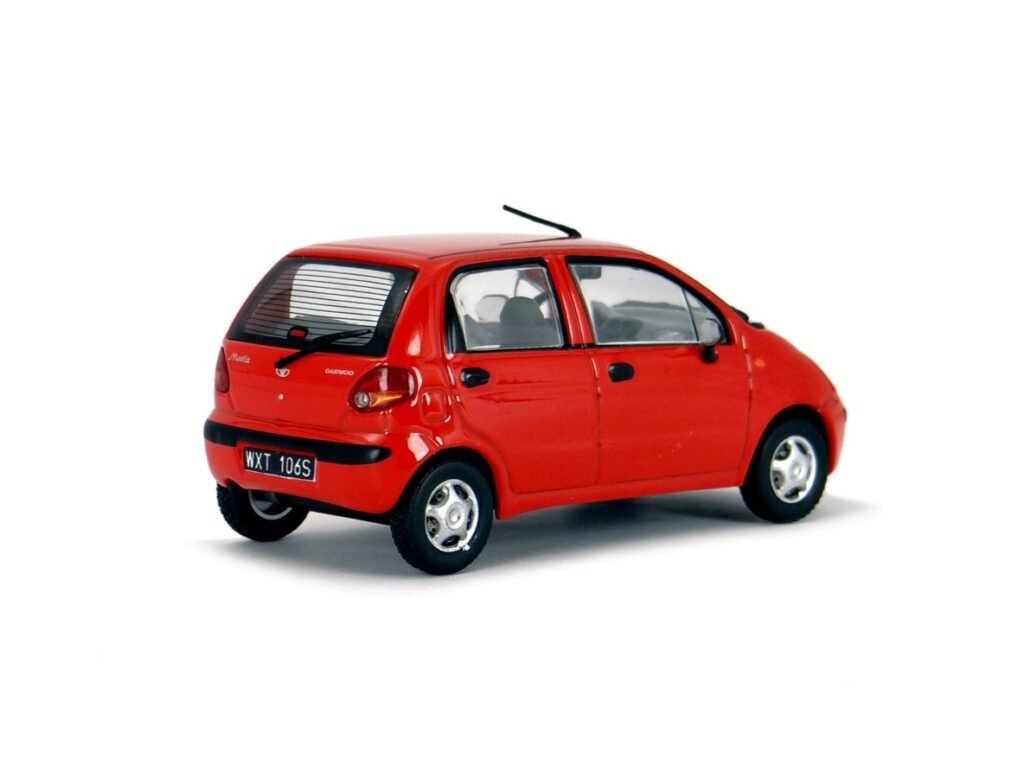
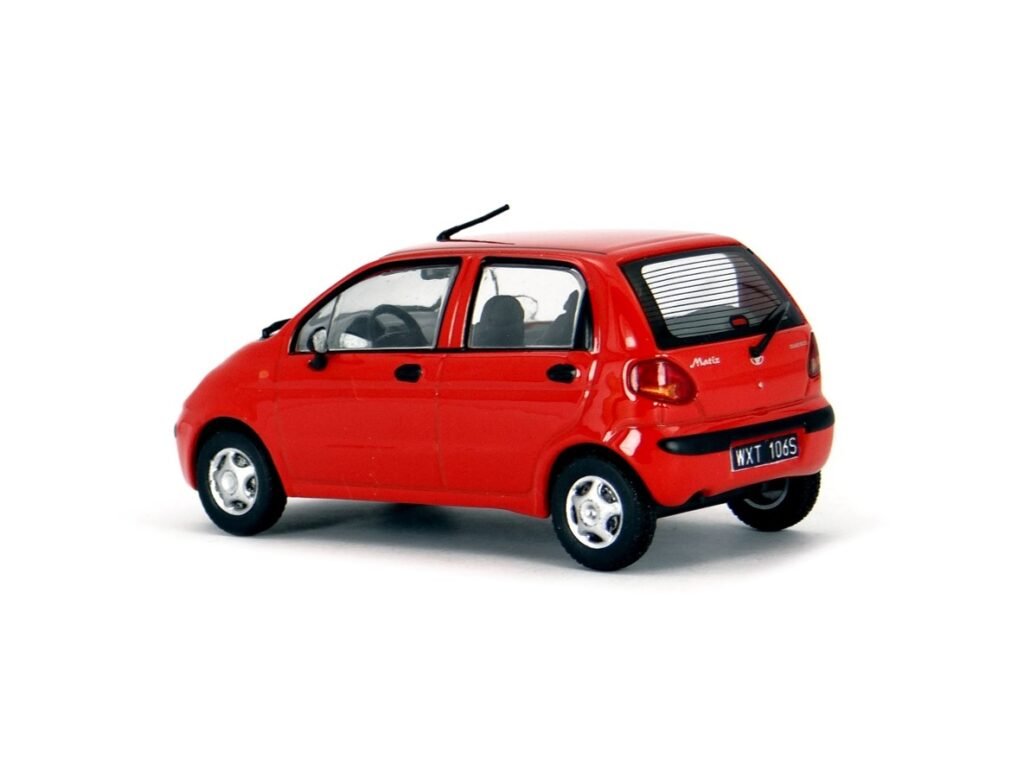
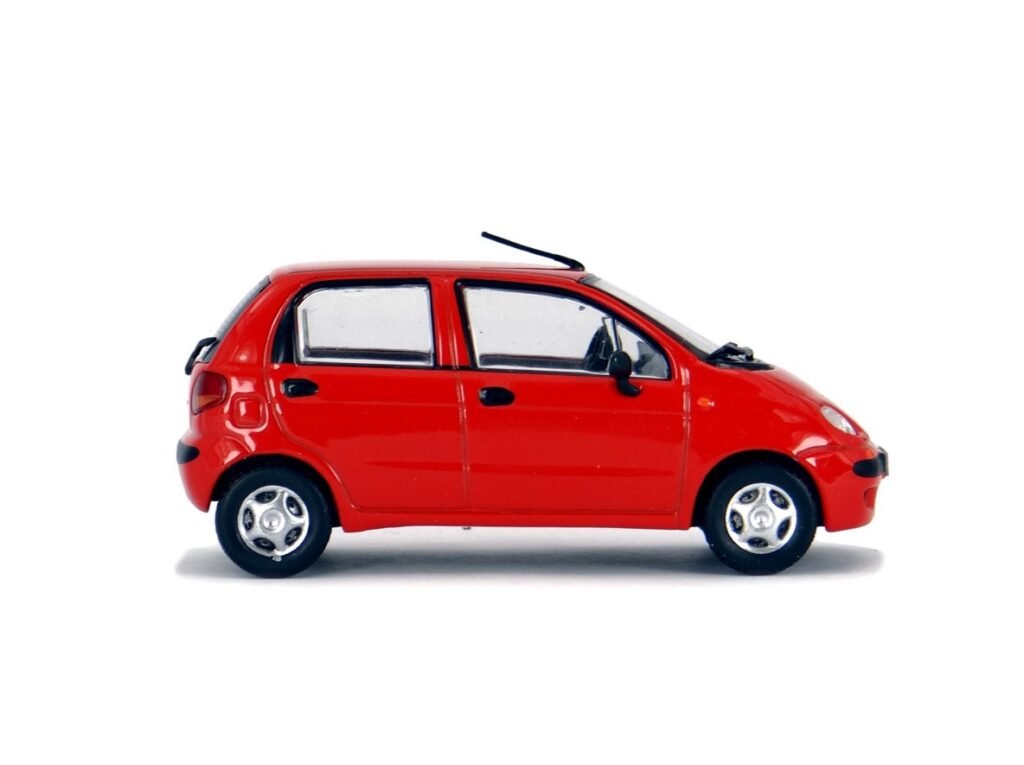
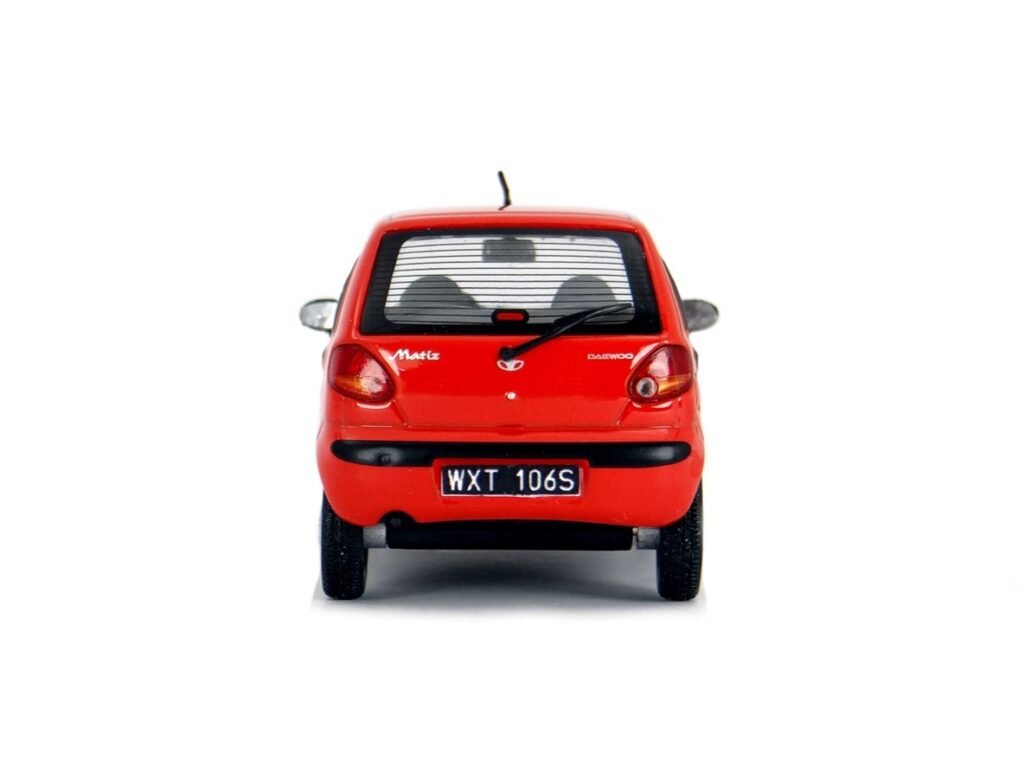
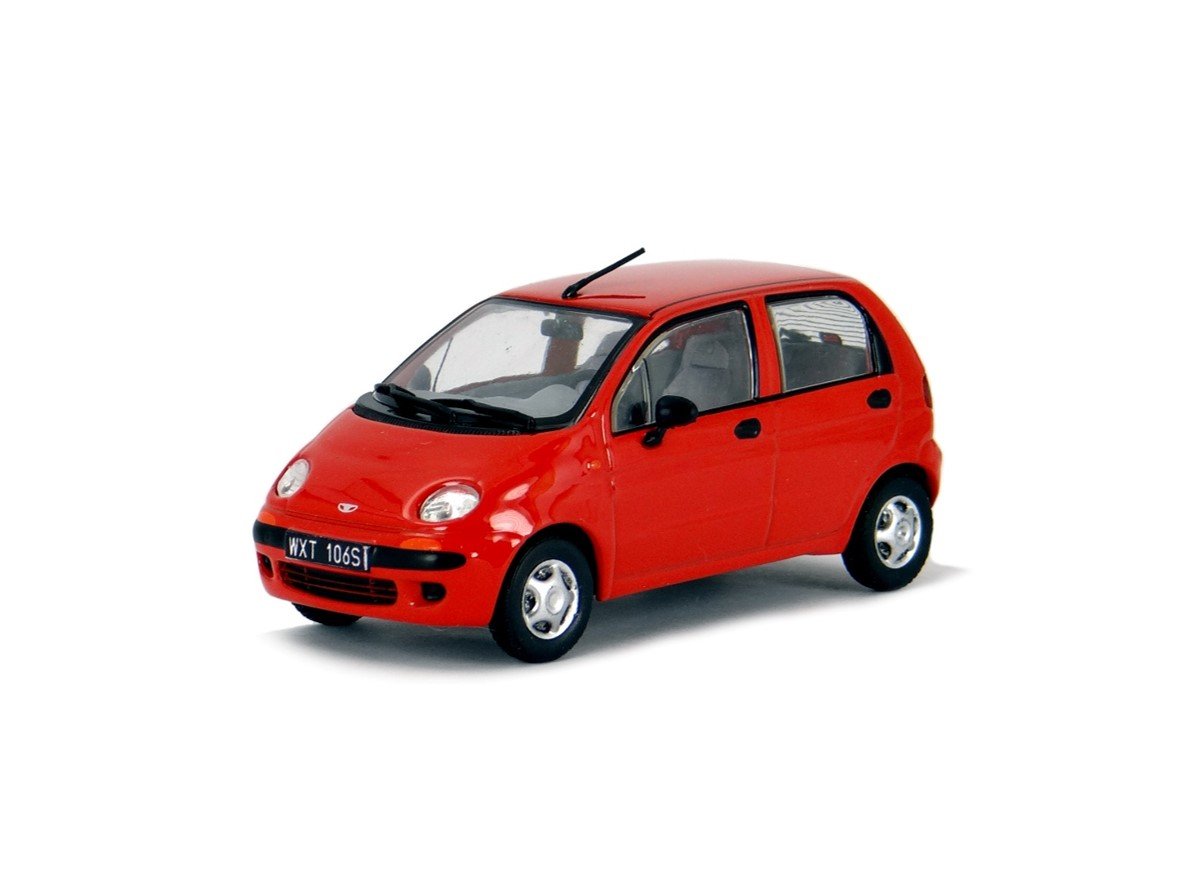
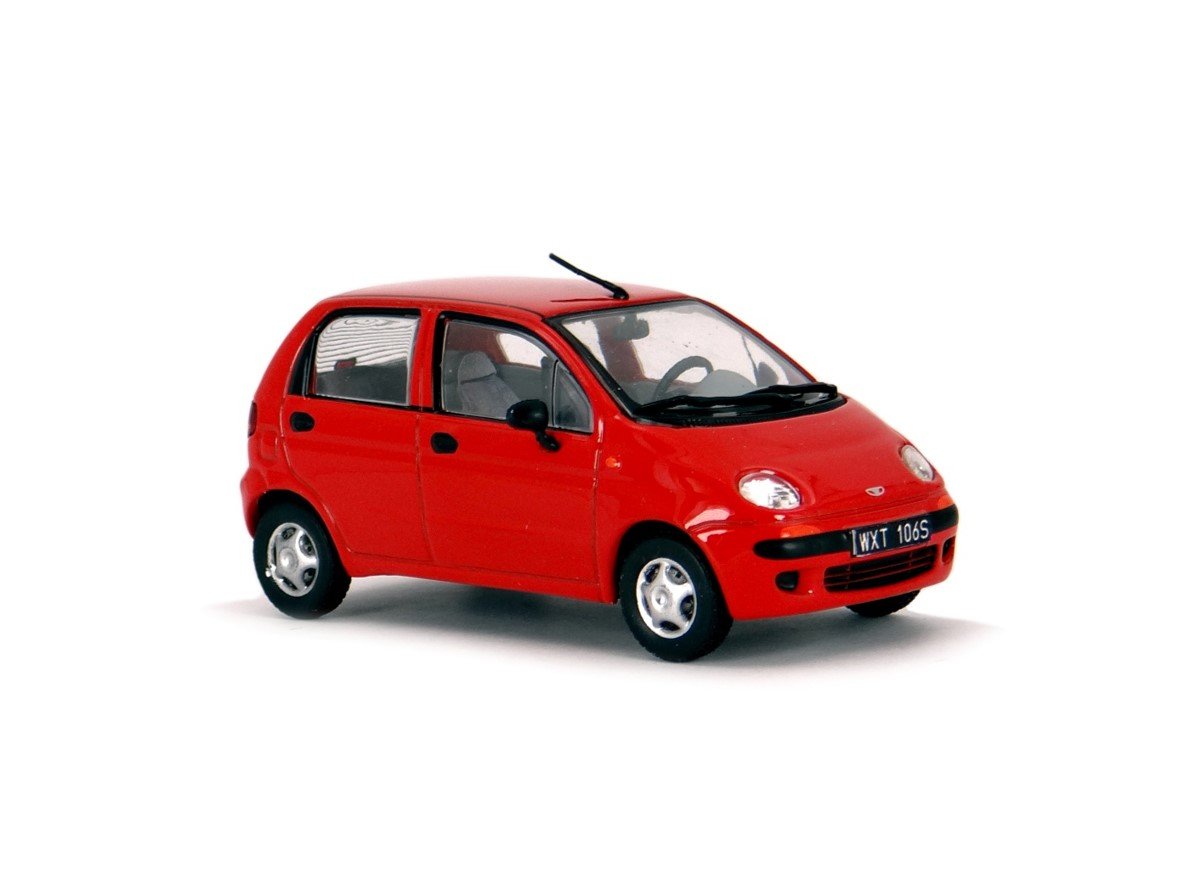
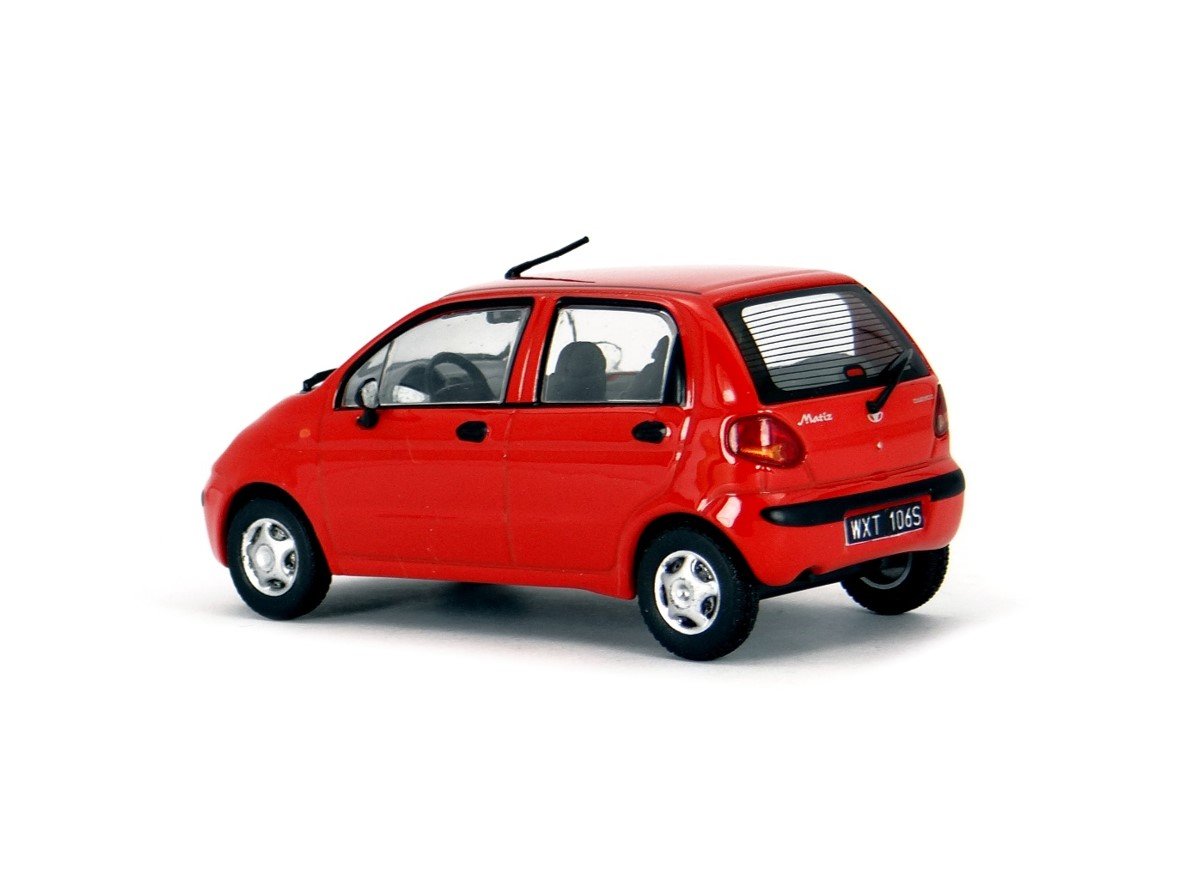
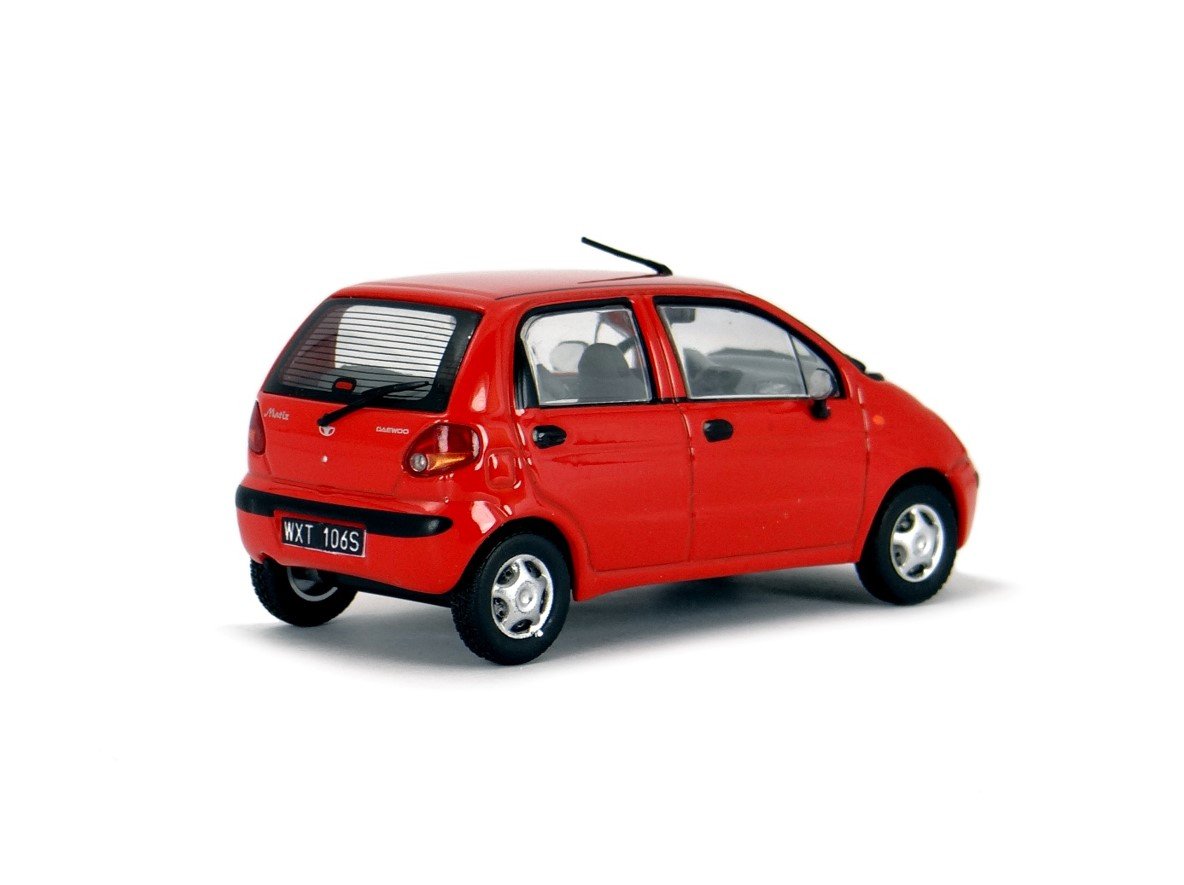
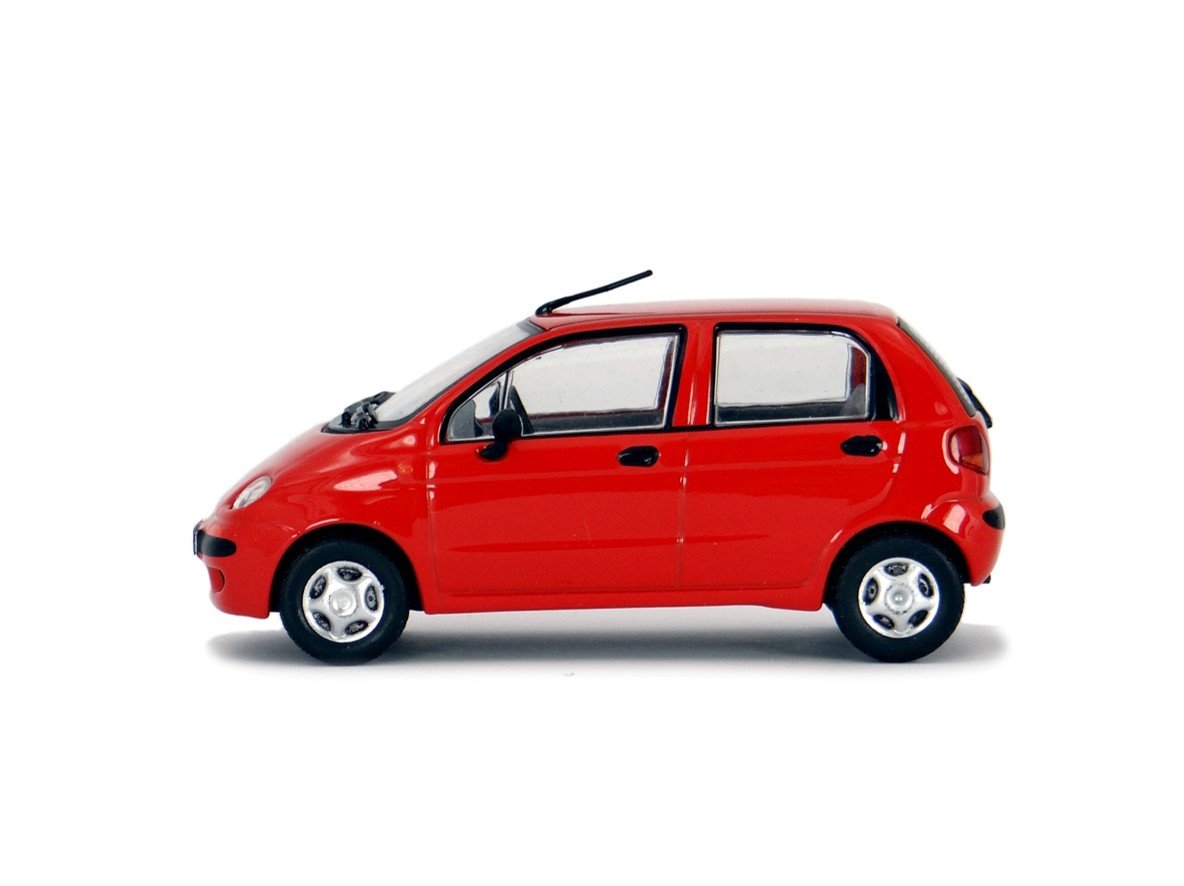
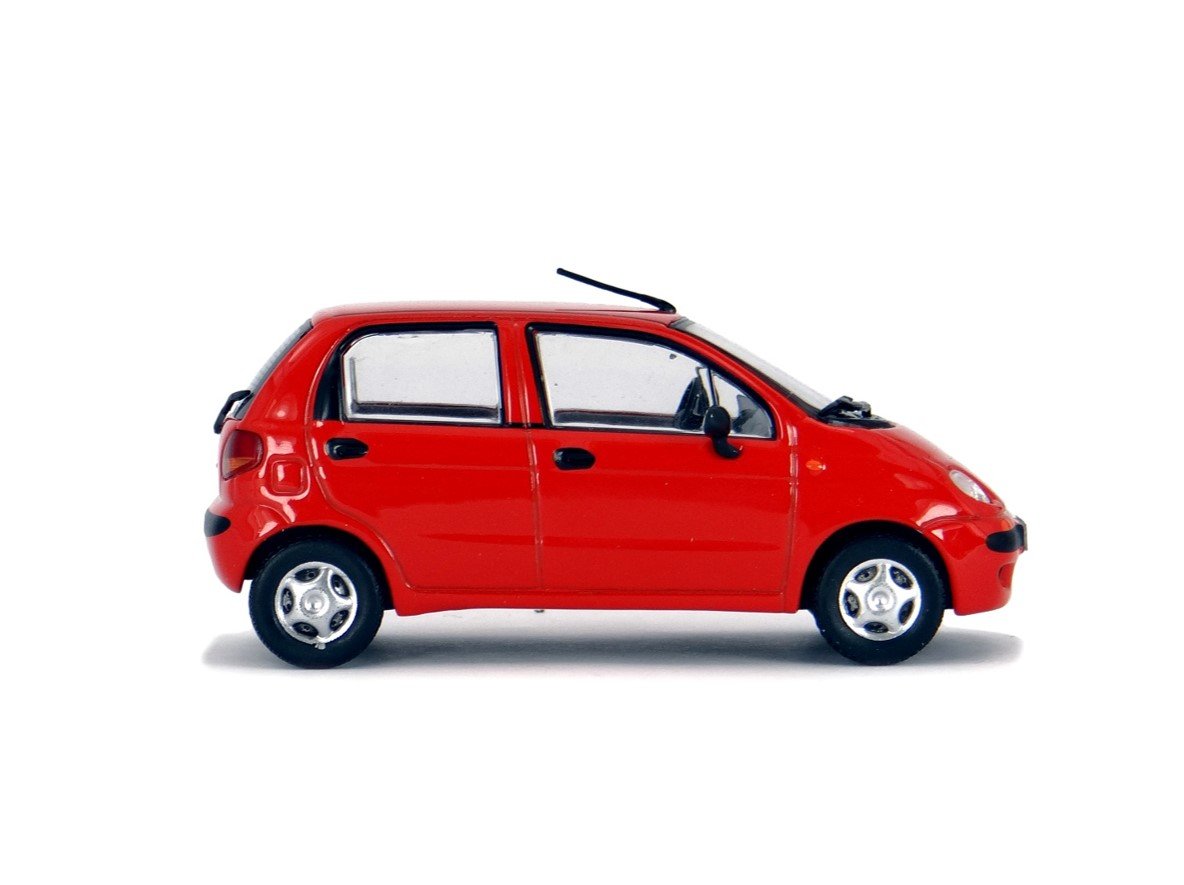
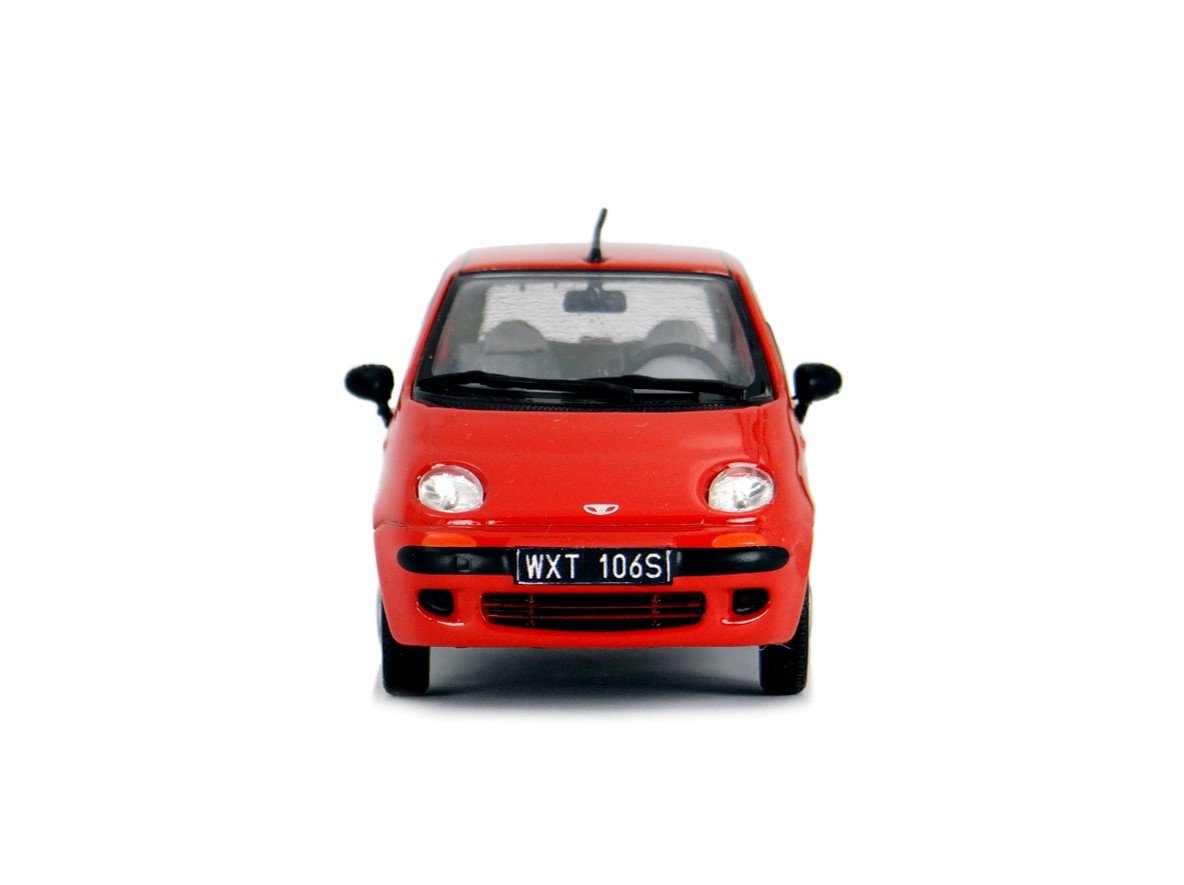
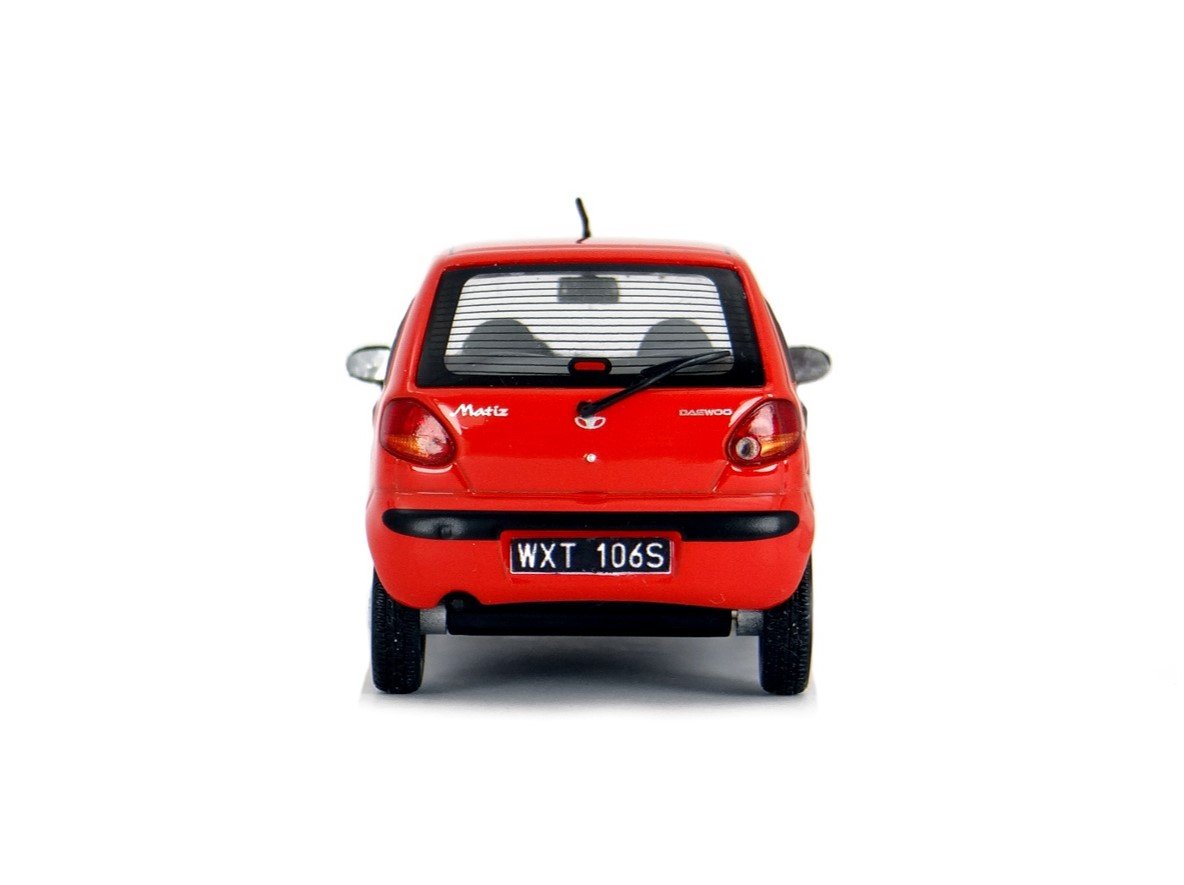
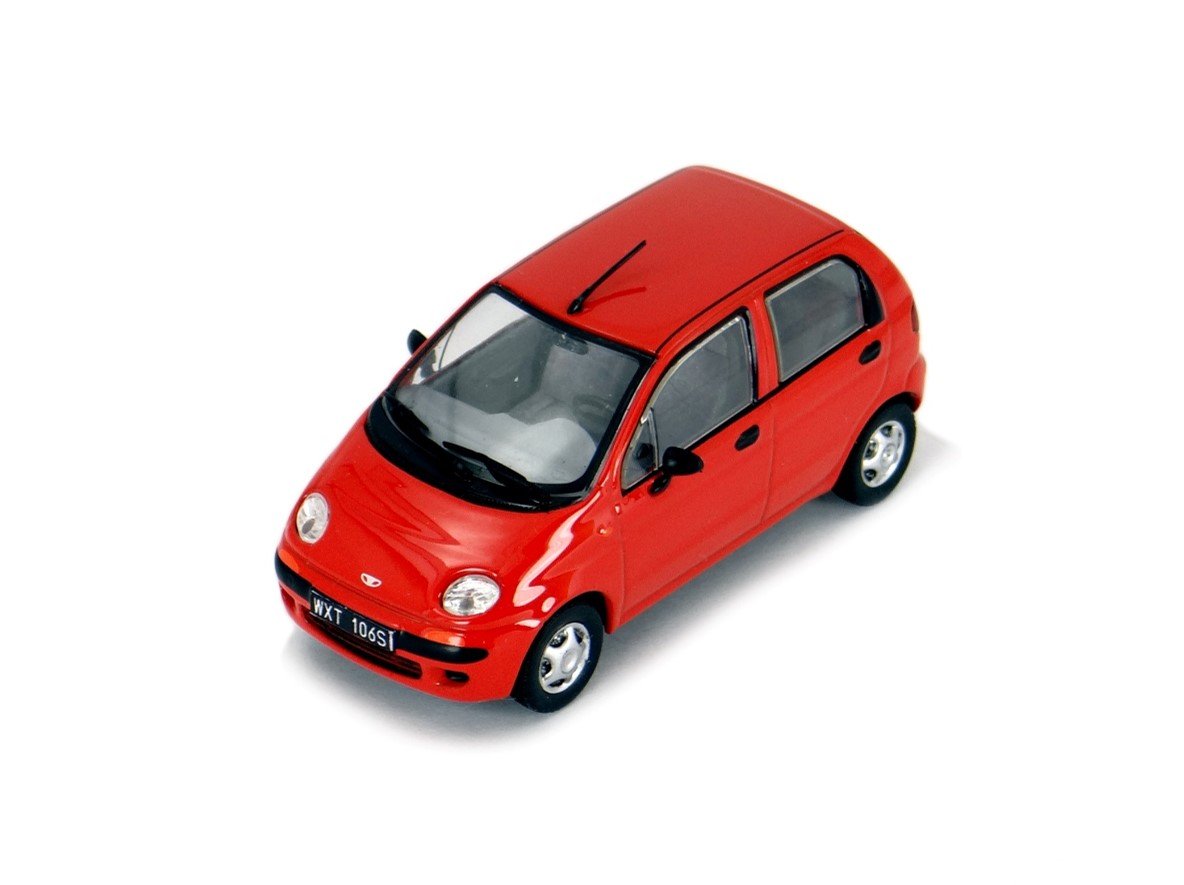
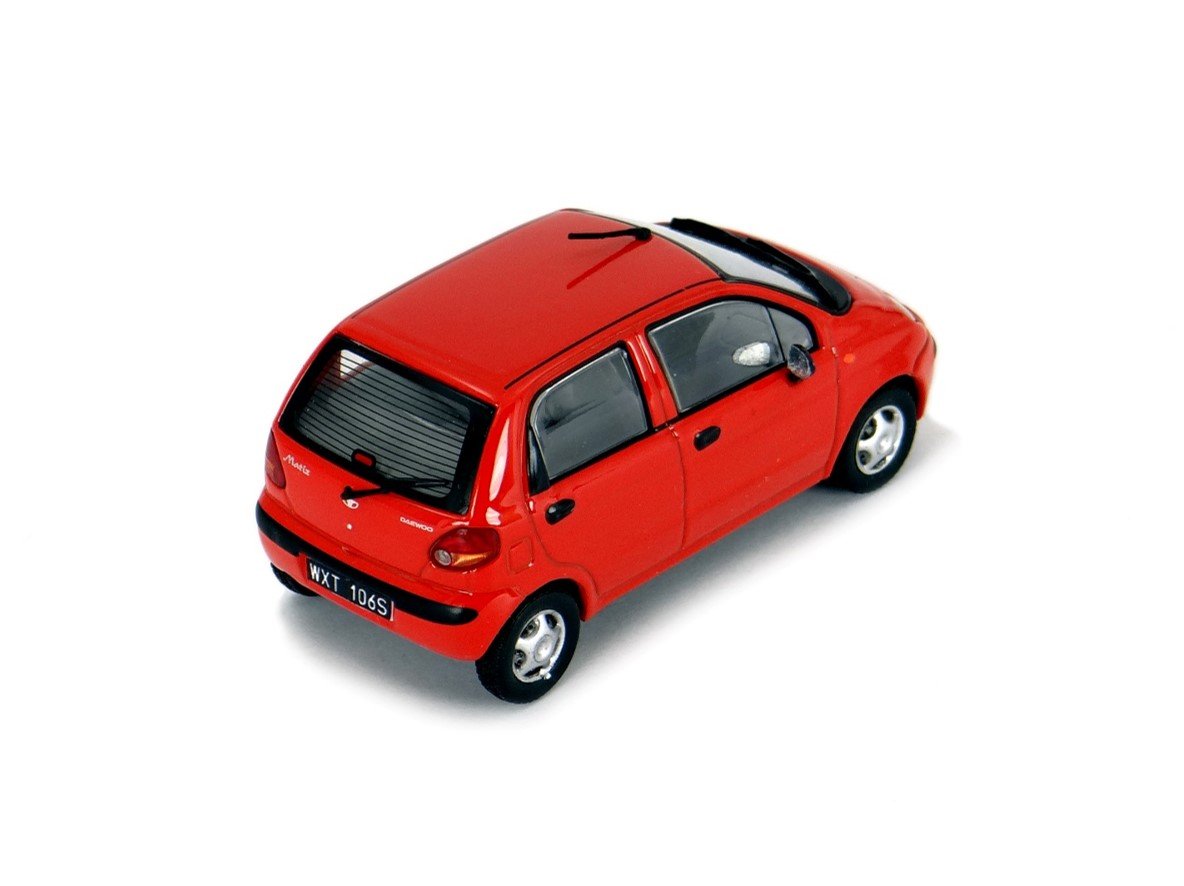
W porównaniu do przeciekowego modelu sprzed kilkunastu lat, tegoroczny Daewoo Matiz jest w bogatszej wersji, ze zderzakami w kolorze nadwozia. Niestety, merytorycznie jest to zmiana na gorsze, bo producent zapomniał dodać spoiler nad tylną szybą, standardowy we wszystkich bogatszych odmianach. Osobiście, żałuję też, że wydawnictwo nie zdecydowało się na jakiś ciekawszy kolor. Przecież w Matizie było do wyboru tyle fajnych metalicznych lakierów; złoty, zielony, pomarańczowy! Oczywiście, czerwony nie jest zły, bo był jednym z popularniejszych, a zawsze mogliśmy dostać jakiś tragiczny kolor jak biały albo żółty. Niemniej jednak, Matiz to kolejne Daewoo ze spektrum czerwonego, po Tico, Espero i Cielo z reedycji “Maşini de Legendă”.
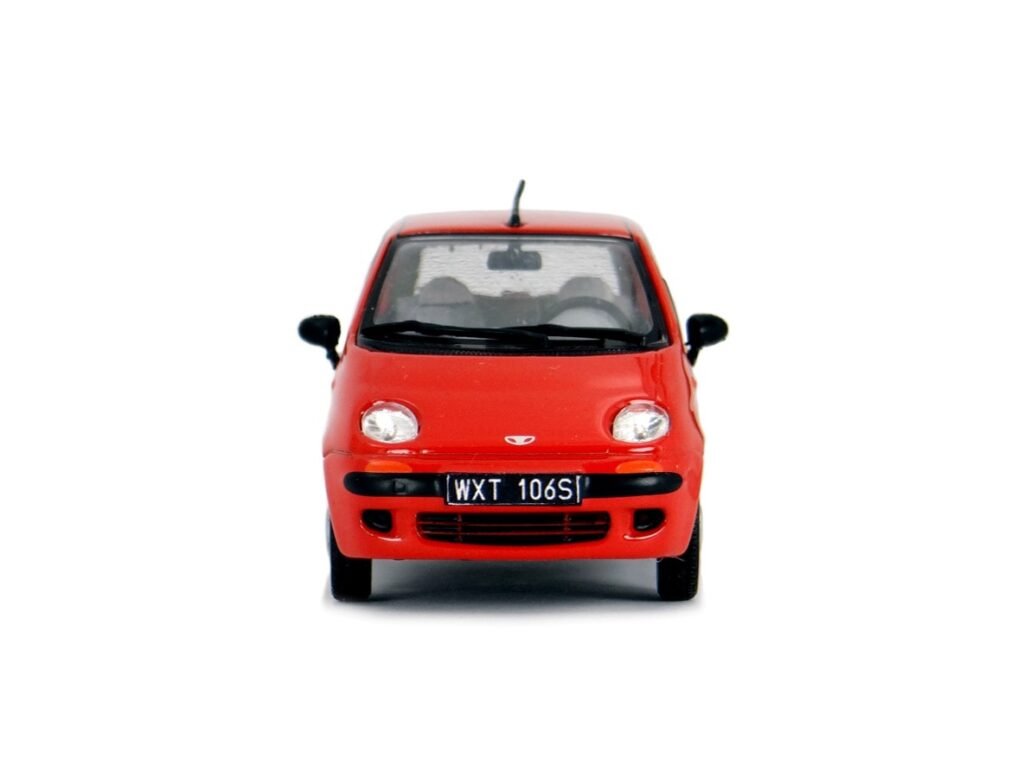
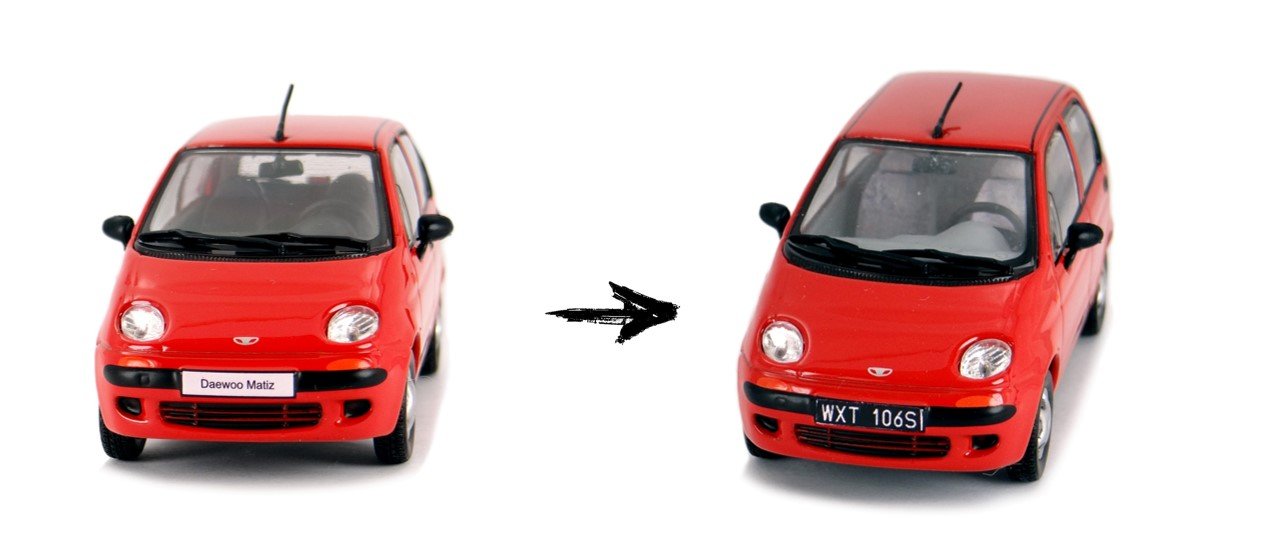
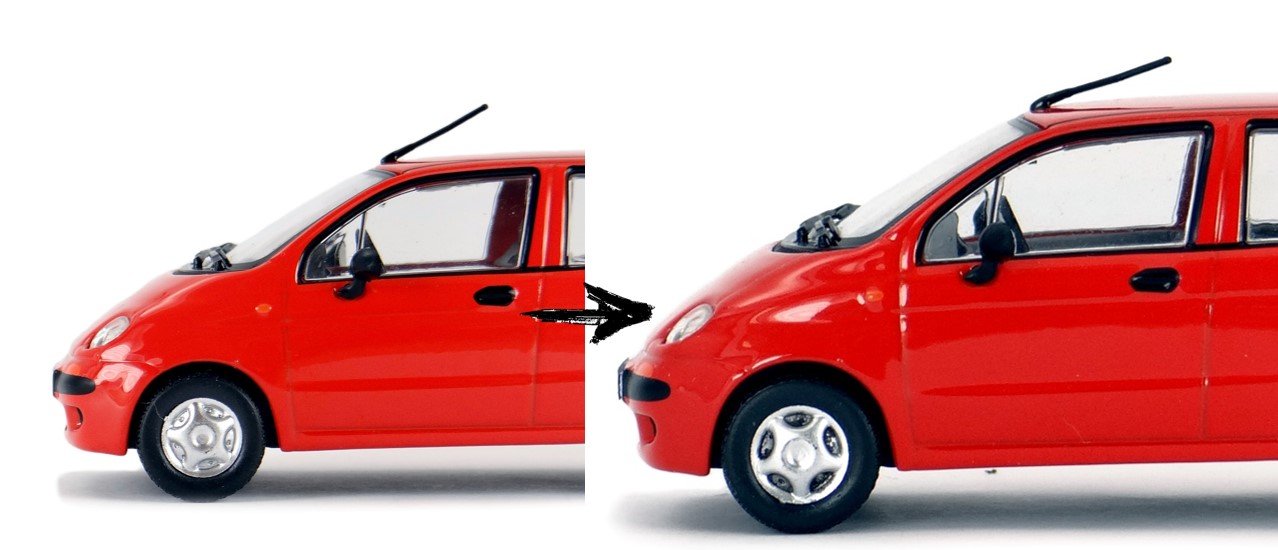
Ogólna jakość modelu jest na podobnym poziomie do innych modeli Daewoo z “Legend FSO”. Jedyną zauważalną różnicą w Matizie z “Maşini de Legendă” jest brak rejestracji (to akurat może i dobrze) oraz czarne wnętrze (to już trochę gorzej). Daewoo Matiz na pewno zostawia nam pole do poprawek, co z chęcią uczyniłem.
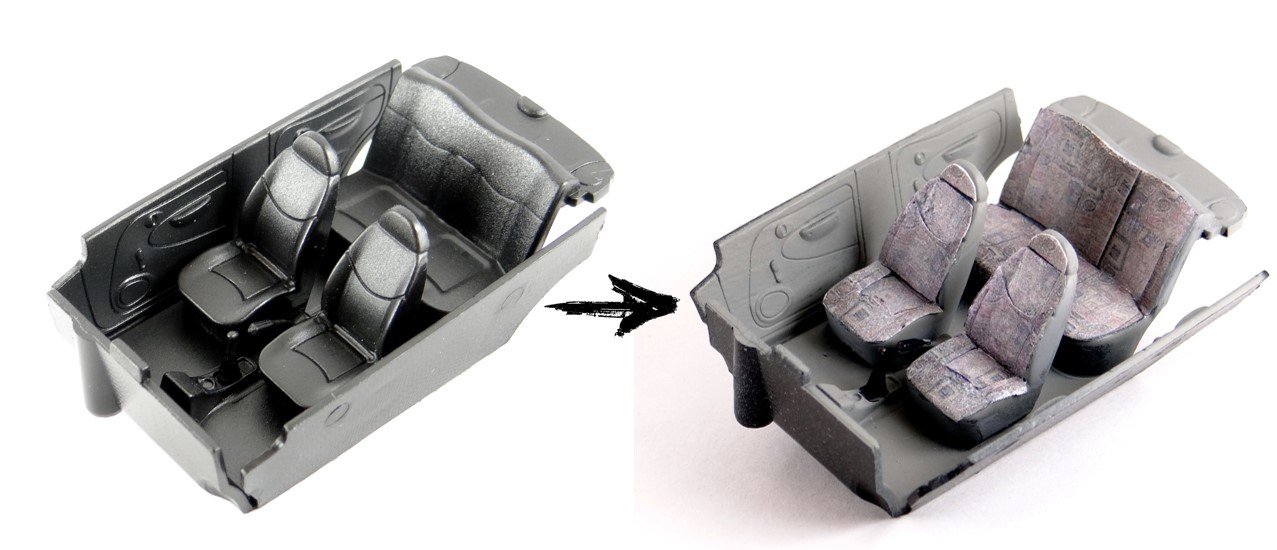
Na liście zmian są więc polskie rejestracje (czarne, autentyczne – na takich jeździł prasowy Matiz), głębia kołpaczków i barwione wnętrze. Typowo dla aut z końca lat 90., Matizy miały wzorzystą tapicerkę, więc taką też odtworzyłem w moim modelu. Wydaje mi się, że model prezentuje się dzięki nim o wiele lepiej. Matiz świetnie oddaje ducha swojej ery i im dłużej niego patrzę, tym bardziej mi się podoba, ale oczywiście oceniajcie sami!
Pamiętajcie też o zerknięciu na profile MiniAutomobili na Facebooku i Instagramie!
*** ENGLISH ***
The Matiz comes from the second wave of models with which Daewoo aimed to conquer Europe and the world in the late 1990s. The ambitious plans ended in a spectacular flop, but the brand still managed to influence Poland’s automotive landscape like no other.
Daewoo entered the European market with the Tico, Nexia and Espero, which—apart from the latter—were merely licensed versions of cars from other manufacturers. The main strength of Daewoo’s offering was its low price. While that was enough to win over buyers in some markets, it wasn’t enough to succeed across Europe as a whole. Backed by a strong economy and substantial financial support from the South Korean government, Daewoo quickly launched a new wave of models. Just a few years later came the Lanos, Nubira, Leganza, and Matiz, all of which were more modern and considerably better-looking. Daewoo had particularly high hopes for their smallest model, the Matiz. The company hoped that its attractive design, practical five-door hatchback body and competitive pricing would shake up the rapidly growing European city car market.
From Italy to Korea
The origins of the Matiz date back to 1992 and, surprisingly, have nothing to do with Daewoo. That year, at the Turin Motor Show, the renowned Italian design house Italdesign Giugiaro unveiled a concept car called the Cinquecento. A year later, at the Bologna Motor Show, Italdesign presented a further development of the project under the name Lucciola.
The car was conceived as a potential successor to the Fiat Cinquecento. The white, three-door concept featured a retractable soft-top roof, with power coming from a hybrid drivetrain. A tiny 490 cc two-cylinder diesel engine, producing just 7.5 hp and built by Lombardini, was paired with a 9.5 hp electric motor. Performance was predictably modest, but the concept was intended to showcase technological innovation rather than speed. It also featured aluminum body panels, swivel-mounted seats for easier access and an interior finished with recyclable materials—an unusual feature at the time. The Italians wrapped all of these innovations in a remarkably attractive body design.
Unfortunately, the Lucciola failed to win Fiat over—or perhaps its advanced design proved a step too far. The project was rejected, and in the interest of keeping costs down, Fiat chose to update the existing Cinquecento instead, which ultimately led to the launch of the Seicento. As for the Lucciola, the concept was shelved.
Around the same time, Daewoo was preparing to expand its model range and needed a successor to its smallest car, the Tico—a licensed version of the aging Suzuki Alto. It was then that Daewoo’s executives made a particularly shrewd move. Rather than developing an all-new model from scratch, they unexpectedly knocked on Italdesign’s door in 1995 and just purchased the Lucciola project, complete with its technical documentation. That is how Daewoo’s cheapest model ended up with a sleek Italian design, carrying the famous “made by Giugiaro” tag.
From prototypes to premiere
Of course, Daewoo had to adapt the Italian design to suit its own needs. Intensive engineering work took place both in Bupyong, South Korea, and at the Daewoo Worthing Technical Centre in England. During the development process, the original three-door body gave way to a much more practical five-door hatchback. The engineers also abandoned the concept’s technological innovations and instead adapted most of the mechanical components from the Tico.
Meanwhile, at the 1997 Seoul Motor Show, Daewoo revealed the Matiz Concept. The Koreans seemingly presented it as a decoy, because the vehicle—developed jointly with the Australian design firm Millard Design—had virtually nothing in common with the car Daewoo was actually preparing for production. In the end, the only thing carried over from the yellow-and-grey concept was its name, Matiz. Which supposedly translates loosely to “friend.”
The results of the international engineering team’s efforts – and the first true glimpse of the production model – appeared just a few months later. At the 1997 Frankfurt Motor Show, Daewoo unveiled three d’Arts concept cars. Although each featured its own unique details and trim, all three closely resembled the production Daewoo Matiz (M100), which made its debut in South Korea in March 1998 before being presented to the European public shortly afterwards at the Geneva Motor Show.
Despite its contemporary MPV-inspired styling, the Daewoo Matiz offered little in the way of technical sophistication. Its simple mechanicals, inherited largely unchanged from the Tico, left no doubt about the car’s budget-conscious design. The same applied to the engine. The M100 Matiz was offered with just one unit: a 0.8-litre three-cylinder petrol engine derived from the 1980s Suzuki Alto. Daewoo’s engineers did make a few revisions, however, boosting output to 51 hp. Even so, performance remained modest, with 0–100 km/h taking 17 seconds and a top speed of 144 km/h. On the upside, the little engine provided reasonable economy.
Taking on the world
Shortly after its launch, series production of the Daewoo Matiz began in Changwon, South Korea. However, it was quickly expanded to other countries as well, including India, Romania, and of course Poland. From the outset, Daewoo designed the Matiz as a global car, so locating production facilities across different regions of the world came as no surprise. It also helped meet demand, which was so strong at first, that customers faced waiting times of several months. In Europe and India, the Matiz even went on to become Daewoo’s best-selling model for several years!
The Matiz’s popularity made complete sense, as the car combined appealing styling with a low price and a surprisingly roomy cabin for such a small car (measuring just 349.5 cm in length). It also had a significant advantage over its rivals. As one of the very few cars in its class, the Daewoo Matiz featured a five-door body, proving particularly valuable in less affluent markets.
Although the Matiz was a global car, it was not marketed under the Daewoo brand everywhere. In Mexico, it appeared as the Pontiac Matiz/G2, in Taiwan as the Formosa Matiz, and in China as the Chevrolet and Baojun Lechi. China also became the centre of a high-profile plagiarism dispute. In 2003, local manufacturer Chery launched the QQ, a car that bore an uncanny resemblance to the Matiz. The dispute even reached the Chinese courts and was officially resolved through a settlement, although unofficially Chery is believed to have paid millions of dollars in compensation.
A sad end
Just two years after its debut, in 2000, Daewoo unveiled the facelifted Matiz (M150). The car featured mildly revised front and rear styling, as well as a new 1.0-litre four-cylinder engine producing 67 hp.
Unfortunately, the facelift coincided with Daewoo’s major financial troubles. As a result, the updated Matiz was only sold in selected markets. In others—including Poland and Romania—production and sales of the pre-facelift version continued unchanged. Soon after, Daewoo collapsed into bankruptcy. The brand was taken over by former partner General Motors and the Matiz was rebadged as the Chevrolet Matiz, before ultimately becoming the Chevrolet Spark.
The Matiz in Poland
Sales of the Daewoo Matiz in Poland began on 15 December 1998. Although it may be difficult to imagine today, its launch generated considerable excitement across the country. Not only was the Matiz a brand-new and affordable car, it was also built in Poland. At first, assembly relied on SKD kits shipped from South Korea, but full production at FSO’s Warsaw-Żerań plant got underway less than a year later, on 18 October 1999. The Polish lineup consisted of a single engine option—the 0.8-litre unit—and four trim levels: Friend, Life, Joy and Top. While the entry-level Friend was decidedly spartan, the range-topping Top could be equipped with two airbags, ABS and air conditioning.
Against the backdrop of the ubiquitous Fiat 126p and Fiat Cinquecento of the time, the Daewoo Matiz stood out not only for its modern design and better equipment (which was hardly difficult), but also for its five-door body. At a time when even the smallest cars often served as family transport, that was a huge advantage. Unsurprisingly then, the affordable Matiz quickly began to fill Polish roads. The record year was 1999, when FSO produced 79,993 units, of which 63,090 were sold on the domestic market. The Polish motoring press shared the enthusiasm, awarding the Matiz numerous prizes and accolades.
Unfortunately, the honeymoon period didn’t last long. Over time, interest in the small Korean hatchback began to fade. The real collapse came in the new millennium, when news of Daewoo’s bankruptcy spread. Production and sales fell to just a few thousand units per year. Customers became increasingly concerned about warranty repairs and the availability of spare parts. Paradoxically, Daewoo’s takeover by General Motors did little to improve the situation.
From 2004 onwards, the Warsaw-Żerań plant produced Matiz models under its own FSO brand. These cars, however, were intended exclusively for the Polish market. Due to extremely low demand—just a few hundred units per year—FSO eventually ended production in February 2007. Over the Matiz’s nearly nine-year presence on the market, Polish customers bought a total of 149,953 units of the small Korean hatchback. The Daewoo Matiz became a lasting part of the turn-of-the-century landscape and marked the beginning of the end for Poland’s domestic automotive industry.
About the miniature – Daewoo Matiz
We waited forever for it, but it’s here at last! The Daewoo Matiz model finally made an appearance. We first heard about it around 2012, when a leaked photo of a gold Matiz appeared on one of the model car forums. The model was supposed to be released in the Romanian “Maşini de Legendă” series, but publishing issues caused the series to end prematurely, so the Matiz never came out. It also didn’t appear in other DeAgostini series running at the time. Hope returned in 2022 with the launch of the “Legendy FSO” series in Poland. Since the Matiz was built at FSO and the model tooling had probably been ready for about a decade, the model surely had to be released! But it wasn’t. “Legendy FSO” ended, the Matiz never appeared, and collectors were left in shock and mourning.
Then, out of nowhere, in the Romanian re-release of the “Maşini de legendă” series, a Daewoo Matiz suddenly appeared in the previews! The planned release date was 19th May 2026. However, problems arose once again. For some reason, two weeks before release, the publisher changed the date to 28th July. It’s hard to say what happened. One thing is certain however; the Matiz models were definitely ready much earlier. They were already appearing on Romanian websites even before the original release date!
The Matiz models from Romania quickly started appearing in large numbers in Poland, so the entire June was marked by Matiz mania among local collectors. I ordered mine from Romania fairly early, but it didn’t arrive until nearly three weeks later, right at the peak of the hype.
Compared to the leaked model from over ten years ago, this year’s Daewoo Matiz is a higher-spec version with body-coloured bumpers. Unfortunately, it’s actually a step backwards in terms of accuracy, since the manufacturer forgot to include the rear window spoiler that was standard on all higher trims. Personally, I also wish the publisher had gone for a more interesting colour. After all, the Matiz had some great metallic options—gold, green, orange! Red is fine, of course, since it was quite a popular choice. After all, we could’ve ended up with something dreadful like white or yellow. Still, this is yet another Daewoo on the red spectrum, following the Tico, Espero and Cleio from the “Maşini de Legendă” re-issue.
Overall, the model’s quality is comparable to other Daewoo models in the “Legendy FSO” series. The only noticeable differences in the “Maşini de Legendă” Matiz are the absence of license plates (which may be actually be a good thing) and a black interior (not so good). The Daewoo Matiz certainly leaves room for improvement, which I gladly carried out myself.
So, the list of changes includes Polish license plates (black, authentic— these were used on a Matiz press car), wheel covers with black markings and a coloured interior. Typically for late 1990s cars, Matiz had patterned upholstery, so I recreated that in my model as well. I think the model looks much better thanks to these changes. The Matiz really captures its era and the longer I look at it, the more I like it — but of course, feel free to judge for yourselves!
Remember to also check out MiniAutomobile on Facebook and Instagram!





Bardzo, bardzo fajny model ! Szkoda wielka, że nie wyszedł w legendach FSO. Chętnie bym go kupił. A swoją drogą do 1996 roku jeździłem prywatnym samochodem z rejestracją WXT.
Z tego co wyczytałem, nie wyszedł w Legendach FSO ze względu na problemy licencyjne. Zgadzam się, że szkoda że nie wyszedł w naszej serii. Dobrze jednak, że w ogóle się ukazał!