

To jedno z najbardziej charakterystycznych europejskich aut lat 90. Dzięki mieszance uroczego wyglądu i zaskakującej praktyczności, pierwsze Renault Twingo zyskało rzesze miłośników i status współczesnego klasyka.
Przedstawiając w 1992 roku Twingo, Renault dobitnie potwierdziło swojego francuskiego ducha rewolucjonizmu. Nowy model całkowicie zmienił zasady gry w klasie miejskich samochodów. Europa nigdy wcześniej nie widziała czegoś podobnego: jednobryłowego nadwozia inspirowanego segmentem MPV w rozmiarze mini. Samochód o długości raptem 343cm, skrywał wystarczającą ilość miejsca dla czterech pasażerów oraz triki w postaci suwanej tylnej kanapy i składanych na płasko siedzeń. Dodajmy do tego perfekcyjną widoczność, świetną zwrotność i mnóstwo charakteru a otrzymamy prawdziwy majstersztyk miejskiego auta. Renault Twingo udowodniło, że mały może dużo i zasłużenie stało się klasykiem.
Początki
Projekty nowego, taniego samochodu który miał w gamie Renault zastąpić starzejące się R4 zaczęły pojawiać się już w latach 70. Konkretnie w 1973 roku uruchomiono program VBG (Voiture Bas de Gamme; w wolnym tłumaczeniu – podstawowy samochód w gamie), którego kulminacyjnym punktem był koncept W-60 z 1986 roku. Ówczesny szef Renault, Georges Besse uznał jednak, że taki pojazd nie będzie rentowny i nie rokuje na przyszłość, więc projekt trafił pod klucz. Tylko tragiczny rozwój wydarzeń sprawił, że prace nad nim wznowiono.
W listopadzie 1986 roku, aktywiści ze skrajnie lewicowej organizacji terrorystycznej Action Directe, zastrzelili Besse przed jego domem. W wyniku tego zdarzenia, funkcję szefa Renault jeszcze w grudniu przejął Raymond Lévy. Lévy miał zupełnie inne podejście i odmienną wizję marki od swojego poprzednika, co poskutkowało zmianą na stanowisku głównego stylisty Renault. Miejsce Gastona Jucheta zajął w styczniu 1988 roku Patrick le Quement. Jak wspomina sam Le Quement, dostał on od swojego poprzednika klucze do kilku tajnych garaży na przedmieściach Paryża, w których potajemnie przechowywano kilka modeli. Jak się niedługo okazało, były wśród nich dwa projekty W60. Jeden autorstwa Marcello Gandiniego, a drugi Jeana-Pierre’a Ploué.
Oba auta mocno się od siebie róźniły. Srebrny, autorstwa Gandiniego, według le Quementa przypominał „mrówkojada uderzonego w pysk”. Drugie auto autorstwa Ploué posiadało kształt bardzo zbliżony do Twinga które znamy, ale o „ponurym” wyglądzie jako to określił le Quement. Pomimo tego, widział w projekcie ogromny potencjał. Le Quementowi udało się przekonać dyrektora Lévy’ego aby oddelegować mały zespół do dalszych prac nad samochodem. Oficjalne wznowienie prac oznaczało też zmianę kodu projektu z W60 na X06, a nadzór nad pracami objął Yves Dubreil.
Wyzwania i trudności
Wyzwania piętrzyły się już od samego początku. Największym z nich było zapewnienie rentowności auta, bowiem dyrekcja Renault była skora do finansowania projektu tylko jeśli będzie przynosił pieniądze. Trudność polegała na tym, że miało być to najtańsze auto w gamie, a tworzono je od podstaw, z minimalnym wykorzystaniem już istniejących części. A to oczywiście znacznie podnosiło koszty. Sytuacji nie poprawiał fakt, że oprócz ograniczonych środków, zespół czuł odgórną presję czasową na dokończenie projektu.
Co ciekawe, zaprojektowanie unikatowego przodu Twingo również okazało się nie lada wyzwaniem. Był to element który przysporzył zaskakująco dużo problemów. Jak wspomina sam Patrick le Quement, pomysłów było wiele, ale żaden nie chwytał. Niejako w akcie desperacji, le Quement naszkicował na kartce charakterystyczny przód auta z wyłupiastymi reflektorami i „uśmiechniętym” wlotem powietrza. Po dopracowaniu na glinianych modelach, auto zyskało wesołe oblicze, które w końcu satysfakcjonowało projektantów.
Pomimo wielkiego zaangażowania całego zespołu, wiara w powodzenie i zatwierdzenie projektu przez dyrekcję okazywała się znikoma.
Lecz gdy zarząd Renault na czele z Raymondem Lévym ujrzał model sympatycznego autka – pojawiły się uśmiechy. Le Quement przekonał ich do swojej wizji, że ten malec wygląda jak zwierzątko które „chcemy przygarnąć w zimną noc i położyć przed kominkiem”. Projekt dostał zielone światło.
Samochód szczęścia
Grupa projektowa w najlepsze kontynuowała prace nad najmniejszym Renault. Choć kluczowym założeniem przy tworzeniu modelu była niska cena, bynajmniej nie oznaczało to braku charakteru. Auto budziło w zespole projektowym tak pozytywne emocje, że nadano mu wewnętrzną nazwę „voiture du bonheur” (z francuskiego „samochód szczęścia”). A że szczęście jest kolorowe, to projektanci postawili na wesołe, jaskrawe kolory zarówno na zewnątrz jak i w środku. Patrick le Quement świadomie zrezygnował z nudnych barw jak biel i czerń. Koralowy, niebieski, turkusowy i żółty stanowiły pierwotną gamę kolorów nadwozia, a w środku towarzyszyła im kolorowa tapicerka we wzory oraz turkusowe przełączniki.
Do wesołego charakteru auta starano się też dopasować odpowiednią nazwę. Początkowo, Renault rozważało nazwy jak Maya, Tonga czy Ypso. Ostatecznie wygrało Twingo, będące (podobno) połączeniem słów tango, swing i twist.
Gdy wydawało się, że wszystko zmierza w najlepszym kierunku, nagle niespodziewaną przeszkodą okazały się badania konsumenckie. Okazało się, że co czwarta osoba była zachwycona samochodem. Jednak aż połowie pytanych auto nie podobało się w ogóle! Dla zarządu Renault takie wyniki były miażdżące, bo nigdy wcześniej żaden model marki nie miał takiego odsetka negatywnych opinii. Winę upatrywano w zbyt zabawkowym przodzie. Cały zarząd razem z zespołem gotowy był go całkowicie przeprojektować.
Przyszłość Twingo wisiała na włosku, ale po raz kolejny do akcji wkroczył le Quement. On jako jedyny w pełni wierzył w potencjał auta i nie chciał słyszeć o żadnych zmianach. Le Quement widział w tych 25% zachwyconych opinii wielką szansę, więc zaciekle przekonywał do zatwierdzenia projektu. Udało mu się. Szef Renault, Raymond Lévy, zgodził się z Le Quementem i po raz kolejny dał Twingo zielone światło.
Francuska żabka robi furorę
Naturalnie, Renault oficjalnie pokazało Twingo podczas salonu samochodowego w Paryżu, w 1992 roku. Nowe auto przyciągało do stoiska Renault niewyobrażalne tłumy. Podobno aż jedna czwarta wszystkich zwiedzających przybyła specjalnie po to, aby zobaczyć Twingo.
To był kolorow ptak na tle monotonnej gamy Renault oraz nudnej konkurencji. Nikt czegoś podobnego nie oferował, więc Twngo natychmiast przyciągało uwagę. Zupełną nowością w klasie było jednobryłowe nadwozie, dotychczas wykorzystywane tylko w autach MPV, takich jak Renault Espace. Wzorem takich pojazdów, wnętrze Renault Twingo zaskakiwało przestronnością i możliwością aranżacji. Choć Twingo było o 27cm krótsze od pierwszego Clio, oferowało podobną ilość miejsca w środku dla czterech osób. Znakiem rozpoznawczym wnętrza Renault Twingo stały się też suwana tylna kanapa i możliwość składania wszystkich siedzeń na płasko, co tworzyło wielki materac. Nie sposób zapomnieć też o awangardowym wtedy elektronicznym prędkościomierzu umieszczonym na środku deski rozdzielczej (mało czytelny, ale mniejsza o to).
Dzięki sprytnym rozwiązaniom i wesołemu obliczu, auto wzbudzało ogromne zainteresowanie zarówno wśród konsumentów jak i dziennikarzy. Wszyscy niecierpliwie czekali kiedy będzie można je kupić.
Twingo wyjeżdża na drogi
Sprzedaż Renault Twingo ruszyła w kwietniu 1993 roku. Zgodnie z planem, Twingo zastąpiło Renault 4 jako najtańszy model marki. Firma nie dawała klientom prawie żadnego wyboru. Początkowo dostępna była tylko jedna wersja za 54,000 franków, ze spartańskim wyposażeniem i
starym, benzynowym silnkiem 1.2 OHV (54 KM) z rodziny Cléon-Fonte, pamiętającym jeszcze lata 60. Jedyne co klienci mogli wybierać, to jeden z czterech kolorów nadwozia oraz opcjonalny miękki, otwierany dach.
Ze względu na cięcie kosztów, Renault Twingo miało tylko jedną przednią wycieraczkę z jednym trybem pracy, a antena radia powędrowała na lusterko kierowcy, by zaoszczędzić na długości kabli. By jeszcze bardziej obniżyć koszty, Renault zaniechało też opracowania wersji dla ruchu lewostronnego. Przez cały okres produkcji, Twingo było dostępne tylko z kierownicą po lewej stronie.
Te ograniczenia nie przeszkodziły jednak Renault Twingo w szybkim zdobyciu popularności. Wręcz przeciwnie, poniękad dodawały mu niebanalnego uroku. Klienci doceniali jego poręczność w mieście, sprytne wnętrze i uroczy wygląd. Twingo zaczęło ubarwiać ulice europejskich miast i zwracać uwagę przechodniów. Zainteresowanie modelem zwiększały też nietuzinkowe rysunkowe reklamy, podkreślające wesoły charakter Twingo.
Aby utrzymać zainteresowanie, Renault dość szybko zaczęło poszerzać ofertę Twingo. Po kilku miesiącach wprowadzono nowe kolory nadwozia, dodatkowe wyposażenie oraz nowe wzory tapicerek. W 1996 roku Renault zastąpiło stary motor nowszym silnikiem D7F 1.2 8V (58 KM), z Clio oraz wprowadziło do oferty Twingo’Matic z 3-biegowym automatem. Renault regularnie przedstawiało też rozmaite wersje specjalne, takie jak Kenzo, Air czy United Colours of Benetton. Dzięki barwnej ofercie, fabryka we francuskim Flins wyprodukowała do 1997 roku już milion egzemplarzy Twingo!
Twingo czas nie tyka
Renault Twingo okazało się tak dobrze zaprojektowane, że większe zmiany nie były nigdy potrzebne. Samochód przeszedł wprawdzie trzy liftingi, w 1998, 2000 i 2004 roku, ale ogólny wygląd i koncepcja Twingo nie zmieniły się przez całe jego rynkowe życie. W 2007 roku, Renault wycofało pierwszą generację Twingo z Europy, ale produkcja w Kolumbii na rynki południowoamerykańskie trwała jeszcze do 2012 roku. Przez prawie 30 lat produkcji wyprodukowano około 2,5 miliona sztuk!
Wcale nieprzesadnie można ustawiać pierwszą generację Renault Twingo na jednej półce z ikonami pokroju Citroëna 2CV, Fiata 500 czy Renault 4. To chyba ostatnie tanie i popularne auto, które zyskało powszechne uwielbienie i status klasyka. Twingo okazało się prawdziwie ponadczasowym projektem, który nawet dzisiaj idealnie nadaje się do użytkowania. Kolejne generacje niestety straciły cały urok i charakter. Na szczęście, najnowsze elektryczne wcielnie Twingo daje nadzieję, że magia pierwowzoru powróci.
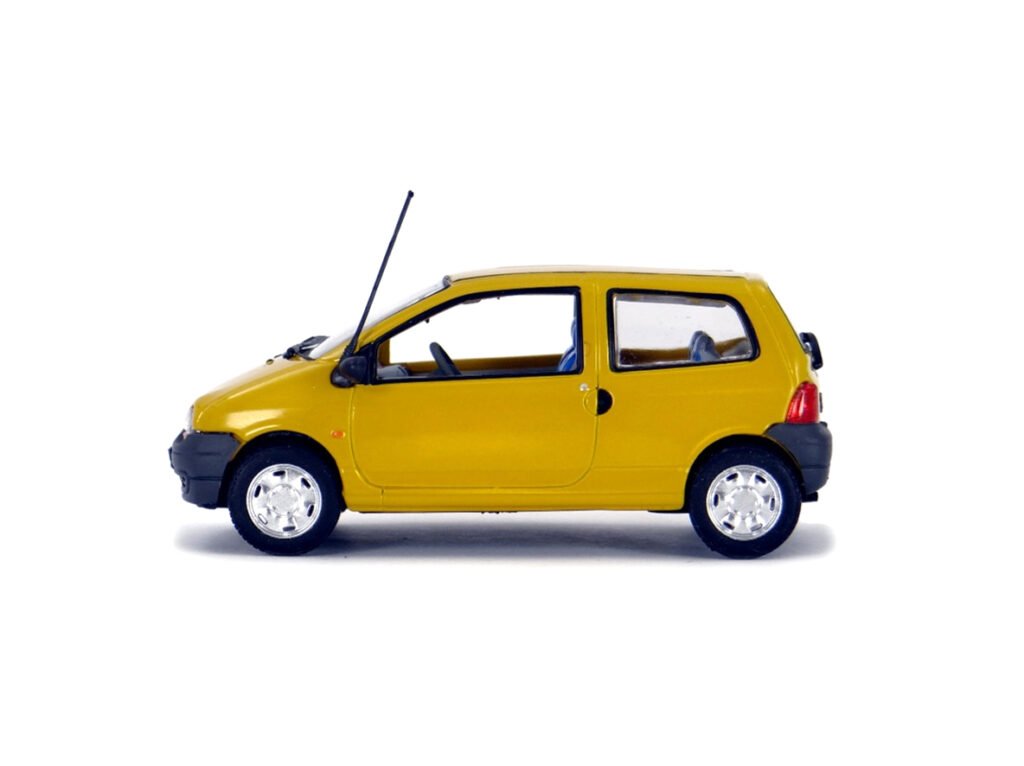
O miniaturze – Renault Twingo I
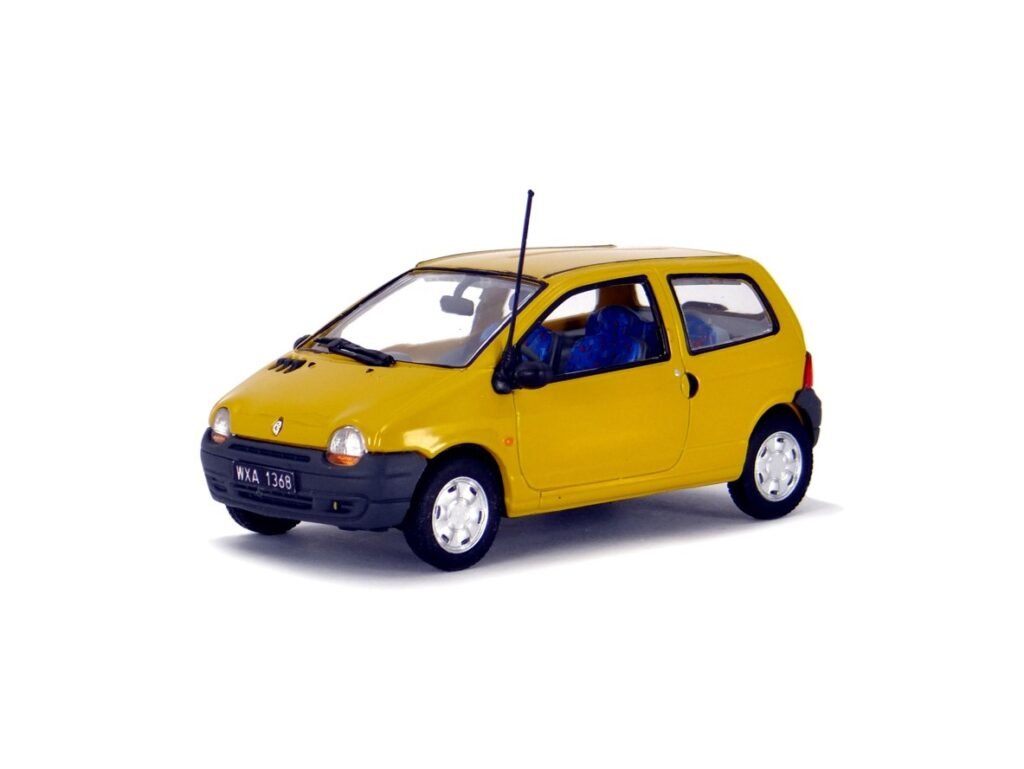
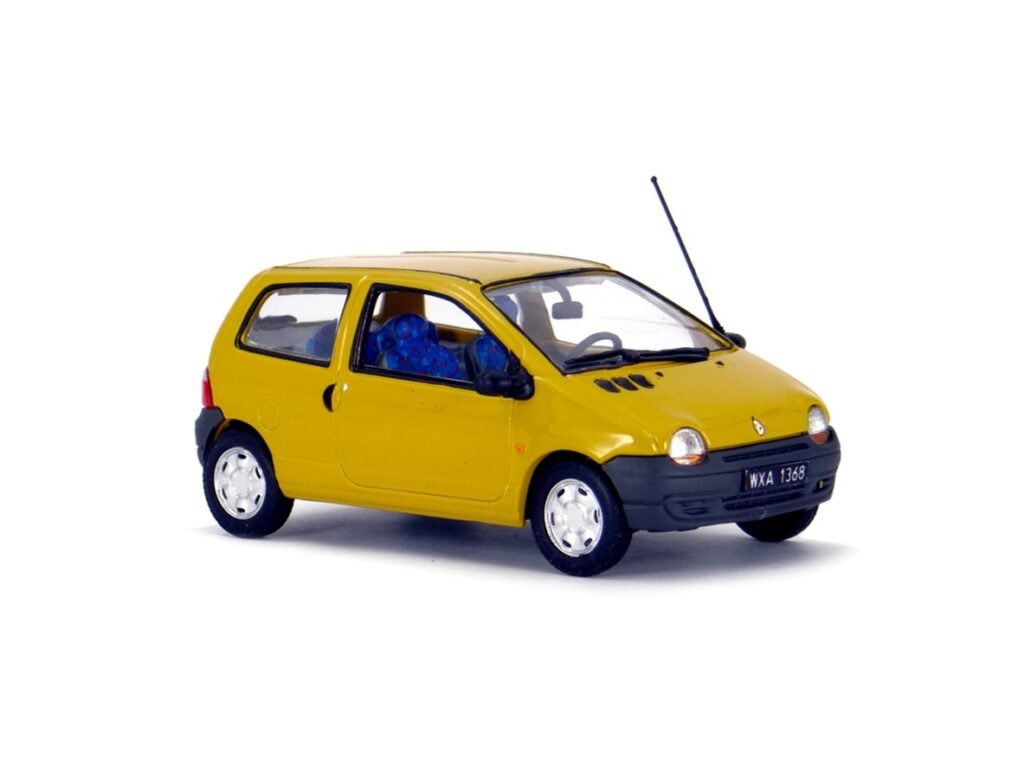
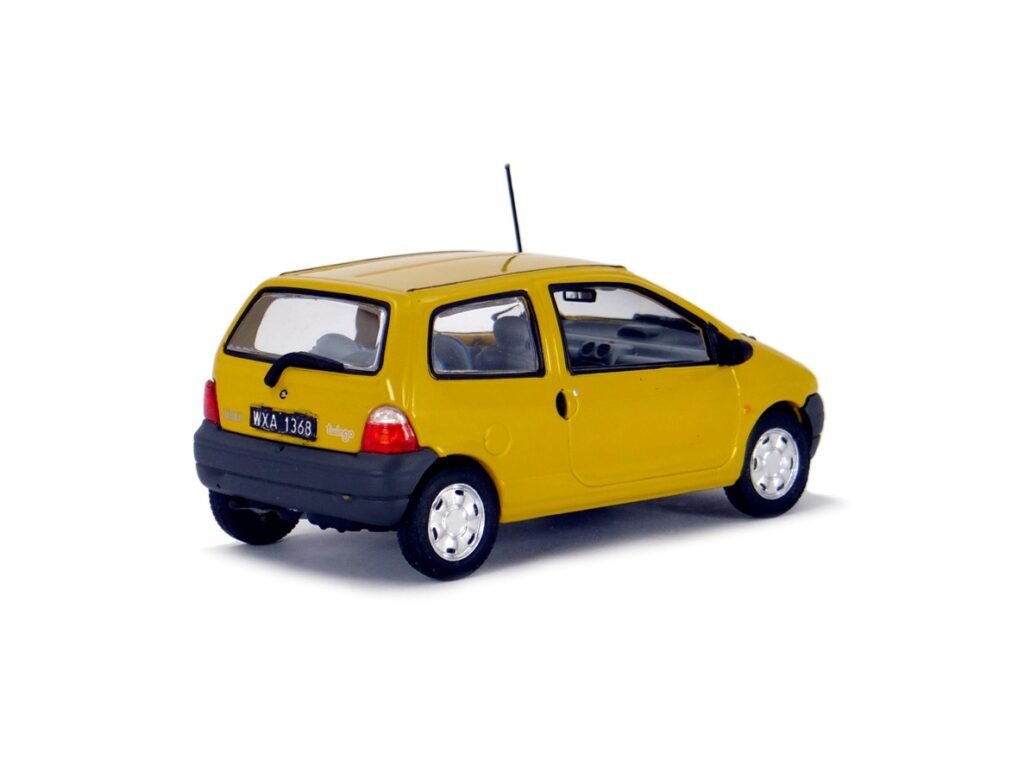
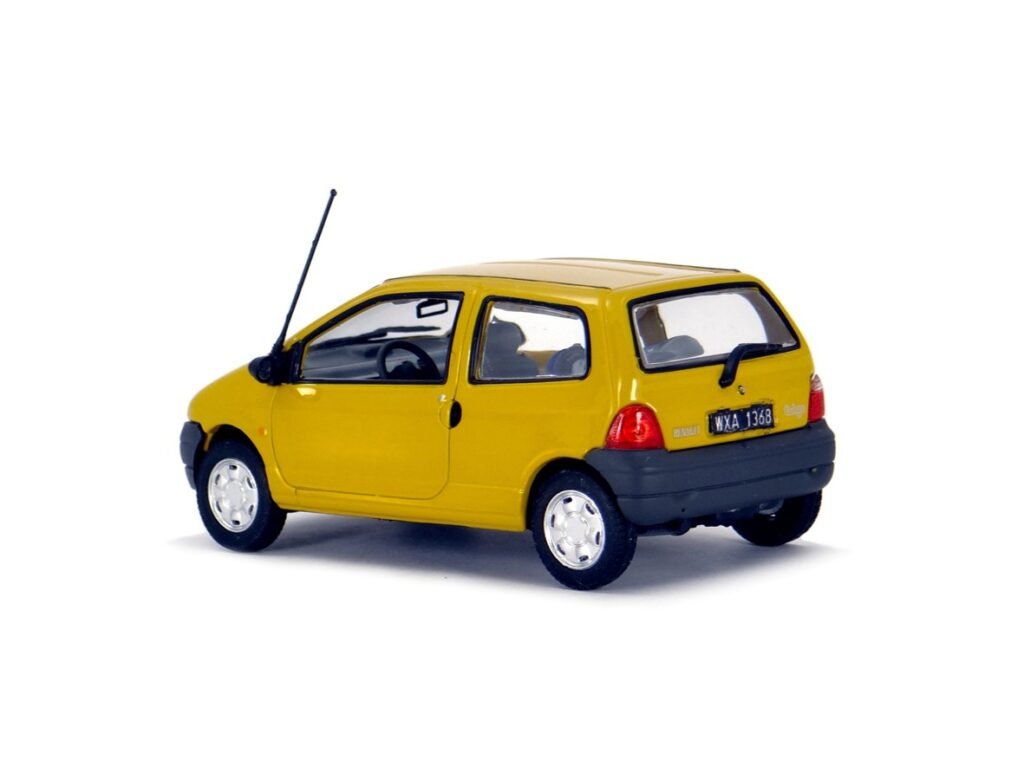
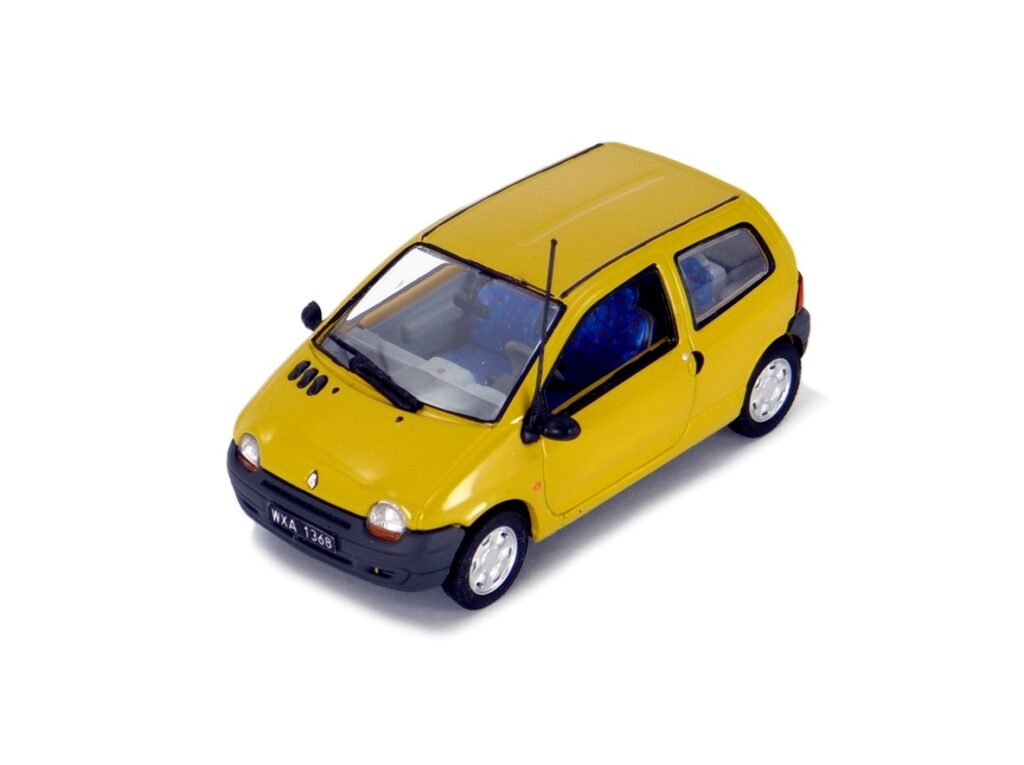
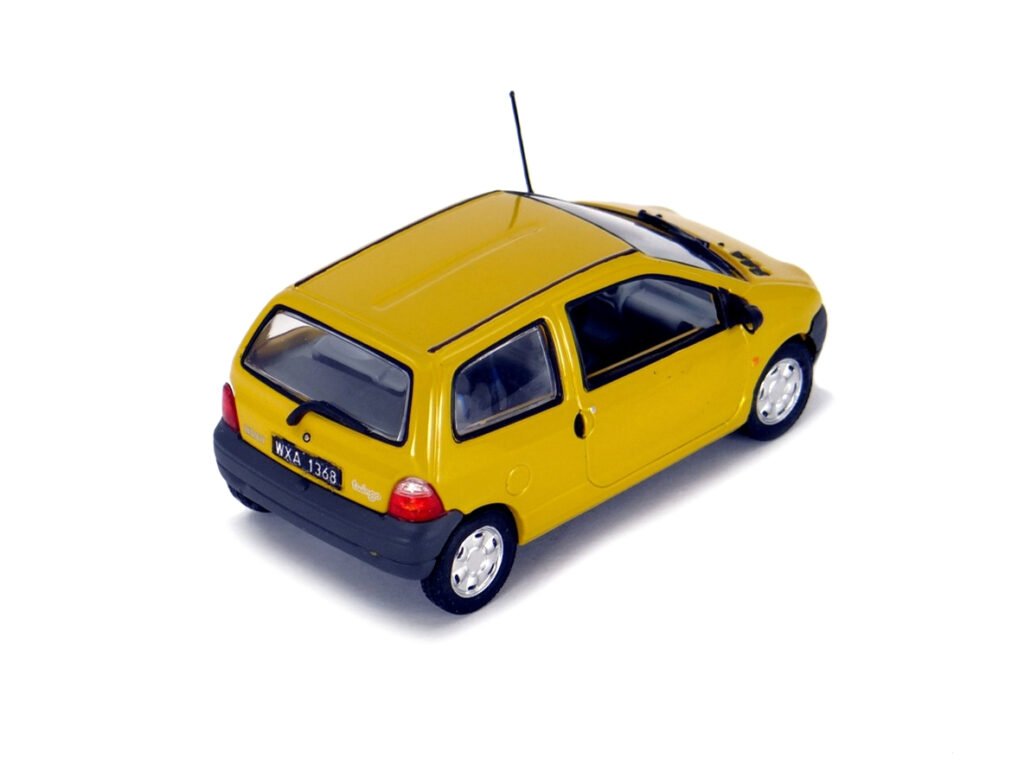
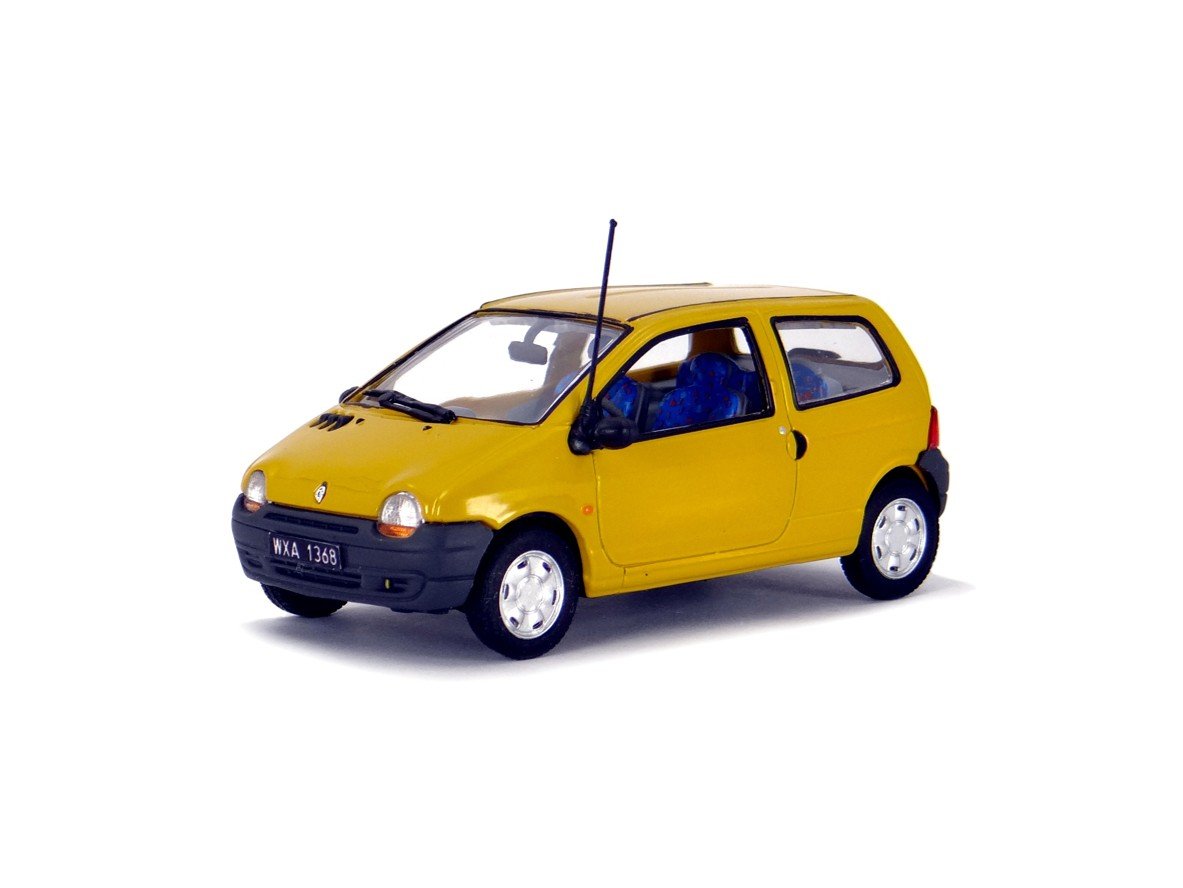
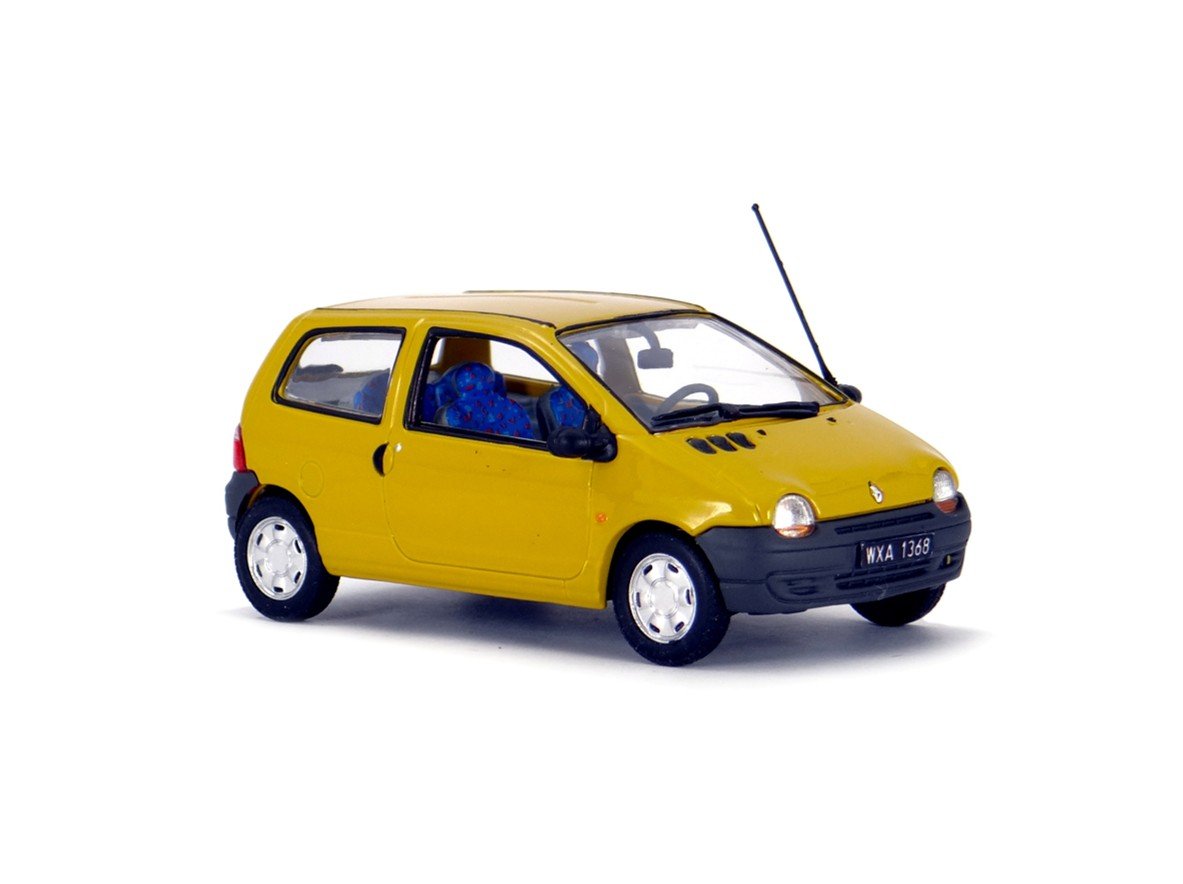
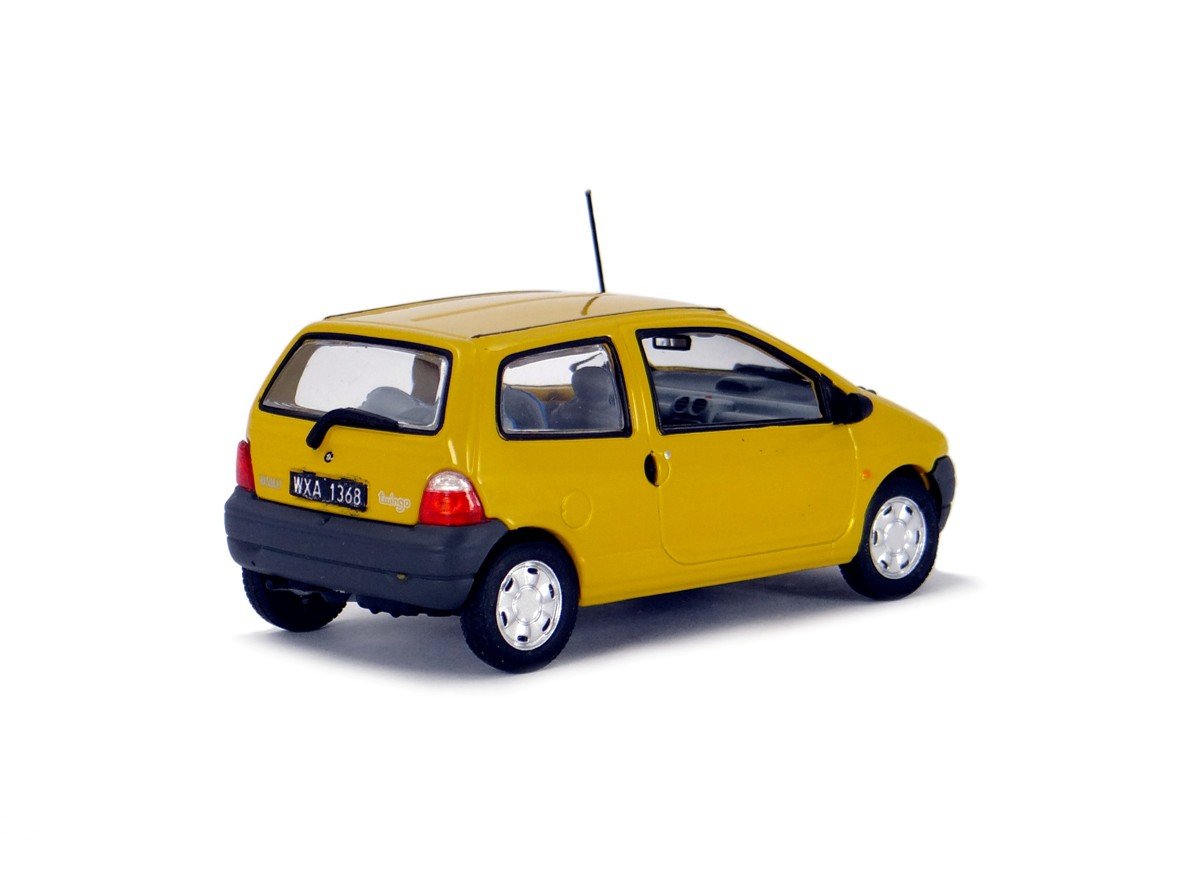
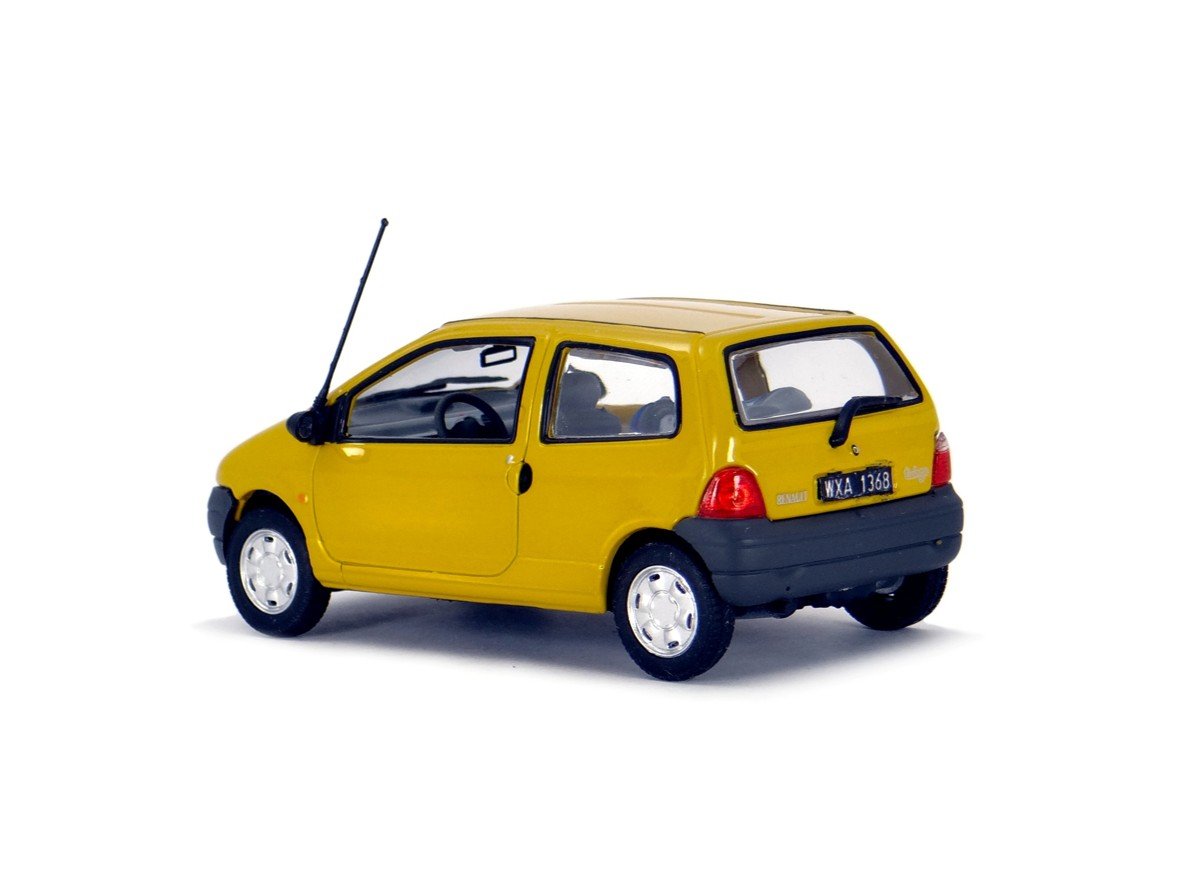
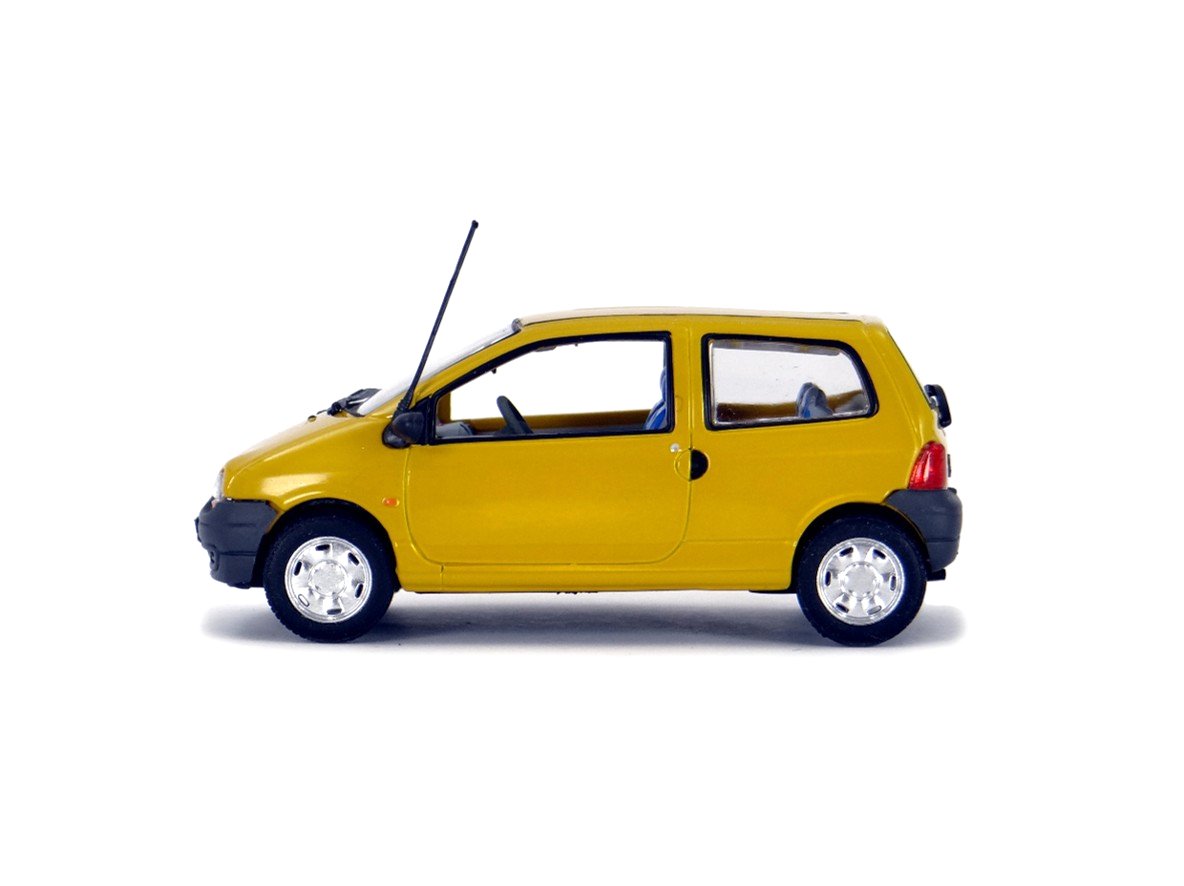
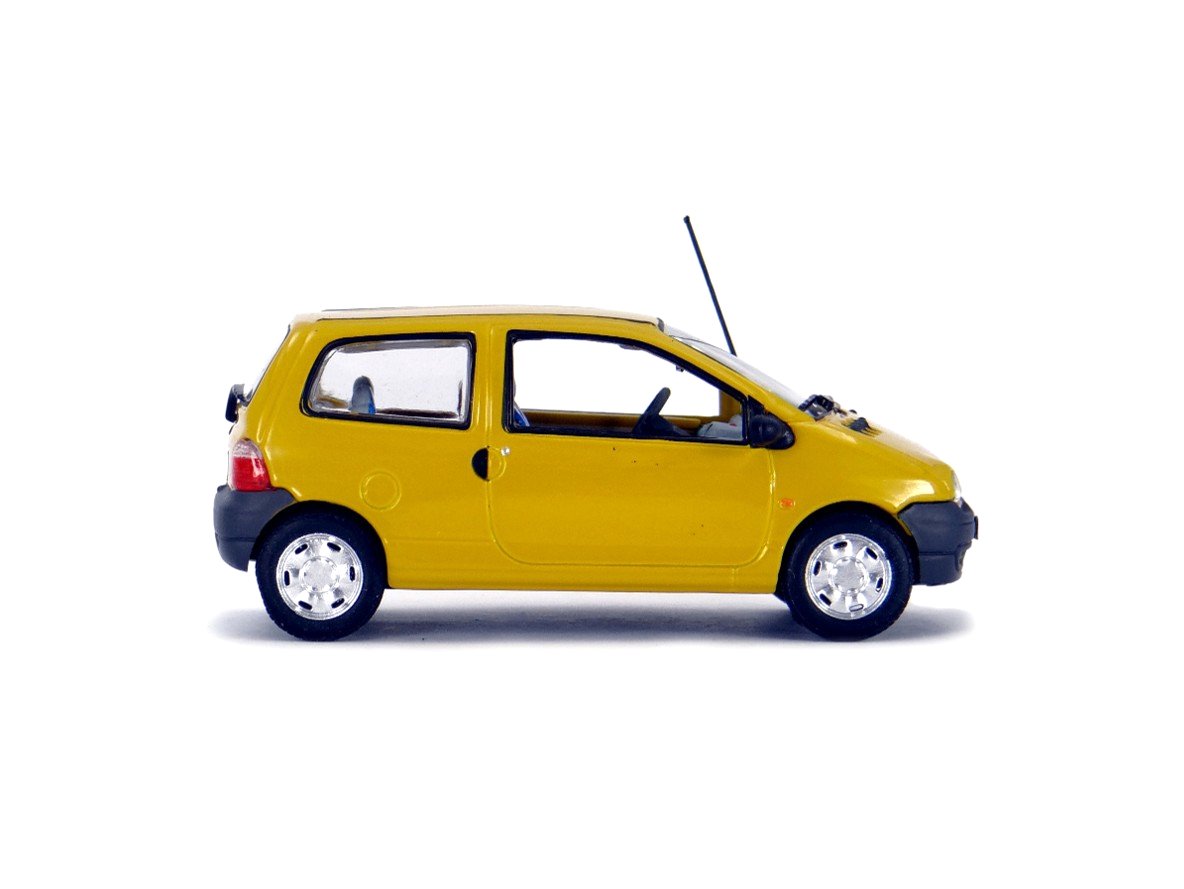
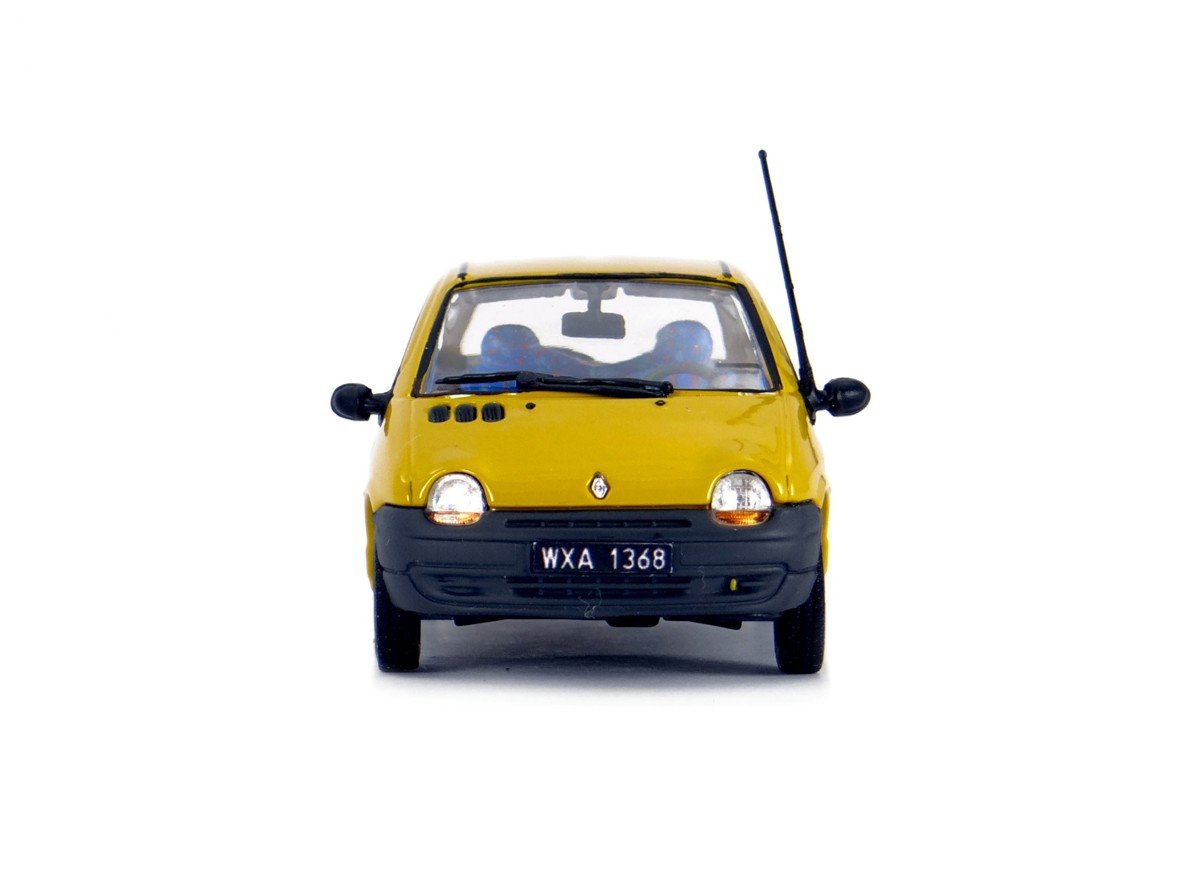
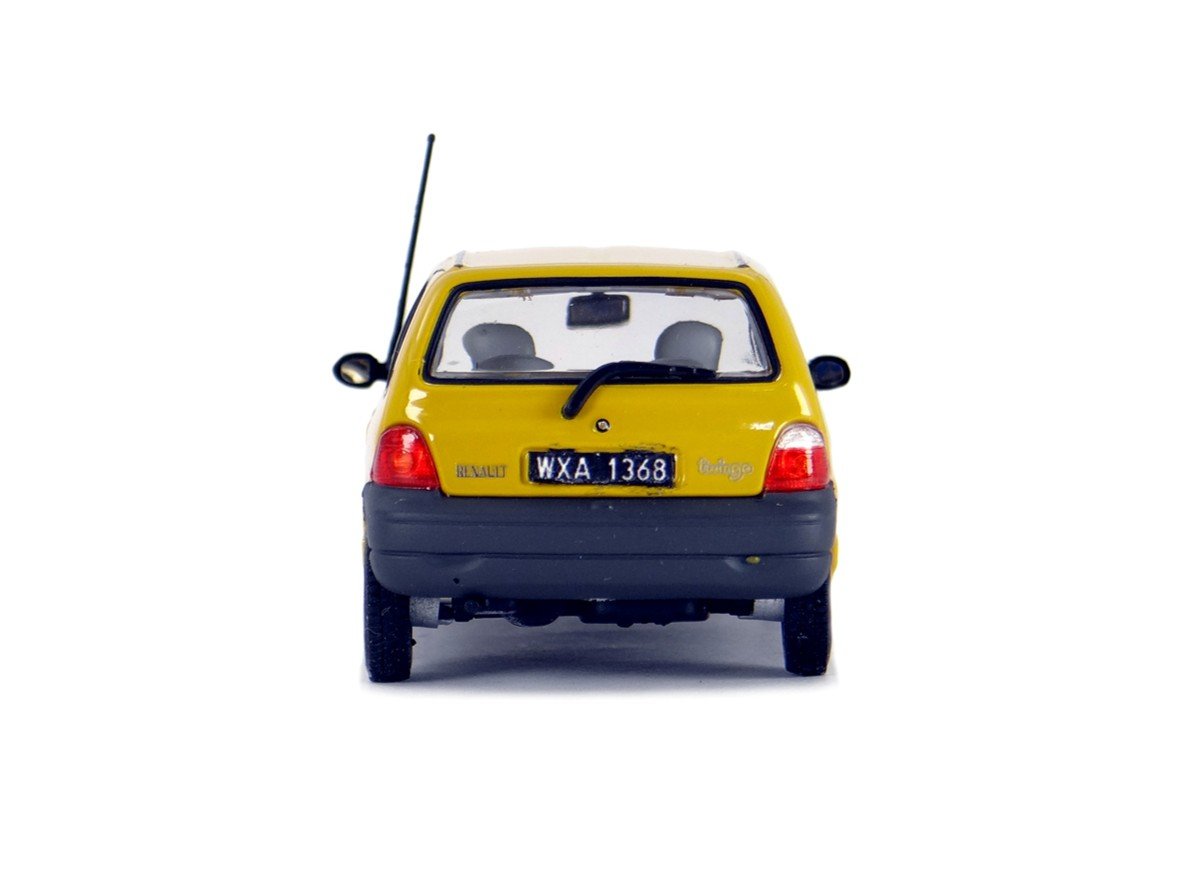
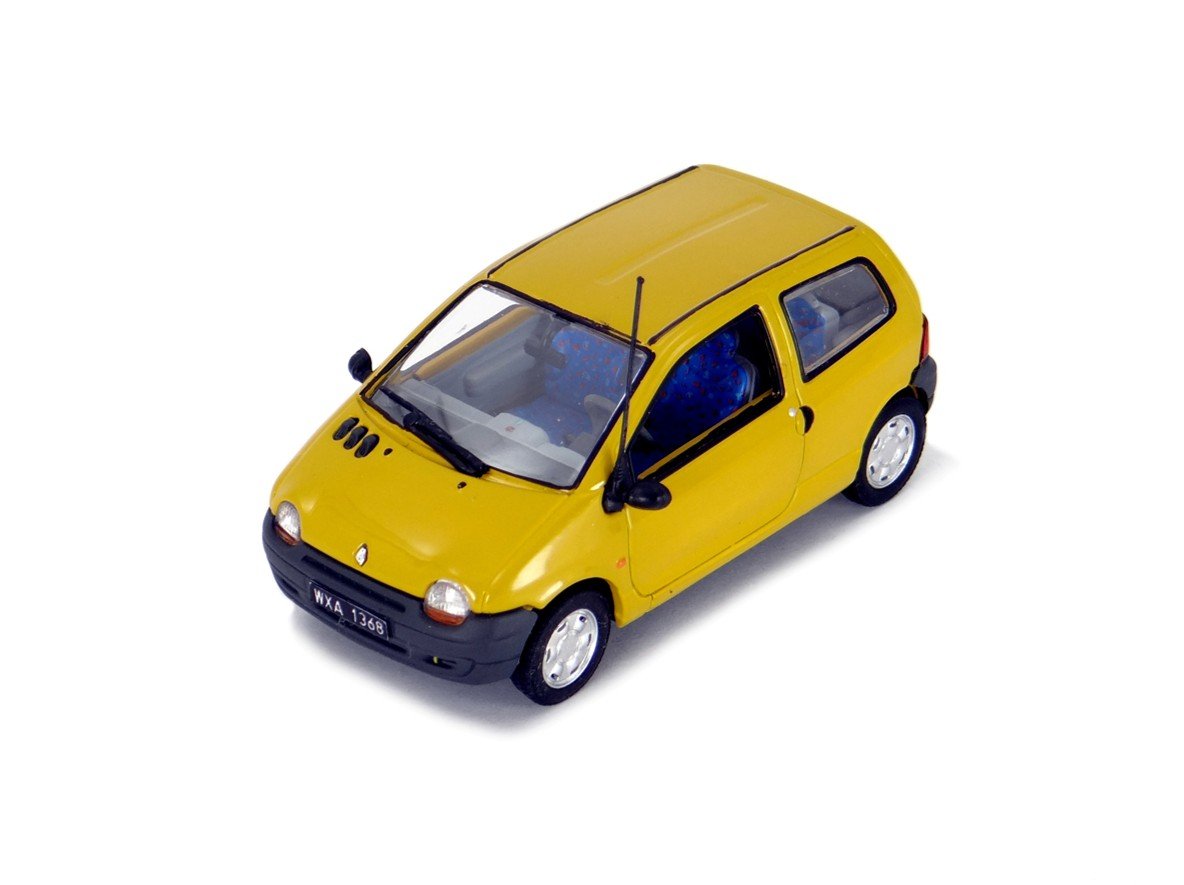
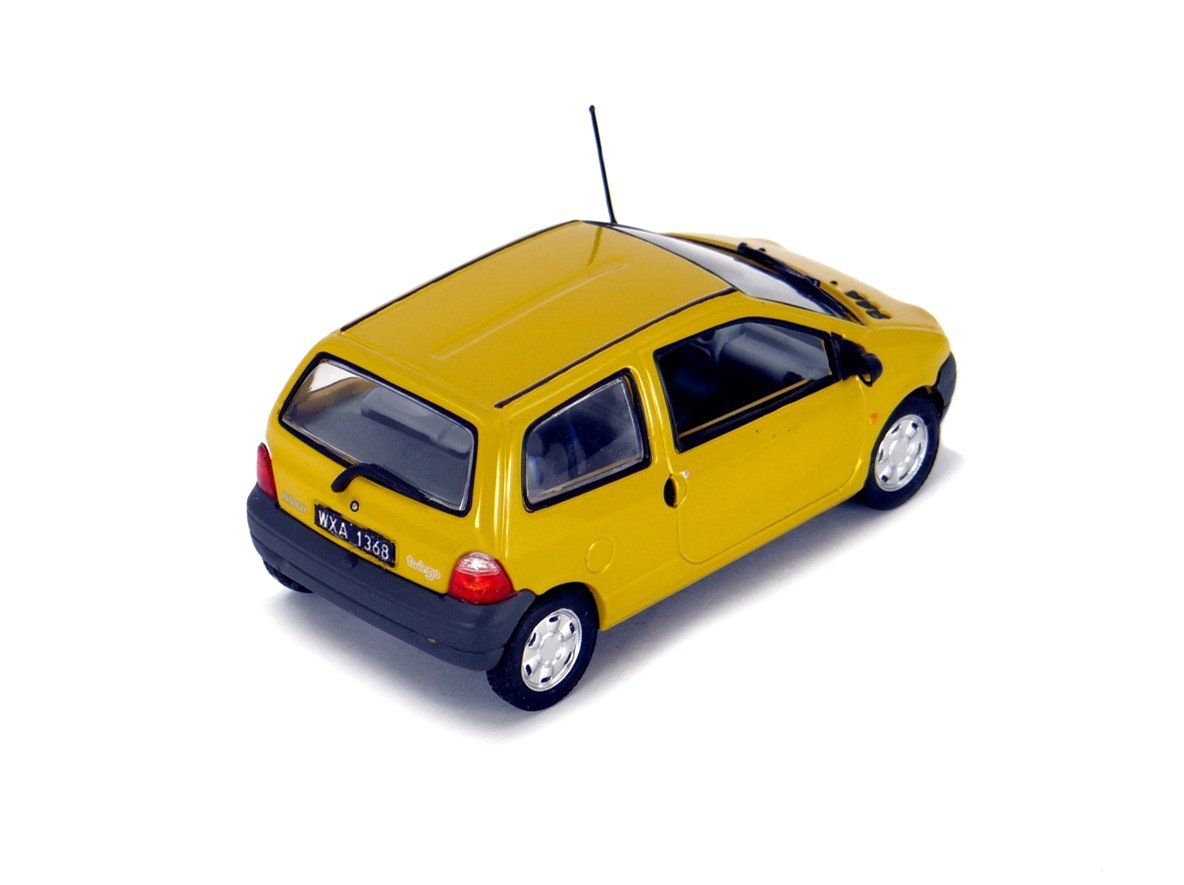
Ten model Renault Twingo w skali 1:43 pochodzi od Noreva. W tym przypadku mamy do czynienia ze starym odlewem w nowym wydaniu, więc na szczęście nie musimy się obawiać plastikowych kółek czy brzydkich lusterek. Tak jak w innych starych Norevach, nie ma tutaj niepotrzebnego cięcia kosztów. Opony są gumowe, szyby odpowiednio osadzone a lusterka wyglądają prawidłowo.
Norev wydał Twingo I w skali 1:43 w kilku kolorach, ale moim zdaniem najlepiej pasuje do niego żółty Indien. Kształty samochodu są po prostu stworzone do tego odcienia! Żołty kolor nadwozia kontrastuje z jaskrawoniebieskimi siedzeniami, wiernie oddając zarówno ducha prawdziwego samochodu jak i całych lat 90. Ogólnie, modelik jest dobrze wykonany i trudno znaleźć w nim jakieś wady. To z pewnością najlepsza dostępna obecnie miniatura przedliftingowego Twingo w skali 1:43 (pozostałe pochodzą od Vitesse i Solido).
W modelu dokonałem następujących modyfikacji; pomalowałem uszczelki dachu i przednich szyb oraz dodałem czarne polskie tablice. Standardowo, model posiada po prostu plakietki “Twingo”, ale uznałem że rejestracje z epoki będą bardziej pasowały.
Na koniec, nie pozostało już nic innego jak zaprosić Was do obejrzenia galerii zdjęć oraz oczywiście odwiedzenia MiniAutomobili na Facebooku i Instagramie!
*** ENGLISH ***
It is one of the most iconic European cars of the 90’s. Thanks to its blend of charming looks and surprising practicality, the first Renault Twingo gained a cult following and the status of a modern classic.
With the 1992 Twingo, Renault certainly reaffirmed its French spirit of revolution. The new model completely reinvented the city car rulebook. Europe had never seen anything quite like it: a one-box body inspired by MPVs, but in a miniature size. Despite being just 343 cm long, the car offered enough space for four passengers, along with clever features like a sliding rear bench and fully fold-flat seats. Throw in excellent visibility, superb maneuverability and heaps of character, and you get a true masterpiece of city car design. The Twingo proved that small can be mighty—and deservedly earned its place as a modern classic.
The beginnings
Plans for a new, cheap car to replace the aging Renault 4 had already been taking shape since the 1970s. In 1973, the VBG programme (Voiture Bas de Gamme, loosely “entry-level model”), was initiated, reaching its peak with the W-60 concept in 1986. However, Renault’s head at the time, Georges Besse, determined that the vehicle would not be financially viable and lacked future potential, leading to the project being suspended. Only a tragic turn of events led to its revival.
In November 1986, activists from the far-left terrorist organization Action Directe shot Besse dead outside his home. As a result of this attack, Raymond Lévy swiftly took over as head of Renault in December of the same year. as December. Lévy had a completely different approach and vision for the brand than his predecessor, which led to a change in the position of Renault’s chief designer. In January 1988, Patrick le Quement replaced Gaston Juchet. As Le Quément himself recalls, his predecessor handed him the keys to several garages hidden on the outskirts of Paris, where a number of models were being kept in secrecy. As it soon turned out, among them were two W60 projects—one by Marcello Gandini and the other by Jean-Pierre Ploué.
Both cars differed significantly from each other. The silver one, designed by Gandini, according to Le Quément, resembled “an anteater punched in the face.” The second car designed by Ploué had a shape very similar to the Twingo we know, but with a “gloomy” appearance as le Quement described. He did however see great potential in the design. Le Quement managed to persuade the chief Lévy to put together a small team to continue developing it. When the project officially restarted, its code was changed from W60 to X06 and Yves Dubreil took charge of the work.
Challenges and difficulties
The challenges began piling up from the very start. The biggest one was ensuring the car’s profitability, as Renault’s management was willing to fund the project only if it could generate profit. The problem was that it was intended to be the cheapest model in the range, yet it was being developed essentially from scratch, with minimal use of existing parts. This, of course, significantly increased costs. On top of that, the team not only had limited funding, but also felt strong pressure from the management to deliver the project on time.
Interestingly, designing the Twingo’s distinctive front end also turned out to be quite a challenge. It caused a surprisingly large number of problems. As Patrick Le Quément himself recalled, there were plenty of ideas, but none of them really worked. In something of a moment of desperation, he sketched the car’s characteristic front—featuring rounded headlights and a “smiling” ait intake. Once refined in clay models, the car took on a cheerful, friendly face that at last satisfied the designers.
Despite the team’s considerable dedication, belief in the project’s success and approval by management remained low. However, when Renault’s executives, led by Raymond Lévy, saw the model of the cute small car, smiles began to appear. Le Quément convinced them of his vision—that the car looked like a little pet “one would want to take in on a cold night and place by the fireplace.” The project got the go-ahead.
Car of happiness
The team pressed on with work on Renault’s smallest car, fully immersed in the project. Although low price was the key objective, certainly didn’t mean a lack of character. The car evoked such positive emotions within the design team, that they gave it the internal name “voiture du bonheur” (French for “car of happiness”). Since happiness is anything but gray, the designers embraced bold, playful colours both inside and out. Patrick Le Quément deliberately avoided dull shades like white and black. Instead, the original palette featured coral red, blue, turquoise and yellow, accompanied by a colourful, patterned upholstery and turquoise switchgear inside.
Efforts were also made to find a name that would reflect the car’s cheerful character. Renault initially considered options such as Maya, Tonga and Ypso. Ultimately, they decided on Twingo, reportedly combining elements of tango, swing and twist.
Just as the project appeared to be progressing smoothly, consumer research unexpectedly became a major obstacle. It turned out that one in four people loved the car—but as many as half of those surveyed hated it! For Renault’s management, these results were disastrous as no previous model had ever received such a high level of negative feedback. The blame was placed on the overly “toy-like” front end. Both the management and the design team were ready to redesign it completely.
The future of the Twingo was hanging by a thread, but once again Le Quément stepped in. He was the only one who truly believed in the car’s potential and refused to hear of any changes. He saw great opportunity in the 25% of enthusiastic responses and argued passionately for the project’s approval. It worked—Renault’s CEO, Raymond Lévy, agreed with him and once again gave the Twingo the green light.
The French froggy causes a sensation
Renault officially presented the Twingo at the 1992 Paris Motor Show. The new model attracted unimaginable crowds to the Renault stand. Reportedly, a quarter of all visitors came specifically to see the Twingo!
It was like a colourful bird against Renault’s otherwise monotonous lineup and its rather dull competitors. Nobody offered anything like it, so the Twingo drew attention immediately. One of the biggest innovations in its class was the one-box body design, previously seen mainly in MPVs such as the Renault Espace. Like others cars of that sort, the interior of the Renault Twingo impressed with its spaciousness and flexibility. Despite being 27 cm shorter than the first-generation Clio, the Twingo offered a similar amount of room for four passengers. Signature features included a sliding rear bench and the ability to fold all the seats flat, creating a large sleeping surface. Then there was the futuristic digital speedometer in the center of the dashboard—maybe not the easiest to read, but undeniably ahead of its time.
Thanks to its clever features and playful character, the car generated huge interest among both consumers and journalists. Everyone was eagerly waiting for its market launch.
The Twingo hits the roads
Sales of the Renault Twingo began in April 1993. As planned, it replaced the Renault 4 as the brand’s cheapest model. The company offered customers very little choice. Initially, only one version was available, priced at 54,000 francs, with spartan equipment and an old 1.2 OHV petrol engine (54 hp) from the Cléon-Fonte family, dating back to the 1960s. The only options available to customers were one of four body colors and an optional retractable canvas roof.
As part of cost-cutting measures, the Renault Twingo was equipped with a single front windscreen wiper with only one operating mode, while the radio antenna was relocated to the driver’s side mirror to reduce wiring length. To further reduce expenses, Renault also decided not to develop a right-hand-drive variant. The Twingo was therefore offered exclusively in left-hand-drive form for its entire production run.
These limitations did not hinder the Renault Twingo from quickly achieving popularity. On the contrary, they arguably contributed to its distinctive appeal. Customers appreciated its city-friendly practicality, clever interior and cheerful design. The Twingo soon started to brighten up streets across Europe, turning heads wherever it went. Its appeal was reinforced by quirky, cartoon-style adverts that emphasized its fun character.
To maintain interest, Renault quickly began expanding the Twingo lineup. After just a few months, new exterior colors, additional equipment and new upholstery patterns were introduced. In 1996, Renault replaced the old engine with the newer D7F 1.2 8V unit (58 hp) from the Clio and added the Twingo’Matic, a 3-speed automatic, to the range. Renault also regularly introduced various special editions, such as Kenzo, Air and United Colors of Benetton. Thanks to this colorful offering, the Flins factory in France had already produced one million Twingos by 1997.
Time doesn’t touch the Twingo
The Renault Twingo proved to be so well designed, that no major design updates were ever required. The model did receive three facelifts—in 1998, 2000, and 2004 – but its overall design and concept remained unchanged throughout its entire lifespan. In 2007, Renault ended production of the first-generation Twingo for the European markets, although manufacturing in Colombia for South American markets continued until 2012. During almost 30 years of production, approximately 2.5 million units were built!
It certainly won’t be much of an exaggeration to place the first-generation Renault Twingo alongside icons such as the Citroën 2CV, Fiat 500 or Renault 4. It is arguably the last affordable, mass-market car to achieve such widespread affection and classic status. The Twingo proved to be a truly timeless design that remains perfectly usable even today. Unfortunately, later generations lost much of its charm and character. Fortunately, the latest electric incarnation of the Twingo offers hope that some of the original magic may return.
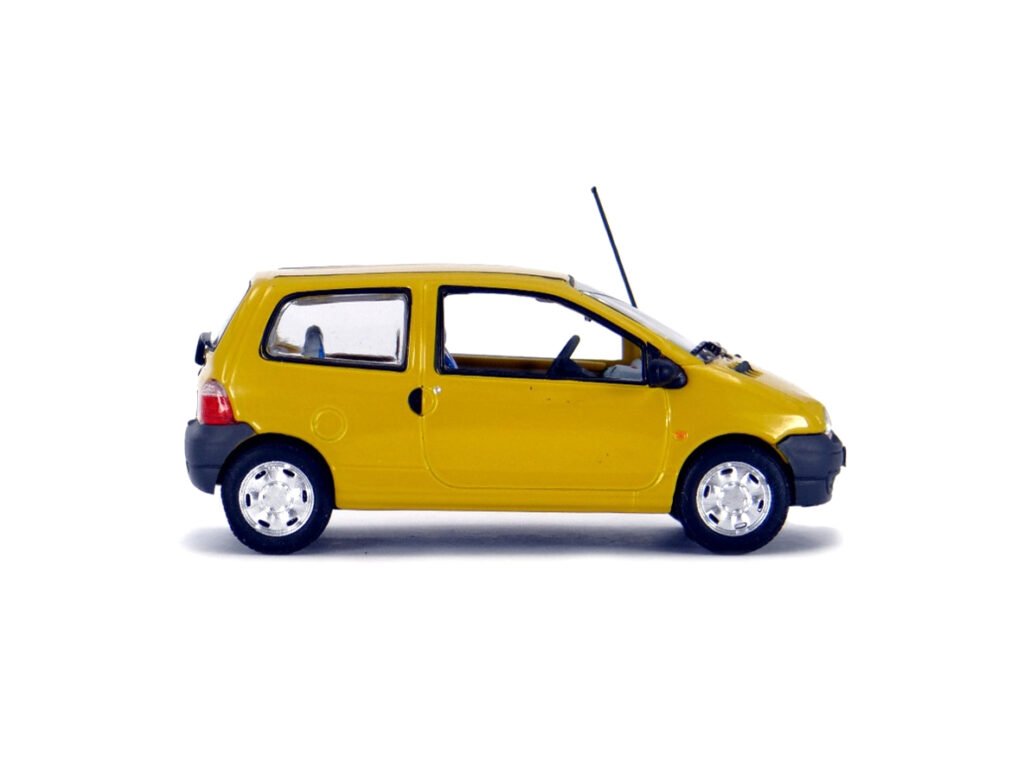
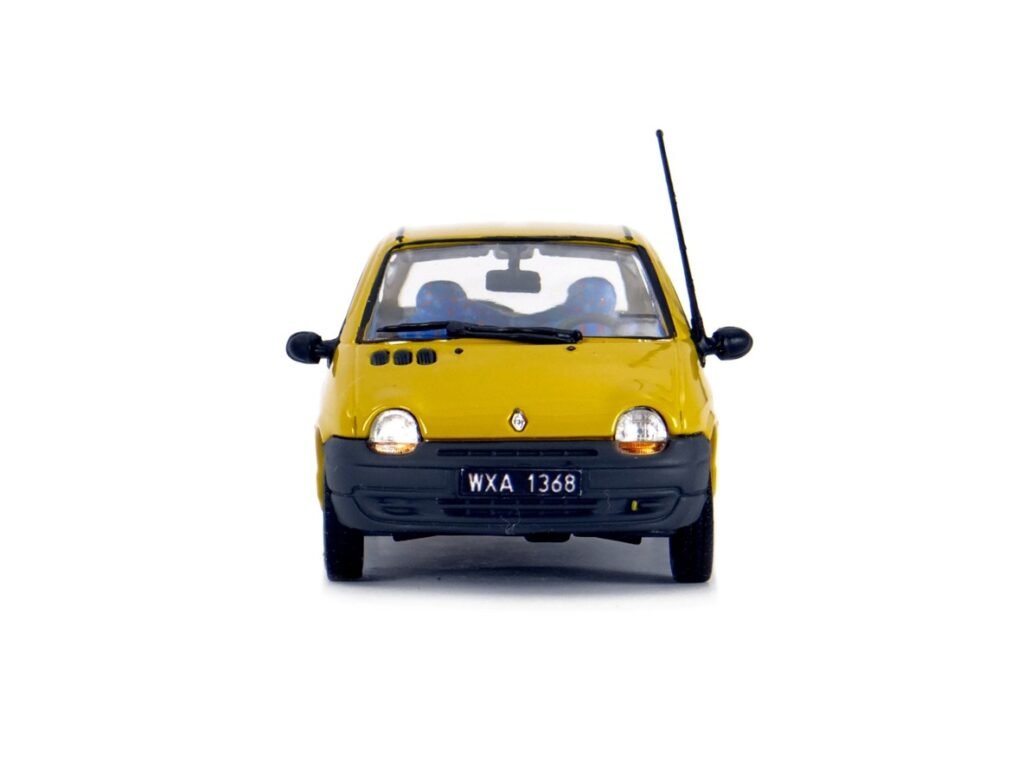
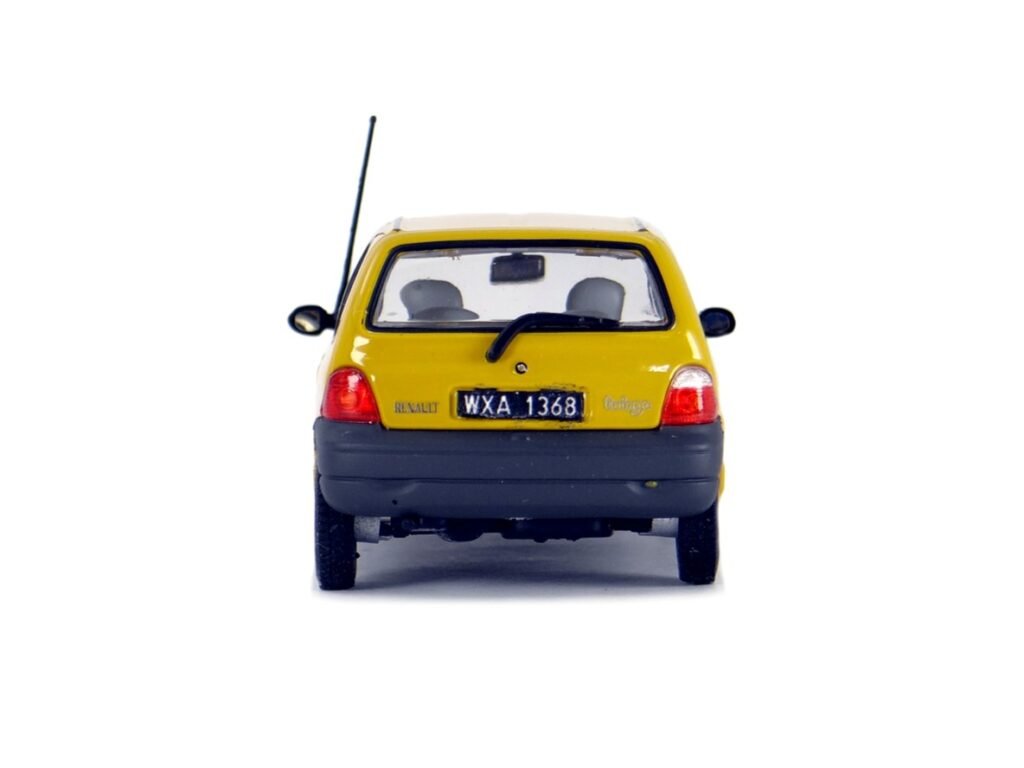
About the miniature – Renault Twingo I
This Renault Twingo model in 1:43 scale comes from Norev. In this case, we are dealing with an old casting in a new edition, so fortunately we don’t have to worry about plastic wheels or ugly mirror, like with Norev’s new releases. As with other older Norev models, there is no unnecessary cost-cutting here. The tires are rubber, the windows are properly fitted and the mirrors look correct.
Norev released the Twingo I in 1:43 scale in several colours, but in my opinion the yellow “Indien” suits it best. The car’s shapes are simply made for this shade! The yellow body colour contrasts with the bright blue seats, faithfully capturing both the spirit of the real car and the entire 90’s era.
Overall, this is a well-executed model, and it’s hard to find any real flaws. It is certainly the best available 1:43 miniature of the pre-facelift Twingo at the moment (the alternatives come from Vitesse and Solido).
I made a few mods to the model: I painted the roof and front window seals and added black Polish plates. The model comes with “Twingo” name plates as standard, but I thought period-correct plates would fit it much better.
Feel free to check the photo gallery and of course, visit MiniAutomobile on Facebook and Instagram!






Ja modelik Twingo kupiłem w salonie Renault w 1995 roku. Jest ro modelik Solido z otwieraną tylną klapą. W modeliku przesuwa się też tylna kanapa jak w prawdziwym samochodzie. Ma typowych kształtów solidowskie pudełko jednak jest ono dedykowane dla salonów, bo jest czarne i zamiast napisu Solido ma z przodu napis na górze po lewej stronie stylizowany napis Twingo a na dole po prawej RENAULT
Dzięki za komentarz! Ja też mam modelik Solido, tylko jeszcze jest “na warsztacie”. Jak kiedyś go skończe, to wjedzie na bloga na pewno. Wydaje mi się, że ten od Solido ma trochę lepsze proporcje od Noreva. Pozdrawiam!