
Może i “rozciągnięty hatchback na bazie Vectry” nie brzmi prestiżowo, ale według Opla właśnie o tym marzyli kupujący auta klasy wyższej. Klienci szybko jednak zweryfikowali tę filozofię. Opel Signum okazał się sromotną porażką.
Zanim Opel Signum trafił do salonów i zrobił absolutnie zero wrażenia, poprzedziły go aż dwa prototypy. W 1997 roku na targach w Genewie Opel pokazał Signum Concept, przerośniętego hatchbacka z przodem podobnym do Astry II. Choć prototyp przeszedł bez większego echa, firma najwyraźniej zachwyciła się swoim własnym pomysłem i w 2001 roku przedstawiła Signum 2 Concept. Jego wygląd był już bardzo zbliżony do seryjnego auta, które debiutowało w 2003 roku.
Zamierzeniem Opla było, aby Signum zastąpił w ofercie Omegę. Jednak zamiast klasycznego sedana i kombi, firma zaproponowała wielkiego hatchbacka z wnętrzem o cechach vana i limuzyny. Choć Signum był w teorii osobnym modelem, to w praktyce stanowił jedynie kolejną wersją nadwoziową Vectry C.
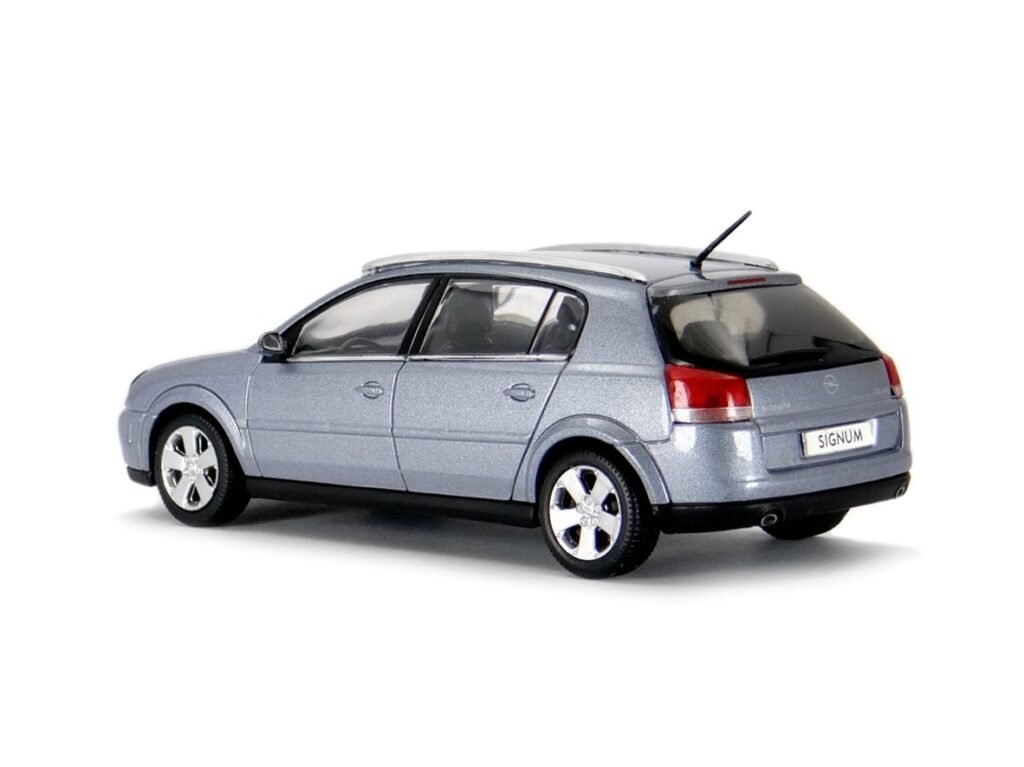
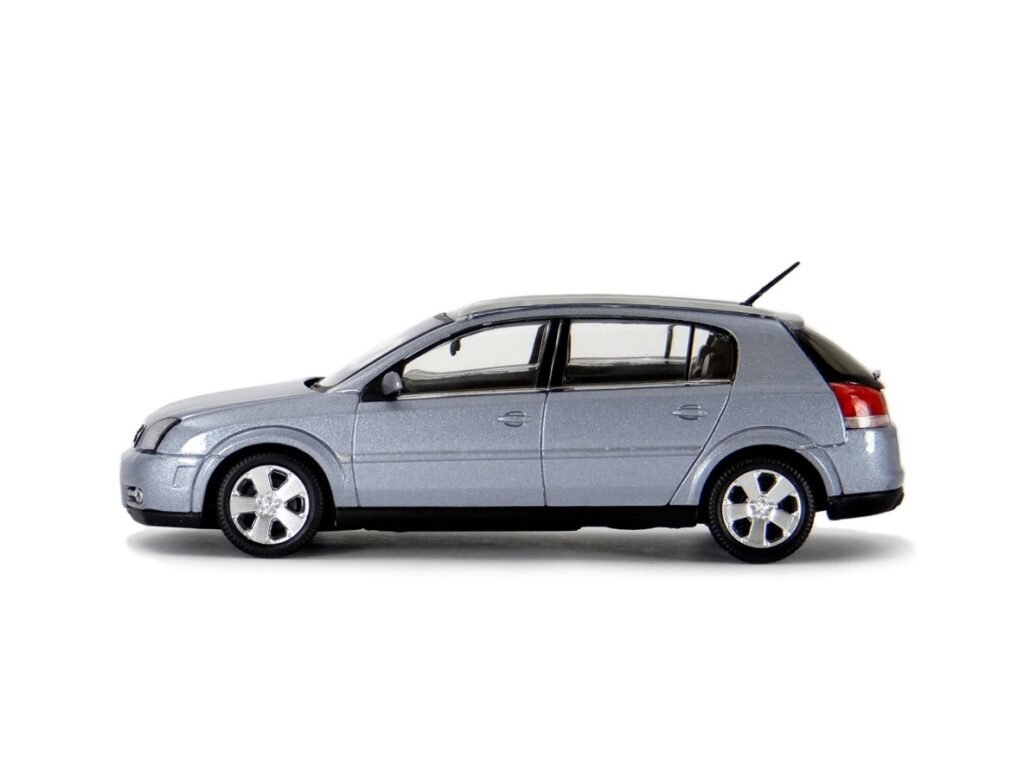
Auto korzystało z przedłużonej wersji platformy GM Epsilon, na której zbudowano też Vectrę kombi. Pokrewieństwo obu modeli było aż nadto widoczne. Poza unikalnym tyłem, Opel Signum wyglądał niemal identycznie do Vectry. Vectrę było czuć również w środku, bo oba modele dzieliły takie same deski rozdzielcze oraz przednie fotele. Wyróżnikiem Signum była natomiast tylna kanapa. Dzięki dużemu rozstawowi osi (283 cm), było tam rekordowo przestronnie, a sprytny system FlexSpace wprowadzał wszechstronność z aut MPV, pozwalając na suwanie i składanie tylnych siedzeń w dowolnych konfiguracjach. Niestety, ultrapraktyczne wnętrze nie wystarczyło, aby zachęcić do auta. Klienci Opla Signum ani nie chcieli, ani nie potrzebowali.
W sumie, trudno się dziwić. Signum kosztował więcej od Vectry, a wiele więcej nie oferował. Jeśli ktoś chciał limuzynę, wybierał albo Vectrę sedan albo bardziej prestiżowe niemieckie marki premium. Z kolei szukający przestrzeni od razu wybierali wielką Vectrę kombi, albo minivana Zafirę. Signum, pomimo swoich zalet, okazywał się autem dla nikogo.
Sytuacji nie poprawiała też gama silników, prawie bliźniacza z Vectrą. Wprawdzie Opel zrezygnował w Signum z podstawowej jednostki 1.6 (bazą był tu silnik 1.8), ale nie dał też sportowej wersji OPC. Tak więc silnik 2.8 V6 Turbo w najmocniejszych wersjach 255 i 280 KM występujących w tańszej Vectrze, nie występował w bardziej luksusowym z założenia Signum. Cóż za świetny sposób na pogrzebanie reputacji flagowego modelu…
Losów Opla Signum nie poprawił lifting z 2005 roku. Nowy przód z większymi światłami upodobnił go do…jeszcze mniejszej Astry. Sprzedaż oczywiście nie drgnęła, ale wtedy już mało kogo to obchodziło. Rynkowa męka dużego Opla ostatecznie dobiegła końca w 2008 roku. Bez zaskoczenia, Signum nie dostał bezpośredniego następcy. Schedę przejął po nim częściowo Opel Insignia.
O miniaturze – Opel Signum
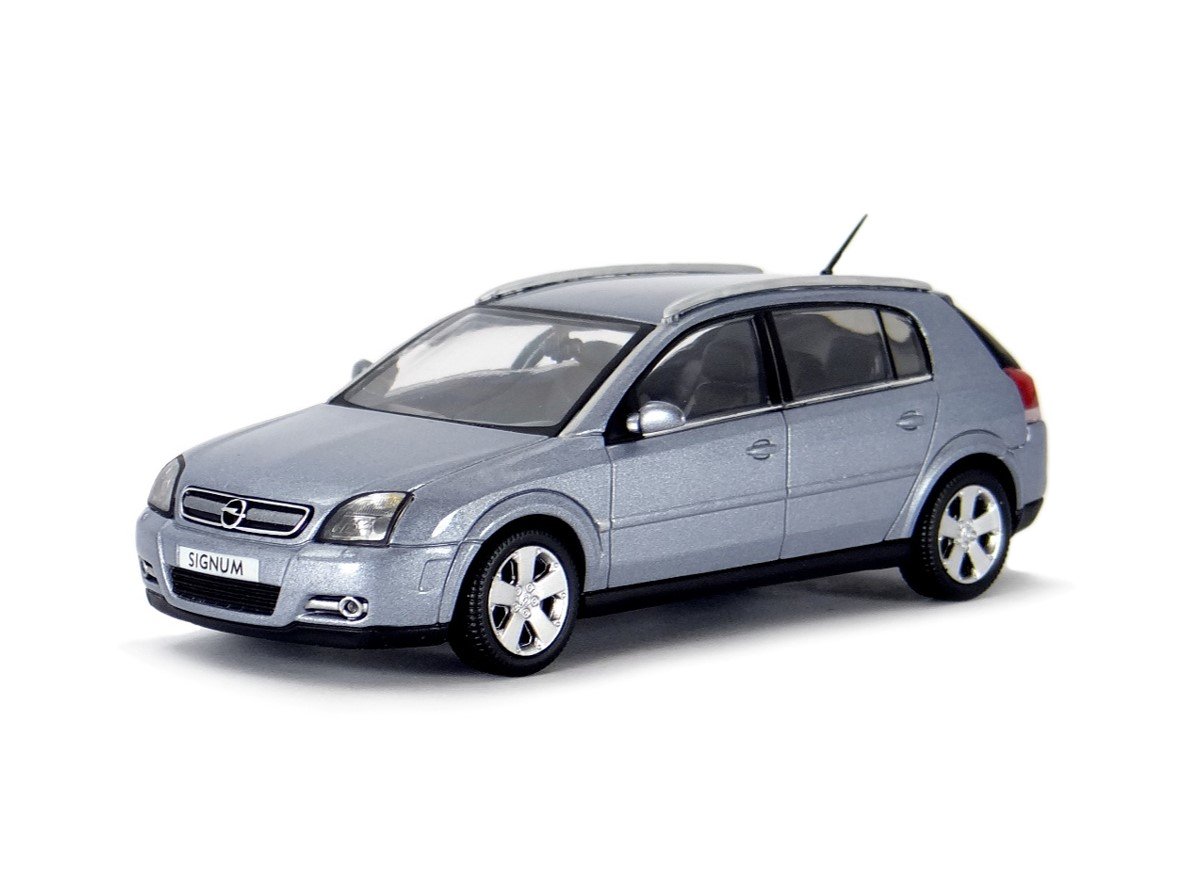
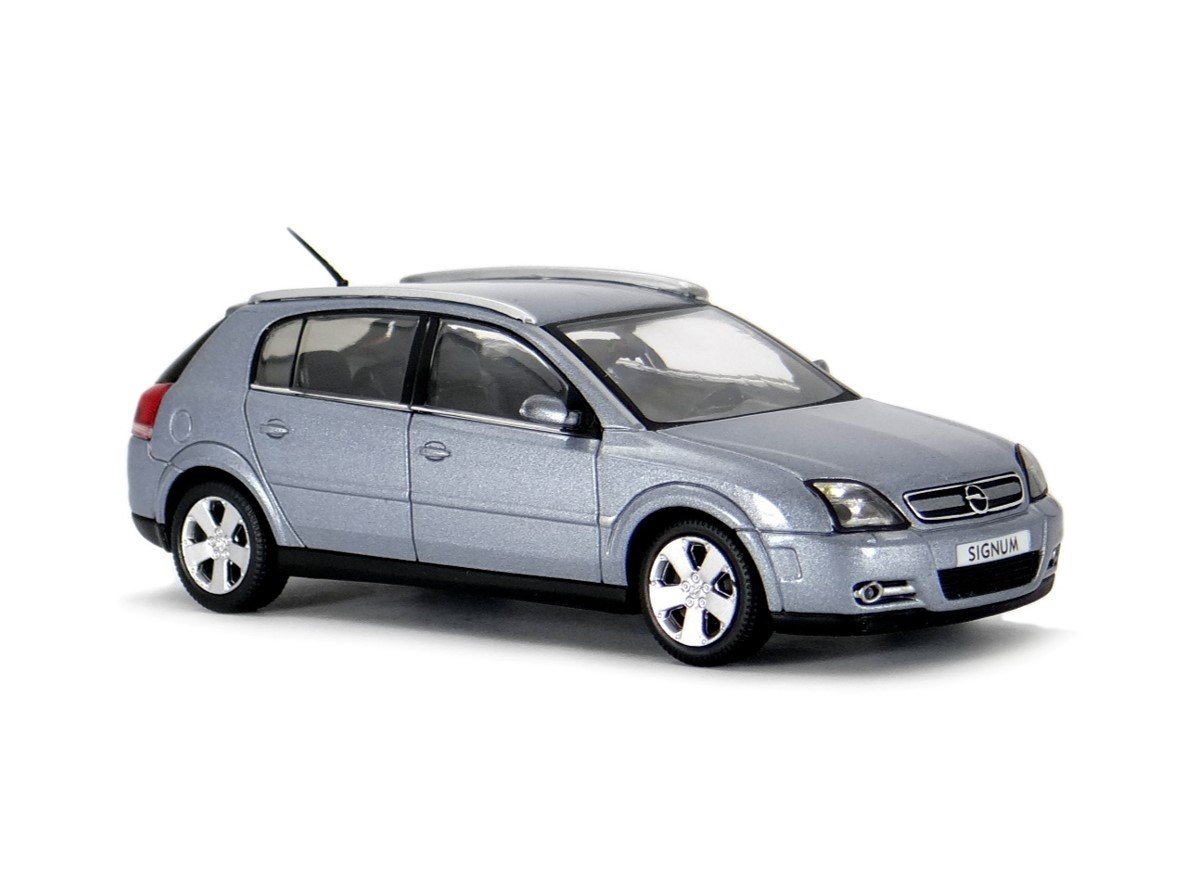
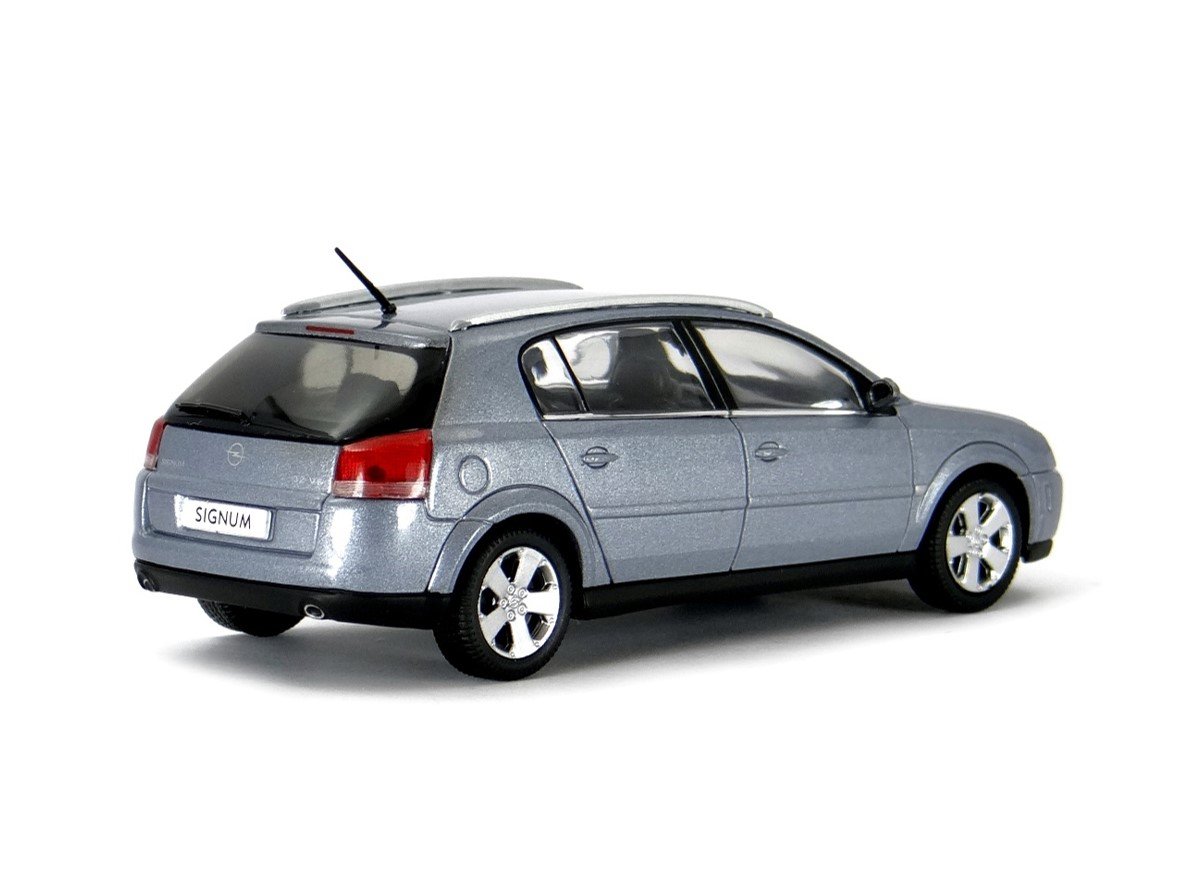
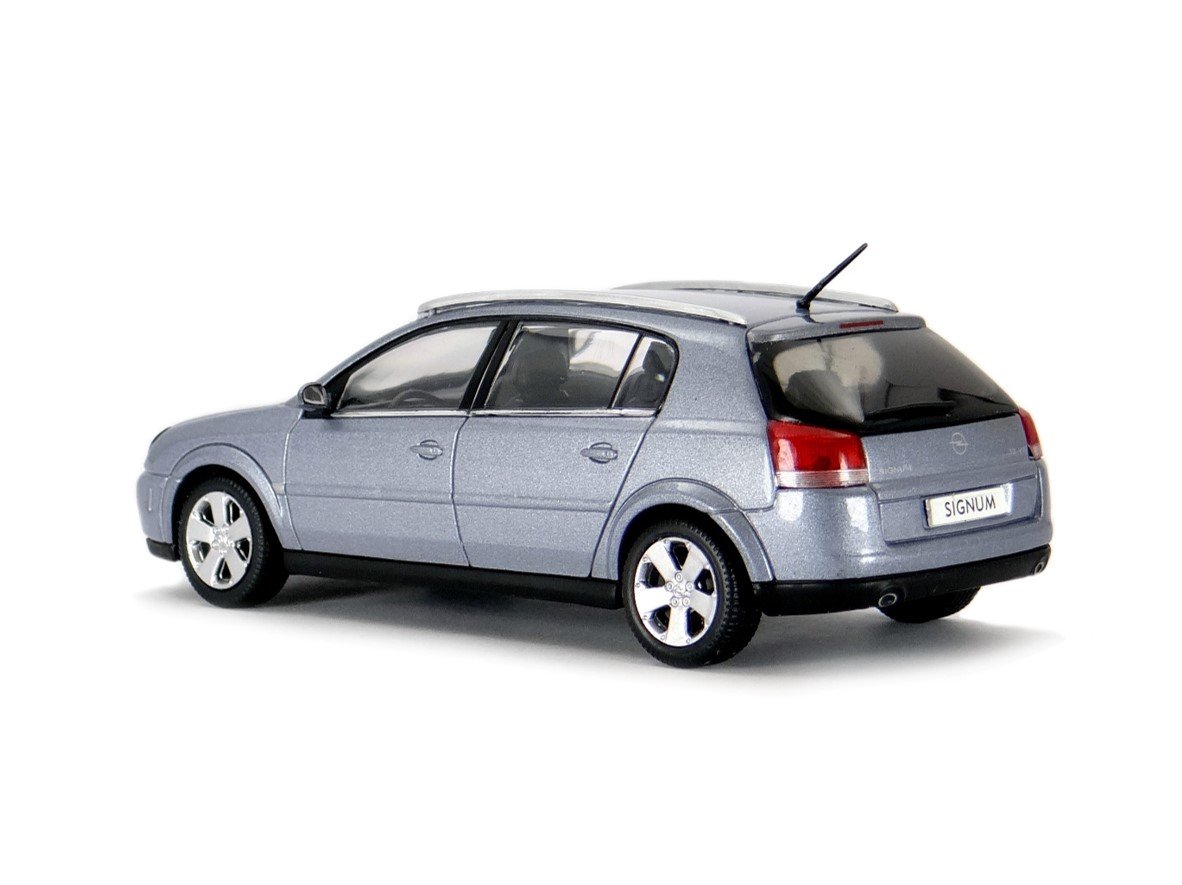
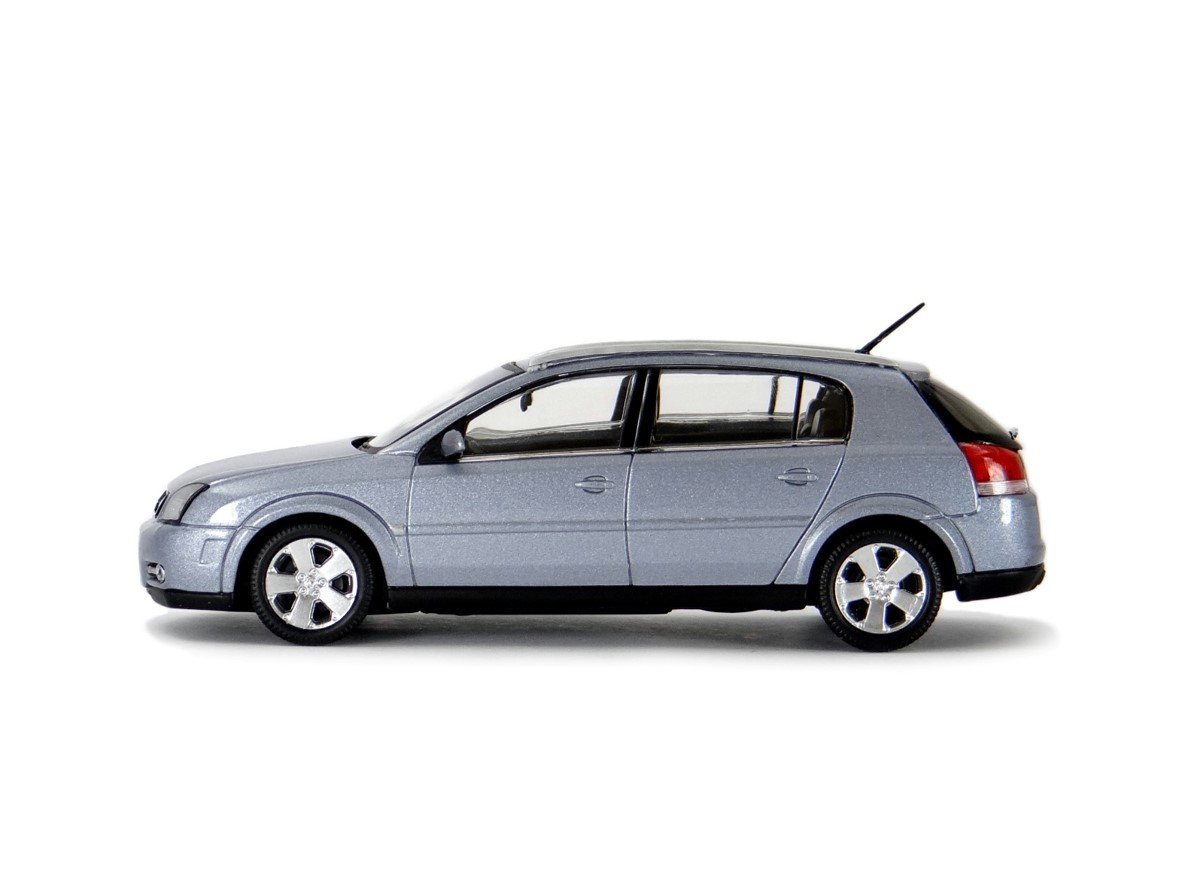
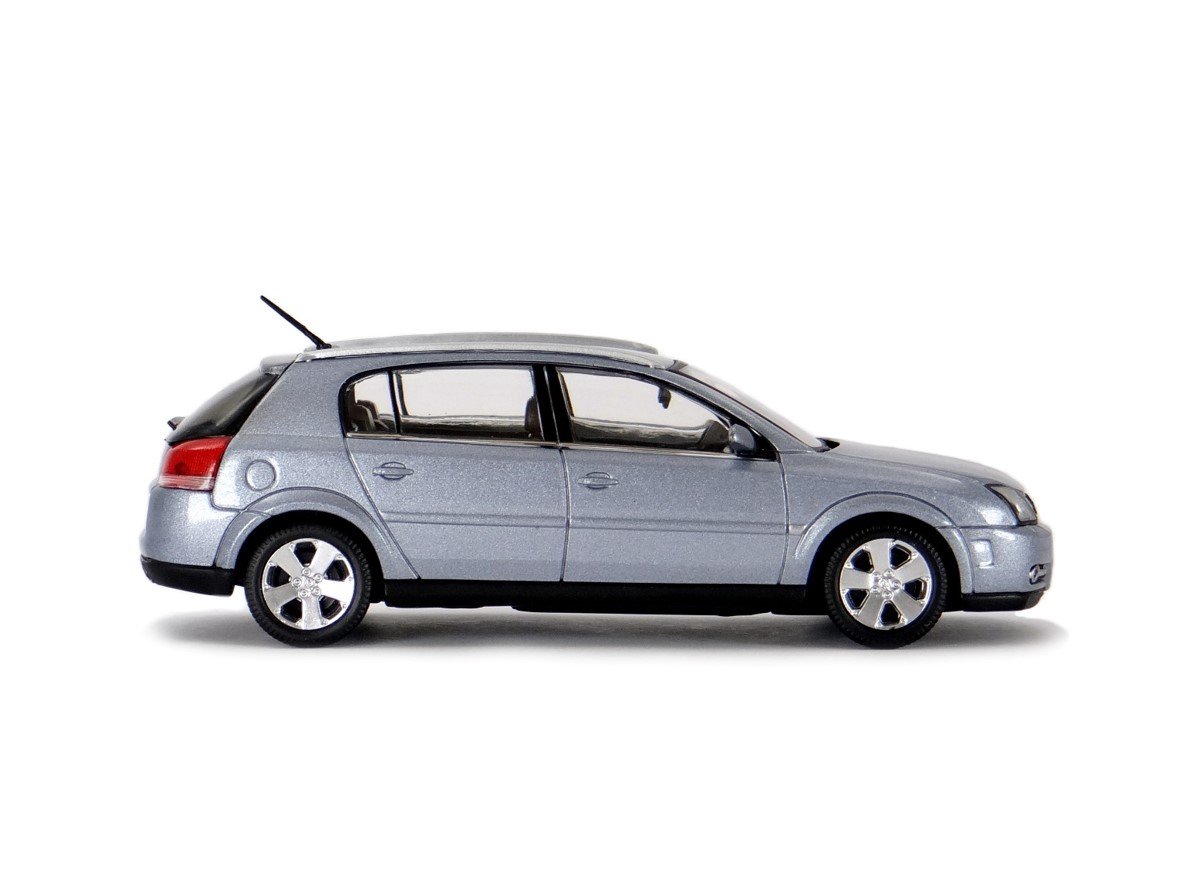
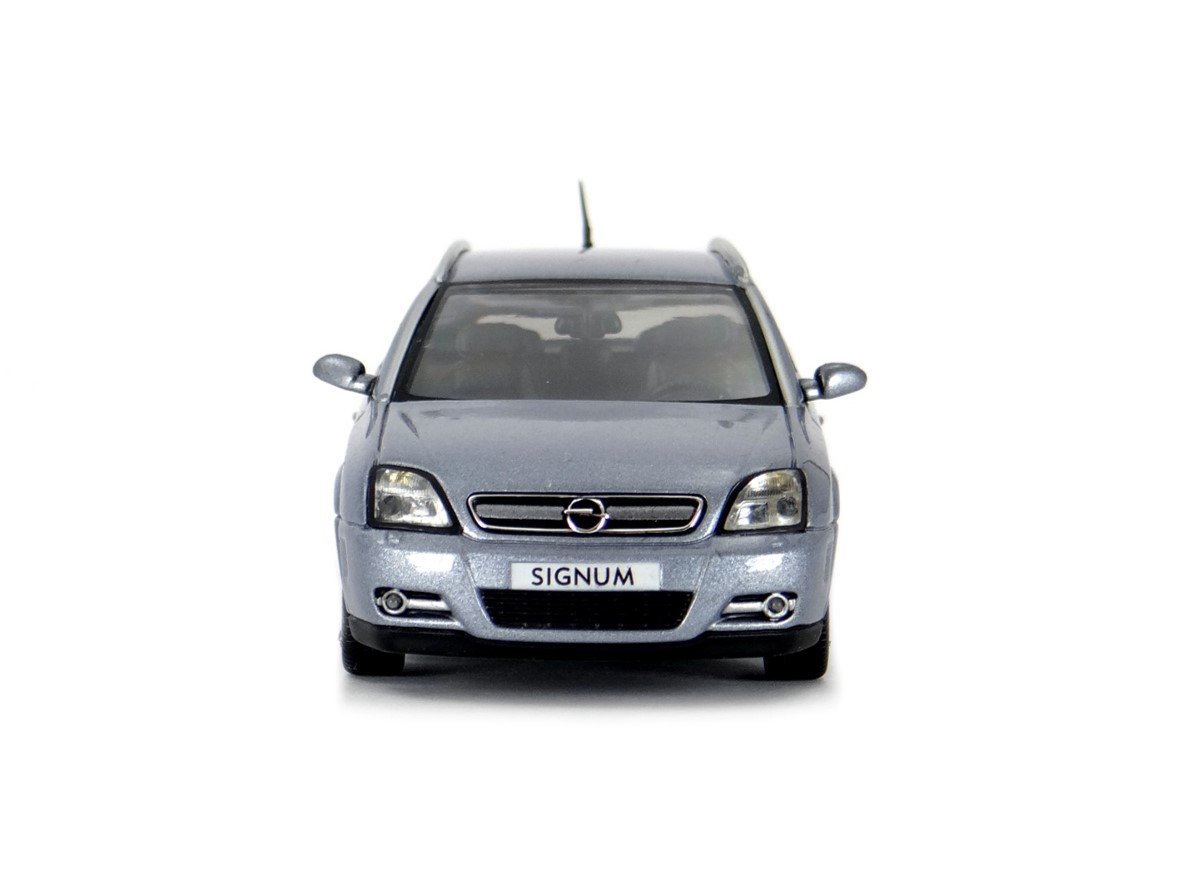
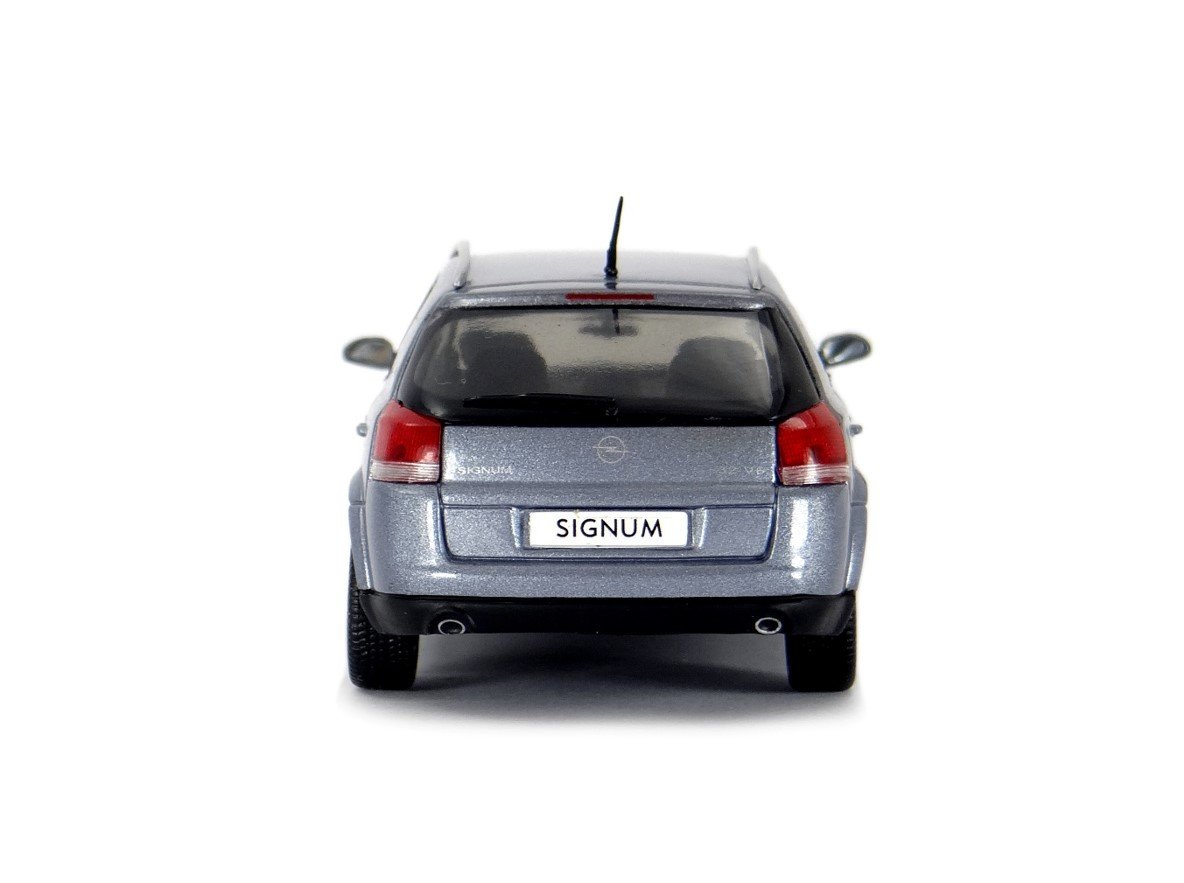
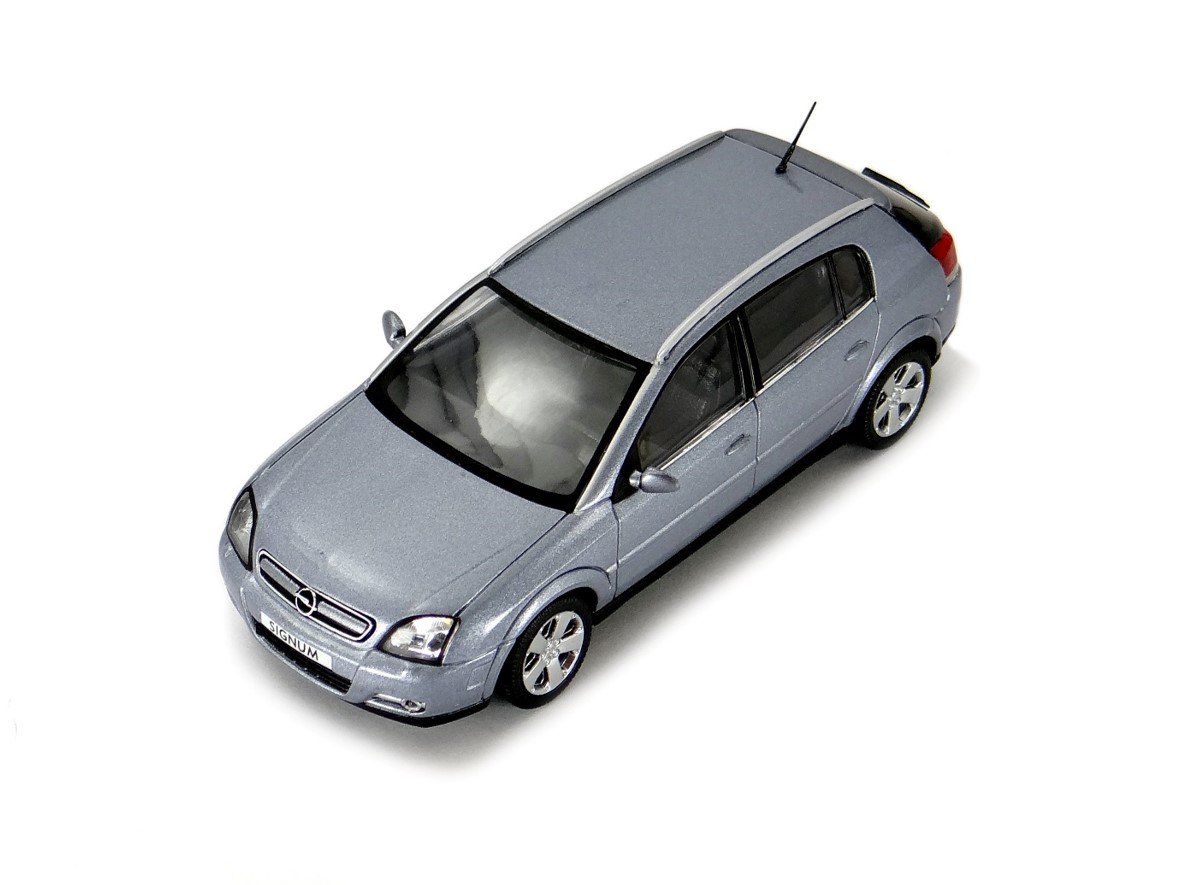
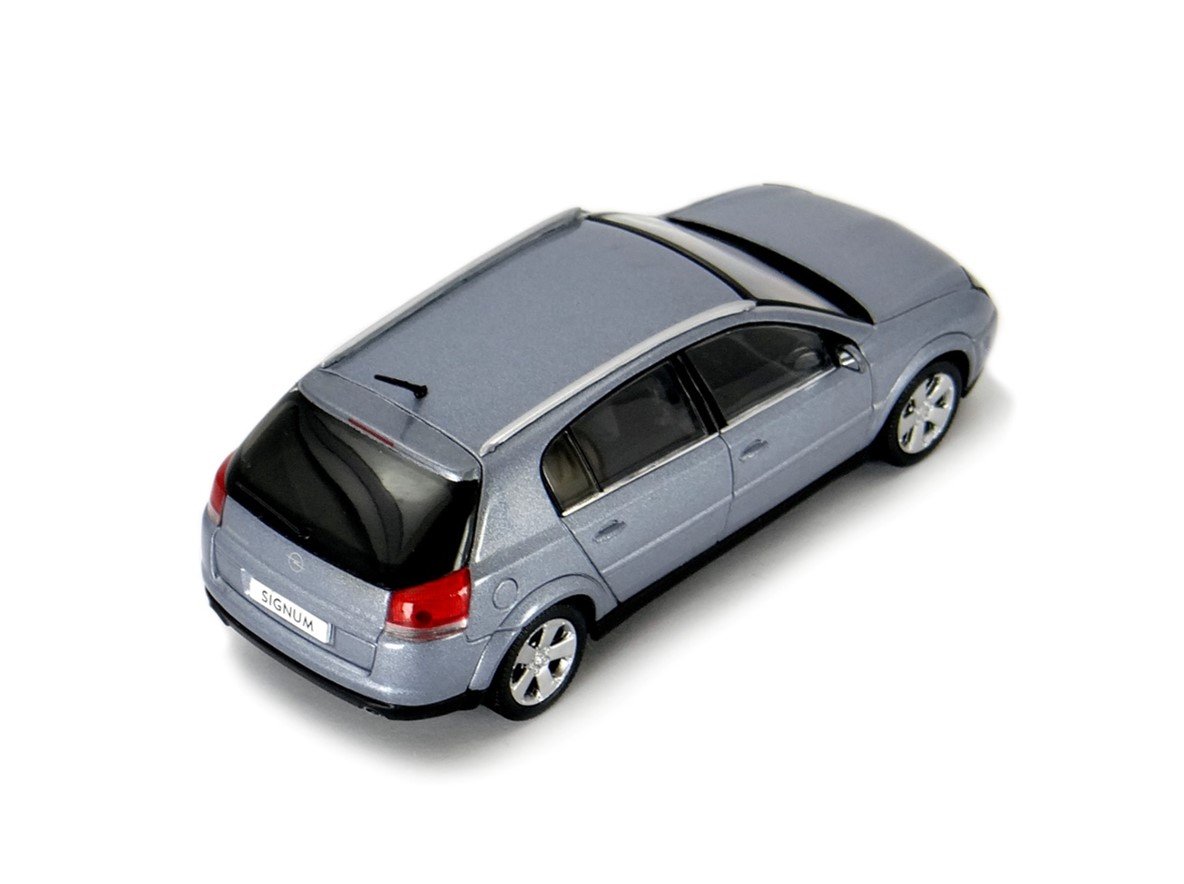
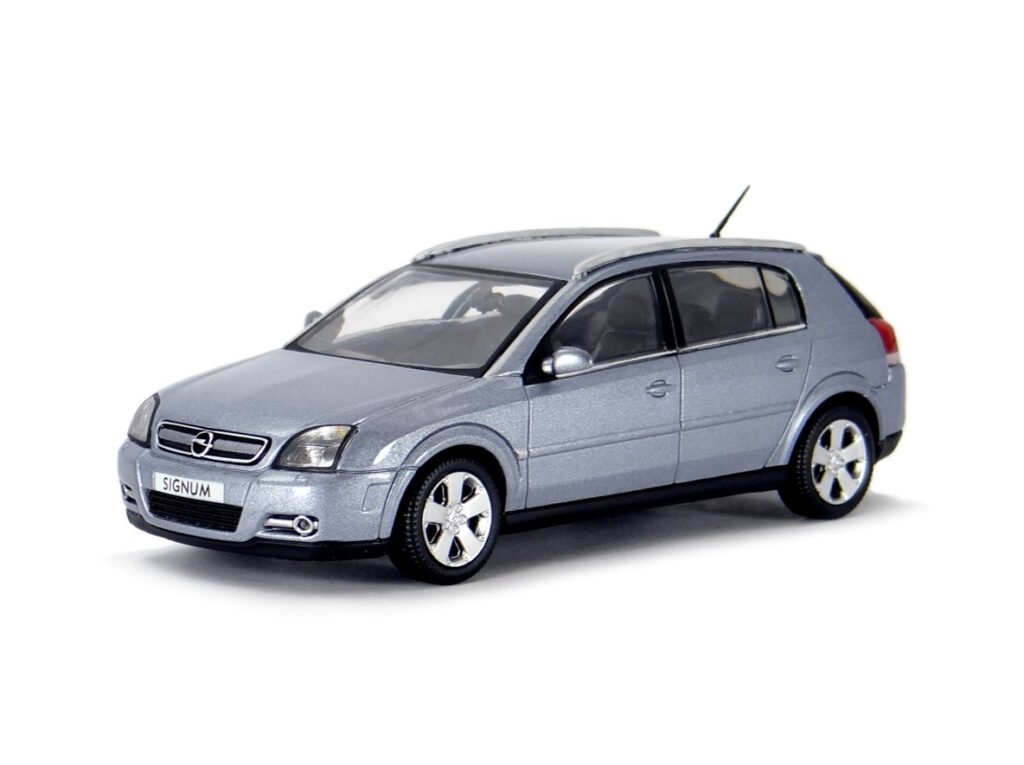
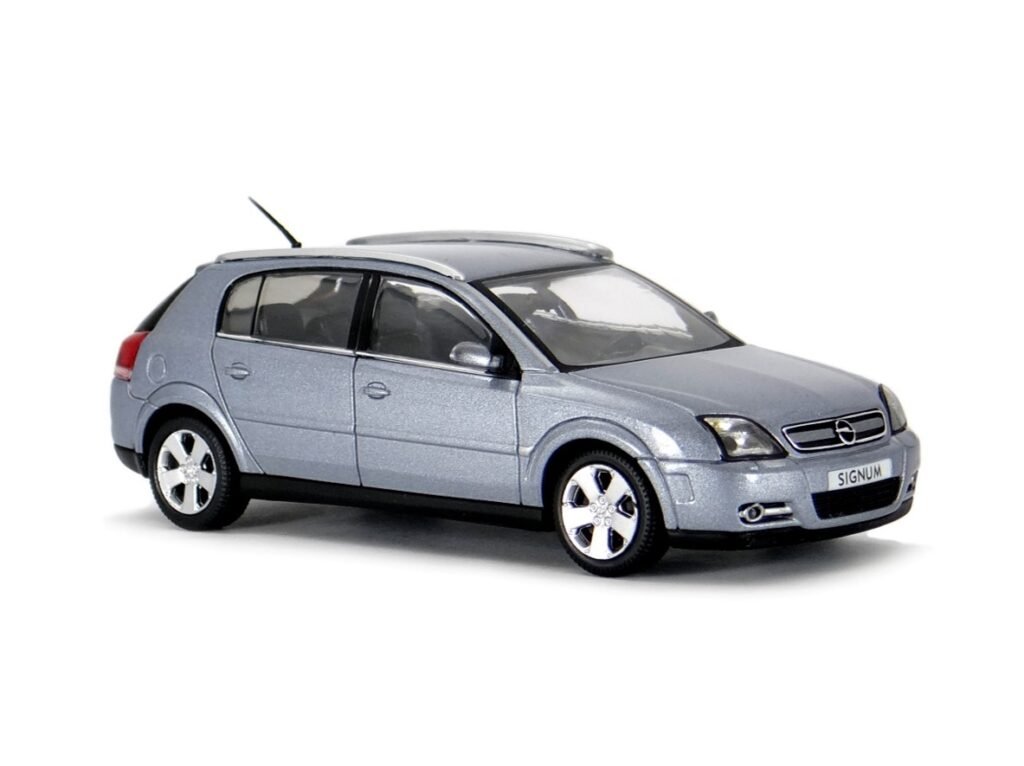
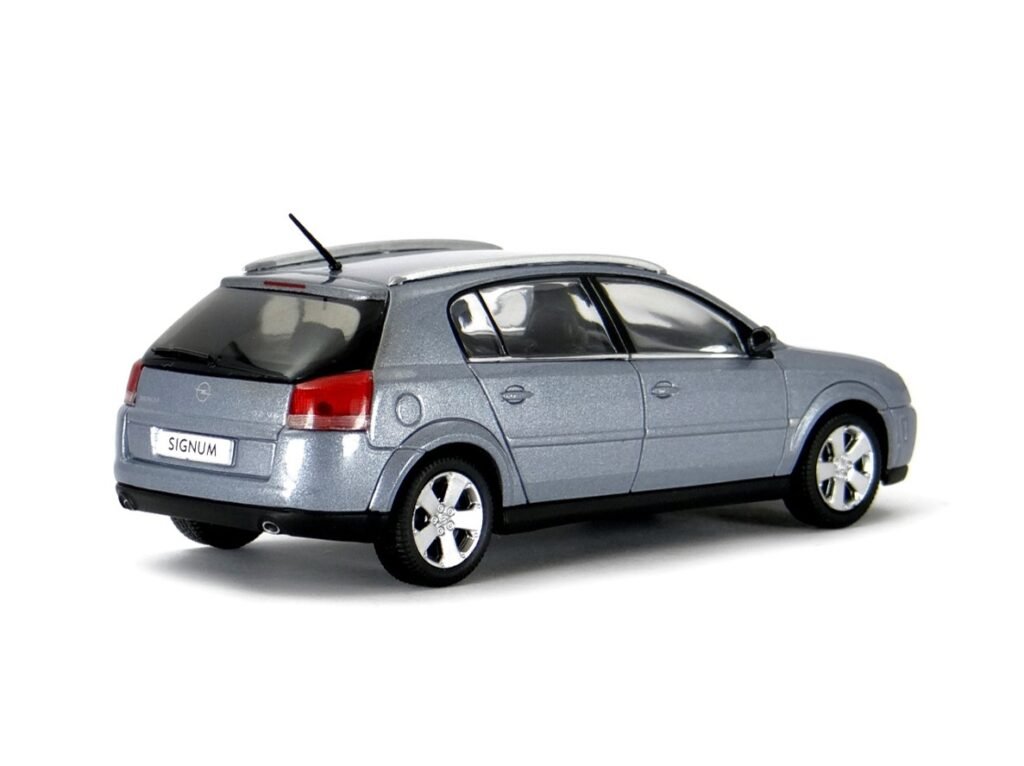
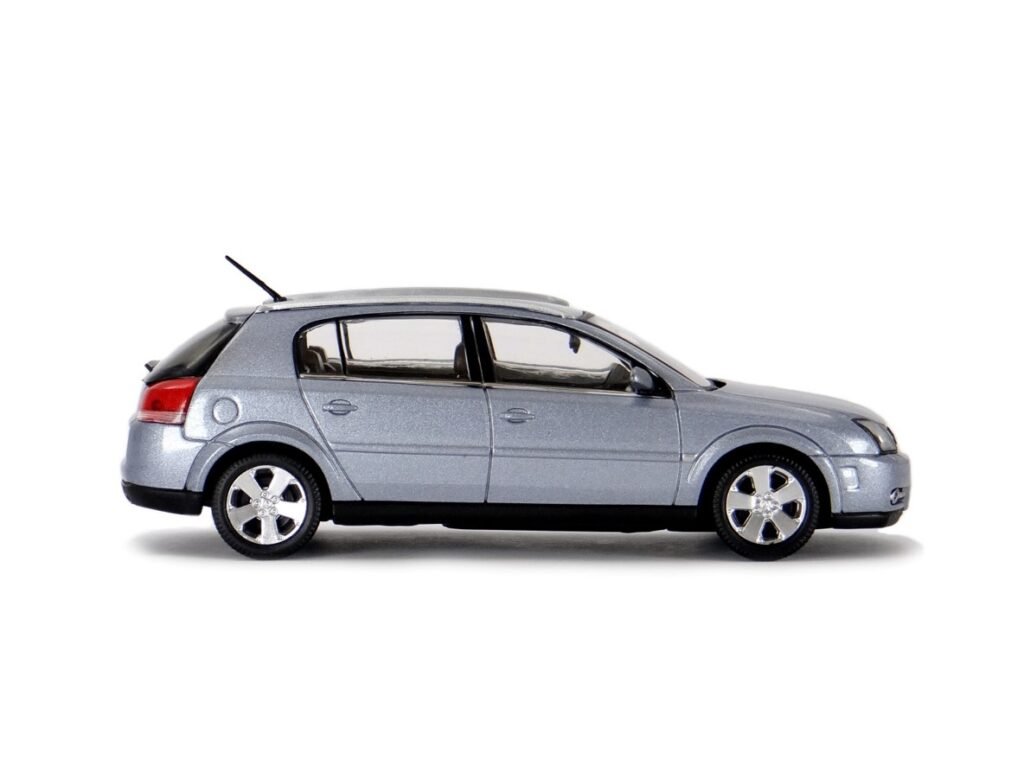
Modelik w skali 1:43 firmy Schuco pochodzi z edycji dealerskiej. W przeciwieństwie do prawdziwego samochodu, miniaturkę Opla Signum można określić jednym słowem – świetna! Jest mi trudno znaleźć jakiekolwiek słabe punkty. Poziom odwzorowania jest bardzo wysoki a modelik wygląda pięknie. Dla zainteresowanych, Signum od Schuco dostępny był też w złotym i czarnym kolorze.
Zapraszam do obejrzenia galerii oraz obserwowania profili MiniAutomobili na Instagramie i Facebooku!
*** ENGLISH ***
A “stretched-out hatchback based on the Vectra” hardly sounds prestigious, but according to Opel, that was exactly what buyers of executive cars dreamed of. However, the market quickly verified this notion. The Opel Signum turned out to be a complete flop.
Before the Opel Signum entered the showrooms and impressed absolutely no one, it had been preceded by two concept cars. In 1997, at the Geneva Motor Show, Opel presented the Signum Concept; an oversized hatchback with a front end resembling the Astra II. Although the prototype made little impact, the company was clearly amazed with its own idea and introduced the Signum 2 Concept in 2001. Its styling turned out to be very close to the production model that debuted in 2003.
Opel intended the Signum to replace the Omega in its line-up. However, instead of offering a traditional saloon and an estate, the company proposed an enormous hatchback with an interior combining features of a minivan and a limousine. Although the Signum was theoretically a standalone model, in reality it was merely just another body variant of the Vectra C.
The car used an extended version of the GM Epsilon platform, which also underpinned the Vectra estate. The resemblance between the two models was painfully obvious. Apart from its distinctive rear section, the Opel Signum looked nearly identical to the Vectra. The Vectra vibe continued inside as well, as both models shared the same dashboard and front seats. What set the Signum apart was the rear bench. Thanks to the long 283 cm wheelbase, rear-seat space was outstanding, while the clever FlexSpace system brought MPV versatility, allowing the seats to slide and fold in almost any configuration. Unfortunately, even the ultra-practical interior was not enough to make the car appealing. Buyers simply neither wanted nor needed the Opel Signum.
And honestly, it’s hardly surprising. The Signum cost more than the Vectra, but offered little more in return. People looking for a limousine either bought the Vectra saloon or moved up to more prestigious German premium brands. Those wanting space on the other hand, went straight for the huge Vectra estate or the Zafira minivan. Despite its strengths, the Signum ultimately became a car for nobody.
Its engine range didn’t help either, being almost identical to the Vectra’s. Opel did drop the entry-level 1.6 engine (Signum’s range started with a 1.8 engine), but it also missed the performance OPC variant. As a result, the 255 hp and 280 hp variants of the 2.8 V6 Turbo, available in the cheaper Vectra, never made their way into the supposedly more luxurious Signum. What a sure-fire way to crush the reputation of your flagship.
The 2005 facelift did little to change the fortunes of the Opel Signum. Its redesigned front end with larger headlights, made it resemble…the even smaller Astra. The sales of course didn’t budge, but at that point very few really cared. The big Opel’s market ordeal finally came to an end in 2008. Unsurprisingly, the Signum never received a direct successor. Its role was partially taken over by the Opel Insignia.
About the miniature – Opel Signum
The 1:43 scale model made by Schuco comes from a dealer edition. Unlike the real car, the miniature Opel Signum can be described in one word — excellent! honestly struggle to find any flaws. The level of detail is outstanding and the model looks beautiful. For those interested, Schuco’s Signum was also available in gold and black.
Go and check out the gallery and of course MiniAutomobile social pages on Instagram and Facebook!