

Mercedes-Benz C-Class Sportcoupé to pierwszy kompaktowy samochód w historii marki. Miał za zadanie zwabić dla niej nowych, młodszych klientów. Atrakcyjny wygląd miał być jego główną bronią, ale na drodze do większego sukcesu stanął kiepski stosunek ceny do jakości.
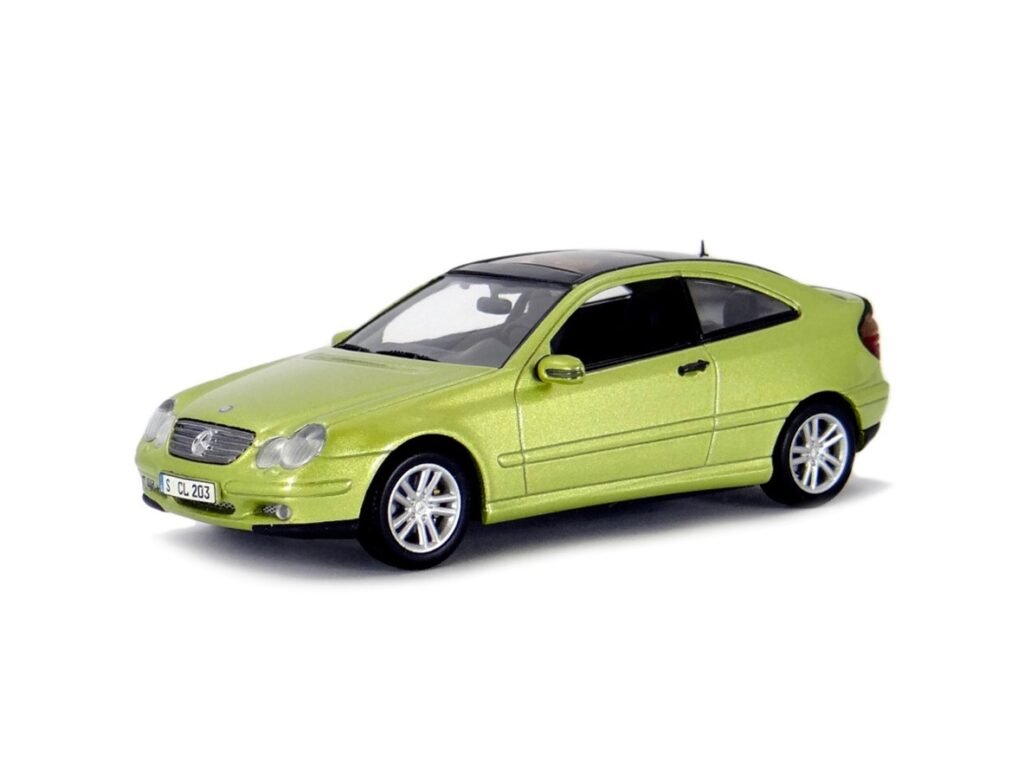
Przez lata Mercedes miał opinię marki dla starszych i majętnych ludzi. Niemców taki image w końcu zaczął jednak uwierać i od końca lat 90. dokładali wszelkich starań aby pozyskać młodszą klientelę. Zaczęło się od roadstera SLK i kontrowersyjnej klasy A. Następnie w 2001 roku pojawiła się klasa C Sportcoupé.
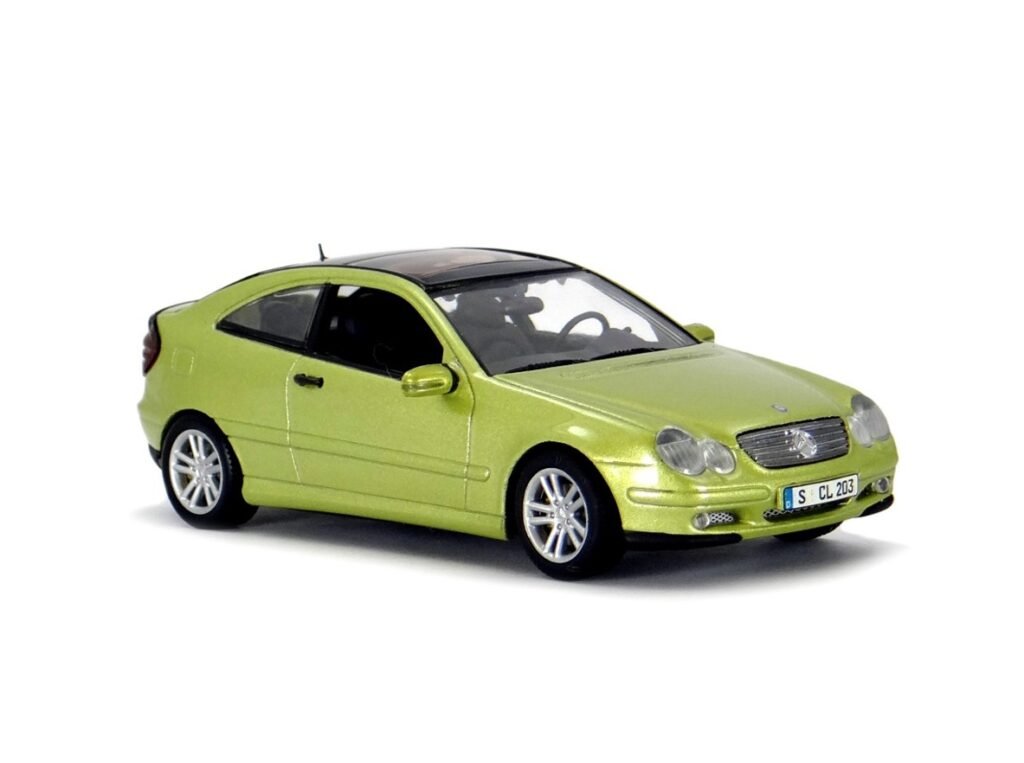
Nowym modelem Mercedes celował bezpośrednio w BMW serii 3 Compact. Oba powstały zresztą według niemal identycznego przepisu: płyta podłogowa z sedana klasy średniej i nowe, zgrabne trzydrzwiowe nadwozie. Mercedes oczywiście oparł swój model na nowej wtedy klasie C W203. Choć oba auta dzielą plarfotmę i mają taki sam rozstaw osi (271,5 cm), widocznie się od siebie różnią. C Sportcoupé ma zupełnie inną sylwetkę; jest krótsza, niższa, z opadającym dachem i ściętym tyłem zwieńczonym dzieloną szybą. Jak na standardy Mercedesa w tamtym czasie, projekt wręcz awangardowy! Inne są też detale, jak wlot powietrza z przodu i reflektory. Kolejnym wyróżnikiem tego modelu jest też opracowany specjalnie dla niego opcjonalny dwuczęściowy paronamiczny dach.
Aby jeszcze mocniej podkreślić młodzieńczy i sportowy charakter Sportcoupé, Mercedes zastosował twardsze amortyzatory i lekko zmienione nastawy zawieszenia względem zwykłej klasy C. Niestety, efekt okazał się rozczarowujący. Choć Sportcoupé jest twardsze i mniej komfortowe od limuzyny, to prowadzi się mniej stabilnie. Na pewno nie jest prymusem w klasie i daleko mu do sportowego coupé.
Na szczęście, wnętrze jest o wiele bardziej udane. Mercedes powstrzymał się od niepotrzebnych eksperymentów. Elegancki i dobrze wykonany kokpit pochodzi prosto z limuzyny, jedyną różnicą jest tutaj trójramienna kierownica. Zaskakuje też przestronność kabiny; pomimo sportowej sylwetki, jest tu sporo miejsca.
Początkowo, gama silników Sportcoupé składała się z wersji C180 (130 KM), C220 (143 KM), C200 Kompressor (163 KM) i C230 Kompressor (197 KM) a kilka miesięcy pózniej dołączył C220 CDI (143 KM). Najciekawsze są oczywiście najmocniejsze wersje, które zadebiutowały później. Modele C230 i C320/C350 z silnikami V6 oraz wykonywane tylko na specjalne zamówienie C30 CDI AMG i C32 AMG .
Rynek przyjął klasę C Sportcoupé z rezerwą. Dla konserwatystów, taki Mercedes był po prostu nie do zaakceptowania. Inni z kolei, narzekali na niski komfort jazdy i kiepskie prowadzenie. Najwięcej szkód sprzedaży narobiła jednak cena. Jak na kompaktowy samochód, Mercedes Benz C-Sportcoupé był strasznie drogi. Kosztował nawet więcej niż bezpośredni konkurent, BMW 3 Compact! Bogate wyposażenie niewiele tu pomagało. Dla wielu, taka cena za kompaktowy samochód, nawet ze znaczkiem premium, była zbyt wysoka.
Pomimo to, C Sportcoupé doczekał się kontynuacji. W 2008 roku przeszedł lifting upodobniający go do kolejnej klasy C i otrzymał nową nazwę – CLC. Ostatecznie, produkcję zakończono w 2012 roku a następcą został “prawdziwy” kompakt – całkowicie nowa klasa A.
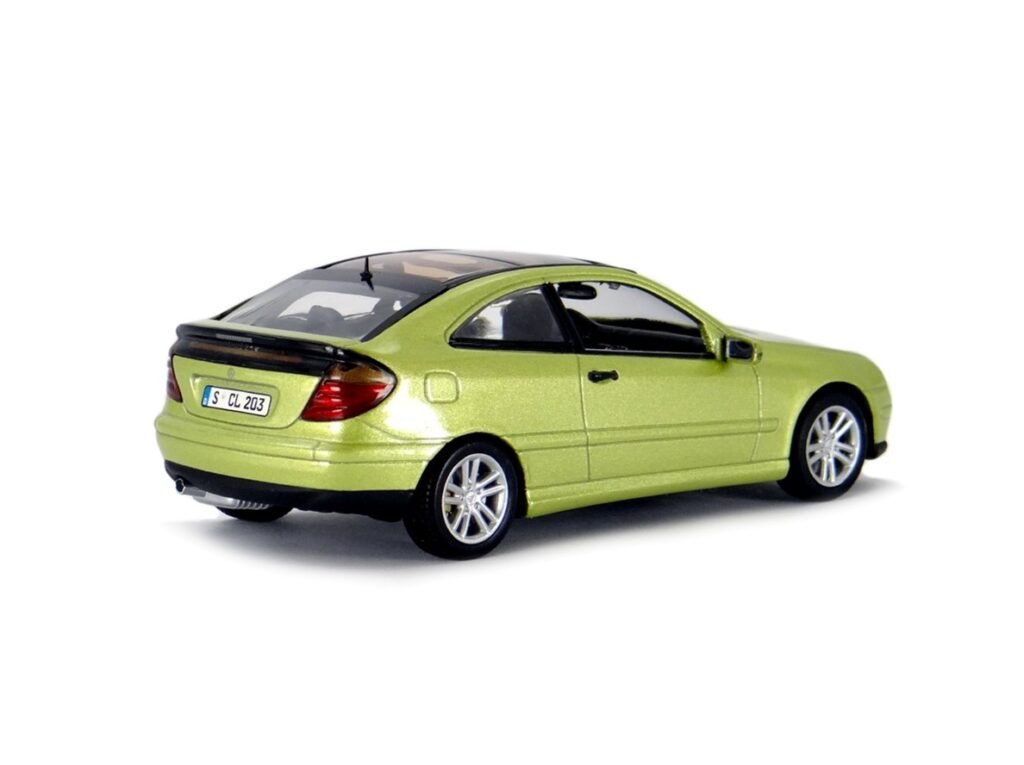
O miniaturze – Mercedes-Benz C-Class Sportcoupé
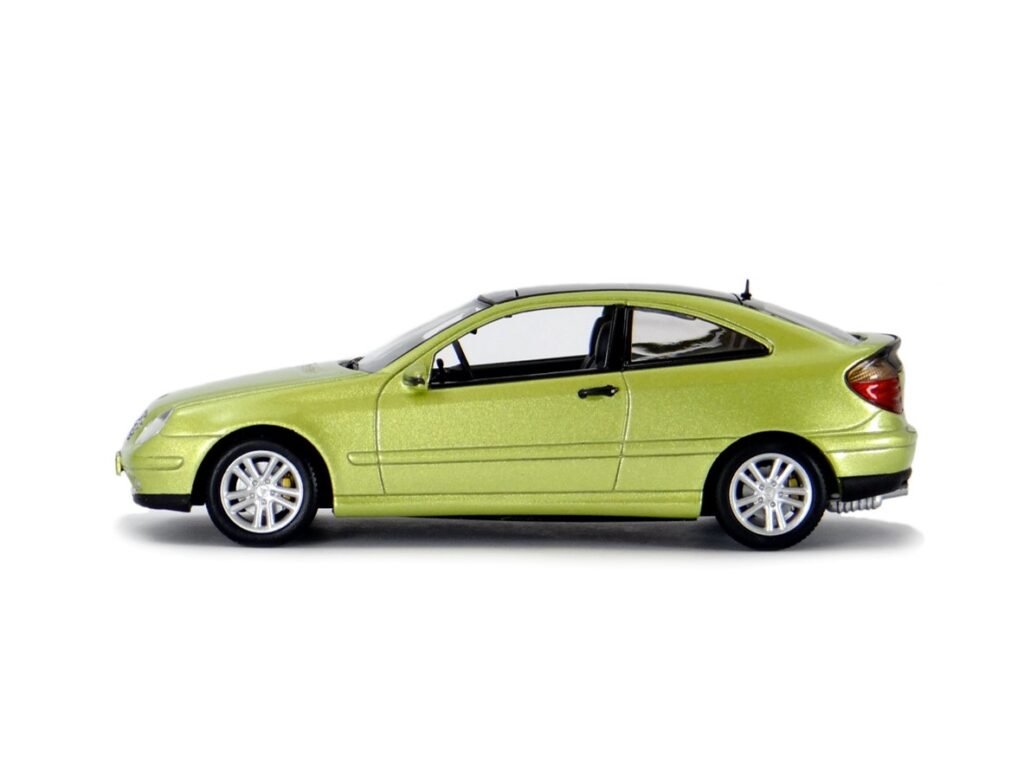
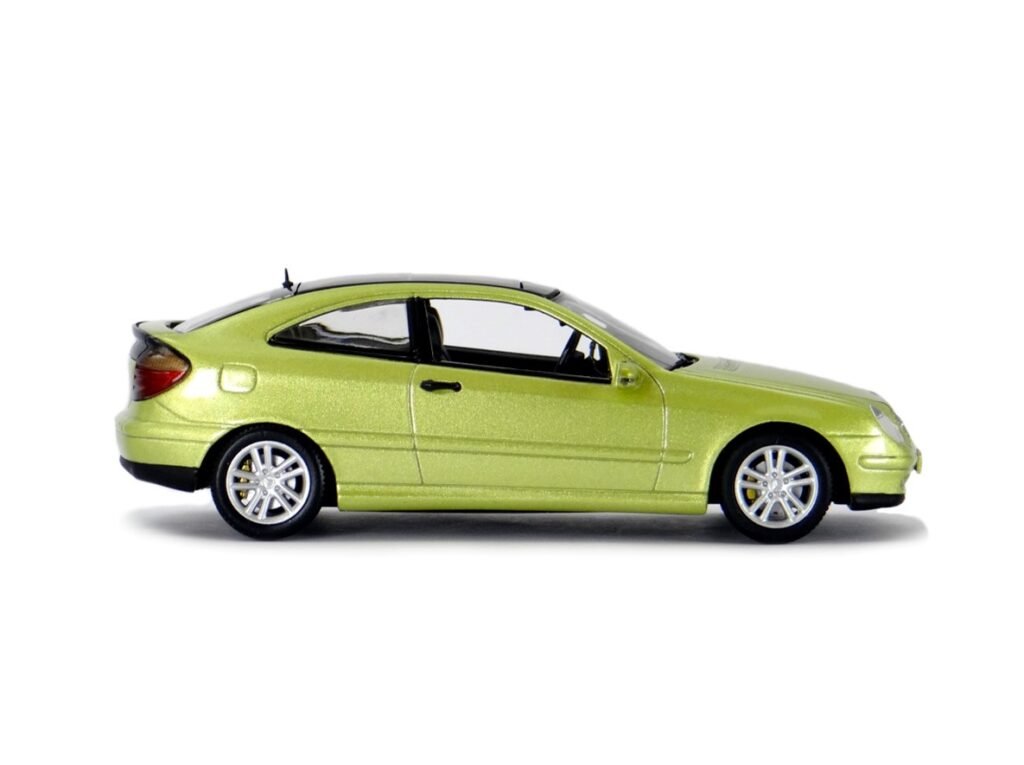
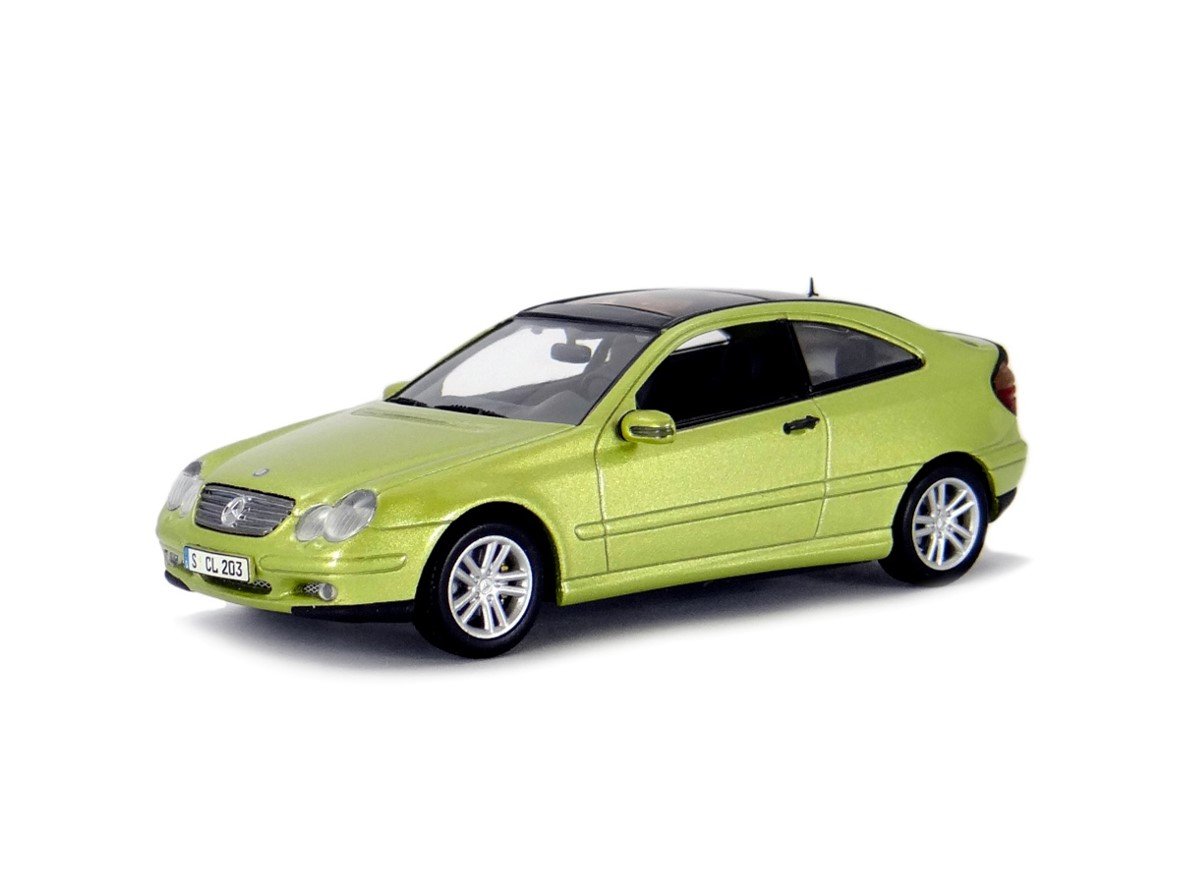
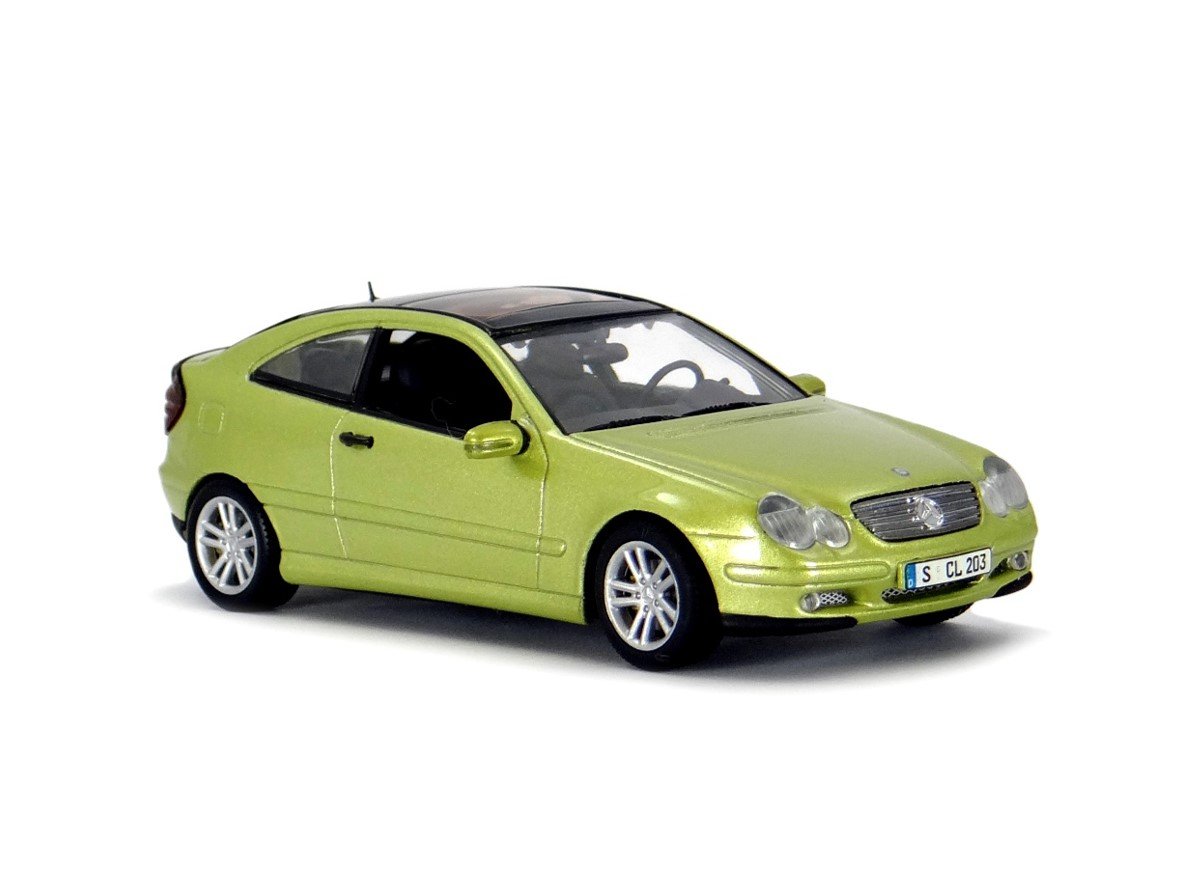
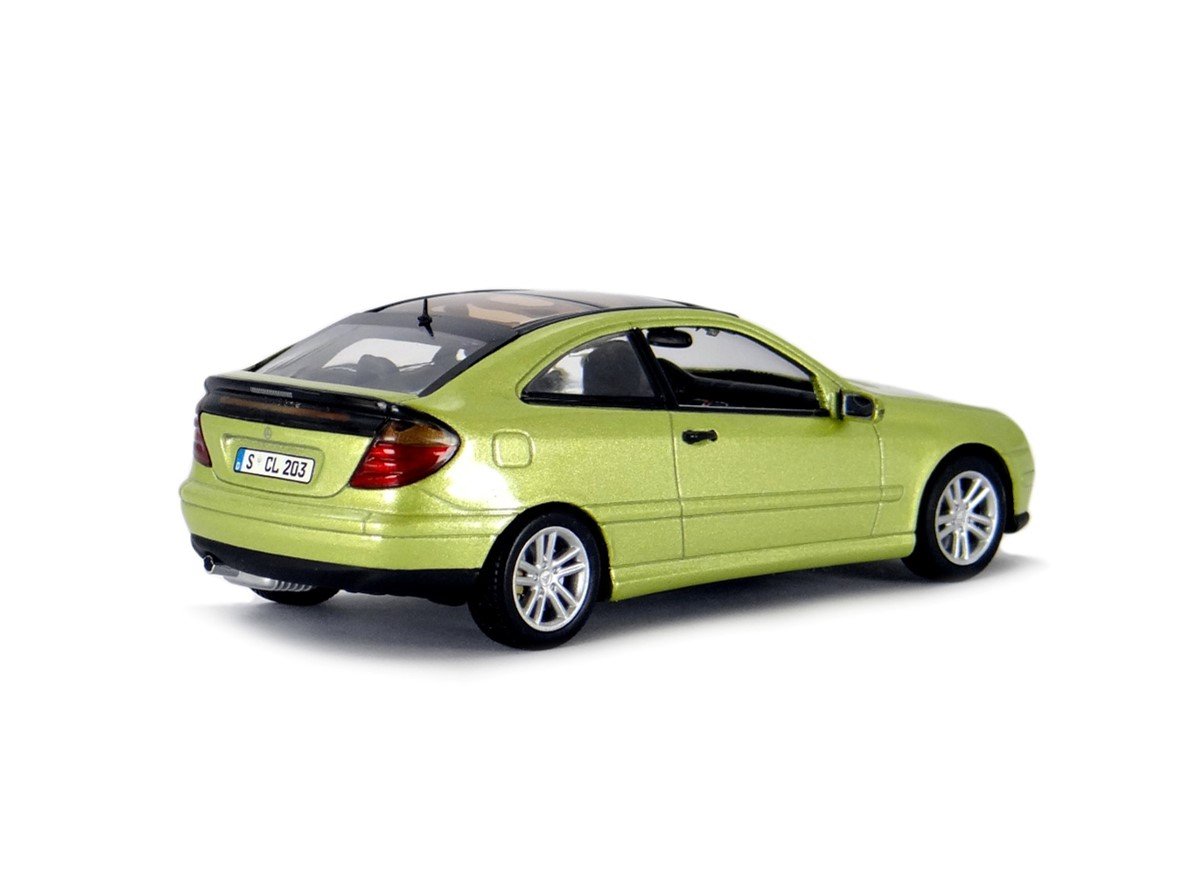
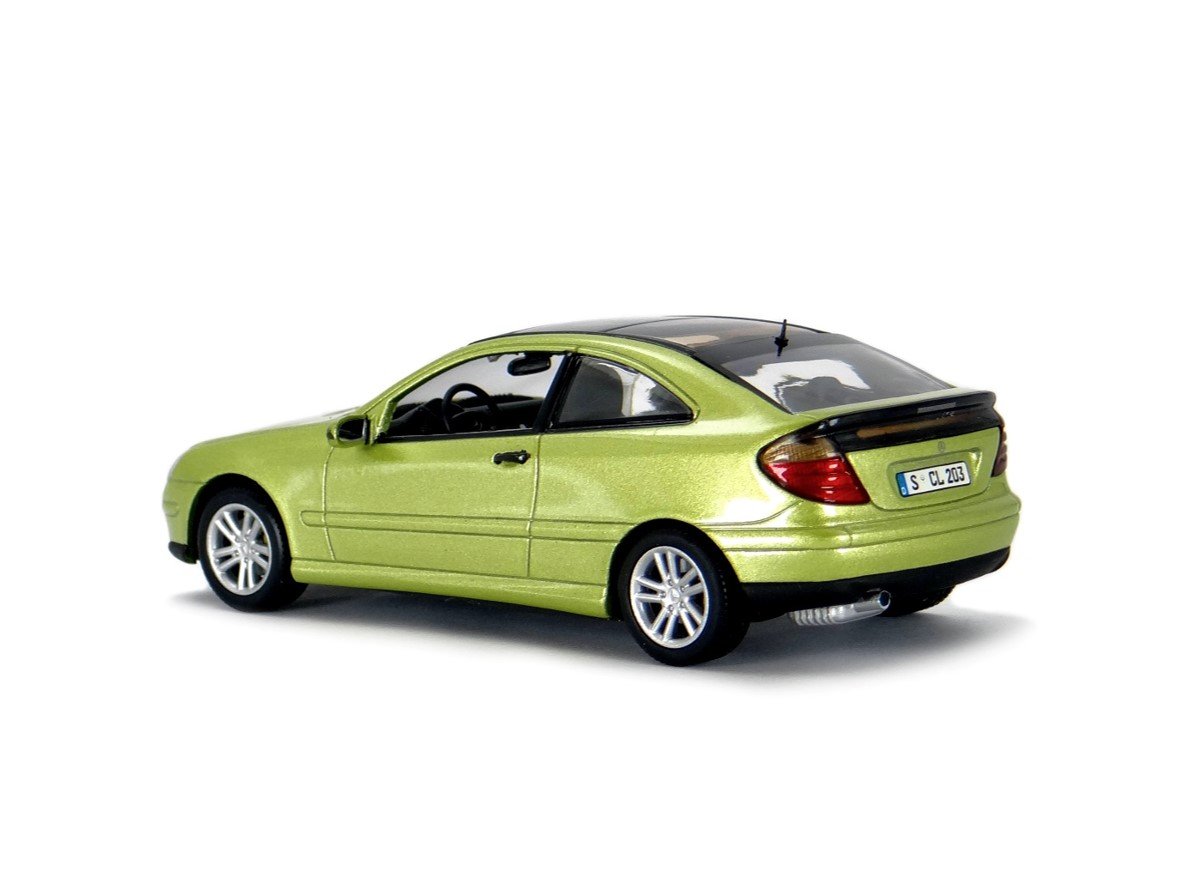
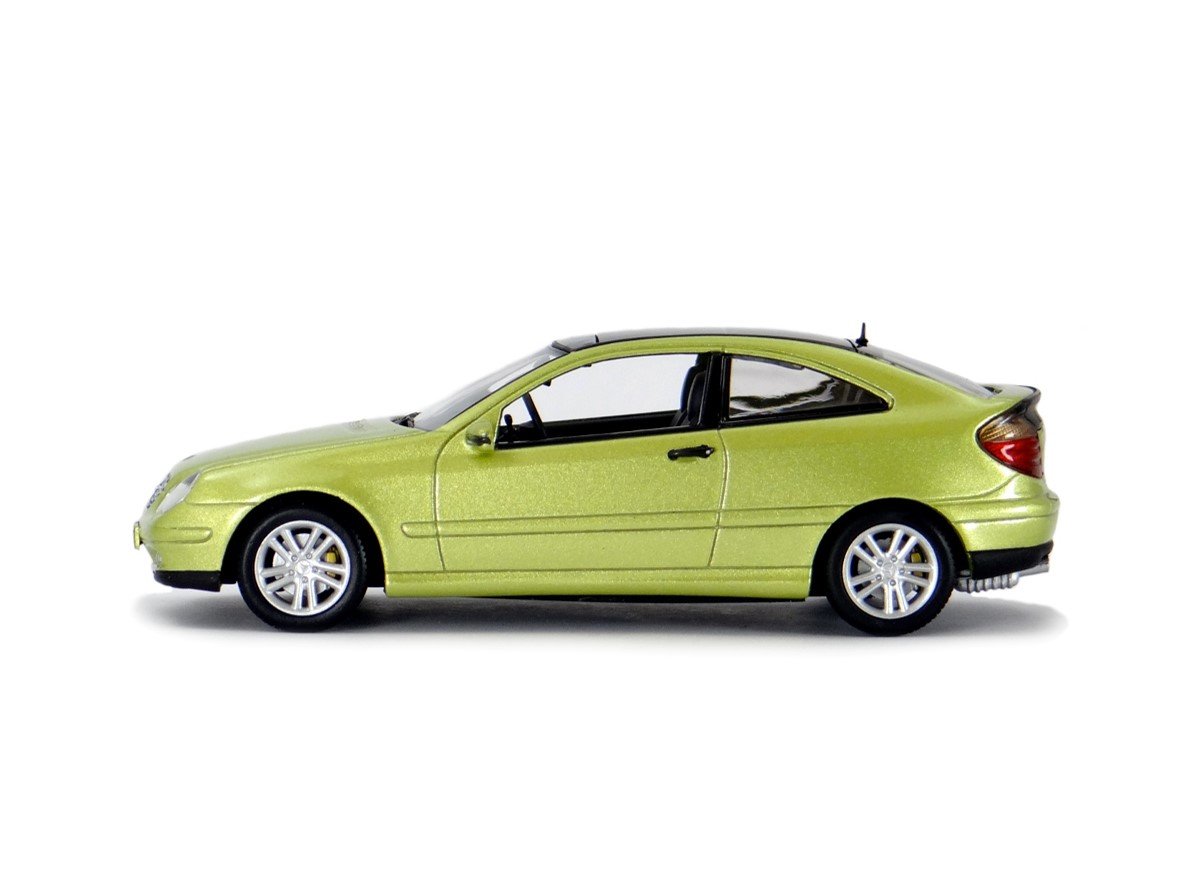
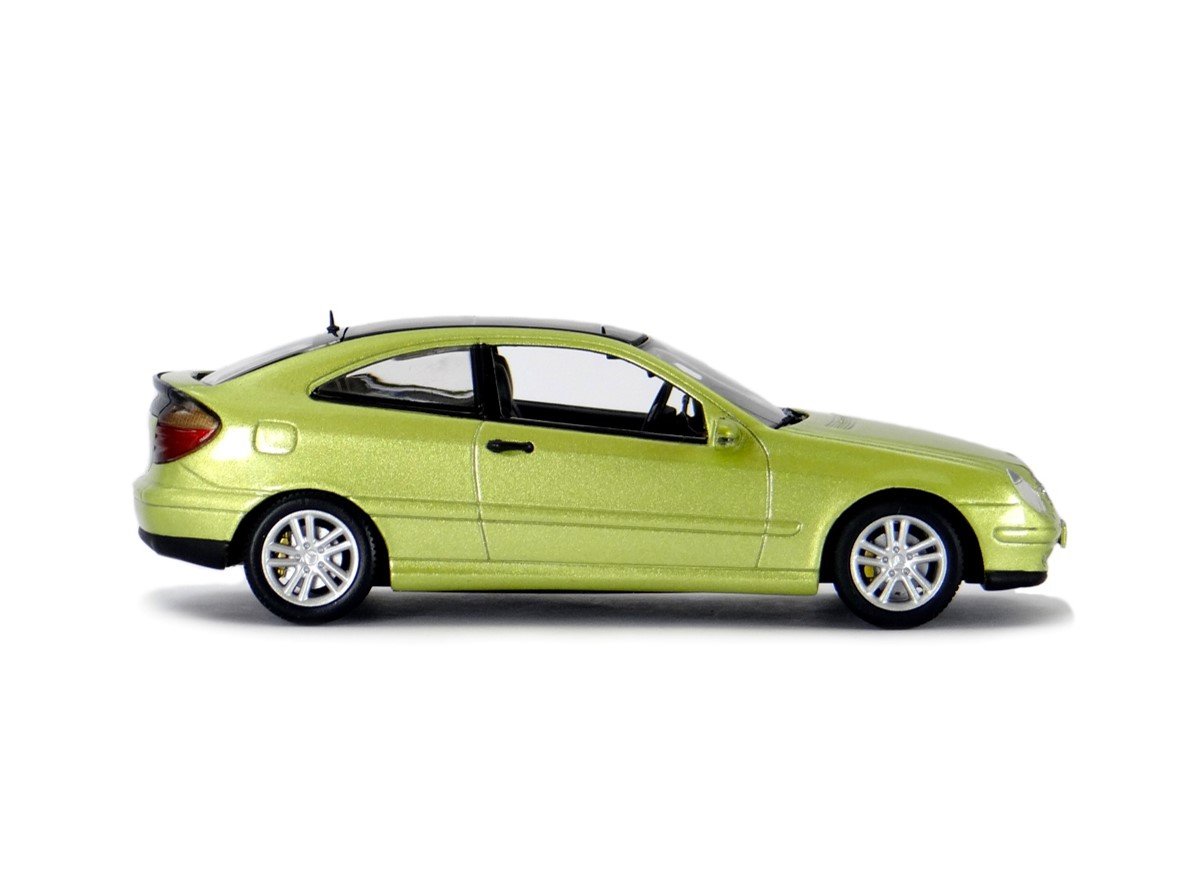
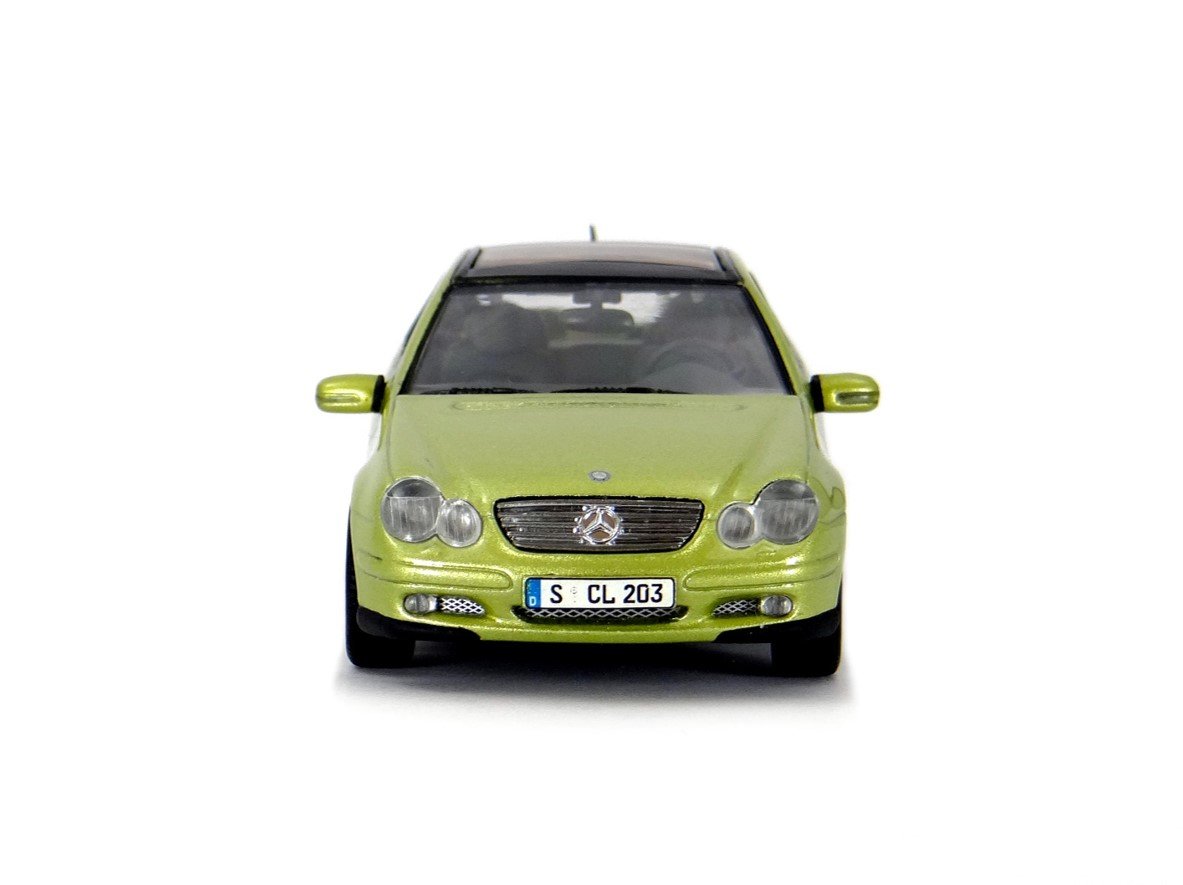
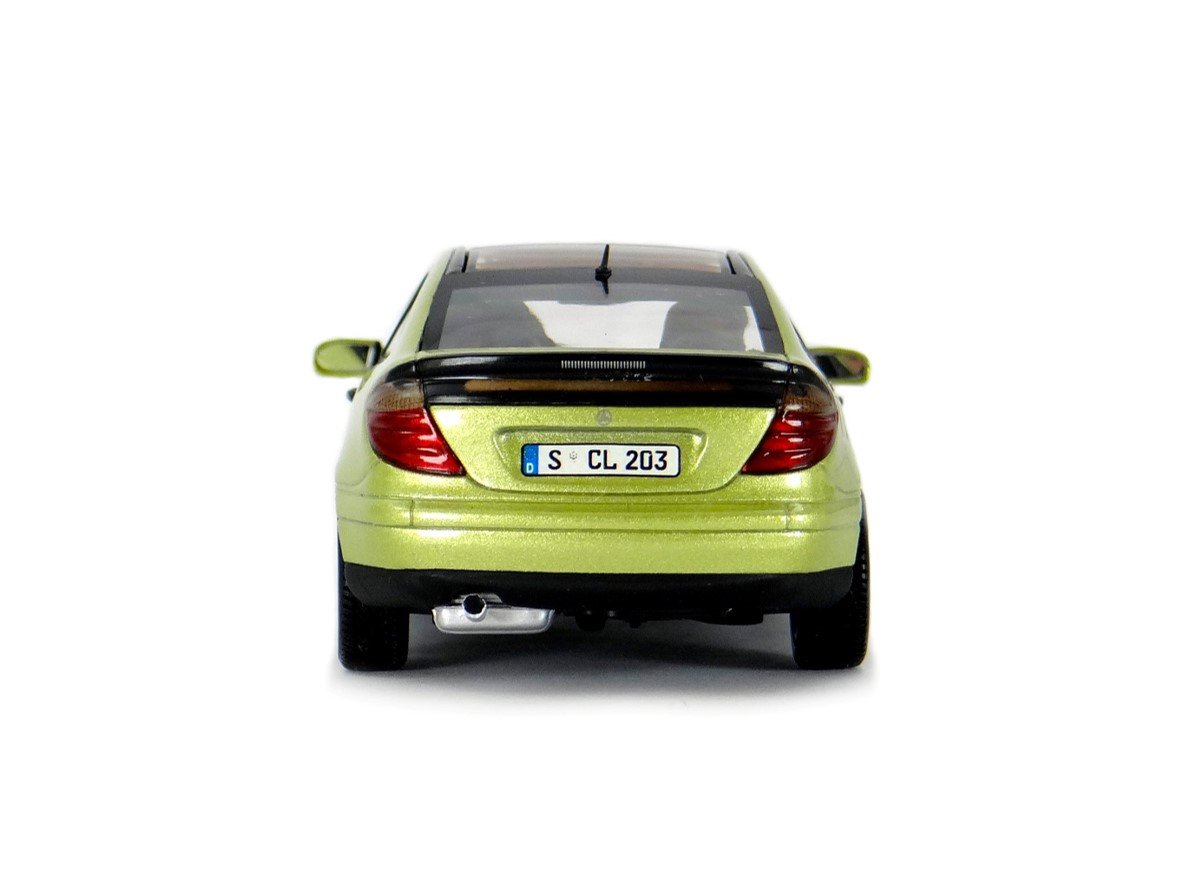
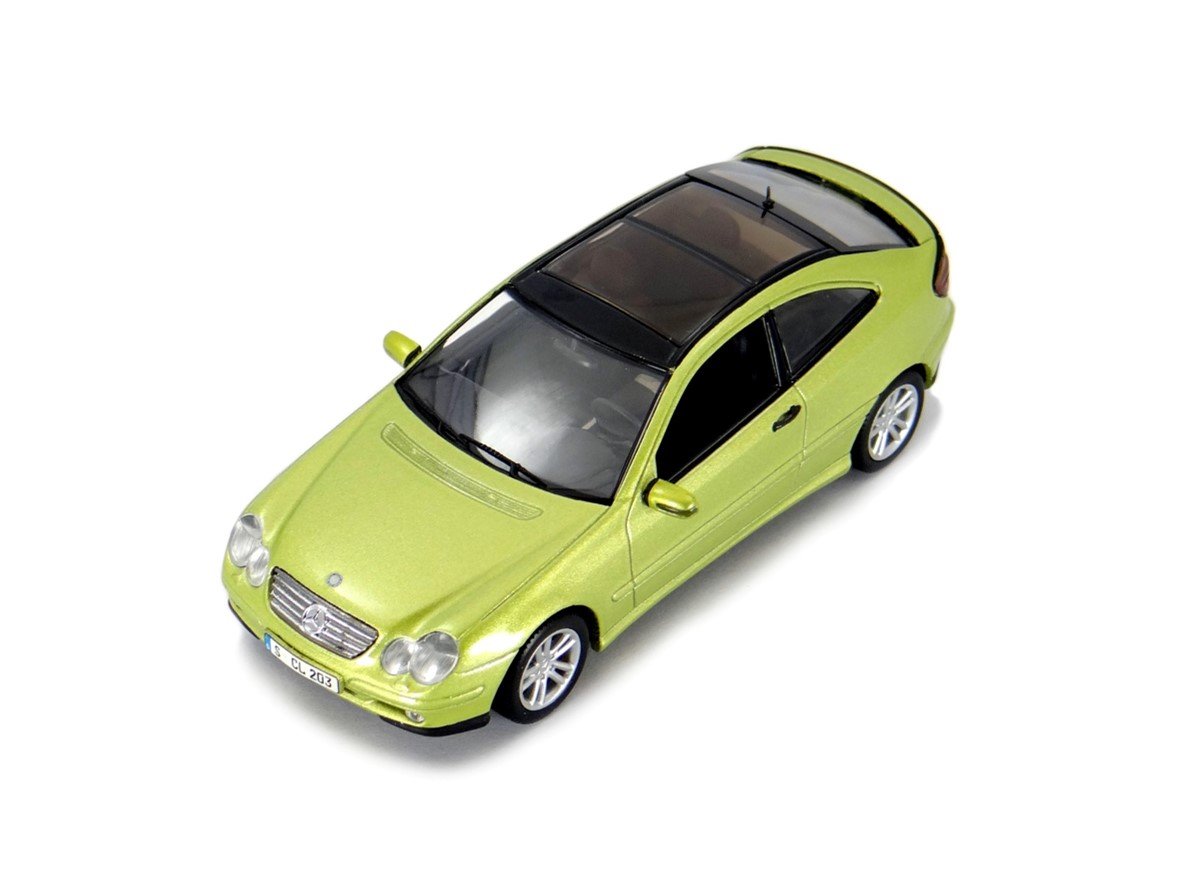
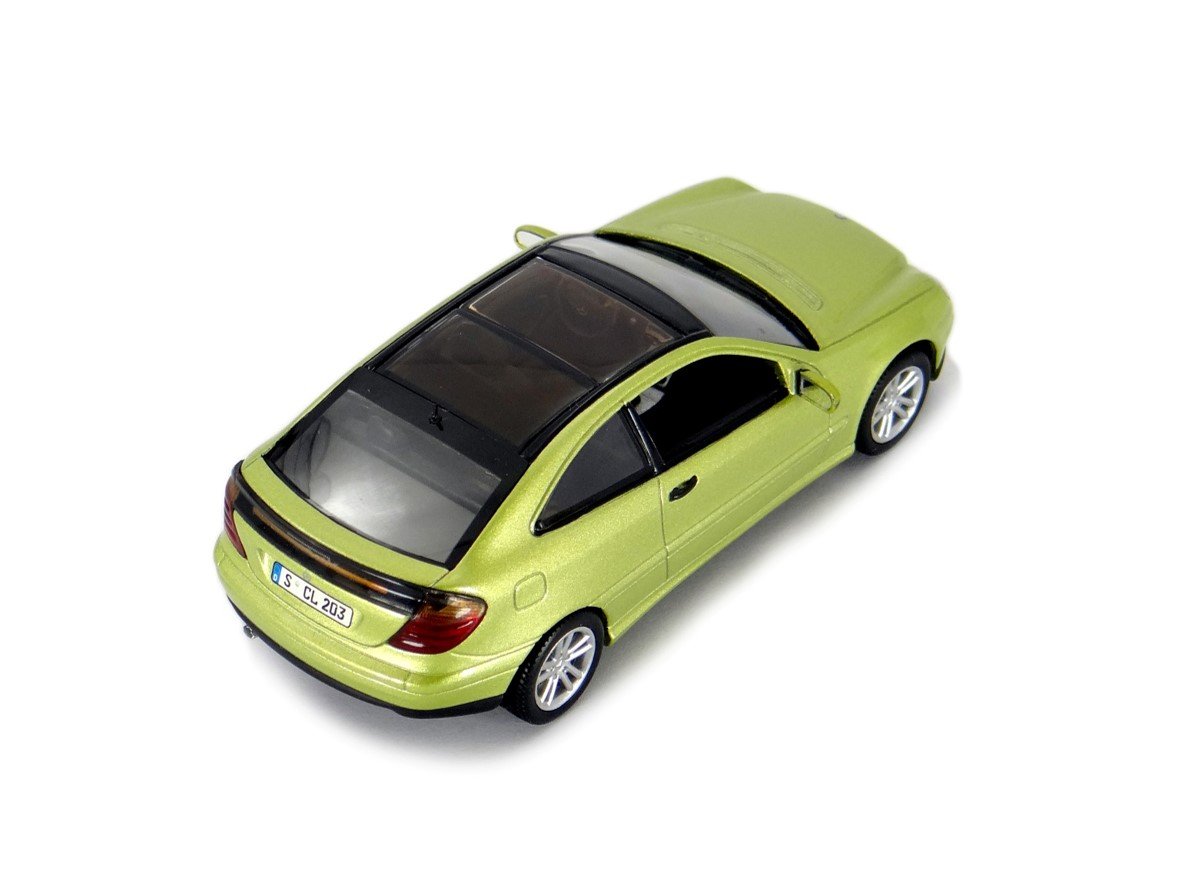
Stary, dobry Minichamps! Kiedyś ta marka wyznaczała standardy w modelarstwie, więc nie dziwi, że miniaturka klasy C Sportcoupé wciąż wygląda dobrze, pomimo ponad 20 lat! Trudno znaleźć tutaj jakiekolwiek słabe punkty. Mamy wysoki poziom odwzorowania zarówno na zewnątrz jak i w środku, oraz ładny metaliczny lakier “Heliodorgrün”. Gwoli ścisłości dodam, że model pochodzi z serii limitowanej do 2304 sztuk.
Zapraszam Was do galerii zdjęć oraz oczywiście stron MiniAutomobile na social mediach: Facebooku i Instagramie!
*** ENGLISH ***
The Mercedes-Benz C-Class Sportcoupé is the first compact car in the brand’s history. It was set with a task of attracting new, younger customers to the brand. Its stylish looks were meant to be its biggest asset, but poor value for money stood in the way of greater success.
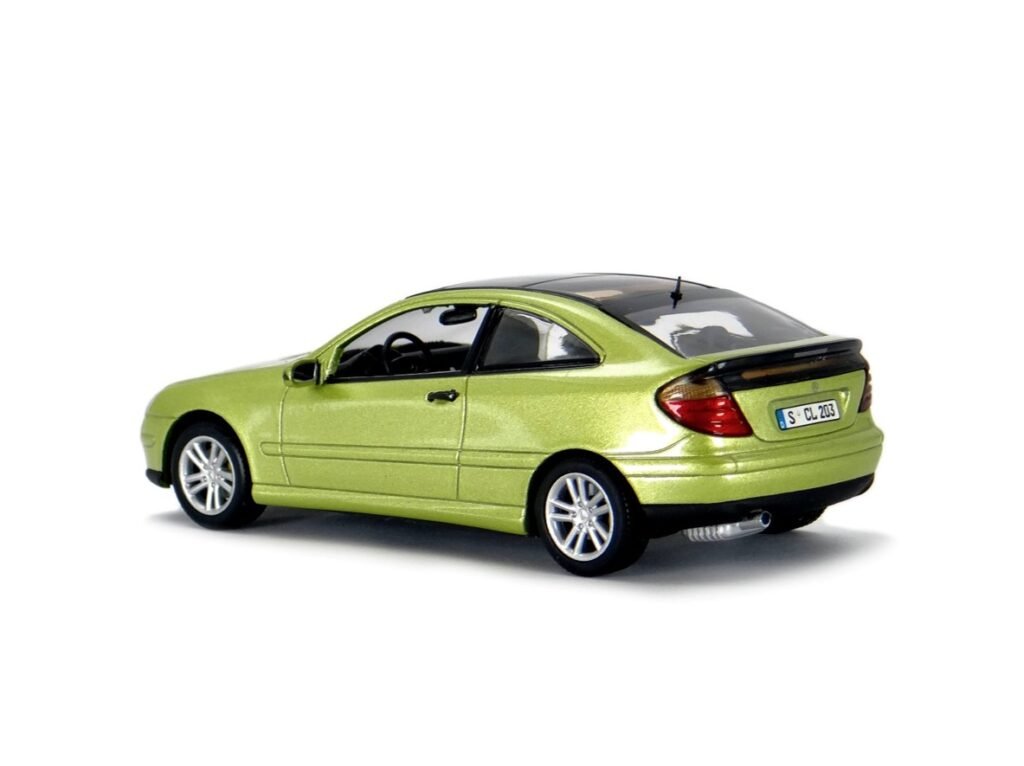
For years Mercedes had a reputation of a brand for older, wealthy people. Eventually, the Germans grew uncomfortable with that image, and from the late 90s they made every effort to attract a younger clientele. It began with the SLK roadster and the controversial A-Class, followed in by the C-Class Sportcoupé in 2001.
With the new model, Mercedes aimed directly at the BMW 3 Series Compact. Both cars in fact followed an almost identical recipe: a compact executive sedan platform wrapped in a sleek three-door body. Mercedes of course based its model on the then-new C-Class W203. Although both cars share a platform and have the same wheelbase (271.5 cm), they differ noticeably. The C Sportcoupé has a completely different shape; it’s shorter, lower, with a sloping roofline and a sharply cut rear end topped by a split rear window. By Mercedes standards of the era, it was a decidedly avant-garde design! The differences also extend to the details, including the front air intake and headlight design. Another distinctive feature is the optional two-piece panoramic roof developed specifically for this model.
To further highlight the Sportcoupé’s youthful and sporty image, Mercedes Mercedes gave it stiffer dampers and tweaked suspension settings compared with the standard C-Class. Unfortunately, the result was underwhelming. Although the Sportcoupé is firmer and less comfortable than the saloon, it exhibits reduced stability and poorer handling. Certainly not the class-best and a far cry from a “sporty coupé”.
Luckily, the interior is much better. Mercedes stopped itself from any unnecessary experiments. The elegant, well-built dashboard comes straight from the C-Class saloon, with only a three-spoke steering wheel setting it apart. The cabin is also surprisingly roomy—despite the sporty look, there’s plenty of space.
Initially, the Sportcoupé engine range included the C180 (130 hp), C220 (143 hp), C200 Kompressor (163 hp) and C230 Kompressor (197 hp), with the C220 CDI (143 hp) joining a few months later. Naturally, the most interestings variants are the most powerful ones, introduced later on; the V6-powered C230 and C320/C350, along with the made-to-order C30 CDI AMG and C32 AMG models.
The C-Class Sportcoupé was met with a lukewarm response. For conservative customers, a Mercedes like that was just unacceptable, while others criticised its ride comfort and mediocre handling. The real damage to sales, however, came from the price. For a compact car, the Mercedes-Benz C-Class Sportcoupé was extremely expensive—costing even more than its direct competitor, the BMW 3 series Compact. The generous equipment did little to help. For many, this was too high a price tag for a compact car, even with a premium badge.
Even so, the C Sportcoupé still got a follow-up. In 2008, it was refreshed to resemble the next C-Class and rebranded as the CLC. Production finally wrapped up in 2012, with the all-new A-Class taking over as the brand’s genuine compact offering.
About the miniature – Mercedes-Benz C-Class Sportcoupé
A good, old Minichamps! This brand once set the standards in model making, so it’s no surprise that the miniature of the C-Class Sportcoupé still looks great, even after more than 20 years! It’s difficult to find any major flaws. The detailing is impressive both inside and out, and the metallic “Heliodor Green” paint looks great. For completeness, I should also mention that this model was released in a limited run of 2,304 pieces.
Go and check out the image gallery and of course the MiniAutomobile social pages on Facebook and Instagram!




Też mam taki modelik (salonowy pokazany w albumach na blogu). Ten ma ciekawy kolor. Takim prawdziwym samochodem odbyłem w 2002 roku podróż z Warszawy do Stuttgartu i fabryki Smarta w Hambach, na szkolenie w tejże.
Widzę, że ostatnio trafiam w modele które posiadasz lub z którymi masz jakieś wspomnienia!