
Ford ma dekady doświadczenia w robieniu popularnych i pożądanych samochodów sportowych. Zarówno Mustang jak i Capri zasłużenie stały się legendami. Naturalnie więc, Ford chciał dodać tej magii również małej Pumie.
Bazując na fundamentach sukcesów Mustanga i Capri, Ford czuł się pewnie prezentując w 1997 roku ich najmniejszą siostrę – Pumę. Auto powstało na fali mody na coupé segmentu B/C i celowało prosto w bezpośredniego konkurenta jakim był Opel Tigra. Oba zbudowano zresztą według identycznej receptury: wnętrze i podwozie z miejskiego hatchbacka opakowane w stylowe nadwozie. W przypadku Pumy, niezwykle stylowe.
Puma była drugim Fordem zaprojektowanym według filozofii “New Edge Design” i wyglądała naprawdę zjawiskowo. Ówcześni konkurenci mogli tylko patrzeć na nią z zazdrością, bo designersko Puma ich nokautowała. Połączenie płynnych linii z ostrymi kątami zapewniało jej niepowtarzalny wygląd, który nawet dzisiaj prezentuje się świeżo.
Stylowy wygląd Pumy skrywa znane i sprawdzone podzespoły z czwartej generacji Fiesty. Płyta podłogowa jest identyczna w obu modelach, natomiast modyfikacjom poddano zawieszenie i układ kierowniczy. Dzięki temu Puma mogła poszczycić się znakomitym prowadzeniem, godnym prawdziwego sportowego auta. Żaden inny model w klasie nie oferował kierowcy takich doznań.
Do charakteru auta idealnie pasowały lubiące wysokie obroty benzynowe silniki Zetec-S opracowane wspólnie z Yamahą. W szczególności oferowana od samego początku jednostka 1.7 (125 KM), dostępna przez cały okres produkcji. Pomimo stosunkowo niewielkiej mocy, dzięki niskiej masie własnej Pumy wynoszącej 1039kg, zapewniała dobre osiągi (202km/h, 0-100 km/h w 9,2 s). Po roku przedstawiono tańszą odmianę z silnikiem 1.4 (90 KM), zastąpioną ostatecznie przez wersję 1.6 (103 KM).
Zdecydowanie najrzadszą odmianę stanowiła natomiast Racing Puma. Model opracowany we współpracy z brytyjską firmą Tickford powstał, aby spełnić przepisy homologacyjne samochodów rajdowych. Najszybsza Puma otrzymała dużo zmian technicznych oraz mocniejszy, 155-konny silnik 1.7 Ostatecznie, powstało tylko 500 egzemplarzy Racing Pumy.
O ile wygląd, prowadzenie i silniki były ogromnymi atutami, to najsłabszą częścią każdej Pumy było niestety wnętrze. Aby zredukować koszty, Puma dostała deskę rozdzielczą taką samą jak w Fieście, różniącą się jedynie kilkoma srebrnymi wstawkami. Nijaki, pospolity kokpit nie pasował do stylowego nadwozia i Puma była za to od początku krytykowana. Ford nigdy tego jednak nie zmienił.
Ostatecznie, Ford Puma nie powtórzył sukcesu Capri i Mustanga. Nie dlatego że był złym samochodem, bardziej dlatego że moda na takie małe couoé była krótkotrwała. Pomimo niezaprzeczalnych zalet, model nie cieszył się wielkim zainteresowaniem. Jedynym wyjątkiem była Wielka Brytania, gdzie trafiło aż 52 tys. egzemplarzy, z wyprodukowano 133 tys! Koniec sprzedaży nastąpił na początku 2002 roku, po niecałych pięciu latach. Choć Ford Puma nie doczekał się bezpośredniego następcy, to w 2022 roku nazwę wskrzeszono. Teraz, nosi ją oczywiście popularny miejski SUV.
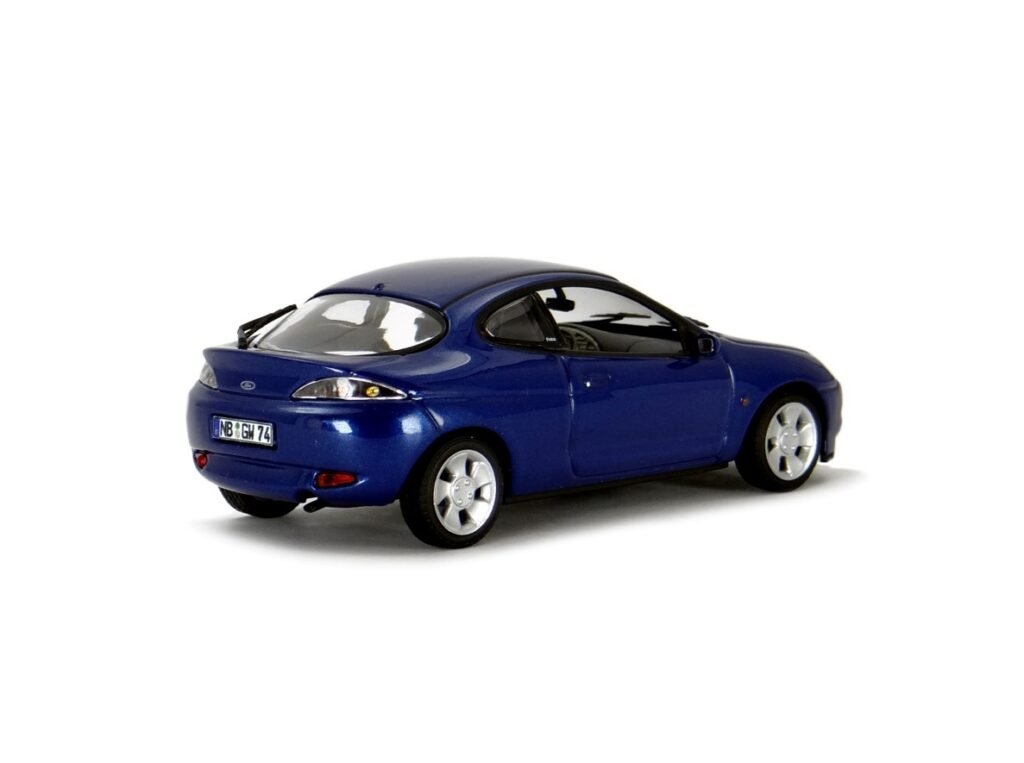
O miniaturze – Ford Puma
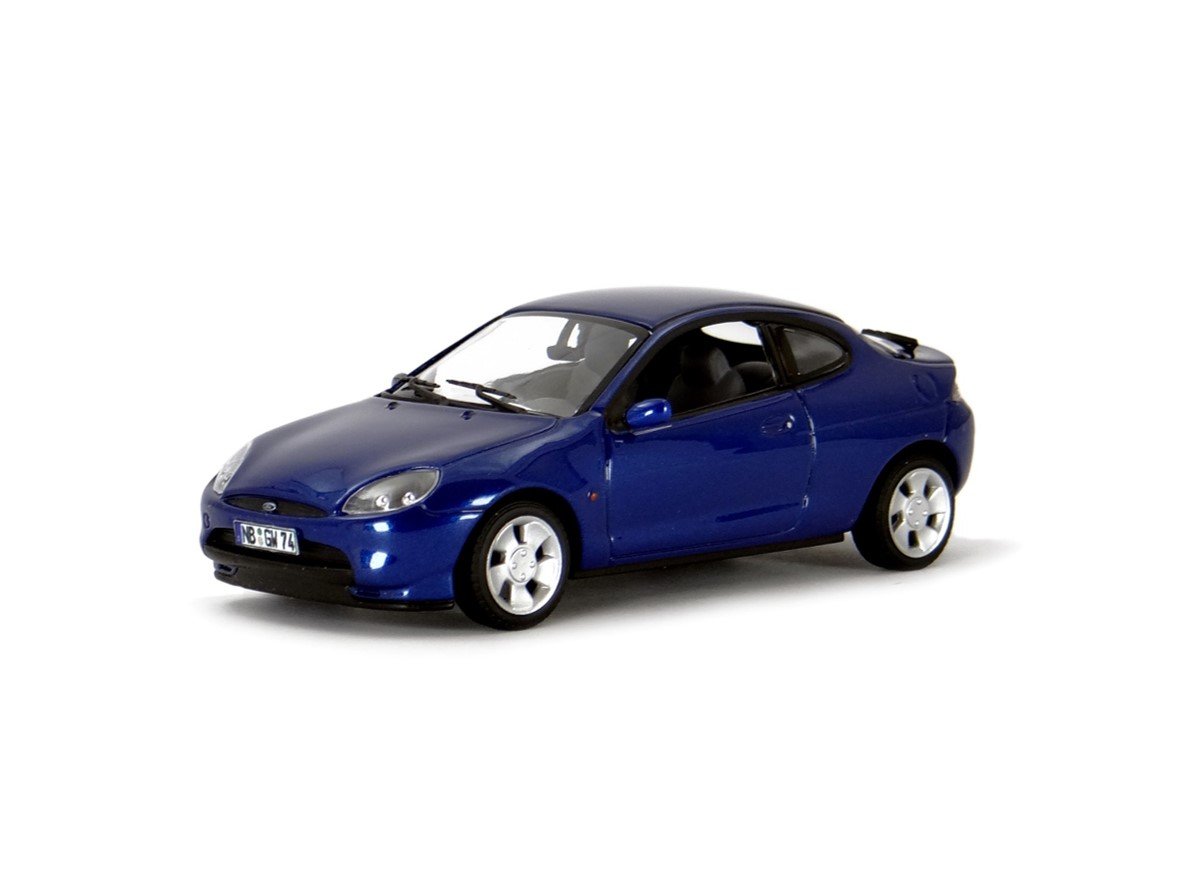
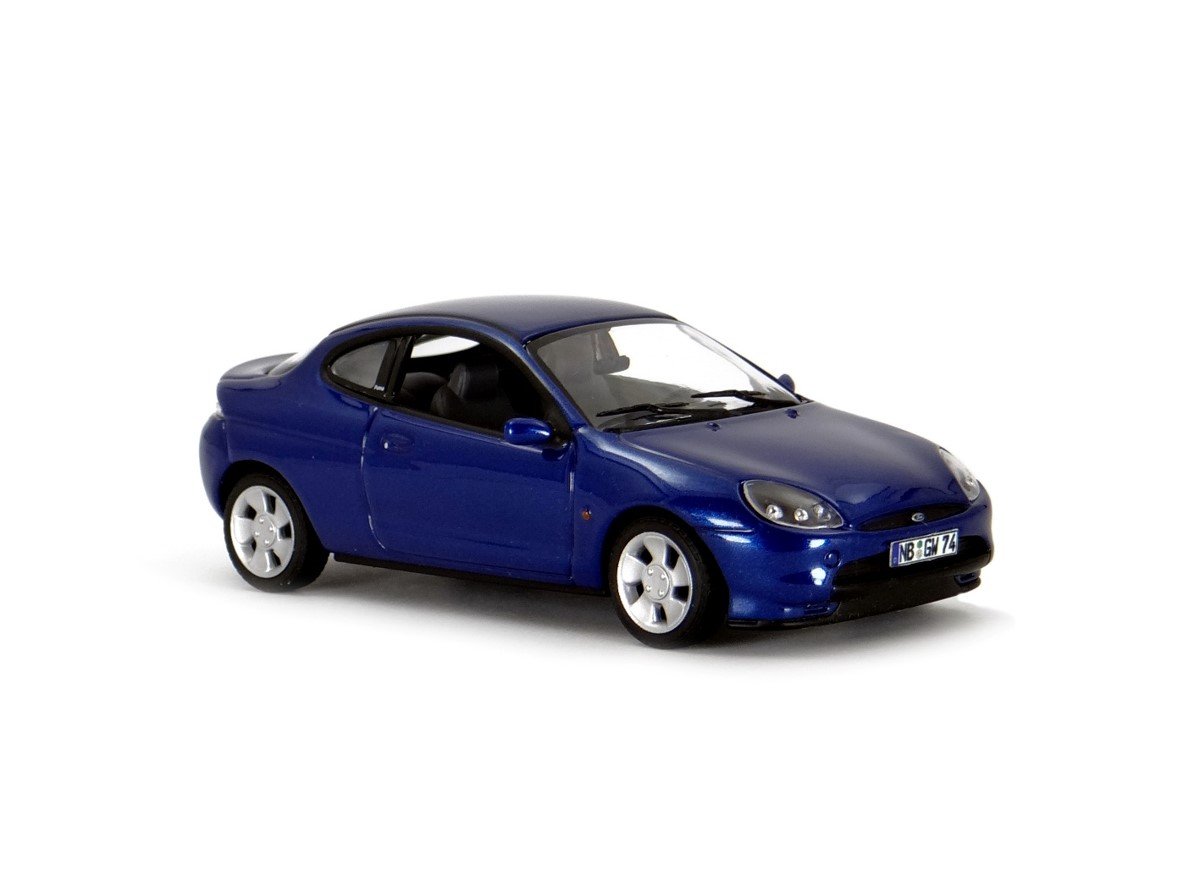
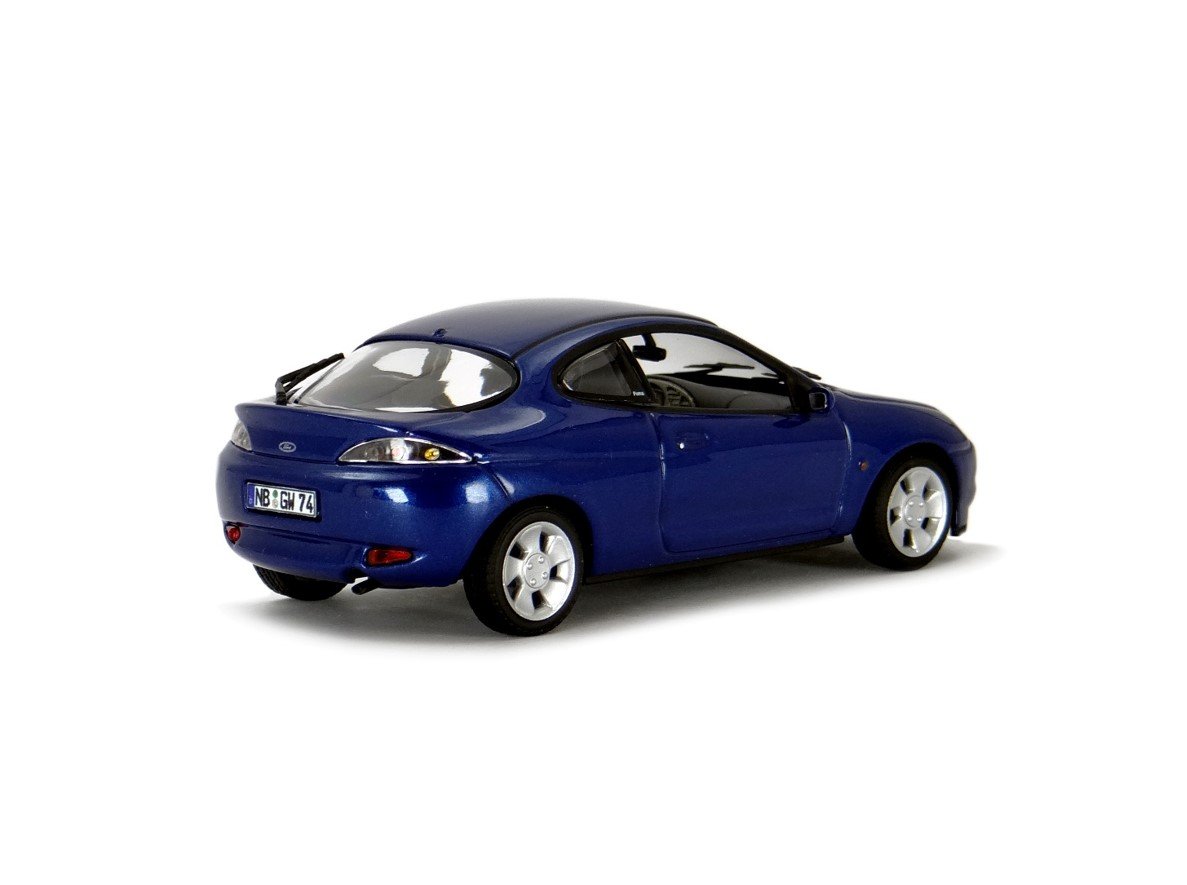
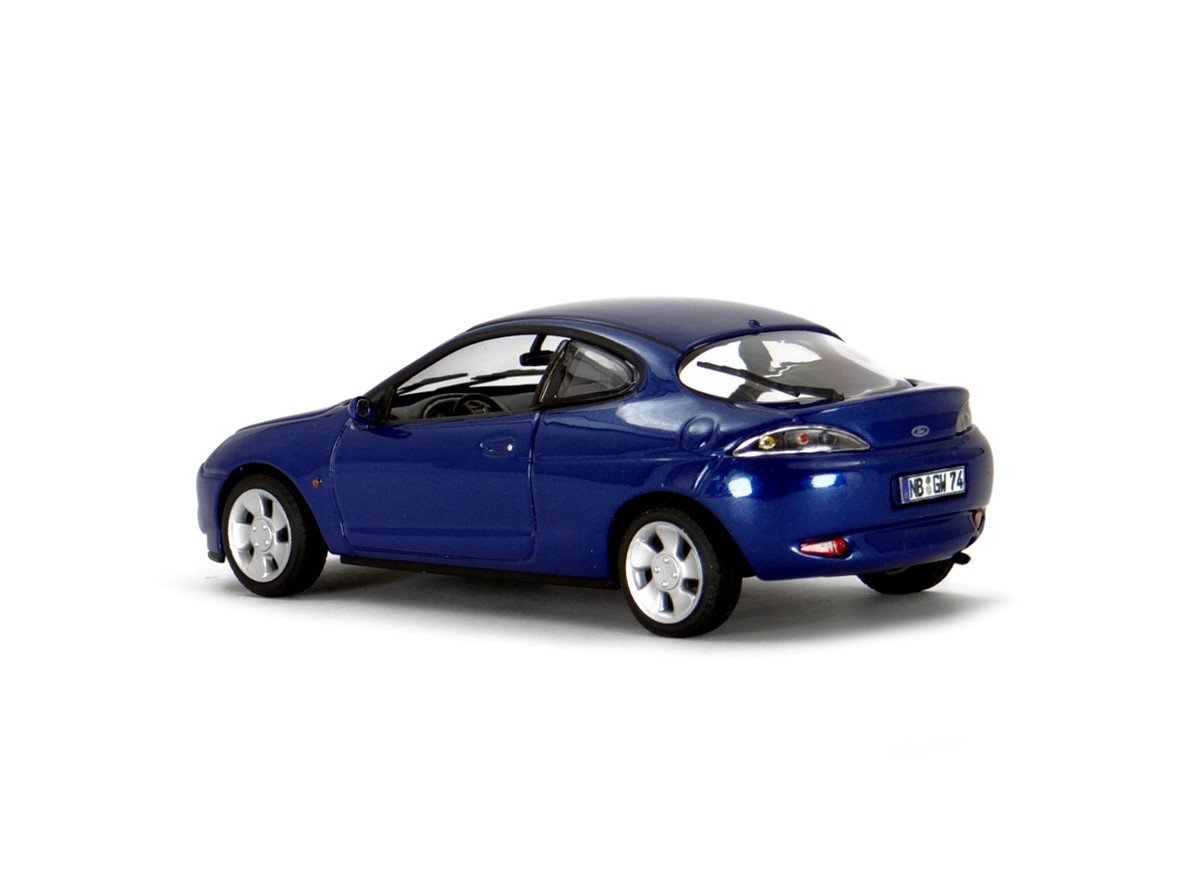
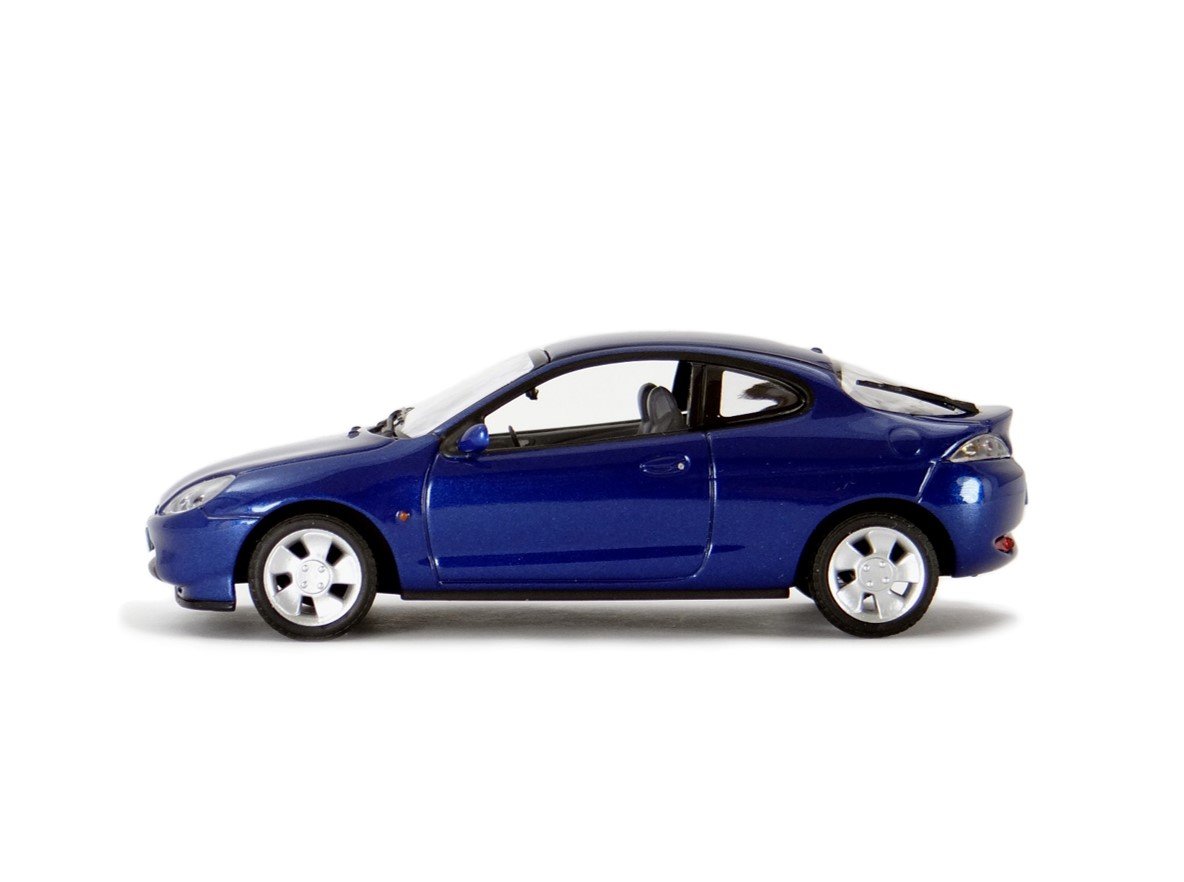
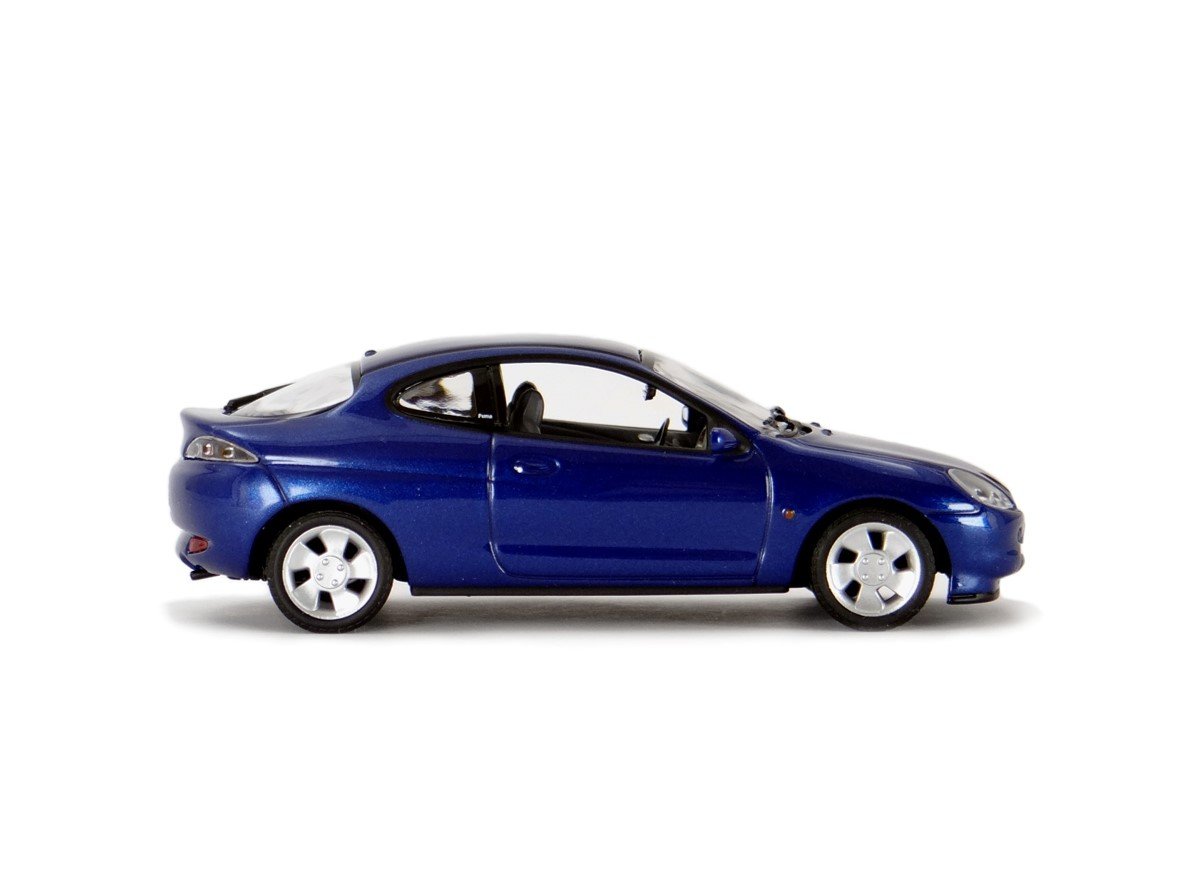
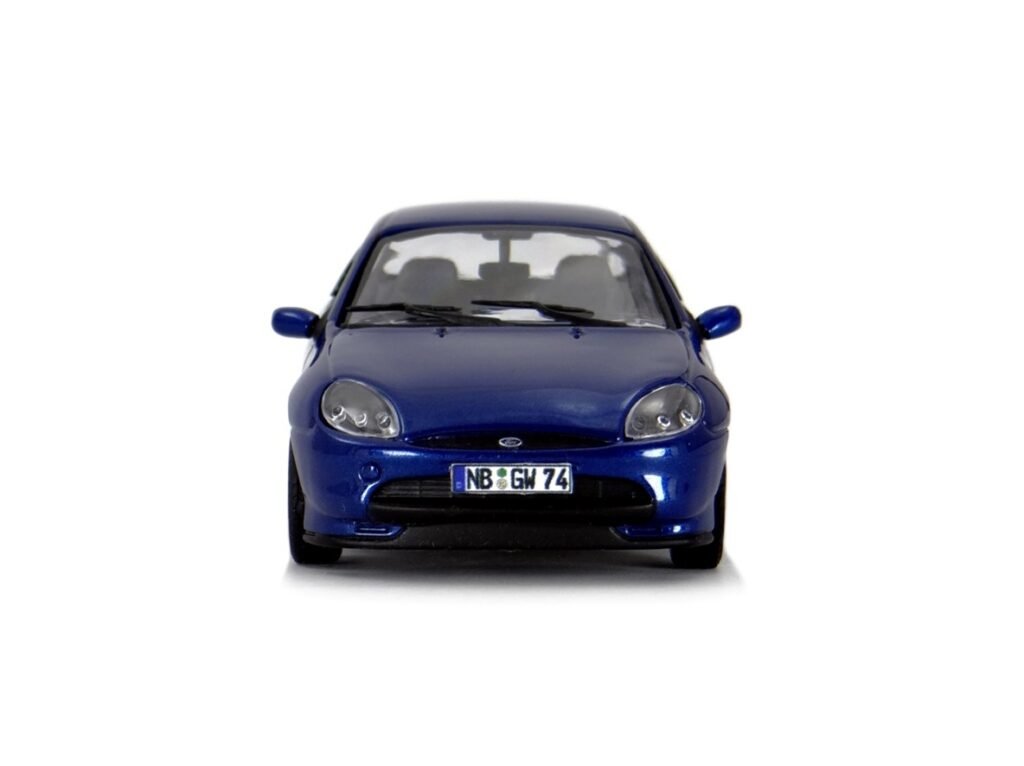
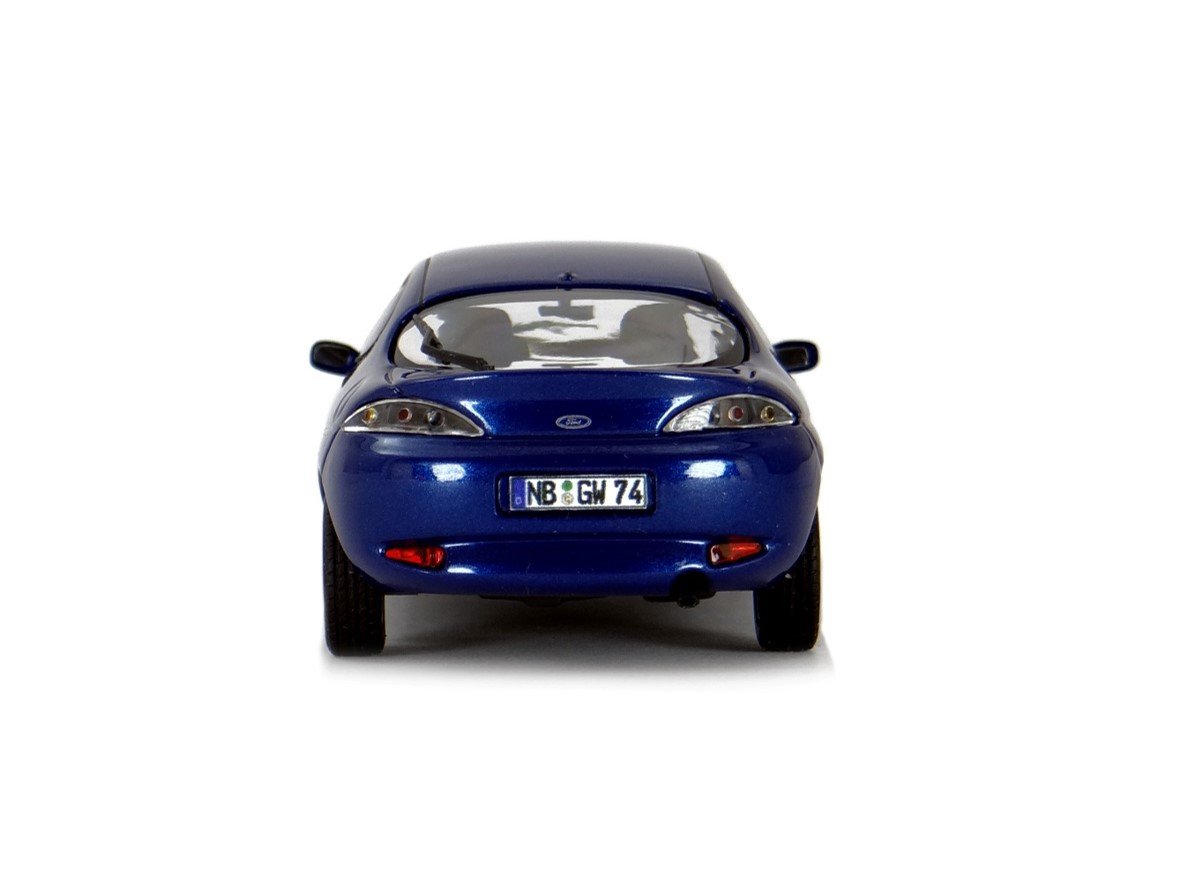
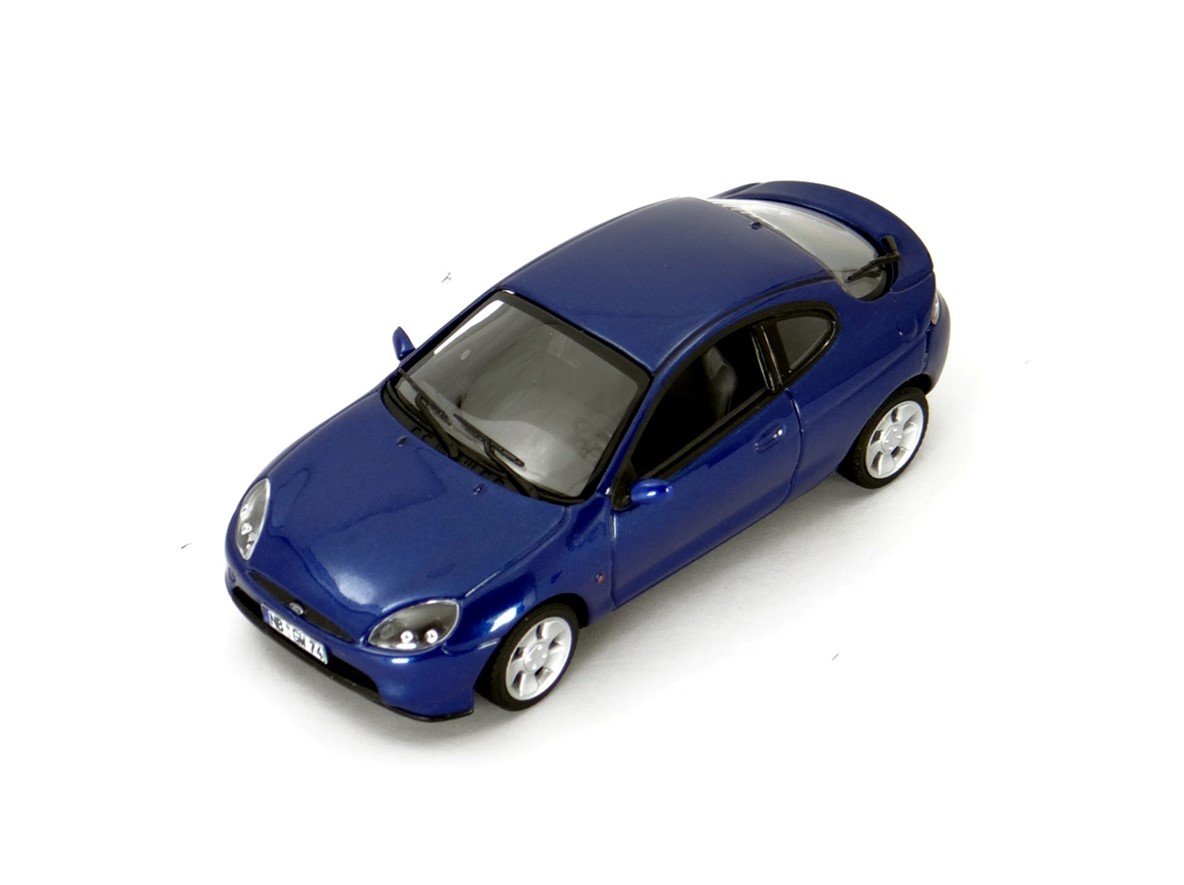
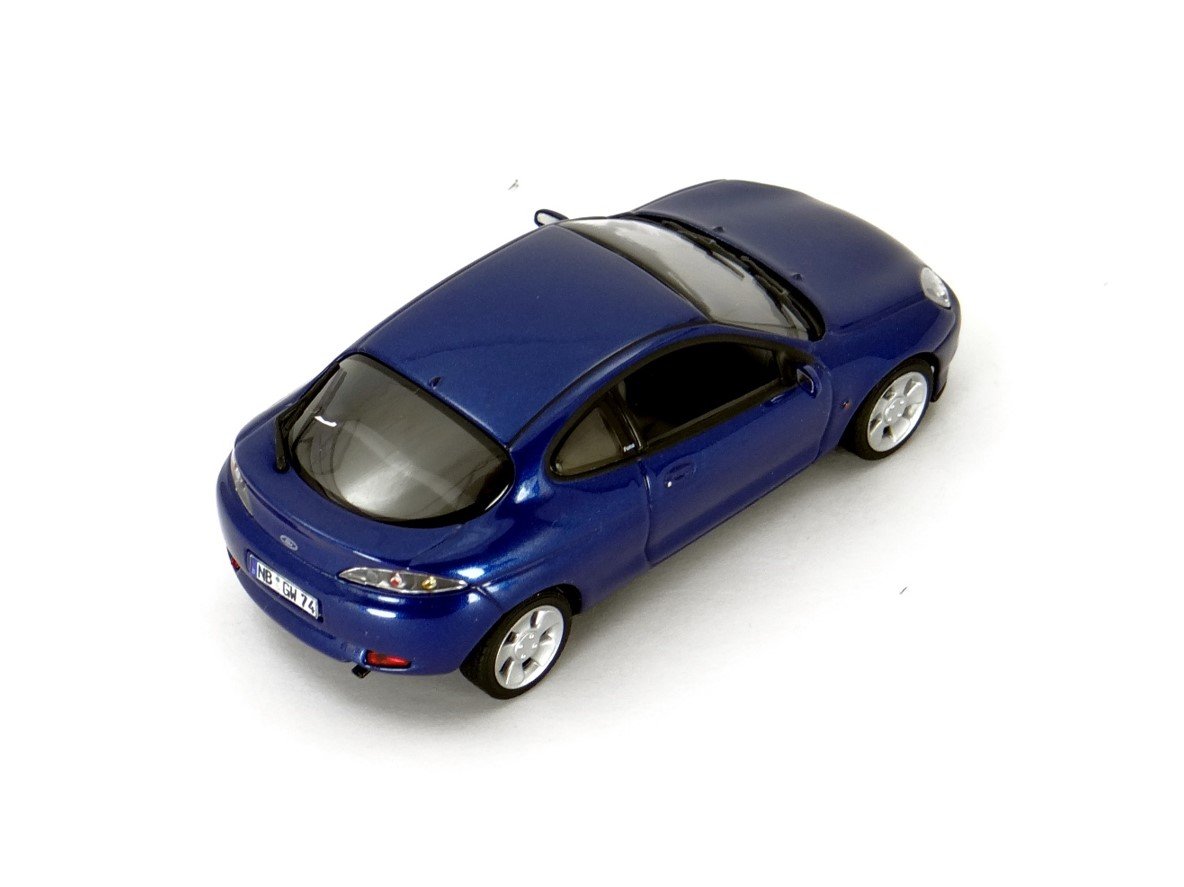
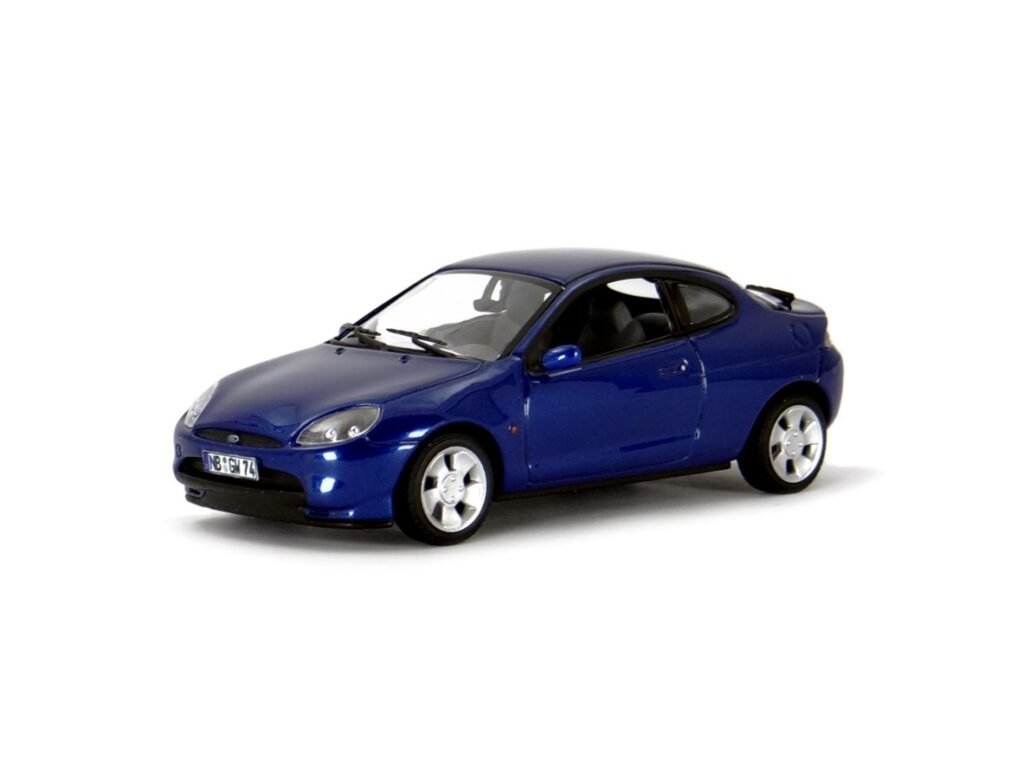
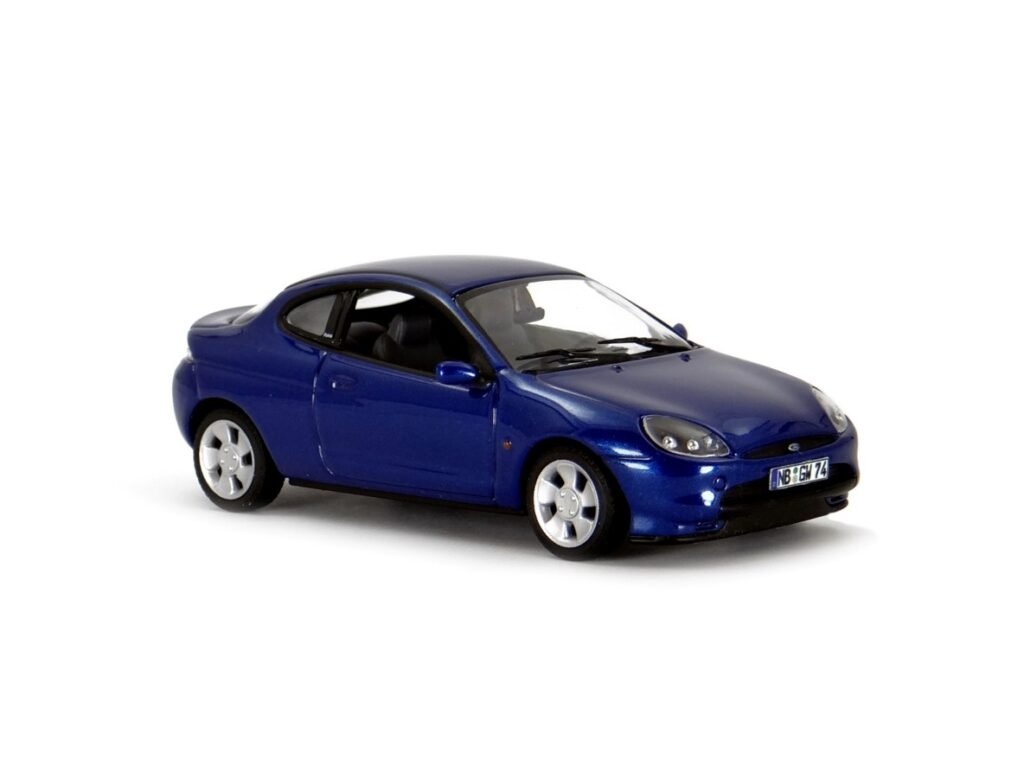
Niebieski Ford Puma od Maxichamps to reedycja starej formy Minichamps z końca lat 90, wypuszczona w 2022 roku. Sam odlew wyśmienicie wytrzymał upływ czasu, więc nie potrzebował żadnych zmian. Ładny metaliczny lakier wystarcza, żeby miniaturka dobrze wyglądała.
Niestety, typowo dla reedycji Maxichamps, otrzymujemy zubożone czarne wnętrze. Na szczęście, udało mi się znaleźć na ebayu tani, zdezelowany egzemplarz Pumy od Minichamps na przekładkę wnętrza. Tak więc moja niebieska Puma może się teraz pochwalić jasnoszarym wnętrzem, tak jak powinna.
Jeśli chodzi o zmiany, to dodałem też tablice rejestracyjne, który standardowo w modelu brakuje. Jak zwykle, to mały szczegół który robi dużą różnicę.
Ford Puma czeka już na Was w fotogalerii, a ja jak zwykle zapraszam do odwiedzania MiniAutomobili na Instagramie i Facebooku!
*** ENGLISH ***
Ford has decades of experience in making popular and desirable sports cars. Both the Mustang and the Capri have deservedly become legends. So, naturally Ford hoped to inject that magic into the little Puma.
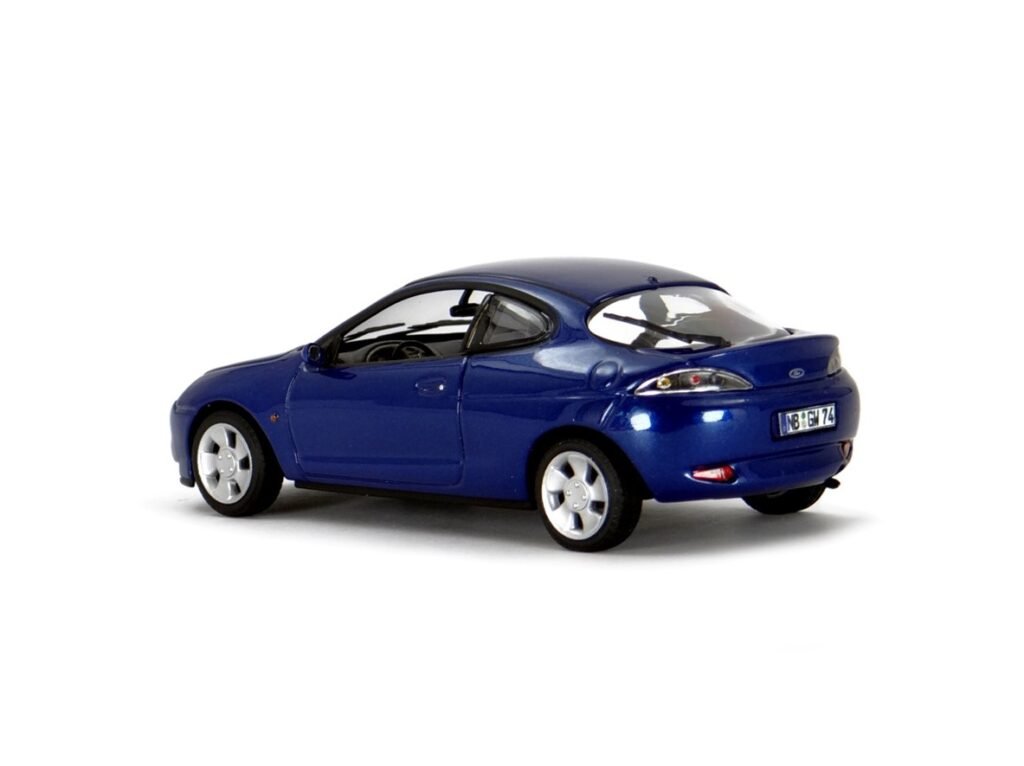
Based on the foundations of the success of the Mustang and the Capri, Ford was confident introducing their tiny sibling – the Puma. The car was born out of the 90s trend for B/C-segment coupés, taking aim squarely at its main rival, the Opel Tigra. In fact, both were built using the exact same formula: a city hatchback’s interior and chassis dressed in a more stylish body. In Puma’s case, an exceptionally stylish body.
The Puma was the second Ford designed in the “New Edge Design” philosophy and looked truly sensational. Its rivals at the time could only look on with envy, as the Puma clearly knocked them out in terms of design. A mix of swooping lines and sharp angles certainly gave the Puma a unique appearance that looks fresh even today.
Puma’s stylish appearance hides tried-and-tested underpinnings of the fourth-generation Fiesta. The floorpan is identical in both models, although the suspension and steering were revised. Thanks to this, the Puma delivered outstanding handling worthy of a proper sports car. No other model in its class could offer drivers such an engaging experience.
The car’s character was was perfectly matched by the high-revving Zetec-S petrol engines co-developed with Yamaha. In particular, the 1.7-litre unit (125 hp), available from launch and throughout the entire production run. Despite its relatively modest power, thanks to the Puma’s low curb weight of 1,039 kg, it delivered strong performance (202 km/h, 0–100 km/h in 9.2 seconds). A year later, a cheaper version with a 1.4-litre engine (90 hp) appeared, which was eventually replaced by a 1.6-litre version (103 hp).
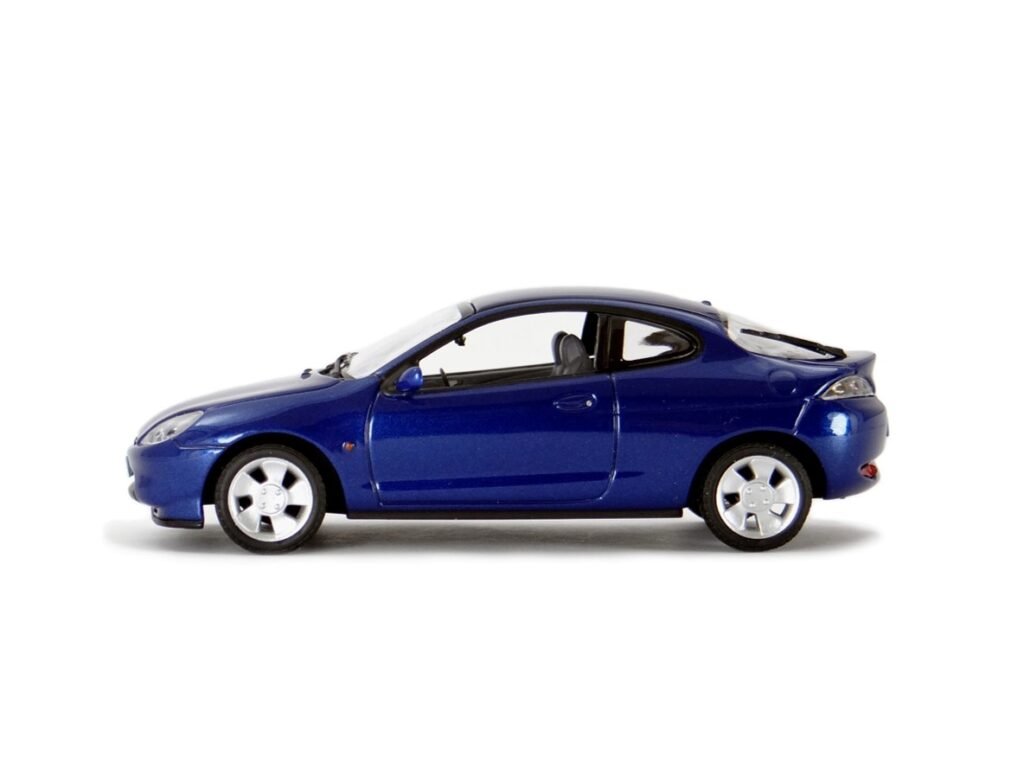
However, the rarest version was undoubtedly the Racing Puma. Developed in cooperation with the British company Tickford, it was created to meet rally car homologation regulations. The fastest Puma received extensive mechanical upgrades, as well as a more powerful 155 hp 1.7-litre engine. In total, only 500 units of the Racing Puma were produced.
While the styling, handling, and engines were major strengths, the weakest part of every Puma was unfortunately the interior. To keep costs down, it borrowed the Fiesta’s dashboard almost unchanged, aside from a few silver trim pieces. The dull, generic cockpit felt completely out of place in such a stylish car, and it drew criticism from day one. Despite this, Ford never addressed it.
Ultimately, the Ford Puma failed to match the success of the Capri and Mustang. Not because it was a bad car, bur rather because the small coupé fad was short-lived. Despite its clear strengths, it never became a big seller. The only exception was the UK, which accounted for 52,000 of the 133,000 units produced! Sales ended in early 2002, after less than five years. Although the Puma never had a direct successor, the name was revived in 2022—this time for a popular small SUV.
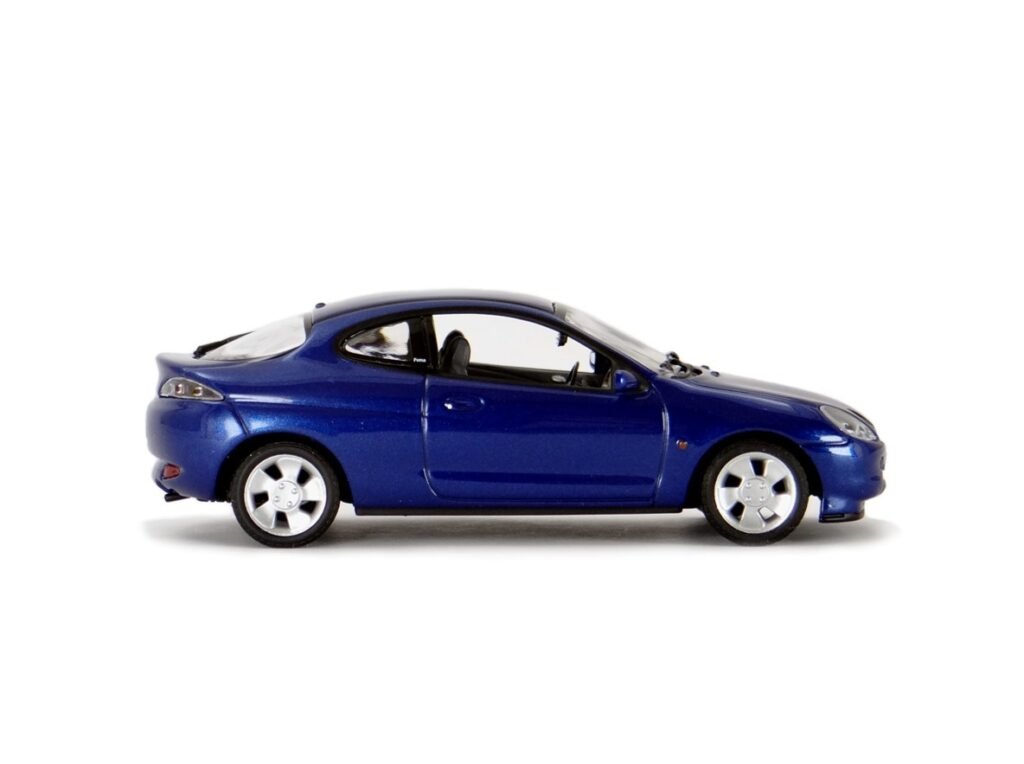
About the miniature – Ford Puma
The blue Ford Puma from Maxichamps is a 2022 reissue of an old Minichamps mould from the late 90s. The casting stood the test of time remarkably well, so it didn’t need any updates. A pretty metallic paint job is enough to make the model look good.
Unfortunately, typical of Maxichamps reissues, we get a simplified black interior. Thankfully, I managed to find a cheap, tatty model of the Minichamps Puma on ebay for an interior swap. So, my blue Puma now boasts a light grey interior, just like it should.
In terms of modifications, I also added the license plates, which are missing from the standard model. As always, it’s a small detail that makes a big difference.
The Ford Puma is already waiting for you in the photo gallery, while I remind you to visit MiniAutomobile on Instagram as well as Facebook!