
Patrzymy na pierwsze fabryczne kombi Mercedesa. Mercedes-Benz S123, czyli wersja kombi legendarnego W123, zapoczątkowała trwającą do dziś tradycję praktycznych aut producenta ze Stuttgartu.
To nie tak, że Mercedesy kombi wcześniej nie istniały. Oczywiście, że istniały, ale były produkowane przez zewnętrzne firmy w niewielkich ilościach. W latach 50. Binz produkował kombi na bazie Mercedesa 300, a pod koniec lat 60. odmianę „Universal” na bazie serii W110/W111 wytwarzała w Belgii firma I.M.A. Po zakończeniu jego małoseryjnej produkcji, przez dekadę nie pojawił się żaden Mercedes z nadwoziem kombi. Nowy rozdział otworzył w 1977 roku Mercedes-Benz S123 – pierwsze kombi produkowane samodzielnie przez Mercedesa.
Touristik und Transport
Decyzja o stworzeniu wersji kombi narodziła się podczas prac nad serią W123. Badania rynkowe pokazały wtedy, że jest zapotrzebowanie na sportowego, luksusowego pięciodrzwiowego Mercedesa. Zarząd wyraził zgodę na taki samochód i prace nad nim ruszyły w 1975 roku.
Ze względu na luksusowy charakter auta, Mercedes od razu odrzucił wcześniejszą nazwę „Universal”. Przez pewien czas rozważano nazwę „Stationwagen” i powstały nawet prototypy z oznaczeniem „ST” na klapie bagażnika, jednak również i tą opcję odrzucono. Ostatecznie, wygrała litera T; skrót od Touristik und Transport, czyli turystyka i transport. Od tej pory fabryczna nazwa odmiany brzmiała T-Modell, a „S” w kodzie S123 to pamiątka po roboczym „Stationswagenie”.
Praktyczny luksus
Mercedes-Benz S123 zadebiutował we wrześniu 1977 roku podczas targów IAA we Frankfurcie. Auto budziło bardzo duże zainteresowanie, co było do przewidzenia, biorąc pod uwagę, że sedan W123 stanowił hit sprzedaży na który klienci czekali w kilkuletnich kolejkach.
Technicznie i stylistycznie, kombi S123 nie różniło się mocno od sedana W123 na którym bazowało. Poza oczywistą zmianą w tylnej części nadwozia, Mercedes zastosował większe hamulce oraz wzmocnione tylne zawieszenie ze standardowym hydropneumatycznym układem poziomującym.
W środku, była to ta sama luksusowa limuzyna ze skórą, drewnem i świetnym wykończeniem. Wartością dodaną była oczywiście praktyczna przestrzeń bagażowa o pojemności 523 litrów. Standardowo, mieściło się tam koło zapasowe a opcjonalnie, Mercedes oferował ławeczkę dla dwóch osób. Praktyczny przedział bagażowy Mercedes wykończył zamszową wykładziną, co podkreślało luksusowy charakter auta. W czasach, gdy kombi pełniły przede wszystkim rolę wołów roboczych z gołą blachą w bagażniku, taka dbałość o szczegóły szokowała.
Początkowo, Mercedes oferował S123 z ograniczoną, względem sedana, paletą silników. Do wyboru klienci mieli wersje 240TD, 300TD, 230T, 250T i 280TE. Od 1980 roku, do oferty dołączyły odmiany 200T, 230TE i 300 TD.
Mercedes ulokował produkcję modelu w swojej fabryce w Bremie. Do zakończenia produkcji w 1986 roku, z taśm zjechało 199 517 sztuk Mercedesa S123.
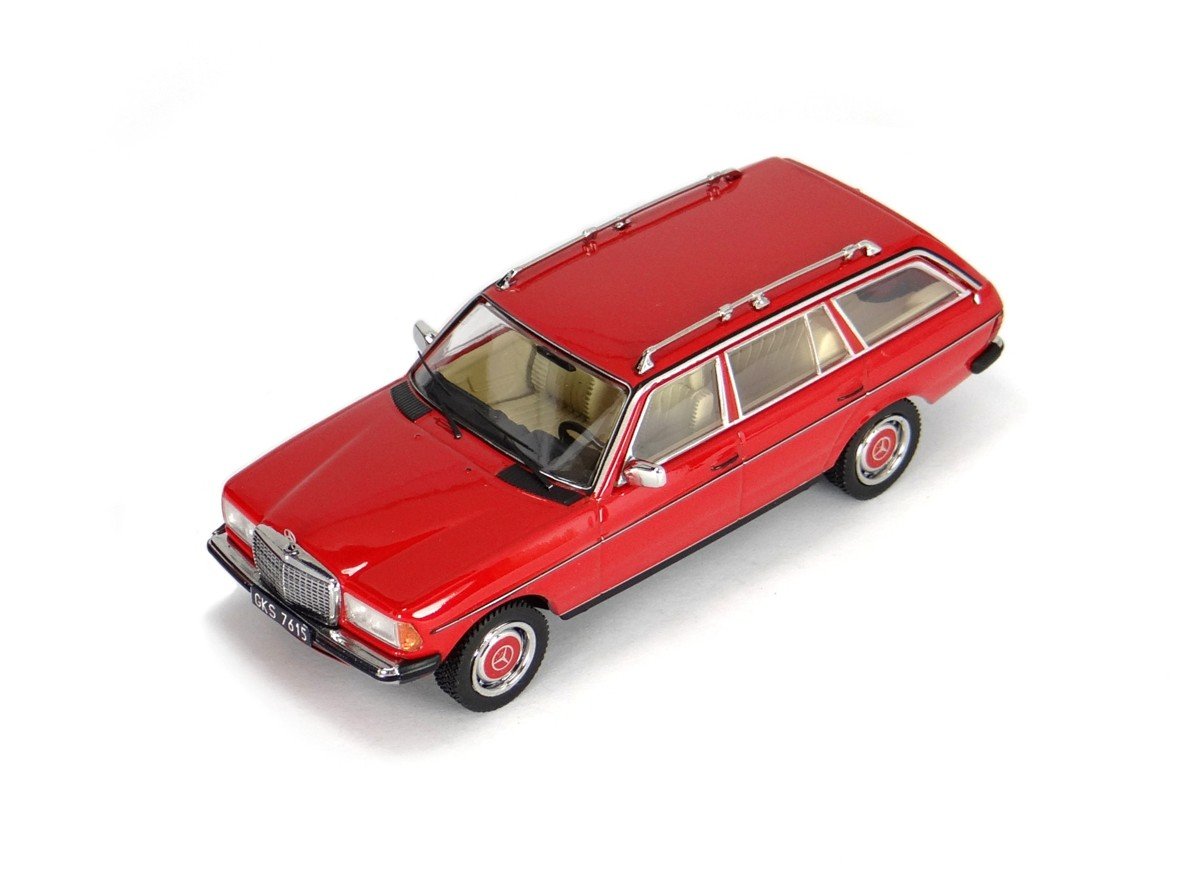
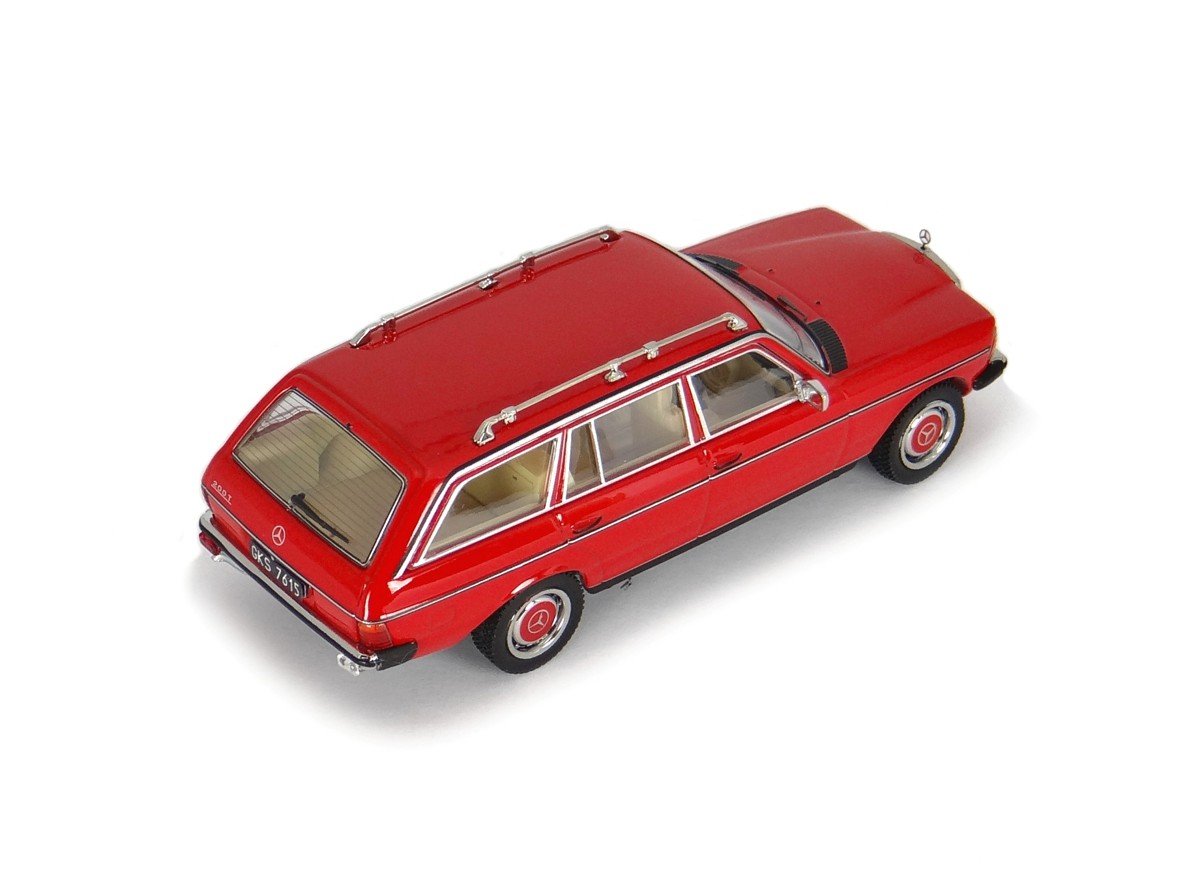
O miniaturze – Mercedes-Benz 200T S123
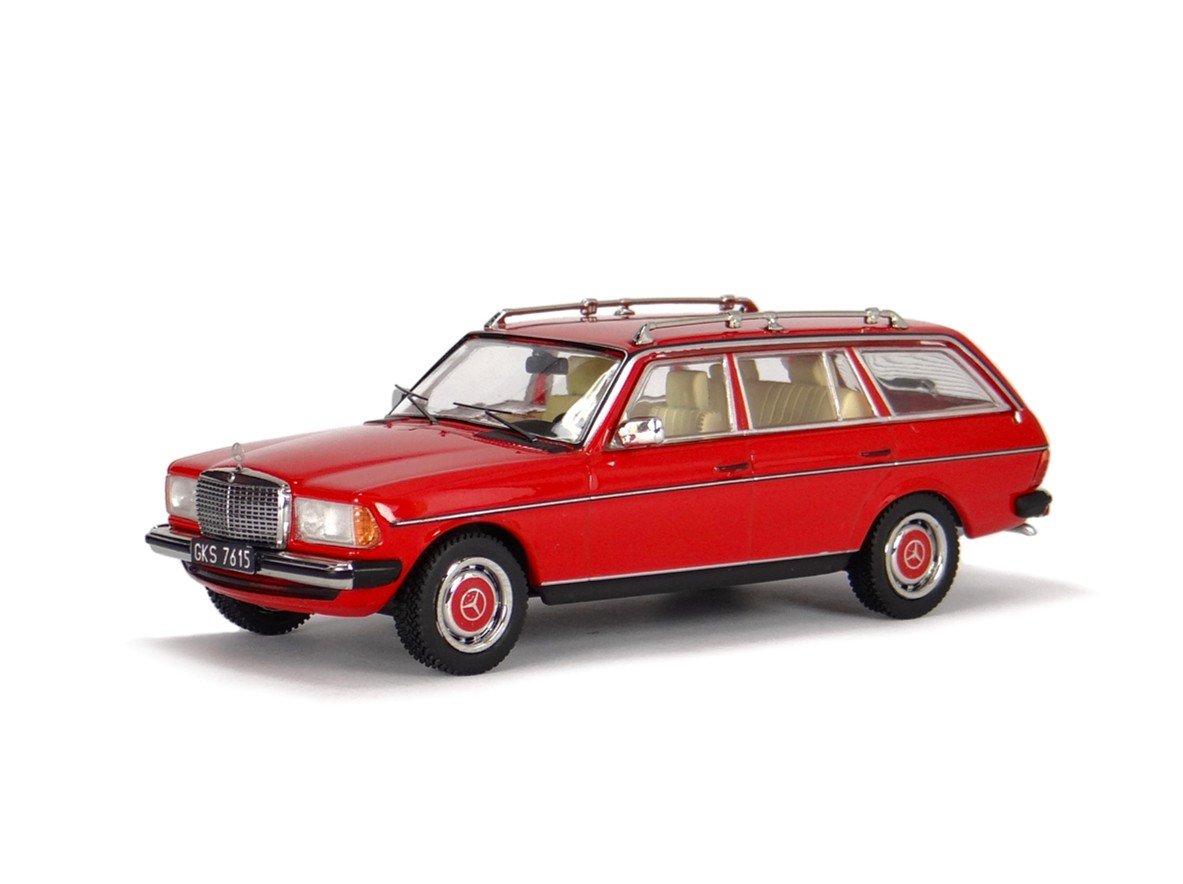
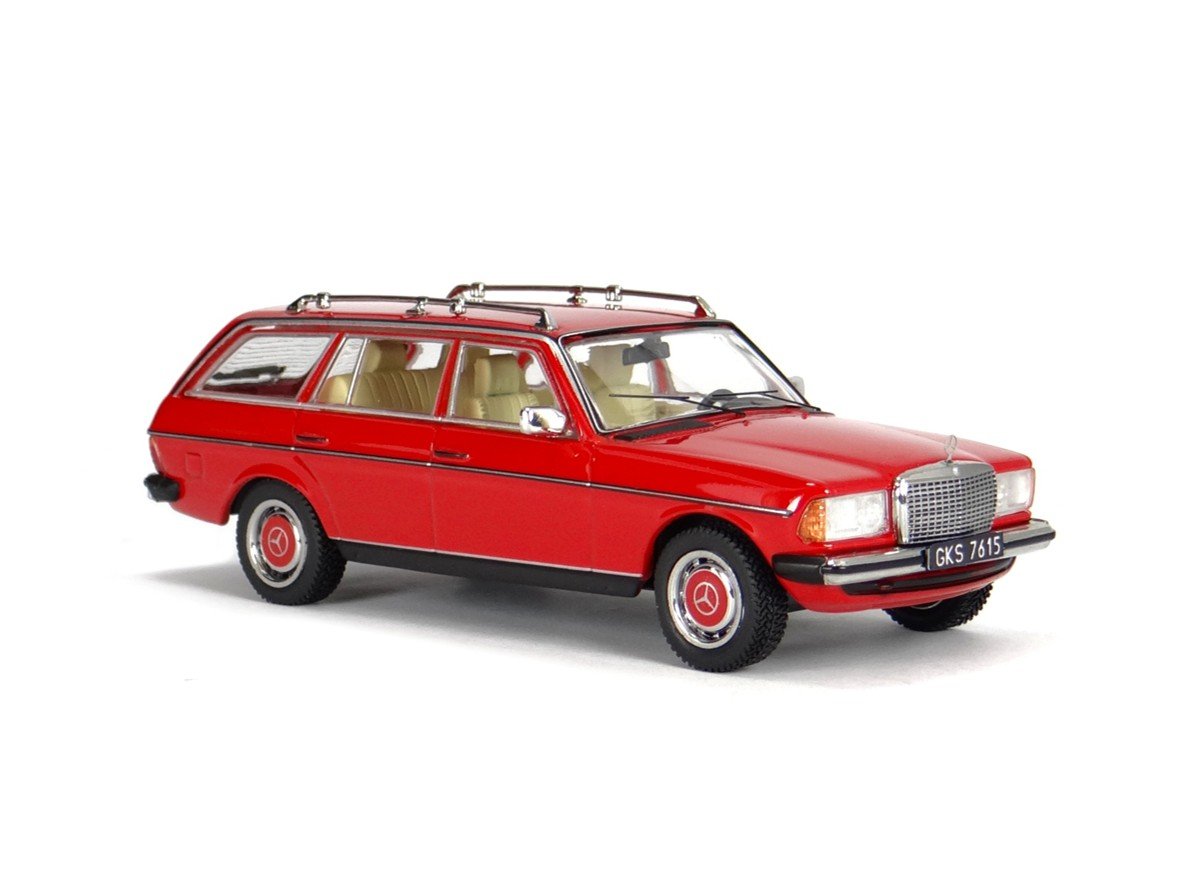
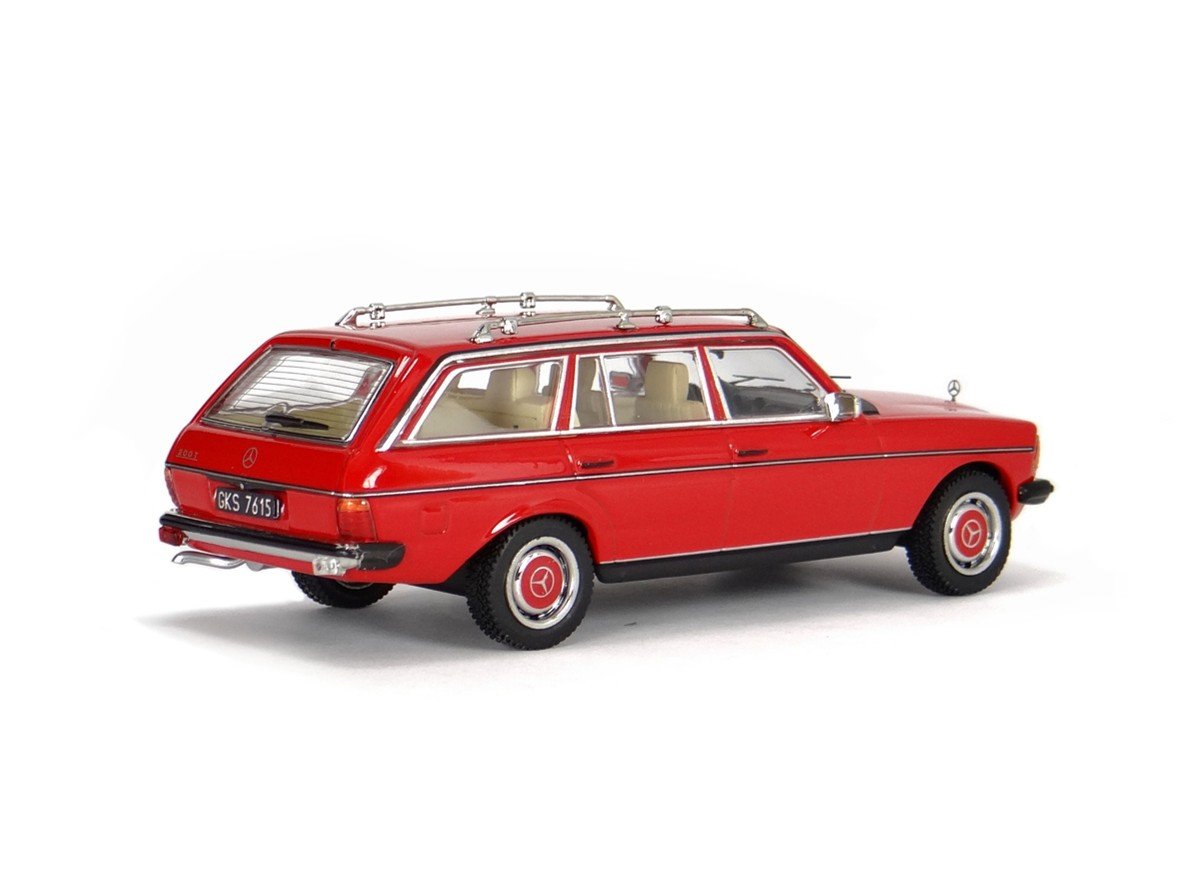
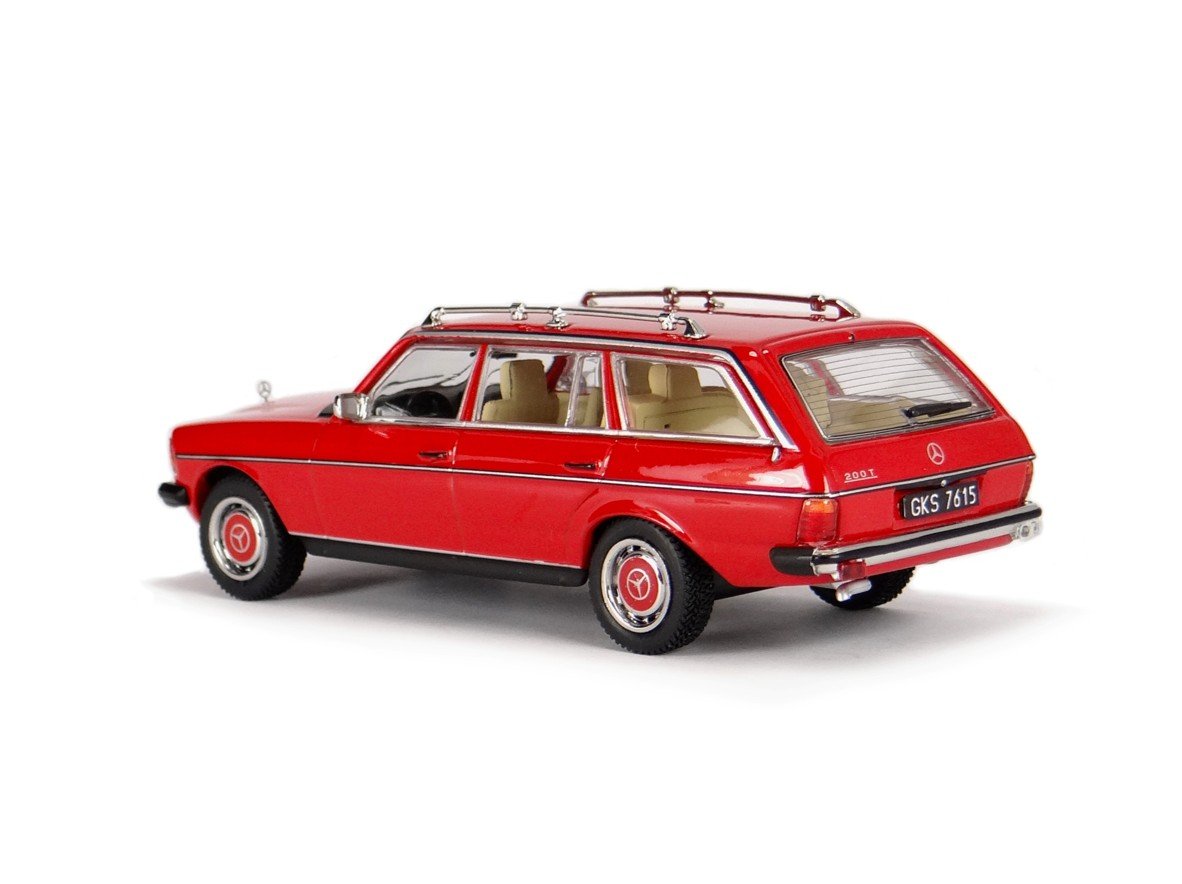
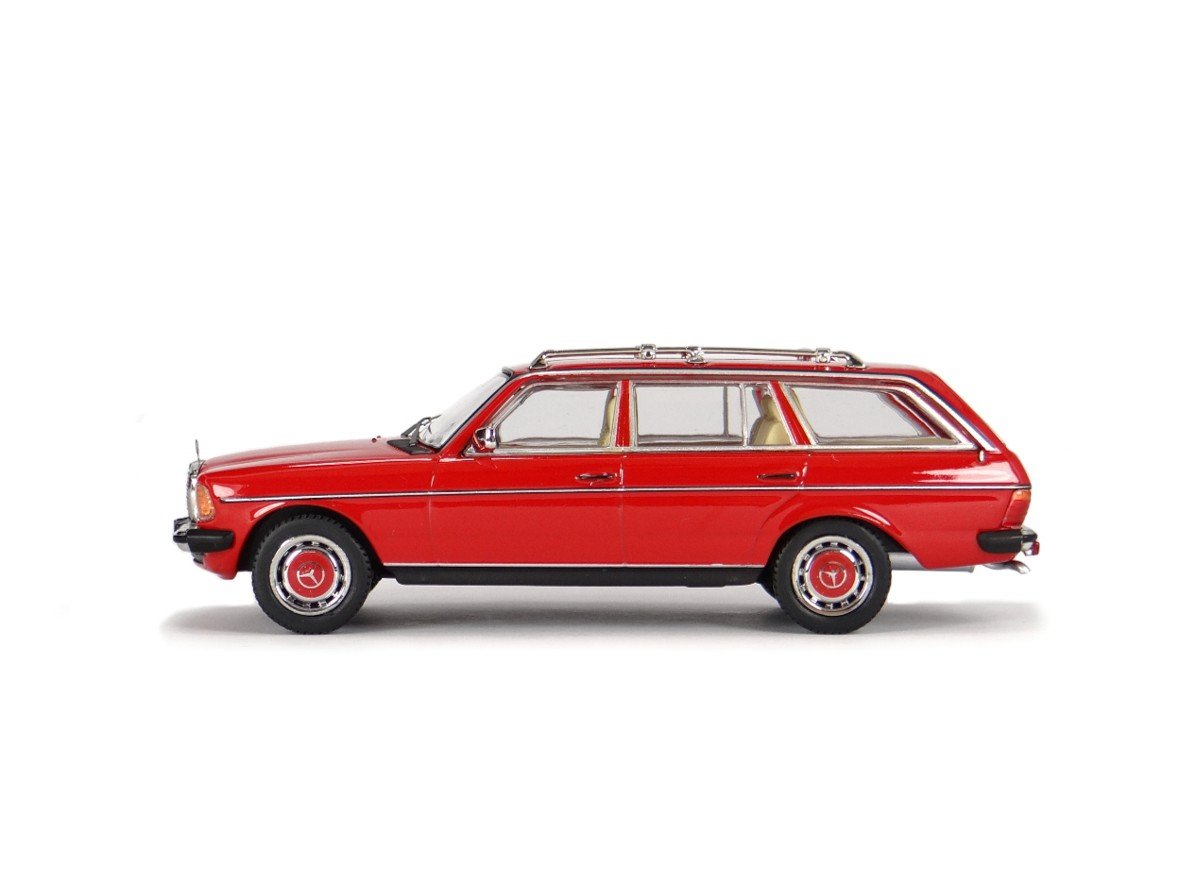
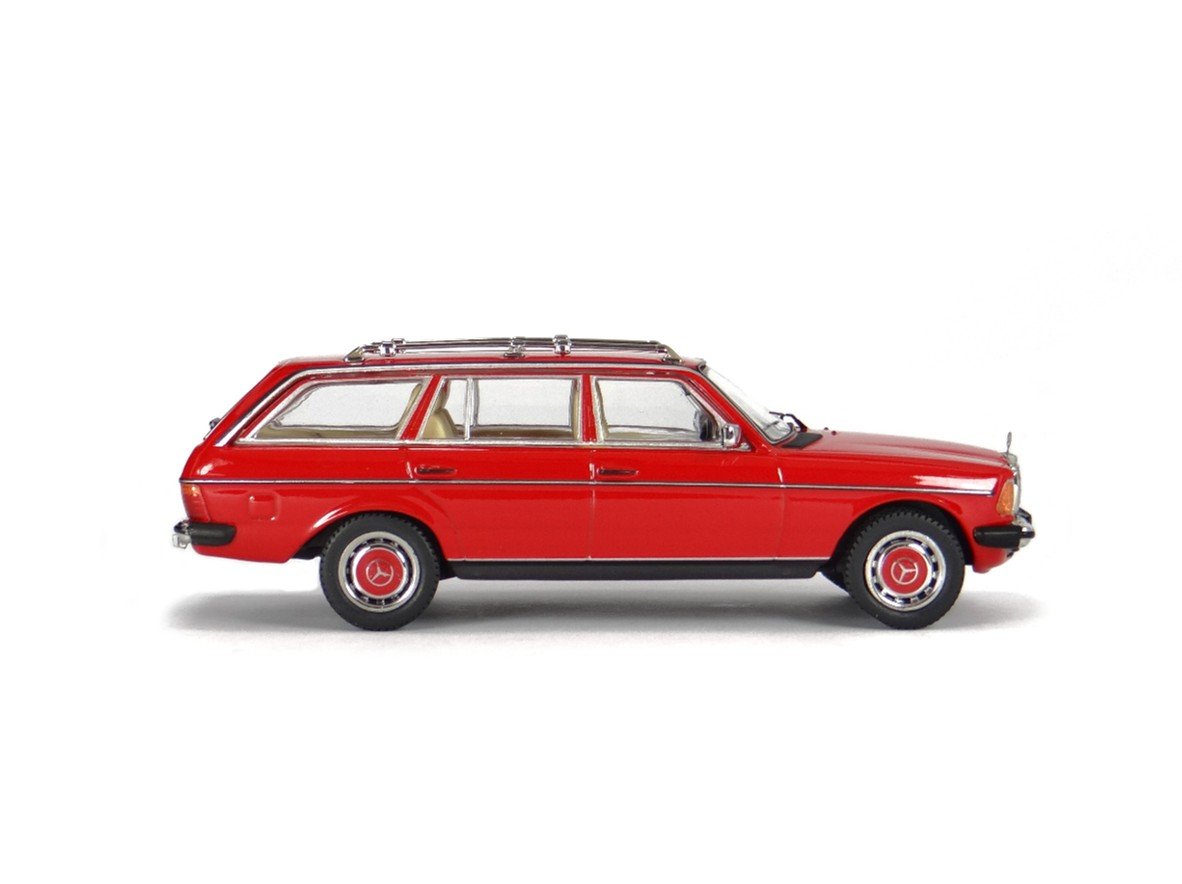
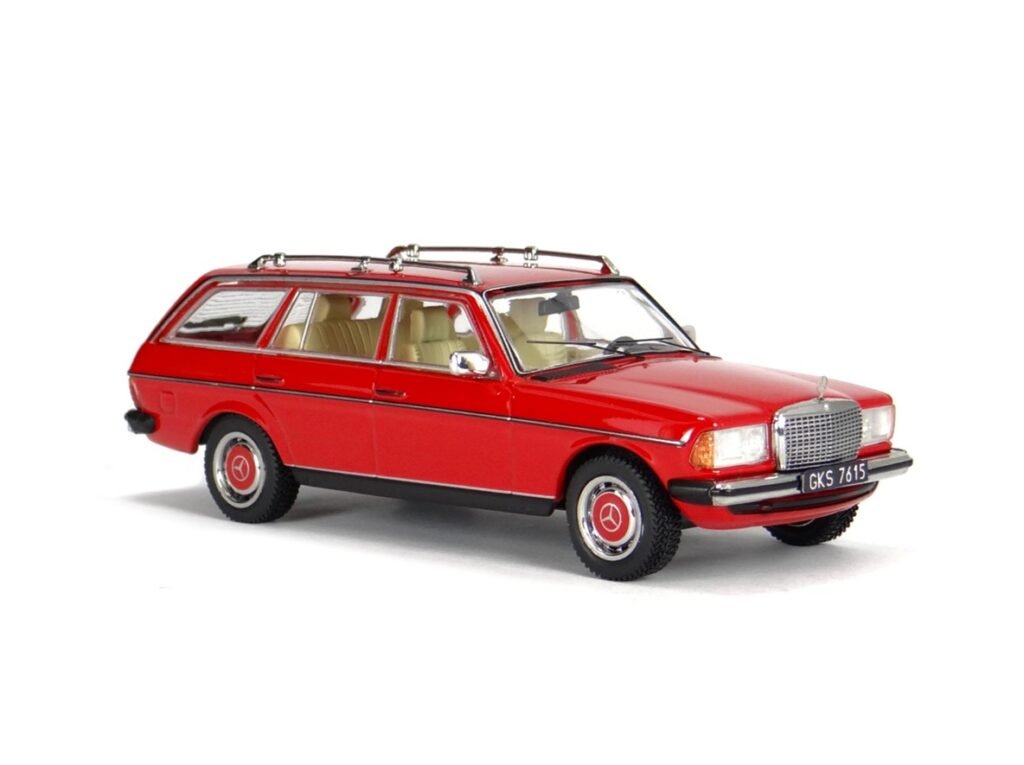
Model “beczki w kombi” chciałem mieć już od dłuższego czasu. O ile mi wiadomo, do tej pory jedyne miniatury Mercedesa S123 pochodziły od Minichampsa i choć nie były złe, wizualnie coś mi w nich nie grało. Dlatego też wstrzymywałem się z ich zakupem. Miałem nadzieję, że pojawi się w końcu jakaś alternatywa. Ku mojej radości, tak też się stało. Na początku roku IXO zapowiedziało model Mercedesa-Benza S123, który wszedł do sprzedaży z początkiem września. Z zakupem nie czekałem oczywiście ani chwili i z radością dzisiaj Wam go prezentuję.
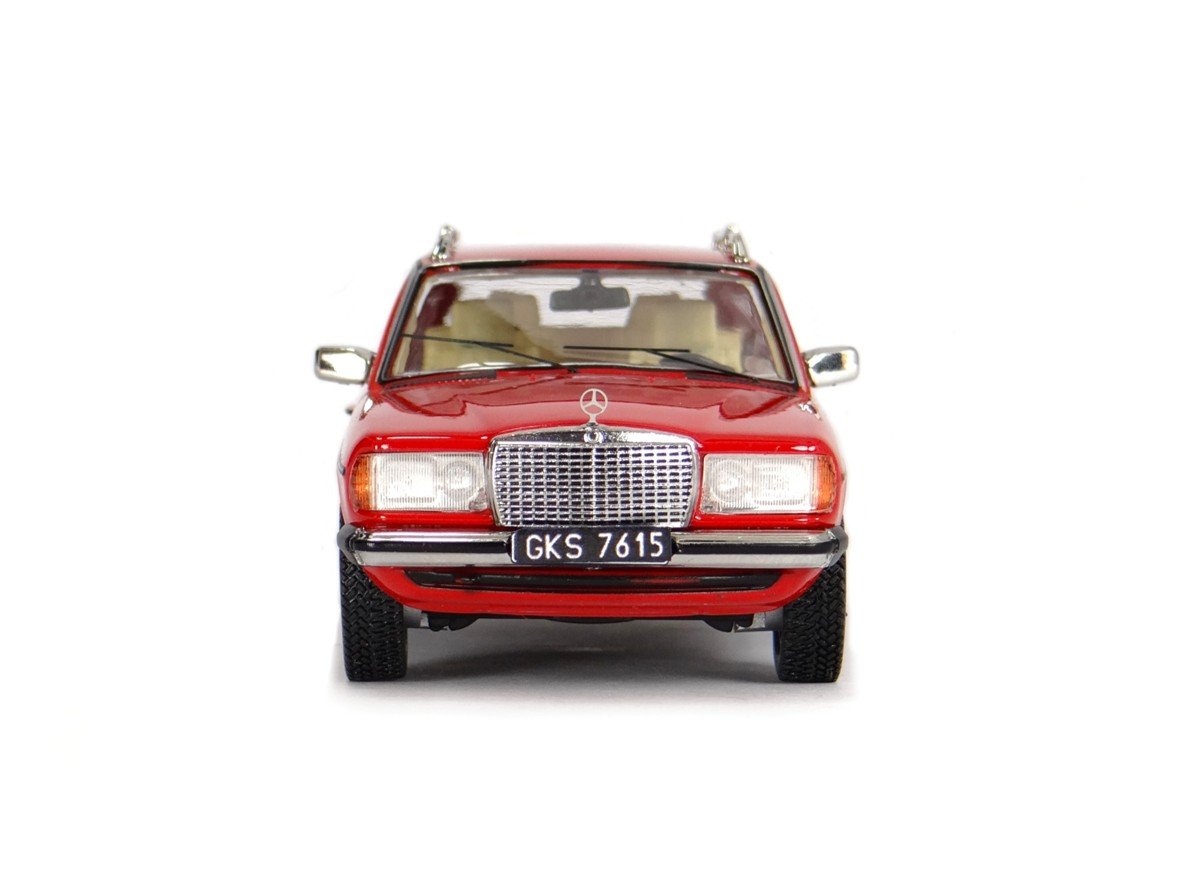
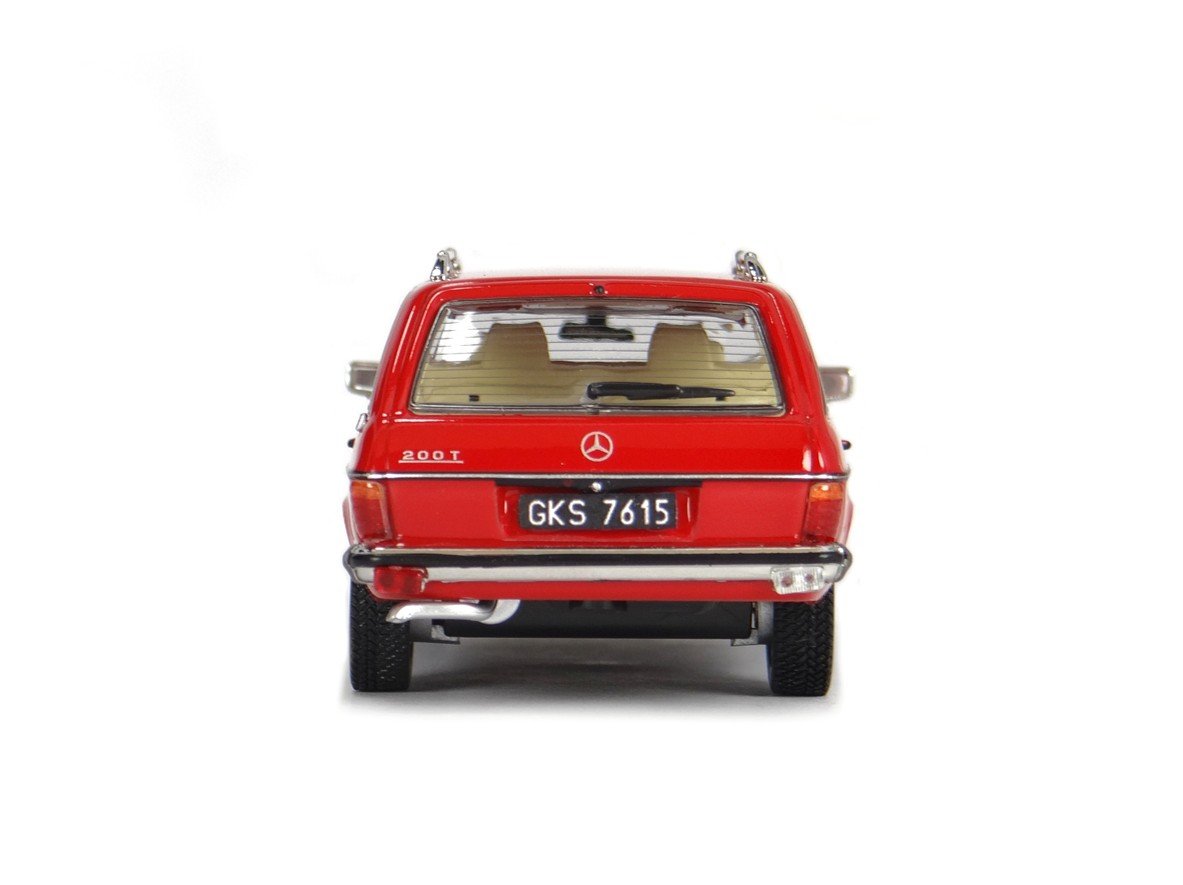
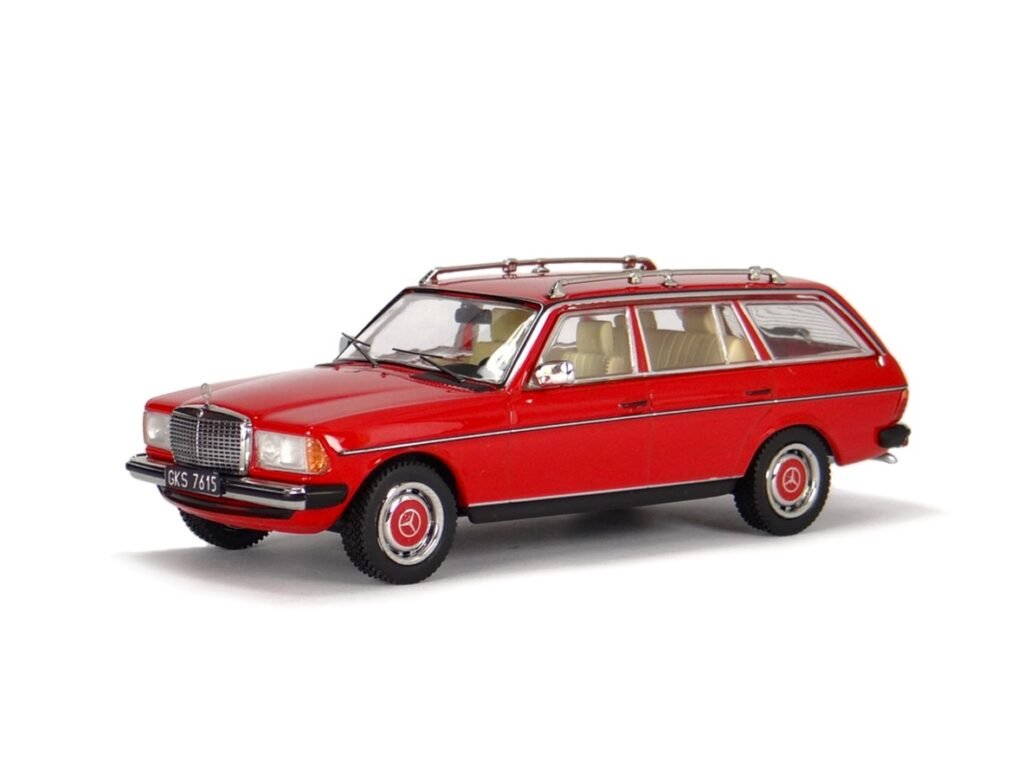
Po otworzeniu paczki nie byłem rozczarowany. Według mnie model wygląda świetnie i wiernie odwzorowuje prawdziwy samochód. Ładny czerwony lakier świetnie komponuje się z beżowym środkiem. Fantastyczne są też charakterystyczne mercedesowskie felgi, nierozłącznie związane z serią W123/S123. Jedyną wadą którą zauważyłem w moim modelu to krzywo przymocowane światło cofania.
Mercedes-Benz 200T S123 standardowo posiada jedynie tablice “Mercedes-Benz”. Aby model bardziej urealnić, postanowiłem dać mu autentyczne tablice “GKS 7615”. Pochodzą z okolic Kościerzyny na pomorzu i tak zarejestrowany czerwony Mercedes kombi istniał w rzeczywistości.
Jak zwykle, zapraszam do obejrzenia galerii oraz do odwiedzania MiniAutomobili na Facebooku i Instagramie!
*** ENGLISH ***
We’re looking at Mercedes’ first own production station wagon. The Mercedes-Benz S123, the estate version of the legendary W123, marked the beginning of the Stuttgart-based manufacturer’s long-running tradition of practical cars.
It’s not that Mercedes estates didn’t exist before. They did of course, but they were built by outside companies in small numbers. In the 1950s, Binz produced an estate version based on the Mercedes 300, while in the late 1960s, the Belgian company I.M.A. built the “Universal” based on the W110/W111 series. After production of the low-volume model ended, no Mercedes estate car appeared for a decade. A new chapter began in 1977 with the Mercedes-Benz S123—the first estate car to be built entirely in-house by Mercedes.
Touristik und Transport
The decision to create an estate version was made during the development of the W123 series. Market research revealed a demand for a sporty, luxurious five-door Mercedes. Management approved the idea and development began in 1975.
Given the car’s luxurious character, Mercedes immediately ruled out the earlier “Universal” name. For a while, the company considered “Stationwagen,” and prototypes were even built with “ST” badges on the tailgate, but this option was eventually rejected as well. Ultimately, the letter “T” won out, standing for Touristik und Transport—tourism and transport. From then on, the official factory designation for the estate version was T-Modell, while the “S” in the S123 designation was a remnant of the working name “Stationswagen.”
Practical luxury
The Mercedes-Benz S123 made its debut in September 1977 at the IAA motor show in Frankfurt. The car attracted a great deal of attention, which was hardly surprising given that the W123 sedan was a huge sales success, with customers facing waiting lists of several years to get one.
In terms of mechanicals and design, the S123 estate differed little from the W123 sedan on which it was based. Aside from the obvious changes to the rear of the body, Mercedes fitted larger brakes and a reinforced rear suspension with a self-leveling hydropneumatic system as standard.
Inside, it was the same luxurious saloon, complete with leather, wood and excellent build quality. The added bonus, of course, was the practical 523-litre luggage compartment. As standard, it housed the spare wheel, while Mercedes also offered an optional rear-facing bench seat for two.
Mercedes finished the practical load area with suede carpeting, further emphasizing the car’s luxurious character. At a time when estate cars were primarily seen as workhorses, often with nothing more than bare metal in the luggage compartment, such attention to detail was remarkable.
Initially, Mercedes offered the S123 with a more limited engine range than the sedan. Customers could choose from the 240 TD, 300 TD, 230 T, 250 T and 280 TE. From 1980, the lineup expanded with the 200 T, 230 TE and 300 TD.
Mercedes based production of the model at its factory in Bremen. By the time production ended in 1986, a total of 199,517 Mercedes-Benz S123s had rolled off the assembly line.
About the miniature – Mercedes-Benz 200T S123
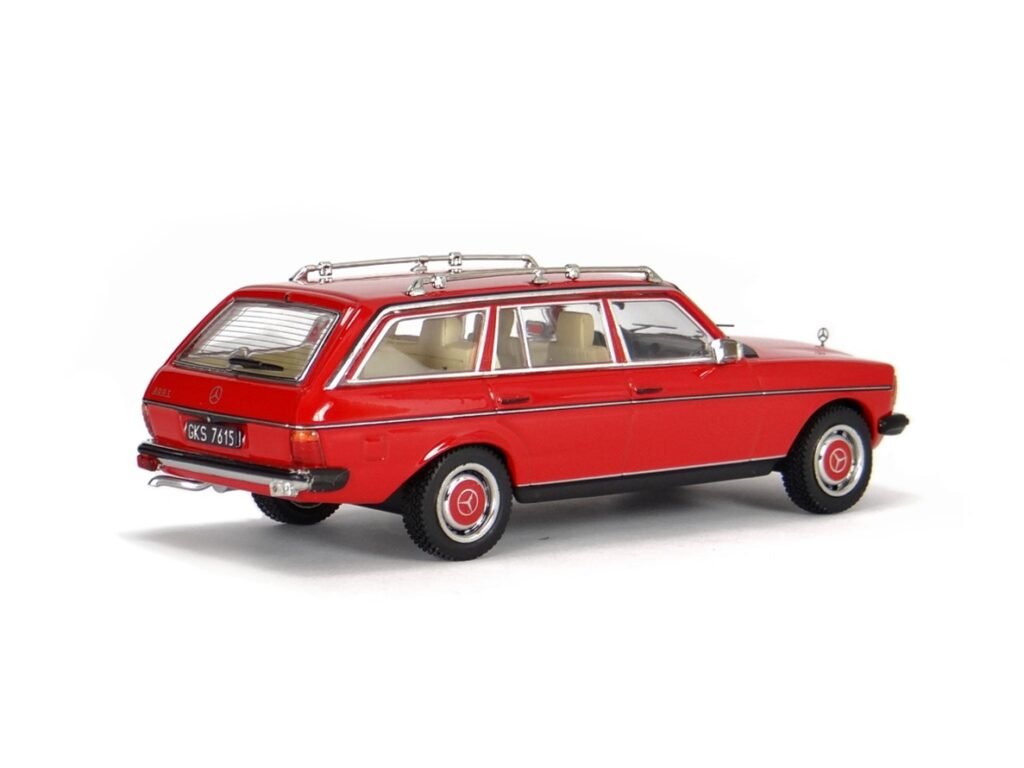
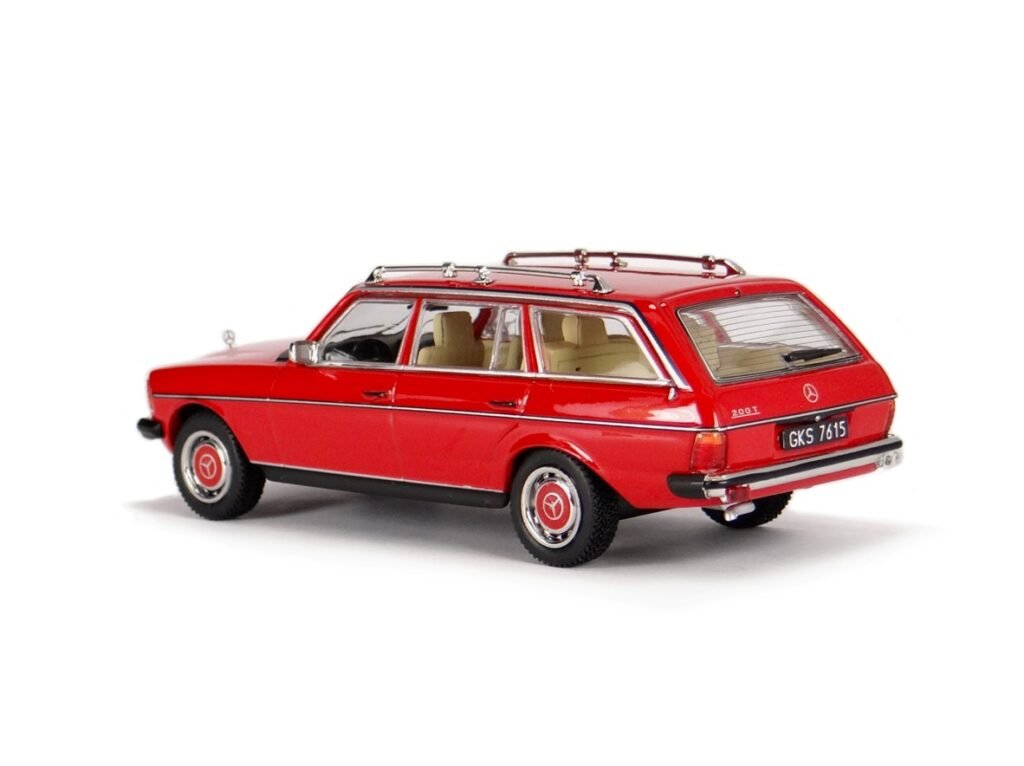
I wanted to have a model of this Merc estate for quite some time now. As far as I know, until now the only miniatures of the Mercedes S123 were made by Minichamps and although they were not bad, something about their appearance just didn’t quite work for me. That’s why I held off on buying one. was hoping that eventually some alternative would appear. To my delight, that is exactly what happened. At the beginning of the year, IXO announced a model of the Mercedes-Benz S123, which went on sale at the beginning of September. Of course, I didn’t hesitate for a second and I’m delighted to present it to you today.
After opening the package, I was not disappointed. In my opinion, the model looks excellent and faithfully reproduces the real car. The lovely red paintwork complements the beige interior beautifully. The distinctive Mercedes wheels are also fantastic, being a key part of the character of the W123/S123 series. The only flaw I noticed on my model is that the reversing light is mounted slightly crooked.
The model of Mercedes-Benz 200T S123 comes with just the “Mercedes-Benz” plates as standard. To make the model more realistic, I decided to give it authentic registration plates: “GKS 7615”. They are from the Kościerzyna area in Pomerania and a red Mercedes estate with these plates existed in real life.
As always, feel free to check out the gallery and of course be sure to visit MiniAutomobile on Facebook and Instagram!