
Legendarny Mercedes-Benz W123 obchodzi w tym roku swoje 50. urodziny! To idealna okazja, by przypomnieć sobie historię “beczki”.
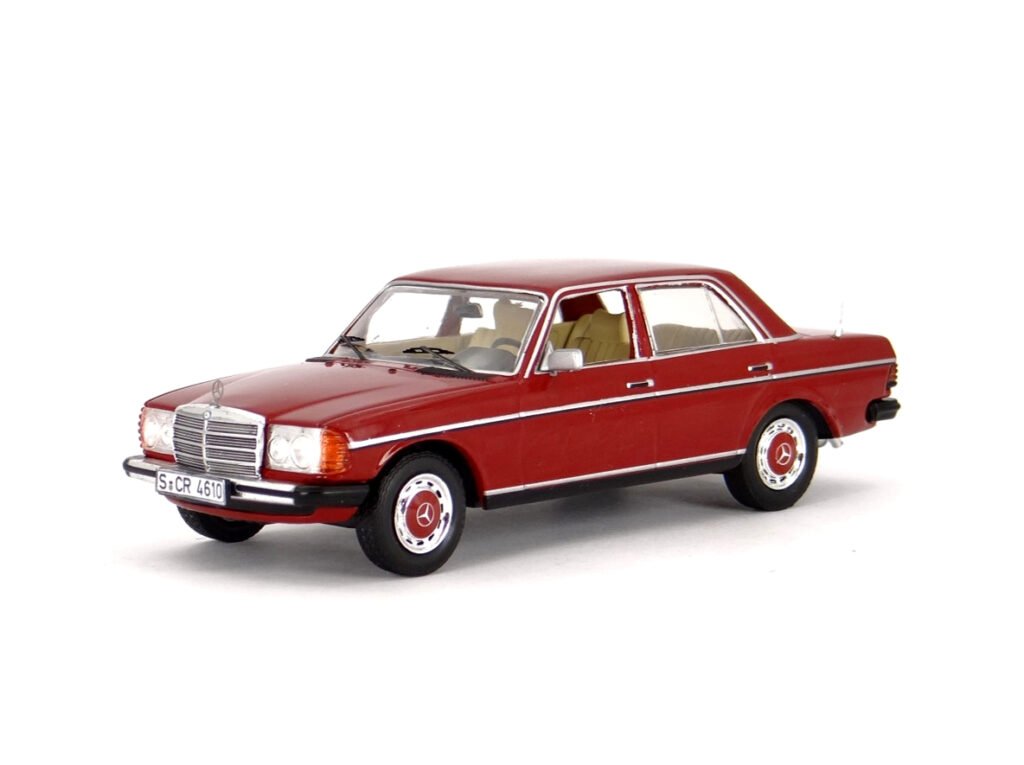
Nawet jeśli kod “W123” komuś nic nie mówi, to jedno spojrzenie na ten samochód na pewno rozwieje wszelkie wątpliwości. To w końcu jeden z najbardziej rozpoznawalnych modeli tej niemieckej marki. Mercedes wyprodukował 2 696 915 egzemplarzy, z czego aż 2 397 514 stanowiła wersja sedan.
Auto kapitalnie łączyło elegancję, ponadczasowy styl, jakość wykonania i nowoczesną technologię, będąc jednocześnie samochodem absolutnie niedyskryminującym. Posiadali go nie tylko taksówkarze od Berlina po Afrykę, czy stateczni emeryci. Właścicielami były też gwiazdy muzyki pop jak Barry Gibb z Bee Gees, John Lennon i Bonnie Tyler, topowi piłkarze jak Franz Beckenbauer a nawet… matka Królowej Elżbiety.
Mercedes-Benz W123 najbardziej zasłynął jednak swoją legendarną niezawodnością, ugruntowując reputację marki. Do dzisiaj to jeden z najbardziej cenionych Mercedesów.
Perfekcyjnie przygotowany
Mercedes-Benz W123 pochodzi z czasów kiedy firma hołdowała perfekcjonizmowi. Nie było absolutnie miejsca na półśrodki czy cięcie kosztów. Mercedes stawiał sobie za punkt honoru, żeby wszystko było perfekcyjnie skonstruowane, dlatego proces tworzenia W123 zajął około ośmiu lat i pochłąnał astronomiczną kwotę około miliarda niemieckich marek.
Technicznie, Mercedes-Benz W123 bazował w dużej mierze na swoim poprzedniku, serii W114/115, zwanej potocznie w Niemczech “Strich Acht”, a u nas “puchacz” lub “przejściówka”. Mechanika z poprzednika bynajmniej nie oznaczała, że nowy samochód był przestarzały. Niemieccy inżynierowie dopracowali po prostu istniejące już elementy do niespotykanej perfekcji. Mercedesowski perfekcjonizm tyczył się nawet tak małych szczegółów jak odgłos zamykania drzwi. Jakość i solidność było w tym aucie widać, słychać i czuć.
Do nieprzeciętnej trwałości, Mercedes dołożył też wysoki poziom bezpieczeństwa. W123 posiadała kontrolowane strefy zgniotu zarówno z przodu jak i z tyłu, oraz zapożyczoną z klasy S W116 bezpieczną kolumnę kierownicy, która przy zderzeniu nie wbijała się do kabiny. Samochód był też technicznie przystosowany do montowania systemu ABS (od 1978 r.) i przednich poduszek powietrznych (od 1980 r.). Elementy dzisiaj powszechne, w tamtym czasie wyprzedzające jednak epokę.
Klasyczna elegancja
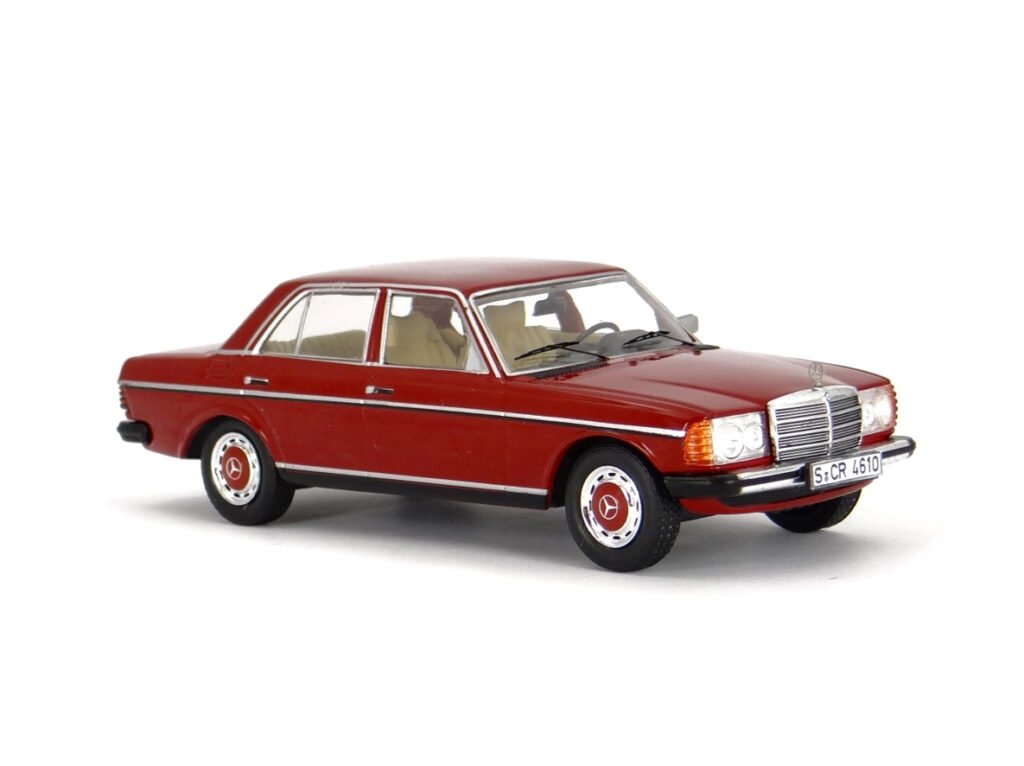
Wygląd serii W123 nie wyprzedzał już swojej epoki, ale nikt tego od Mercedesa-Benza nie oczekiwał. Friedrich Geiger i Bruno Sacco odpowiedzialni za stylistykę, wyznawali zasadę powściągliwej, klasycznej elegancji. Projektanci połączyli elementy znane z poprzednika (W114/115) z motywami użytymi już w luksusowej klasie S W116, zaprezentowanej w 1972 roku. Kanciasta sylwetka z idealnymi proporcjami, ozdobiona wielkim chromowanym grillem i subtelnymi chromowanymi listwami to popis ponadczasowej elegancji. Mercedes-Benz W123 nawet dziś, 50 lat po debiucie, robi wrażenie.
Wnętrze auta robi nie mniejsze wrażenie. W kabinie panuje elegancka i spokojna atmosfera, rodem z hotelowego lounge’u. Wygodne fotele, skórzana tapicerka, wszechobecna jakość i solidność zachwycały w 1976 roku i czynią to nadal. Kabina W123 może z powodzeniem służyć za wzór do naśladowania.
Natychmiastowy sukces
Prasowa premiera Mercedesa-Benza W123 odbyła się w styczniu 1976 roku w niewielkim miasteczku Bandol na Lazurowym Wybrzeżu, na południu Francji. Do dyspozycji prasy były 33 egzemplarze, w różnych wersjach silnikowych i poziomach wyposażenia, odzwierciedlające szeroką gamę nowego auta. Dziennikarze od razu chwalili elegancki wygląd, ponadprzeciętny poziom bezpieczeństwa i wysoki komfort jazdy. Opinie były jednoznacznie pozytywne, auto praktycznie nie posiadało słabych stron.
Klienci też bardzo szybko docenili zalety serii W123. Choć była drogim samochodem, to jej całą roczną produkcję wykupiono zanim jeszcze oficjlanie trafiła do sprzedaży! Klienci na dostawę zamówionego samochodu musieli czekać minimum dziewięć miesięcy, ale często zdarzało się że był to grubo ponad rok. Niektórzy decydowali się nawet dopłacać, aby otrzymać samochód szybciej.
Do szczególnie absurdalnych sytuacji dochodziło w Niemczech. Zainteresowanie autem było tam tak duże, że lekko używane egzemplarze W123 potrafiły kosztować kilka tysięcy marek więcej, niż nowe z salonu! Zresztą, przez cały okres swojej produkcji, Mercedes-Benz W123 był jednym z najpopularniejszych nowych aut w Niemczech. W 1980 r. udało mu się nawet zdetronizować z pierwszego miejsca VW Golfa.
Jedno auto, wiele twarzy
Popularność samochodu na pewno zwiększała szeroka oferta, dostosowana do różnych potrzeb. Trochę ponad rok po premierze sedana (W123), wiosną 1977 roku Mercedes zaprezentował elegancką wersję coupé (C123), a we wrześniu – pierwsze w swojej historii samodzielnie skonstruowane pojemne kombi (S123). Była też limuzyna z wydłużonym rozstawem osi, “Lang” (V123).
Imponująco wyglądała oferta silników. Aż dziewięć różnych jednostek napędowych, benzyny i diesle, o mocach od 55 KM do 177 KM, pokazywało różne oblicza samochodu. Z podstawową, wolnossącą 55-konną jednostką diesla (200 D), W123 był wolny, ale oszczędny i niezniszczalny. Z kolei topowy, sześciocylindrowy rzędowy benzynowy silnik o mocy 177 KM (280), zapewniał iście sportowe osiągi.
To często wyświechtany banał, ale w gamie Mercedesa W123, naprawdę każdy mógł znaleźć coś dla siebie.
Legendarna niezawodność
Mercedes-Benz W123 zasłynął przede wszystkim swoją niespotykaną trwałością i niezawodnością. Szczególnie z niezniszczalnymi silnikami diesla pod maską. Dzięki prostej, ale perfekcyjnie dopracowanej technice, te auta wykazywały się wybitną odpornością, nawet w najtrudniejszych warunkach. A jeśli jakimś trafem się w końcu zepsuły, to naprawić je było bardzo łatwo.
Dzięki mieszance komfortu i niezawodności, W123 było uwielbiane przez taksówkarzy w każdym zakątku świata. Czy to na niemieckich Autobahn, czy piaszczystych drogach Afryki, Mercedes-Benz W123 bez zająknięcia pokonywał kolejne kilometry.
Setki tysięcy kilometrów przebiegu naprawdę nie robiły na nim żadnego wrażenia a wiele egzemplarzy wykręciło kilkumilionowe przebiegi. Zresztą, wiele z nich niestrudzenie jeździ do dziś, dalej wożący ludzi i towary jak gdyby nigdy nic.
Mercedes-Benz W123 to bez wątpienia jeden z najbardziej niezawodnych samochodów wszechczasów. To prawdziwy klasyk, który pomógł zbudować renomę Mercedesa jako producenta trwałych, dobrze wykonanych samochodów. Jego następca, seria W124, podążyła wytyczoną ścieżką, wzmacniając renomę niemieckiego producenta.
O miniaturze – Mercedes-Benz 240D W123
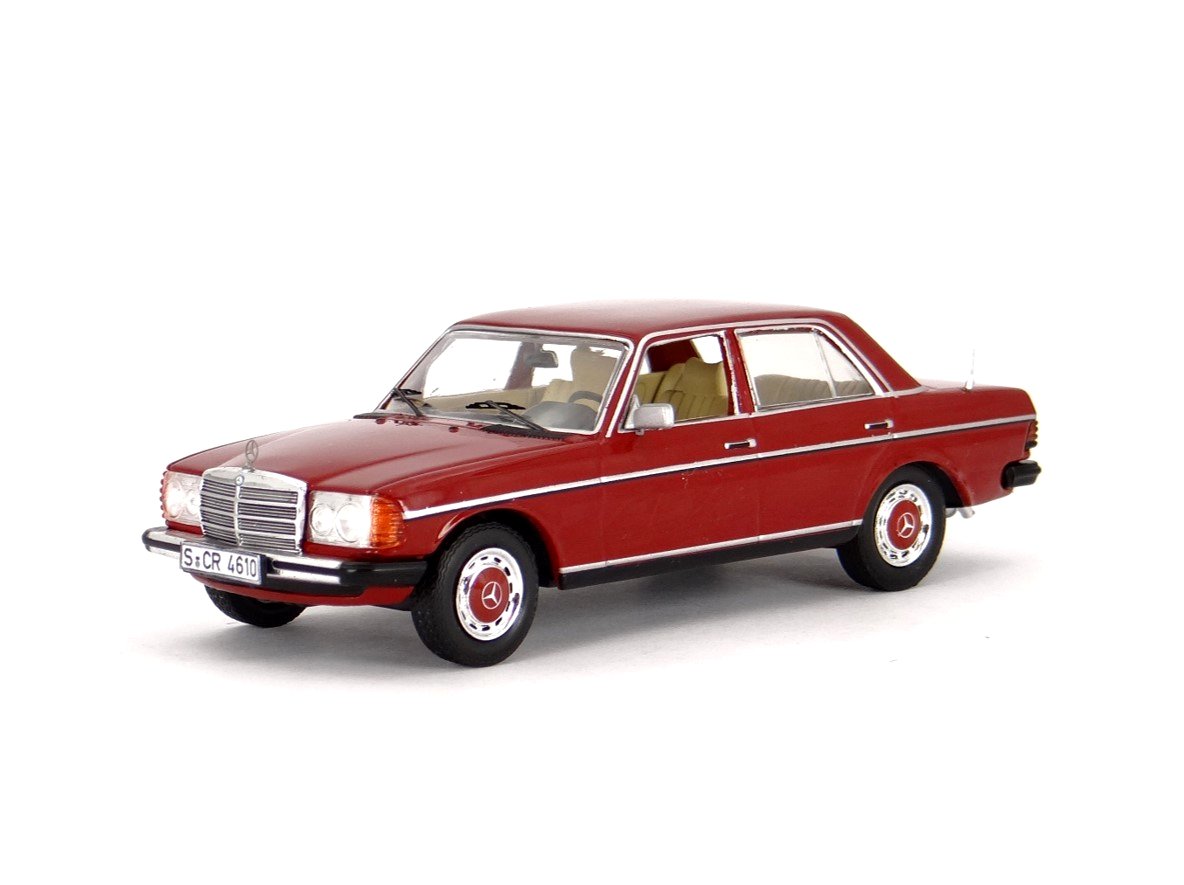
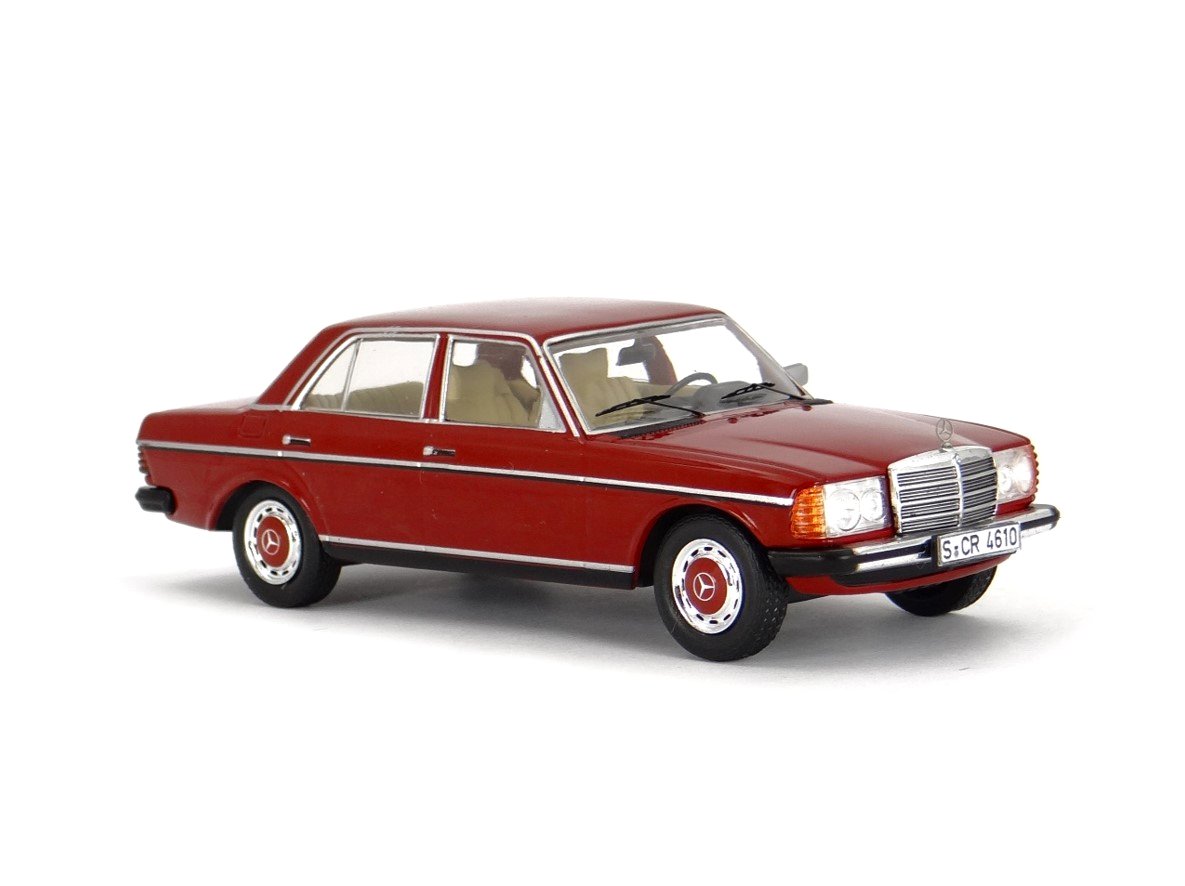
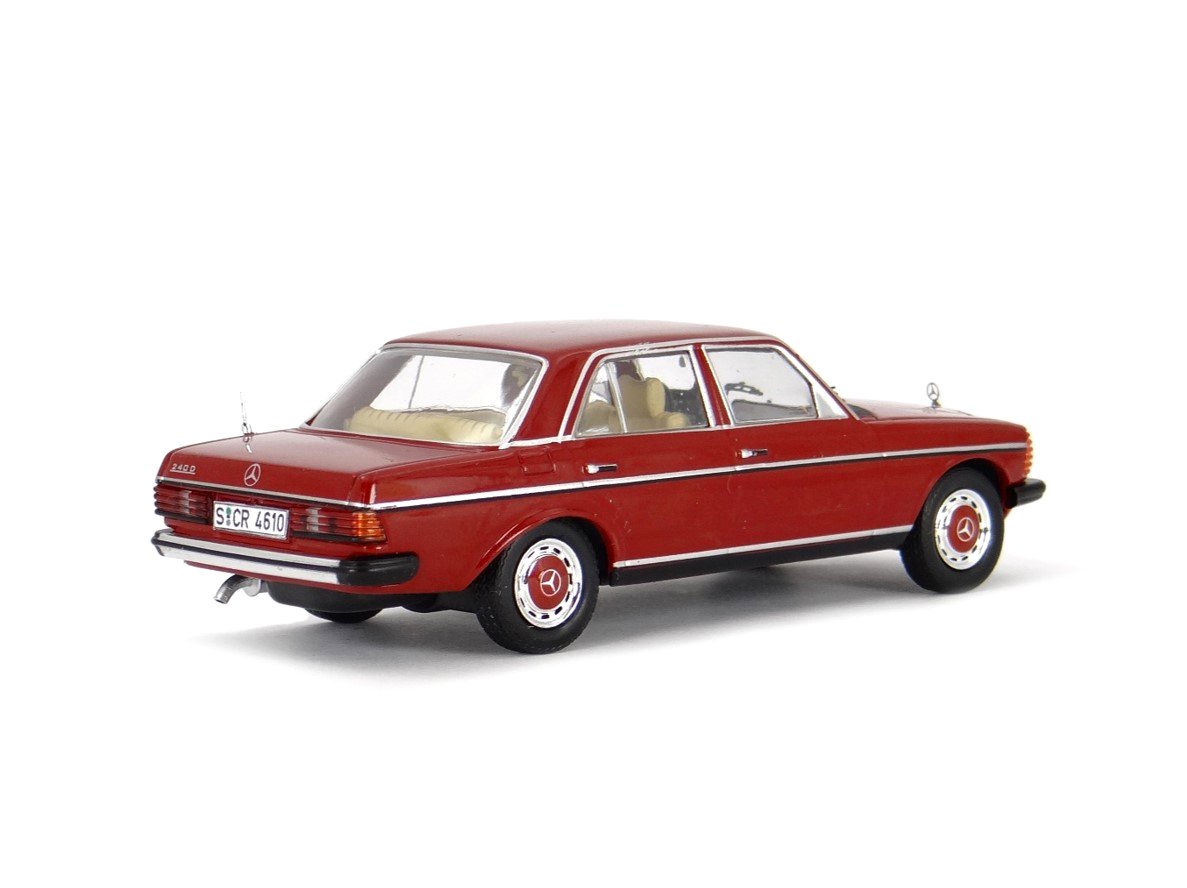
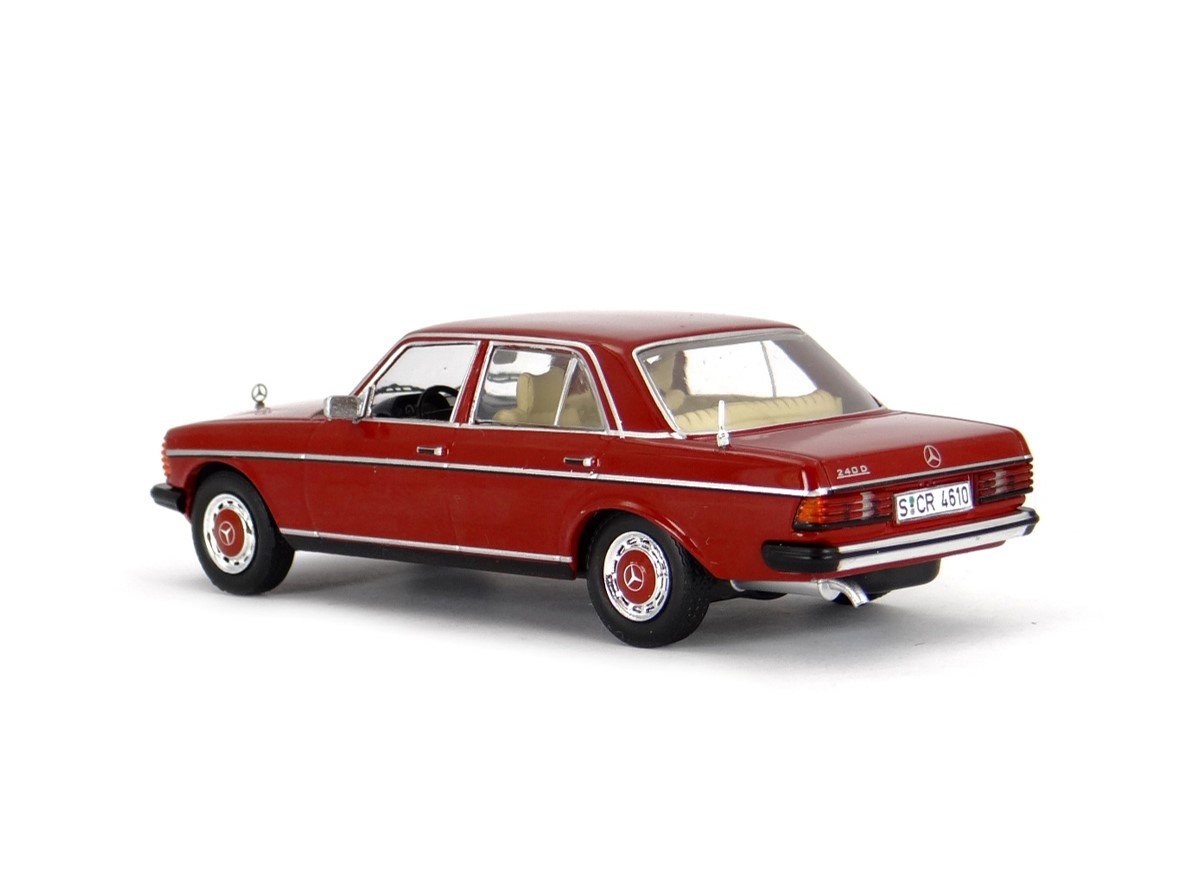
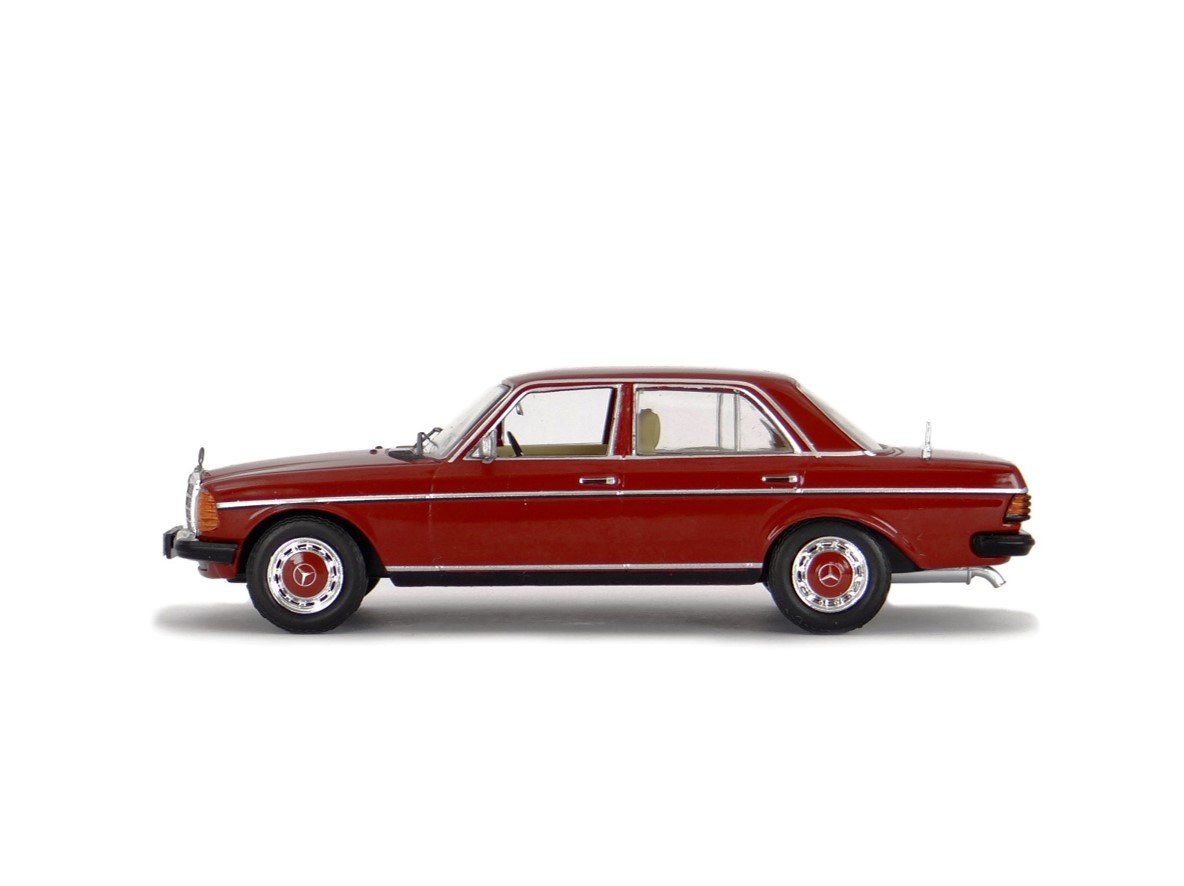
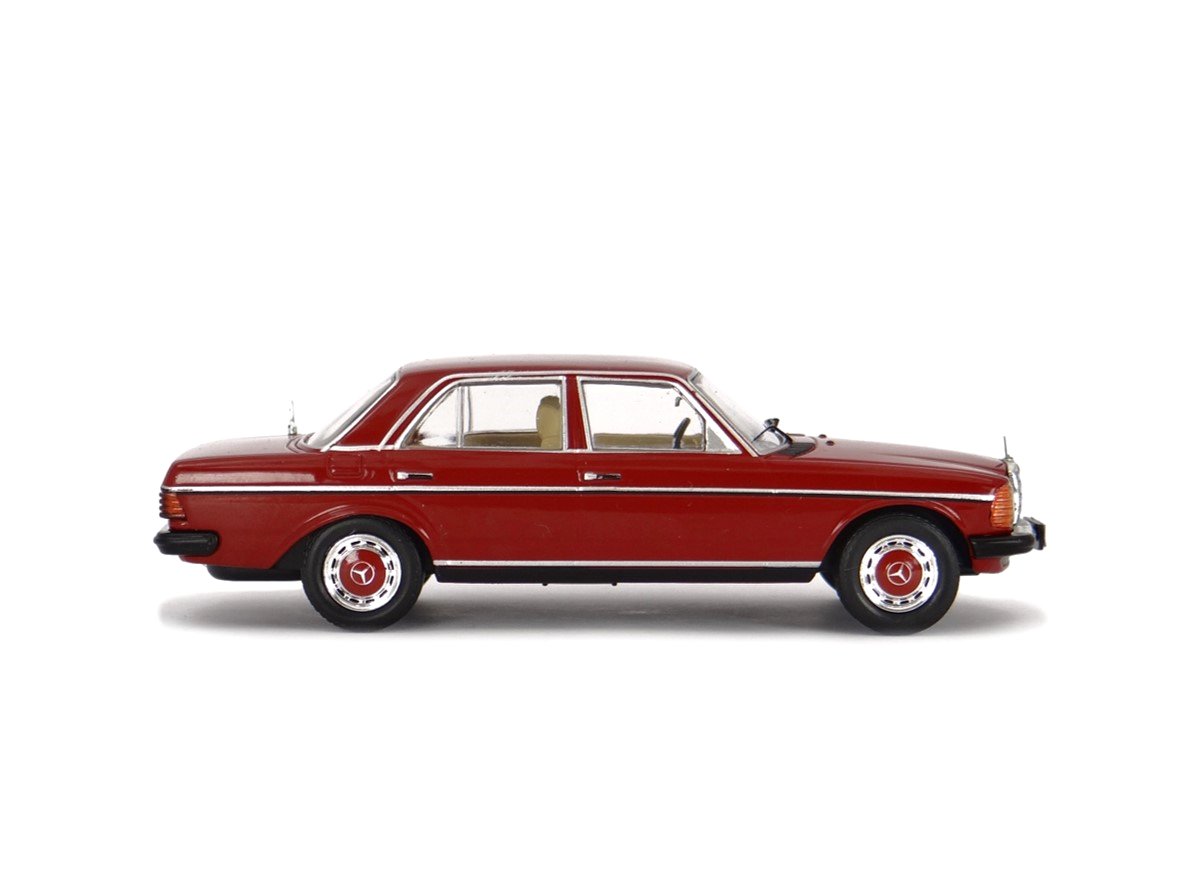
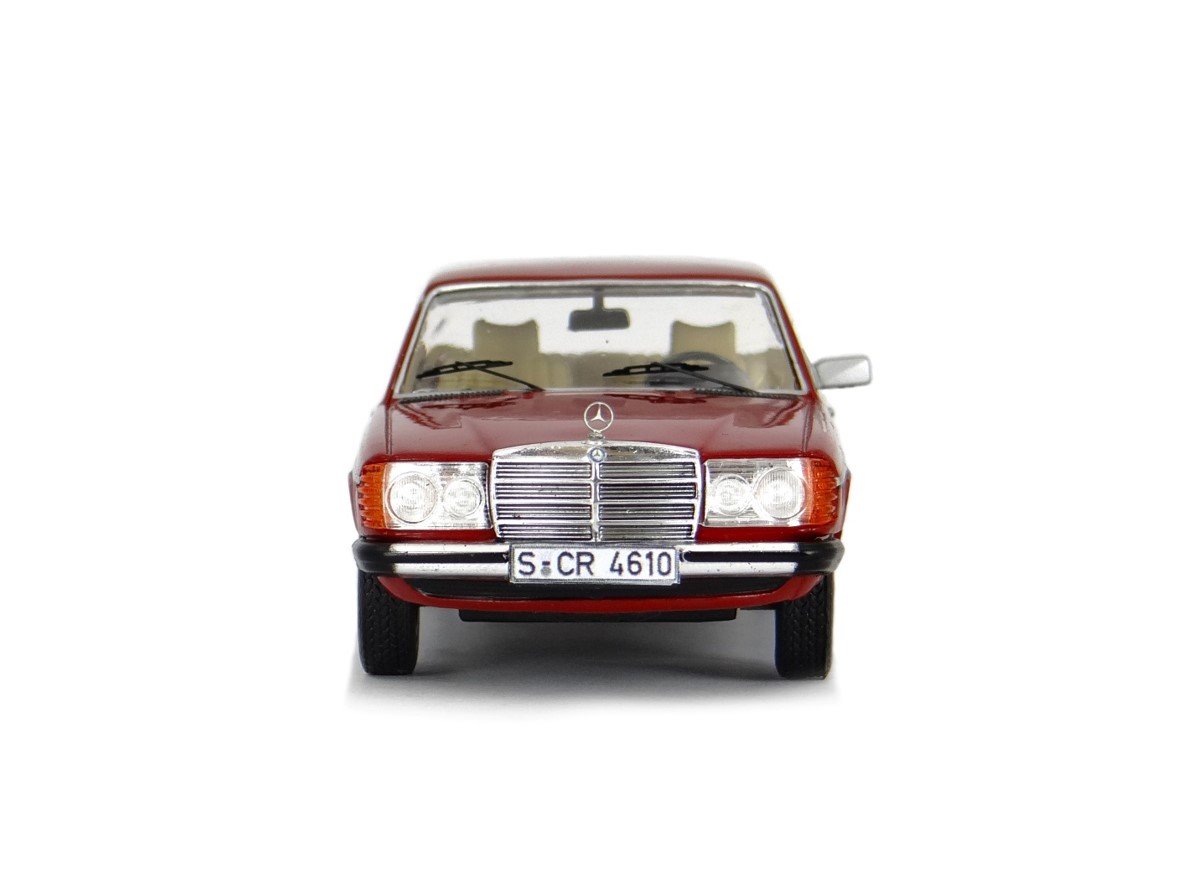
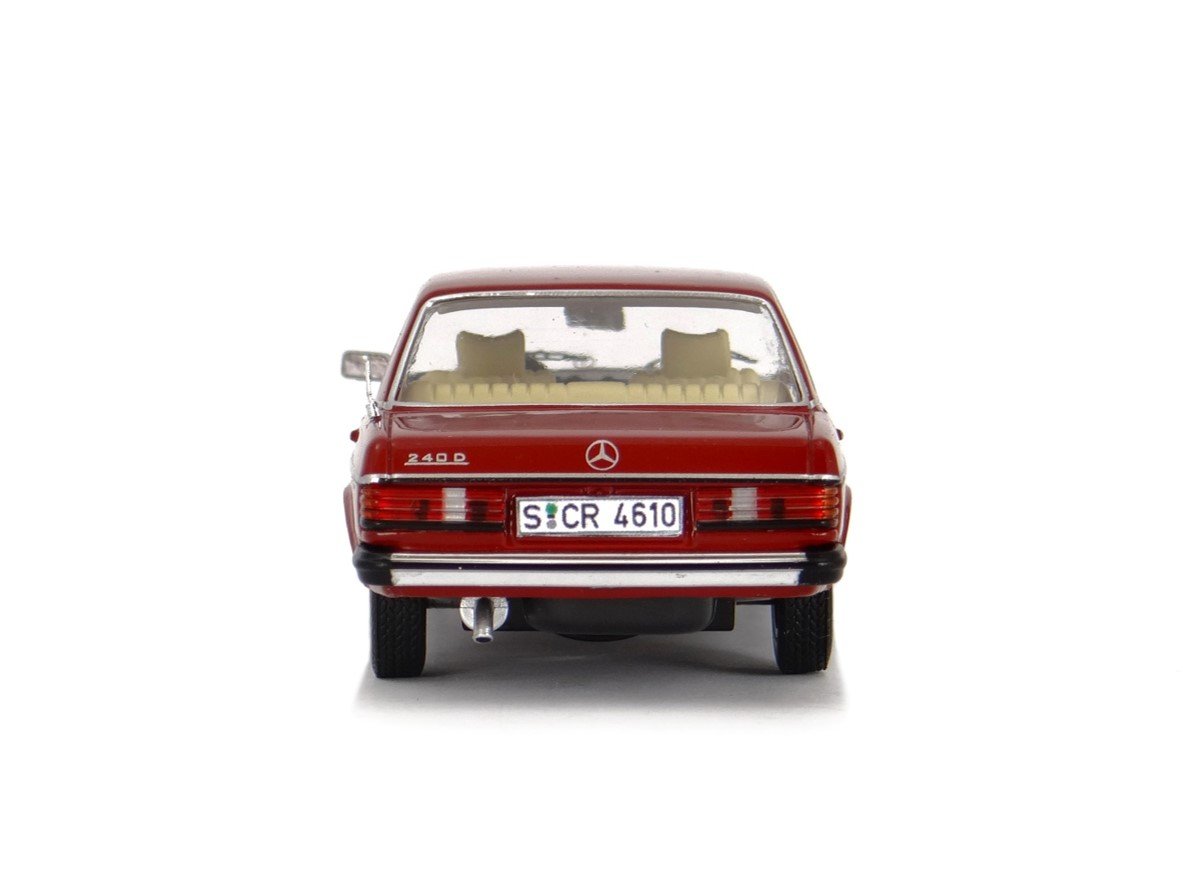
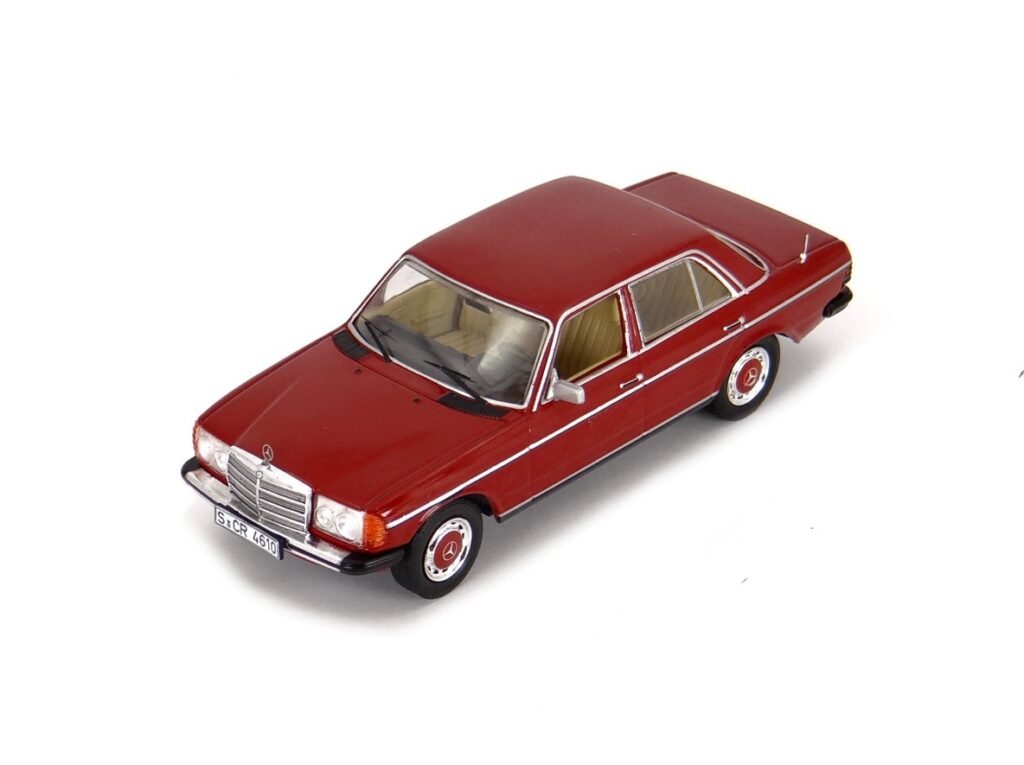
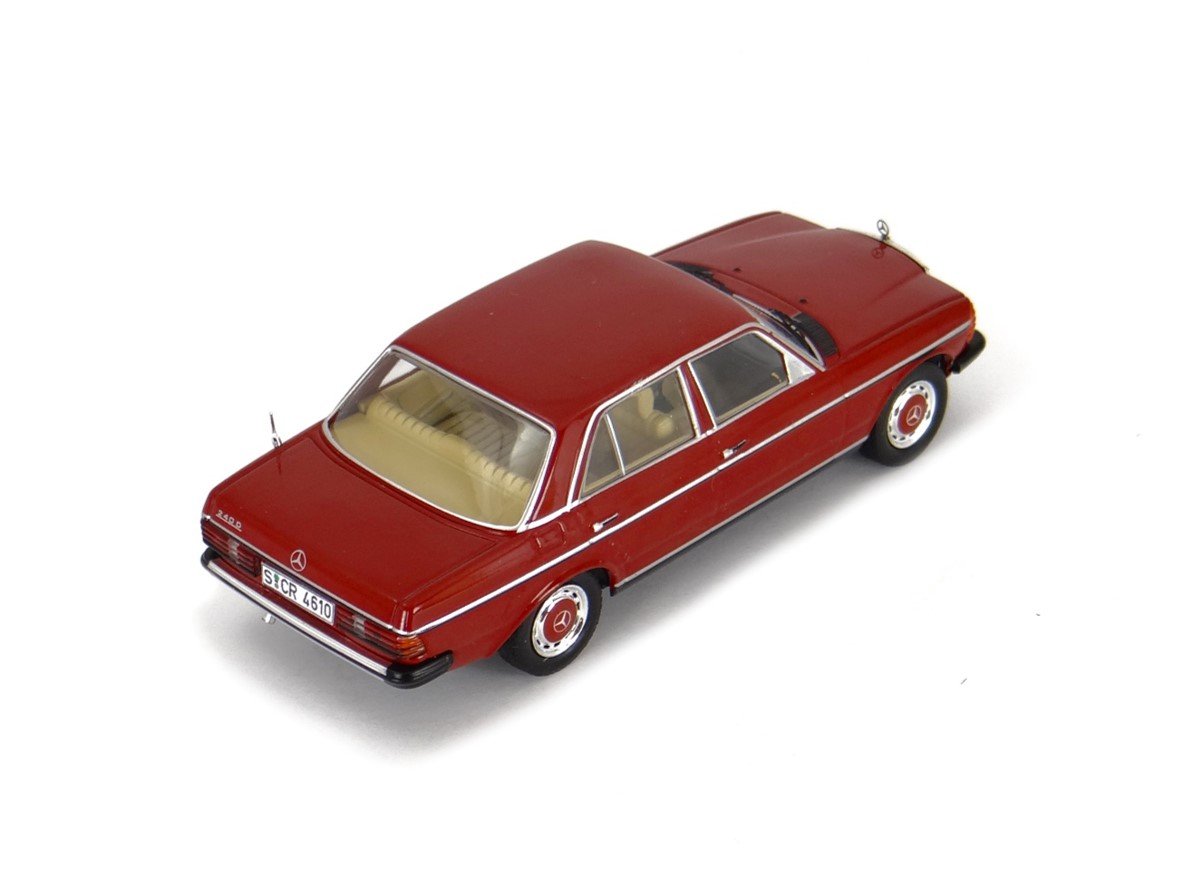
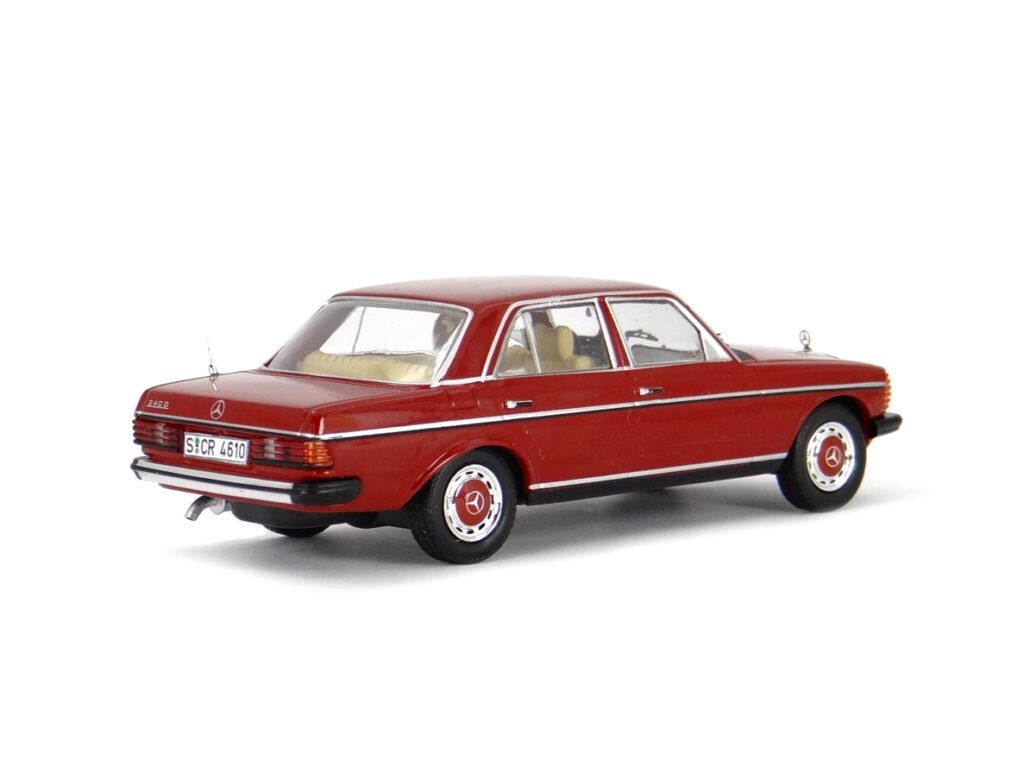
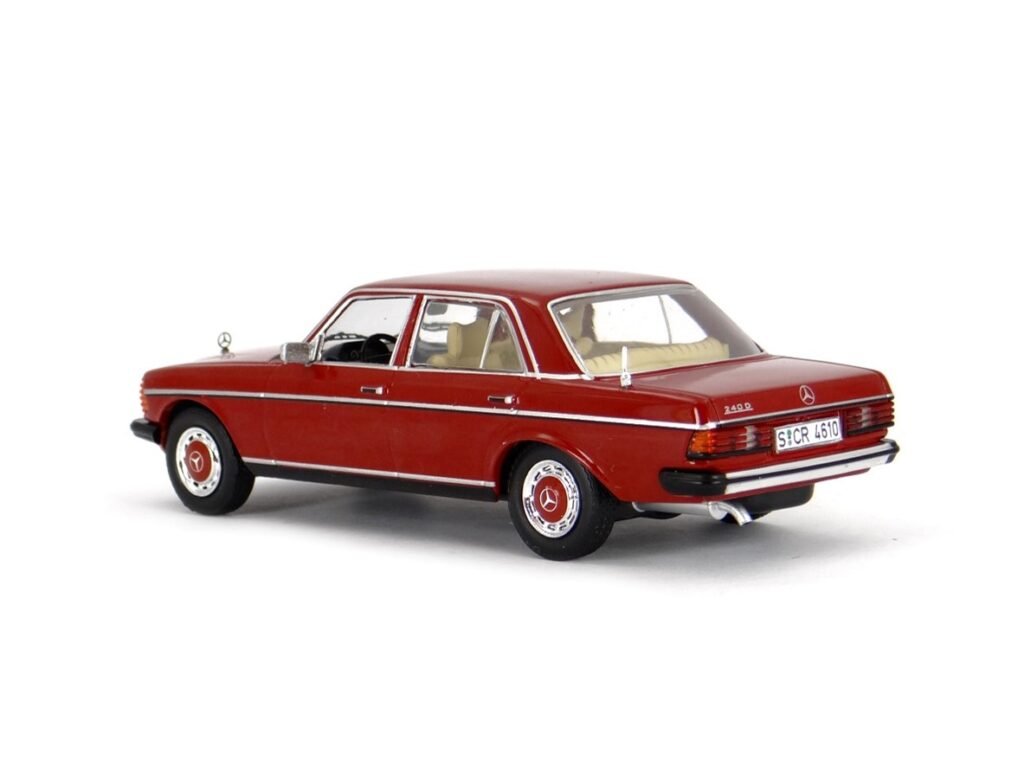
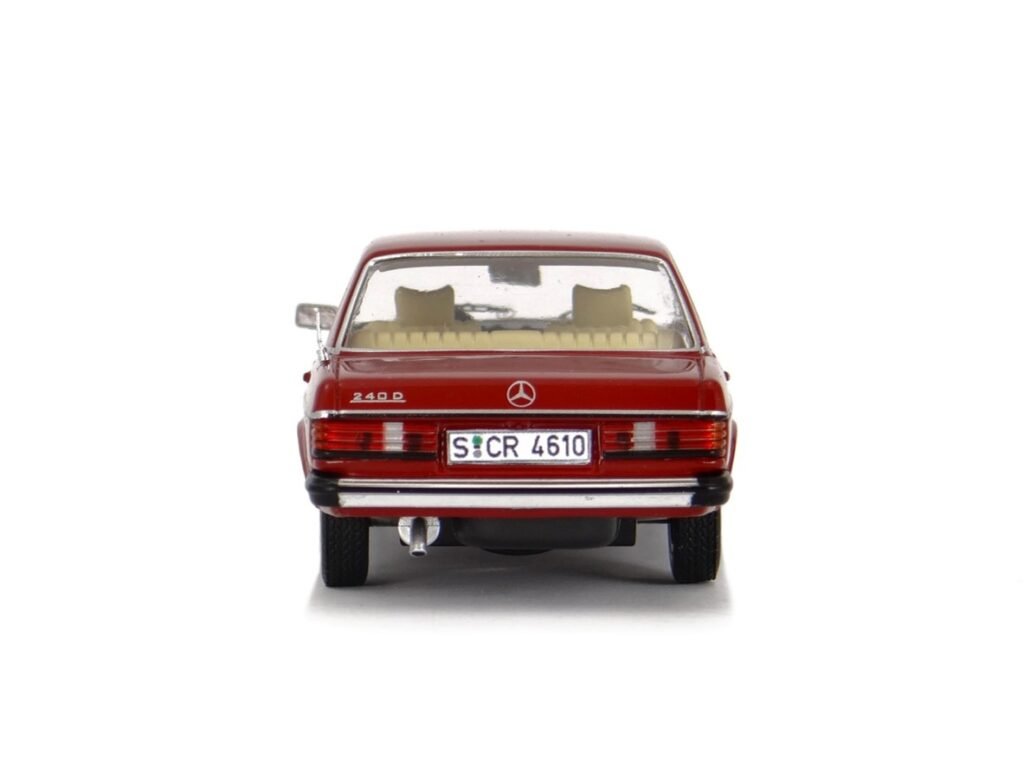
Model Mercedesa-Benza 240D W123 IXO wypuściło w 2022 roku, natomiast ja kupiłem go w styczniu 2024. Według mnie, to jest najlepsza miniaturka serii W123 w skali 1/43, zdecydowanie lepsza od starego modelu Minichamps. IXO idealnie uchwyciło proporcje nadwozia oraz odwzorowało charakterystyczne dla samochodu detale. Ja nie znajduję w modeliku żadnych słabych stron, wygląda po prostu świetnie.
IXO wypuściło Mercedesa-Benza W123 w kilku kolorach. Poza prezentowanym czerwonym (CLC443N.22), jest jeszcze niebieski (CLC488N.22), zielony (CLC587N.22) oraz srebrny 200D (CLC340N.22). Warto wspomnieć, że odlew IXO był też wykorzystany w bardzo wielu seriach gazetowych w Europie. Dlatego też, można spotkać modele W123 w gorszym standardzie wykończenia, pomalowane na inne kolory.
W moim modeliku dokonałem jedynie dwóch modyfikacji. Dodałem szkiełko w bocznym lusterku oraz niemieckie rejestracje z epoki. Bazowałem na starych zdjęciach prasowych, więc W123 na takiej rejestracji faktycznie istniało (chociaż możliwe że w innym kolorze).
Ja zwykle, zapraszam do obejrzenia galerii zdjęć oraz odwiedzania MiniAutomobili zarówno na Instagramie jak i na Facebooku!
*** ENGLISH ***
The legendary Mercedes-Benz W123 celebrates its 50th birthday this year! That’s a perfect opportunity to look back at its story.
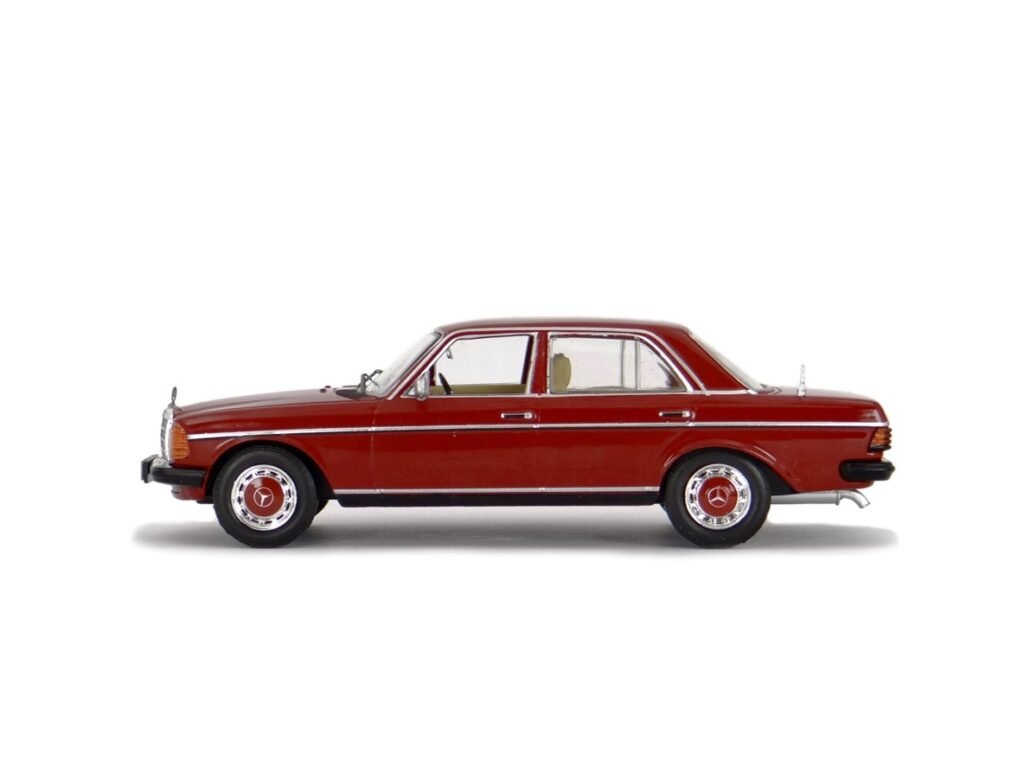
Even if the code “W123” doesn’t mean anything to someone, one look at the car will certainly clear up any doubts. This is, after all, one of the most recognisable models of the German brand. Mercedes produced 2,696,915 examples, with 2,397,514 of them being sedans!
The car perfectly combined elegance, timeless design, exceptional build quality and modern technology, while also being classless. It found its way into the hands of taxi drivers from Berlin to Africa, pensioners, but also pop stars such as Barry Gibb from the Bee Gees, John Lennon and Bonnie Tyler, football legends like Franz Beckenbauer and even… Queen Elizabeth’s mother.
Above all, however, the Mercedes-Benz W123 became famous for its legendary durability, cementing the brand’s reputation. Even today, it remains one of the most respected Mercedes models ever made.
Perfectly prepared
The Mercedes-Benz W123 comes from an era, when the company was devoted to perfectionism. There certainly was no room for half-measures or cost-cutting. Mercedes took pride in making sure that everything was perfectly engineered, hence the development of the W123 took about eight years.
Mechanically, the Mercedes-Benz W123 drew heavily from its predecessor, the W114/115 series, commonly known as the “Stroke Eight” or “Strich Acht” in German. Underpinings carried over from the previous model certainly didn’t mean the new car was outdated. The German engineers simply refined the existing components to an unprecedented level of perfection. Mercedes’ pursuit of perfection extended even to the smallest details, such as the sound of the doors closing. The car’s quality and robustness could easily be seen, heard, and felt.
Alongside its exceptional durability, Mercedes also gave the W123 a high level of safety. It featured crumple zones at both the front and rear, as well as a safety steering column adopted from the W116 S-Class, designed to collapse rather than intrude into the cabin during a crash. The car was also engineered to accommodate ABS (introduced in 1978) and front airbags (from 1980). While commonplace today, these features were truly ahead of their time back then.
Classic elegance
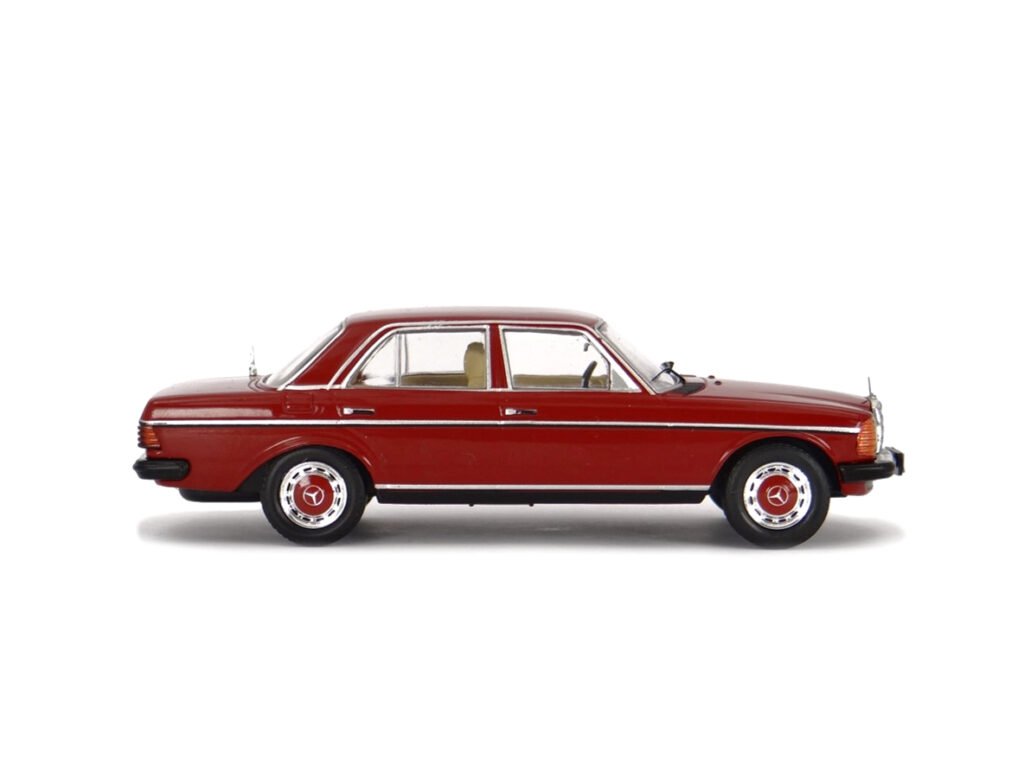
The W123’s styling on the other hand, wasn’t ahead of its time, but nobody expected that from Mercedes-Benz. Designers Friedrich Geiger and Bruno Sacco firmly believed in understated, classic elegance. They combined styling elements from the predecessor (W114/115) with styling cues already introduced on the flagship W116 S-Class in 1972. The perfectly balanced, crisp and angular silhouette, adorned with a large chrome grille and subtle chrome trim is a showcase of timeless elegance. Even today, 50 years after its debut, the Mercedes- Benz W123 looks the part.
The car’s interior looks the part just as much. The cabin exudes an elegant, calm atmosphere, reminiscent of a hotel lounge. Comfortable seats, leather upholstery and the outstanding quality impressed in 1976 and continues to do so today. The W123’s cabin can certainly serve as a reference point for modern designs.
Immediate success
Mercedes-Benz unveiled the W123 to the press in January 1976 in the picturesque town of Bandol on the French Riviera. Journalists had access to 33 cars in a variety of engine and trim configurations, reflecting the breadth of the new model range. The press was immediately impressed by the car’s elegant design, outstanding levels of safety and ride comfort. Reviews were unanimously favourable, with the W123 having virtually no flaws.
Buyers also quickly recognised the strengths of the W123. Although it was an expensive car, its entire first year’s production was sold out, before the model had even officially gone on sale! Buyers faced a minimum nine-month wait for delivery, though delays of well over a year were far from uncommon. Some were even willing to pay extra, just to receive their cars sooner.
Some of the most remarkable examples of the W123’s popularity happened in Germany. Demand for the W123 was so strong, that lightly used examples often sold for several thousand Deutschmarks more, than brand-new cars from the showroom. In fact, the the Mercedes-Benz W123 remained one of Germany’s best-selling new cars throughout its production run. In 1980, it even knocked the Volkswagen Golf off the no.1 spot.
One car, many faces
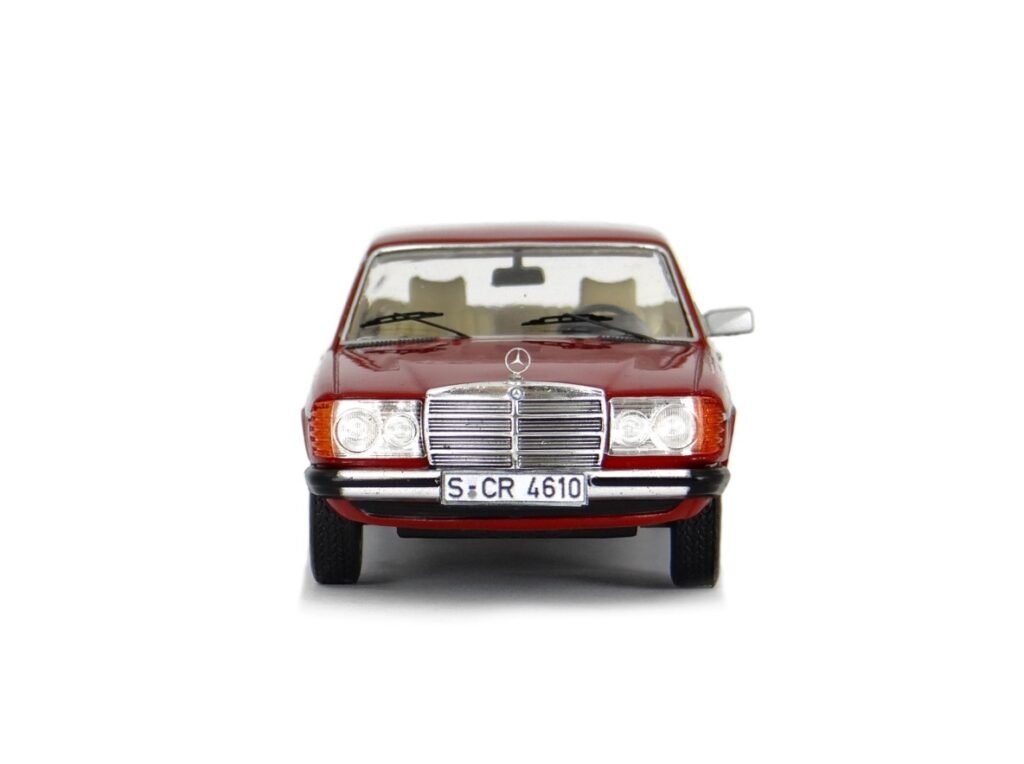
The car’s success was certainly helped by its wide range, tailored to meet a wide variety of customer needs. Just over a year after the launch of the saloon (W123), Mercedes introduced the elegant coupé (C123) in the spring of 1977, followed in September by the S123—its first independently developed estate model. The range also included the Lang (V123), a limousine with an extended wheelbase.
Equally impressive was the engine lineup. With no fewer than nine different powertrains—both petrol and diesel—producing between 55 and 177 hp, the W123 offered a remarkably broad range of driving characteristics. With the entry-level naturally aspirated 55 hp 200 D diesel, the car was slow, but economical and virtually indestructible. By contrast, the range-topping 177 hp 280 model, powered by an inline-six petrol engine, delivered truly sporting performance.
It may sound like a cliché, but the W123 range really did offer something for everyone.
Legendary reliability
Above all, the Mercedes-Benz W123 became renowned for its extraordinary durability and reliability. Especially, when fitted with one of its virtually indestructible diesel engines. Thanks to simple, yet perfectly engineered mechanicals, these cars proved exceptionally resistant to the toughest conditions. And when something finally did go wrong, it was generally easy to fix.
Thanks to the blend of comfort and bulletproof reliability, the W123 became a firm favourite with taxi drivers around the world. Whether cruising along Germany’s Autobahns or tackling the dusty roads of Africa, the Mercedes-Benz W123 covered mile after mile without complaint. Even hundreds of thousands of miles barely seemed to faze it, with many examples accumulating mileages in the millions. In fact, many W123s are still on the road today, tirelessly carrying passengers and cargo, as if it’s nothing.
The Mercedes-Benz W123 is undoubtedly one of the most reliable cars of all time. A true classic, it helped cement Mercedes-Benz’s reputation for building durable, well-made cars.
Its successor, the W124, followed the path it had forged, further strengthening the German manufacturer’s reputation.
About the miniature – Mercedes-Benz 240D W123
IXO released the Mercedes-Benz 240D W123 model back in 2022, but I got mine in January 2024. I think it is the best 1:43 scale miniature of the W123 series, certainly much better than the older Minichamps model. IXO captured the body’s proportions perfectly and faithfully reproduced the car’s distinctive details. I can see no flaws in the model, it just looks so good!
IXO released the Mercedes-Benz W240D W123 in a few colours. In addition to the red version shown here (CLC443N.22), the model is also available in blue (CLC488N.22), green (CLC587N.22), and as a silver 200D (CLC340N.22). and silver 200D (CLC340N.22) variants. It is worth mentioning that IXO’s casting was also used extensively in partwork magazine collections throughout Europe. As a result, W123 models can also be found in different colours, although these generally feature a lower standard of finish.
I only made two modifications in my model; I added the glass-effect on the wing mirror and German license plates from the era. I was basing it on old press photos, so a W123 with that reg did exist in reality (although possibly in a different colour).
As always, go and check out the photo gallery and be sure to visit MiniAutomobile on both Instagram and Facebook!