
Skoda Favorit to bez wątpienia jeden z najważniejszych samochodów w historii tej czeskiej marki. To też prawdopodobnie najlepszy samochód jaki powstał w krajach socjalistycznych. Bez Favorit, Skoda nie byłaby tą marką, którą jest dzisiaj.
W 1987 roku Favorit otworzyła zupełnie nowy rozdział w historii Skody, będąc jej pierwszym przednionapędowym modelem z silnikiem montowanym poprzecznie z przodu. Ta zmiana potwierdzała ambicje Skody względem zachodnich rynków, gdzie taki układ napędu już od lat 70. królował w autach miejskich i kompaktowych. Czesi dołożyli do współczesnego napędu jeszcze nowoczesny projekt autorstwa Bertone. W efekcie, Skoda Favorit nie tylko deklasowała inne auta z bloku wschodniego, ale też zaznaczyła swoją obecność na rynkach zachodnich. Jej sukces odegrał kluczową rolę w przekonaniu Volkswagena do zainwestowania w czeską firmę, czyniąc z Favorit symbol odrodzenia Skody.
Potrzeba zmiany
Praktycznie od początku swojego istnienia Skoda była wierna tylnemu napędowi. Najpierw łączonemu z silnikiem z przodu, a od 1964 roku i modelu 1000 MB, sparowanego z silnikiem z tyłu. Taka konstrukcja była w tamtym czasie zresztą całkiem popularna wśród europejskich samochodów. Niosła ze sobą jednak sporo wad, takich jak gorsze prowadzenie, większe zużycie paliwa czy drastycznie ograniczona możliwość tworzenia różnych wersji nadwoziowych. Zauważyli to czołowi producenci samochodów, i już od lat 70. zaczęli oferować przednionapędowe auta z silnikiem z przodu.
Potrzebę zmiany widziała również Skoda, ale ze względu na ograniczenia wynikające z ustroju politycznego i minimalnego budżetu, szybkie opracowanie nowej konstrukcji było niemożliwe. Czesi rozpoczęli współpracę z producentami z NRD, Wartburgiem i VEB Sachsenring Automobilwerke produkującym Trabanty. W zamyśle, trzej producenci mieli kooperować przy tworzeniu i produkcji nowego samochodu. Efektem prac był projekt Skoda 760, ale ponownie ze względów polityczno-ekonomicznych, współpracę zakończono w 1979 roku.
Kolejnym pomysłem Czechów była współpraca z ZSRR i licencyjna produkcja. W tym celu, na początku lat 80. prototypowe Zaporożce z ukraińskiej fabryki ZAZ pokazano Czechom w Sowieckiej ambasadzie w Pradze. Nie przypadły one jednak do gustu czeskim decydentom i do współpracy z Sowietami nie doszło.
Nowe podejście
Po nieudanych próbach współpracy, rząd Czechosłowacji uznał, że należy skonstruować nowy pojazd samemu. W 1982 roku Skoda dostała więc zielone światło od rządu na rozpoczęcie prac nad zupełnie nowym autem, które miało zastąpić przestarzałe modele serii 105/120. Rządowe wytyczne od razu nakładały sporą presję czasu – prace nad nowym samochodem miały być ukończone do 1985 roku, a początek wielkoseryjnej produkcji planowano na 1987 rok.
Nowy projekt otrzymał kod 780 a dowodził nim inżynier Jaroslav Kindl. W kilka miesięcy zbudowano cztery prototypy. Pomimo to, już w marcu 1983 roku pieczę nad projektem przejął inżynier Petr Hrdlička a roboczą nazwę zmieniono na Skoda 781. Na Hrdličke i jego zespół czekało karkołomne jak na realia tamtych czasów zadanie, stworzenia w dwa i pół roku zupełnie nowego samochodu, gotowego do produkcji seryjnej.
To oczywiście rodziło problemy. O ile z aspektami technicznymi Skoda mogła się uporać we współpracy z czeskim Instytutem Badań Pojazdów Samochodowych, o tyle zaprojektowanie w tak krótkim czasie nadwozia spełniającego zachodnie wymagania potrzebowało już pomocy z zewnątrz. Hrdlička zdawał sobie z tego sprawę i za zgodą rządu wybrał się na targi motoryzacyjne w Genewie, aby znaleźć firmę która mogłaby pomóc w zaprojektowaniu auta. Hrdlička był odważny i zdeterminowany, więc od razu poszedł do największych biur projektowych. Rozmowy z Ital Design Giugiaro, Pininfariną i Chausson nie przyniosły jednak oczekiwanych skutków.
Włoski styl
Ostatecznie, Skoda wybrała studio Bertone, które za cenę 28 milionów czechosłowackich koron zobowiązało się zaprojektować nowy samochód w pięciu wariantach nadwozia – hatchback, sedan, kombi, coupé i pojazd użytkowy. Umowę z Włochami podpisano szybko, bo w niecałe trzy miesiące – w czerwcu 1983 roku.
Już w momencie podpisywania kontraktu, Włosi zaprezentowali gotowe szkice nowego samochodu. Czesi mieli jednak swoje założenia i oczekiwali konkretnych rozwiązań. Chcieli na przykład wykorzystać pewne elementy z pierwotnego projektu Skoda 781. Włoskim projektantom dużo problemów sprawiały też ograniczone możliwości miejscowych dostawców komponentów do produkcji nowego auta. Wszelkie szczegóły z włoskim studiem Bertone negocjował osobiście Petr Hrdlička. Pomimo różnic, prace szły całkiem sprawnie i już na początku 1984 roku gotowe był pierwszy prototyp wersji hatchback.
Zgodnie z umową, włosi przygotowali też prototypy wesji sedan (Skoda 782), coupé (Skoda 783), furgon (Skoda 784), kombi (Skoda 785) i pick-up (Skoda 787). Jednak ze względów finansowych, do produkcji weszły finalnie jeszcze tylko pick-up i kombi.
Czeska technika
Ze względu na ograniczony budżet, czechosłowacki rząd już w pierwotnych wytycznych wskazał, że w nowym modelu musi zostać użyty stary silnik ze Skody 120/130. W międzyczasie, w Europie Zachodniej wprowadzono jednak ostrzejsze normy emisji spalin, których stary silnik nie spełniał. Skoda zmuszona więc była do gruntownej modernizacji swojej jednostki.
Czescy inżynierowie przystosowali ją do tankowania benzyny bezołowiowej, obniżyli zużycie paliwa oraz emisję spalin. W pracach nad silnikiem Skodzie pomagali nawet inżynierowie Porsche!
Skoda poprawiła też wytrzymałość silnika, która dotychczas była jedną z jego najsłabszych stron. Siedem jeżdżących prototypów (co na dzisiejsze czasy jest malutką liczbą) pokonało w czasie jazd testowych setki tysięcy kilometrów. Po analizie wyników i ostatnich poprawkach, Skoda 781, ale już z oficjalną nazwą Favorit, była gotowa do premiery.
Oficjalny debiut
Skoda Favorit oficjalnie debiutowała 16 września 1987 roku, podczas targów w Brnie. Data i miejsce premiery były motywowane politycznie, ale z czasem zostały skrytykowane jako przedwczesne. Po pierwsze, główna fabryka Skody w Mlada Boleslave nie była jeszcze gotowa na pełnoskalową produkcję Favorit. Po drugie, uważa się że wczesna premiera w Brnie, pozbawiła pierwszą międzynarodową prezentację w styczniu 1988 roku w Amsterdamie efektu nowości.
Niezależnie od wątpliwości, premiera Skody Favorit w Brnie wywołała w Czechosłowacji wielkie poruszenie. Był to bowiem pierwszy od lat prawdziwie nowy samochód rodzimego producenta, na dodatek współtworzony z renomowaną włoską firmą. Poprawa względem poprzednika, Skody 120/130, była ogromna. Nie odnosiło się już wrażenia obcowania z obiektem muzealnym. Skoda Favorit była dość nowoczesnym pojazdem, wpusującym się w ówczesne trendy. Czesi byli z niej dumni i mieli ku temu wszelkie powody.
Skoda Favorit wyjeżdża na drogi
Początkowo, ze względu na znikomą produkcję i chęć wyłapania wczesnych niedociągnięć, Favorit dostępna była wyłącznie dla służb i organizacji rządowych. Oficjalna sprzedaż ruszyła dopiero w połowie 1988 roku, po ukończeniu modernizacji głównej linii montażowej w fabryce w Mlada Boleslav.
Gama Favorit była dość skromna. Do wyboru był tylko jeden benzynowy, czterocylindrowy silnik o pojemności 1289 cm³, w dwóch wersjach mocy: 58 KM (handlowe oznaczenie 135) i 63 KM (handlowe oznaczenie 136). Były też tylko dwie wersje wyposażenia standardowego; L (de Luxe) i LS (de Luxe Super).
Na rodzimym rynku, początkowa cena wersji 136 L wynosiła 84,600 CZK, czyli równowartość 27.5 miesięcznych pensji. Pomimo stosunkowo wysokiej ceny, Skoda Favorit szybko zaskarbiła sobie sympatię kierowców i stała się nieodłącznym elementem czechosłowackiego krajobrazu.
Zresztą, Favorit radziła sobie całkiem dobrze również na zagranicznych rynkach. Szczególnie u nas w Polsce (przyczynił się do tego na pewno jej montaż w Poznaniu), ale też w Niemczech i Wielkiej Brytanii. Oczywiście, jej postrzeganie różniło się w zależności od rynku. O ile w “demoludach” Skoda Favorit jawiła się dla wielu jako auto marzeń i szczyt aspiracji, na zachodzie stanowiła jedną z najtańszych opcji posiadania nowych “czterech kółek”.
W budowaniu pozytywnego image’u na pewno pomagały sukcesy w motorsporcie. Rajdowe wersje Favorit w latach 1991 – 1994 cztery razy wygrywały w swojej klasie słynny Rajd Monte Carlo a w 1994 roku także FIA Formula 2 World Cup.
Skok w nową rzeczywistość
Niedługo po wprowadzeniu Favorit do sprzedaży, Skoda stanęła przed jeszcze większym wyzwaniem – transformacją ustrojową. Wprowadzenie zasad wolnego rynku nadwyrężyło i tak już trudną sytuację finansową Skody. Onaczało to, że aby przetrwać, producent musi szukać zachodniego partnera strategicznego. Potencjał Favorit na pewno ułatwiał to zadanie. Czesi prowadzili rozmowy z różnymi markami, ale jak wiemy, to ostatecznie Volkswagen kupił udziały w czeskiej firmie. Wiosną 1991 roku, Skoda stała się częścią grupy Volkswagena.
Przejęcie przez Volkswagena pozwoliło Skodzie na niezbędne modernizacje Favorit. Pierwsza z 1991 roku była symboliczna i ograniczała się jedynie do przesunięcia logo Skody na środek chłodnicy. Następnie, poprawiono jakość materiałów, wprowadzono zmiany konstrukcyjne, poprawiono poziom bezpieczeństwa i wyposażenia.
Od początku produkcji w 1987 do jej końca w 1994 roku, Skoda wytworzyła w sumie 783 167 sztuk Favorit. Jeśli doliczyć do tego kombi Forman i rozmaite wersje użytkowe, to do 1995 roku całkowita liczba pojazdów osiągnęła poziom 1 077 126. Zastąpiona przez Skodę Felicię, Favorit stała się jednym z symboli swojej epoki i budzącym nostalgię klasykiem.
O miniaturze – Skoda Favorit
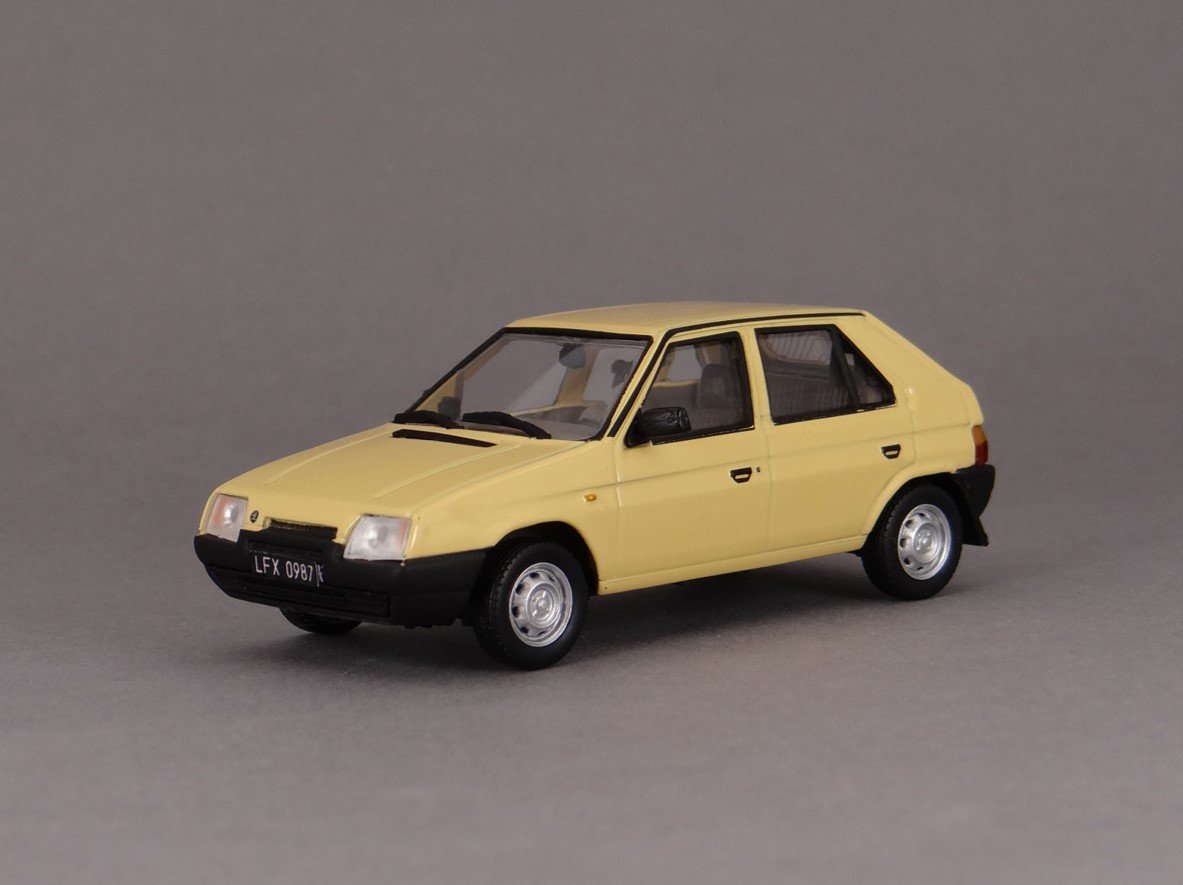
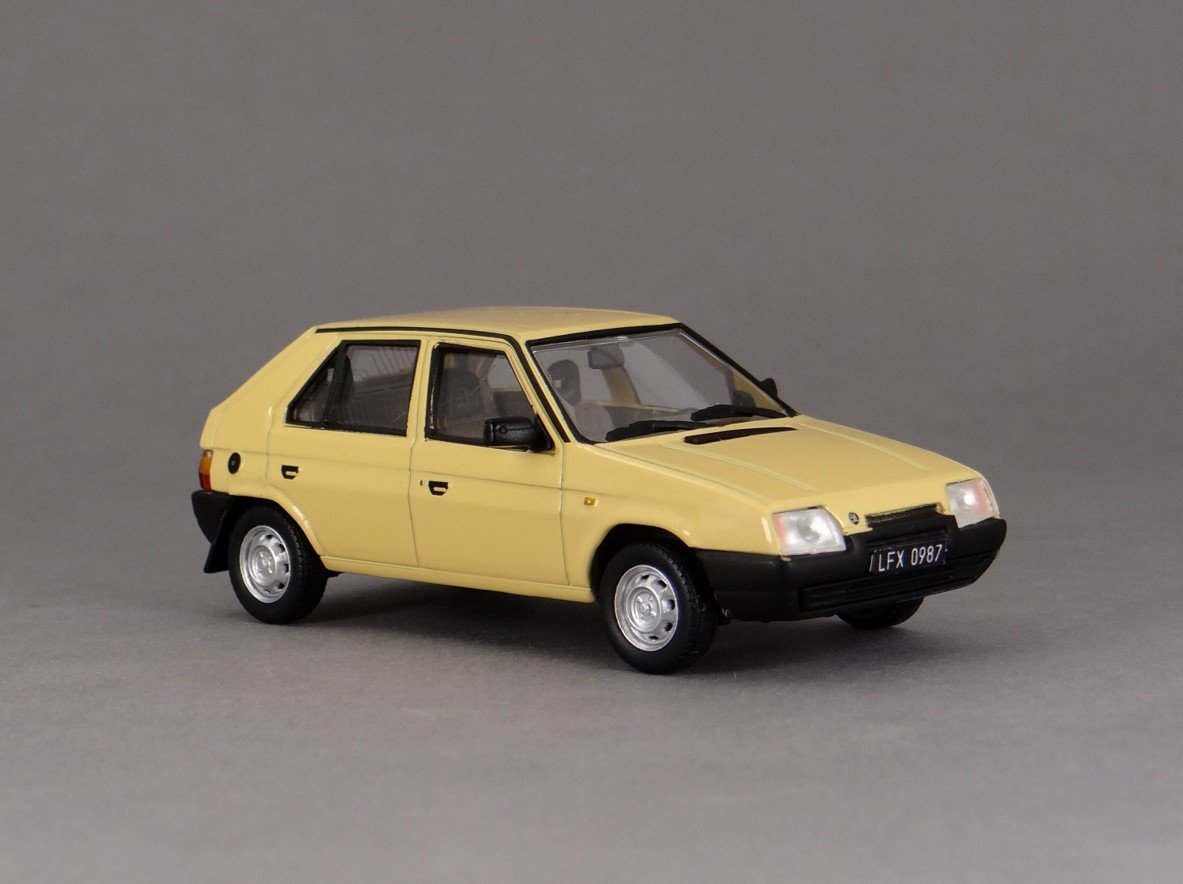
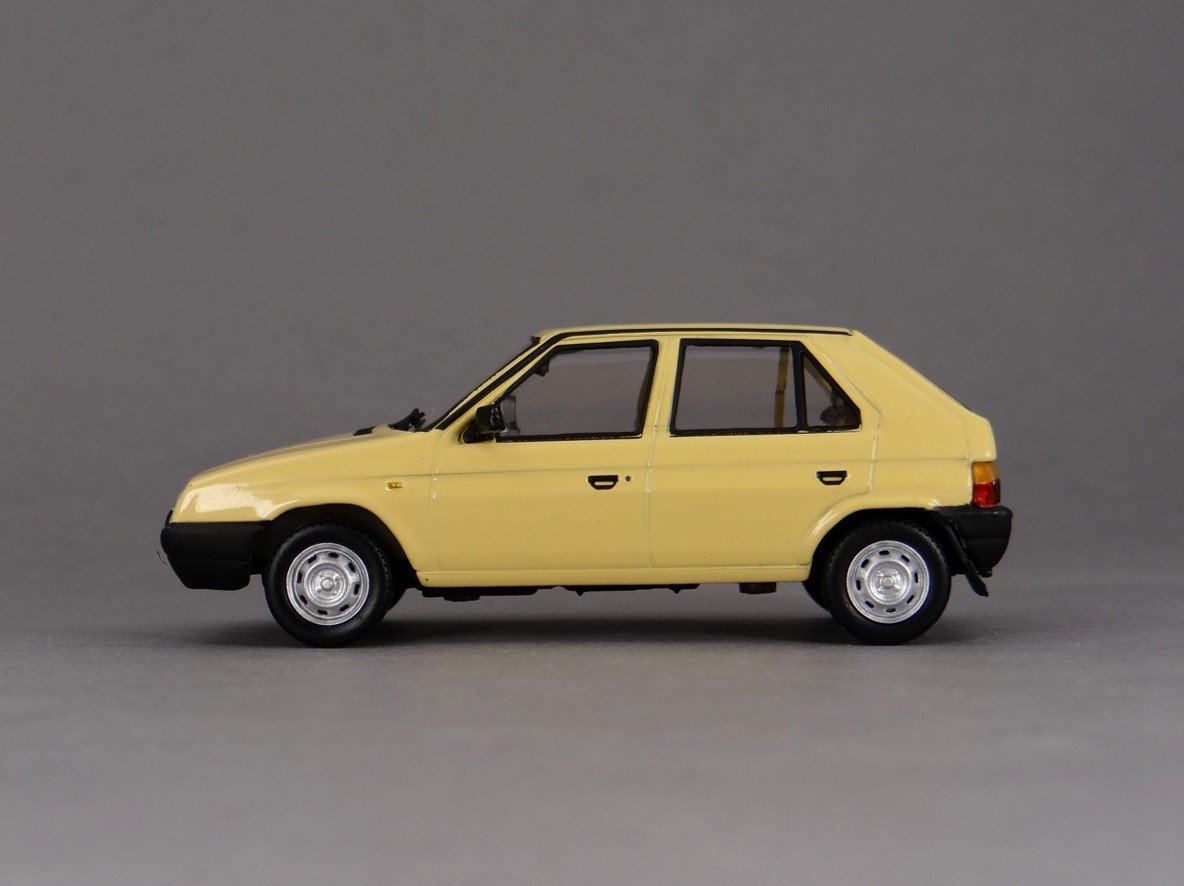
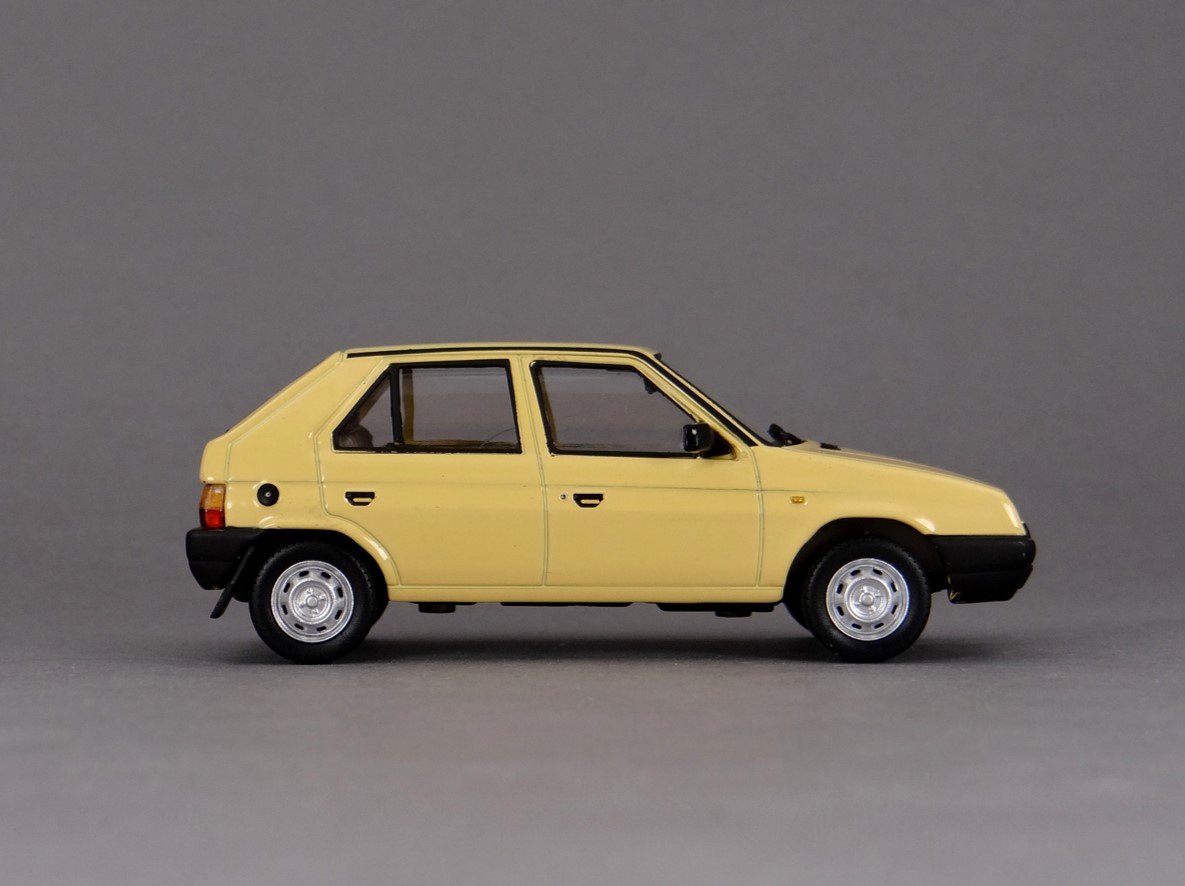
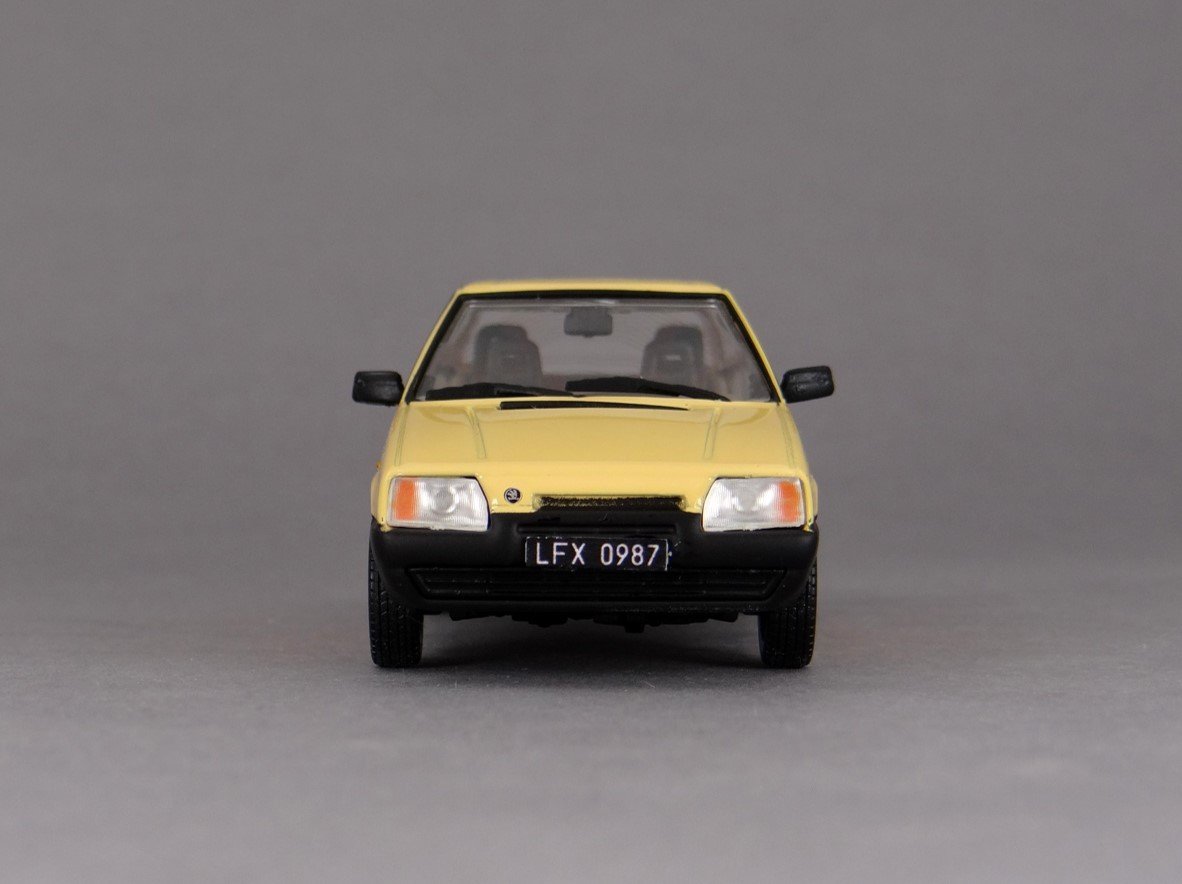
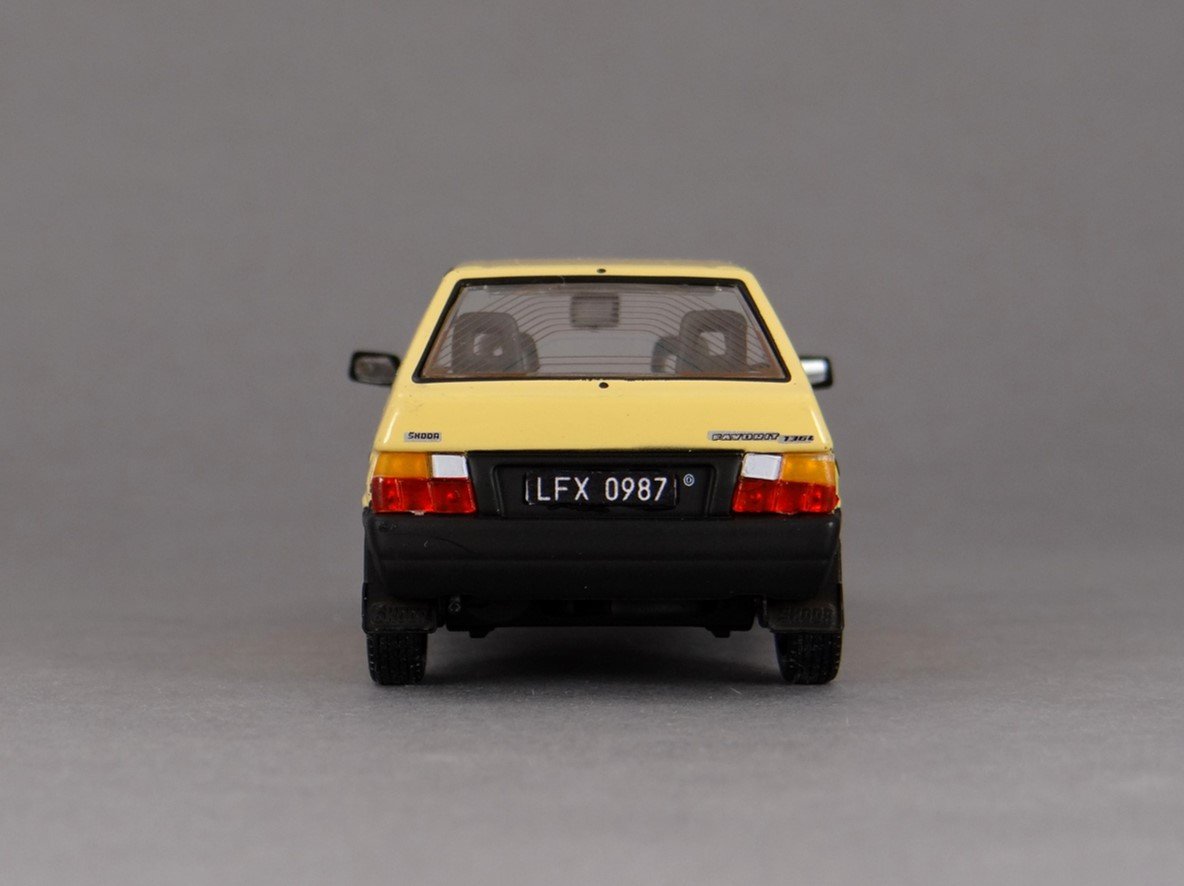
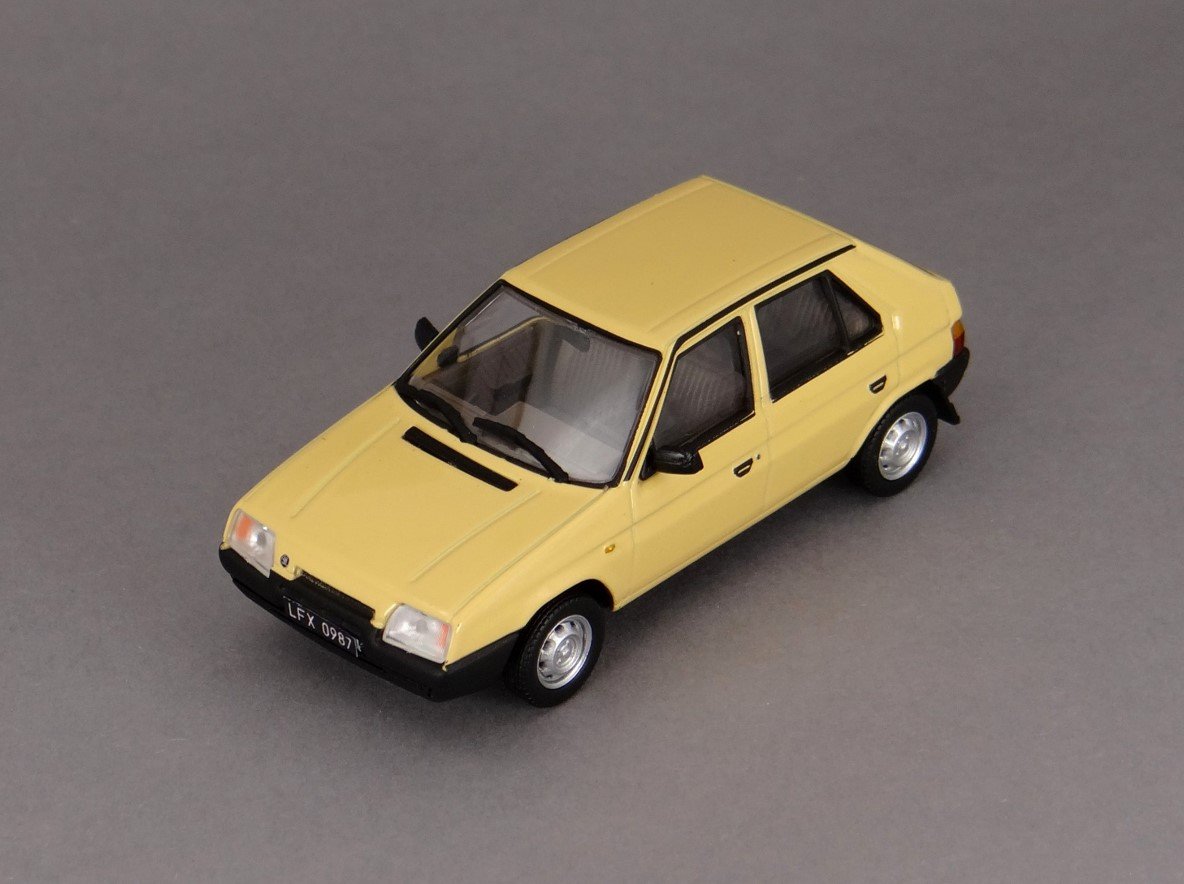
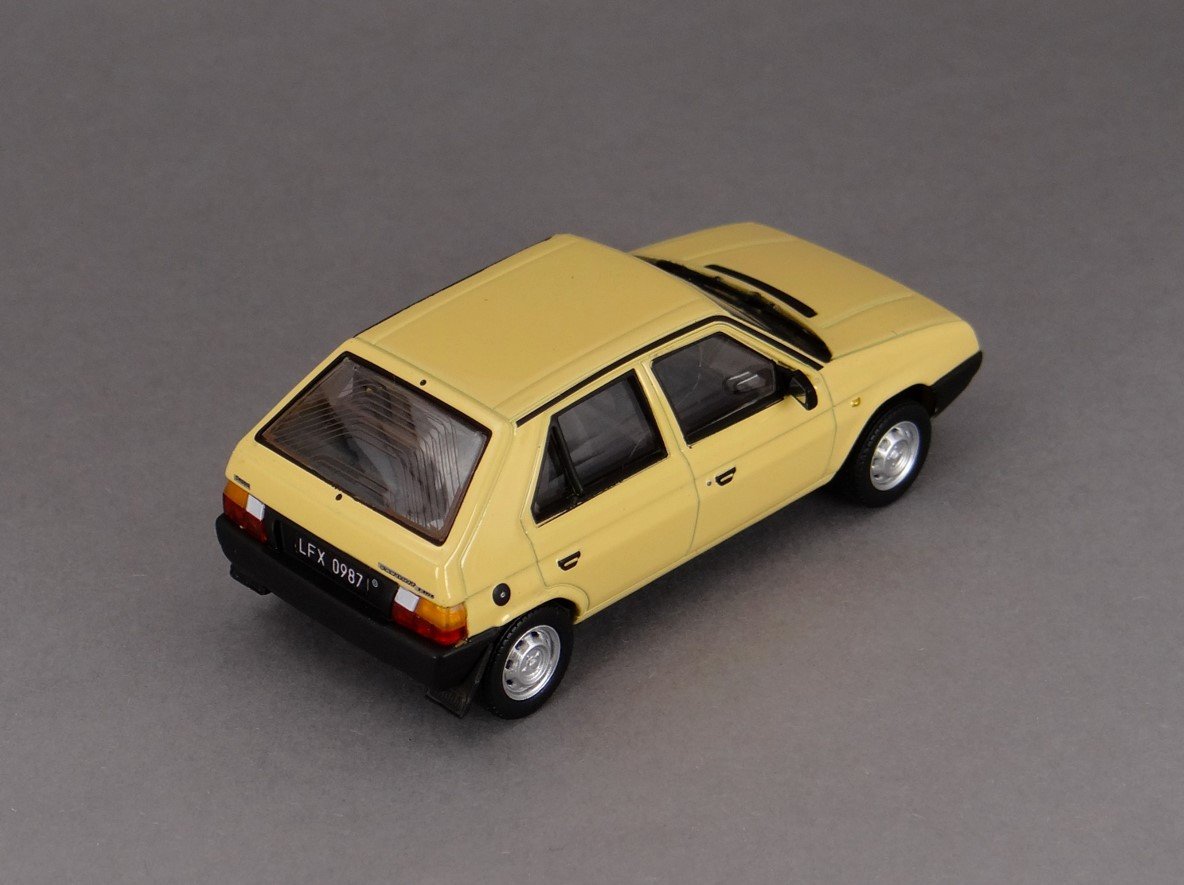
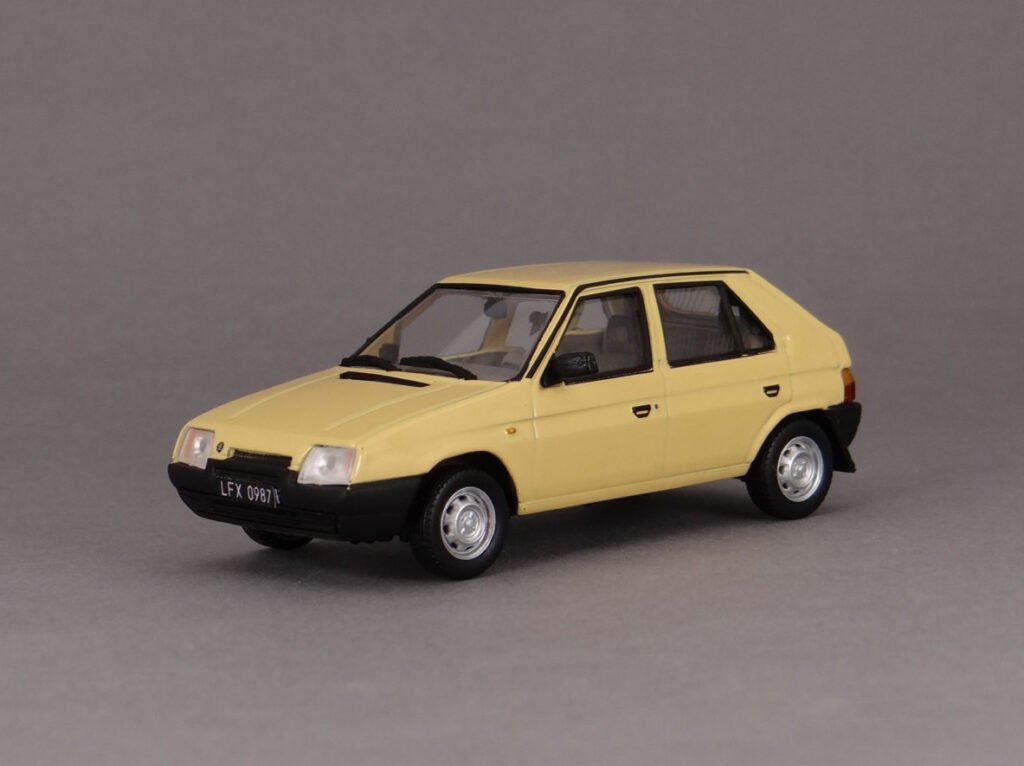
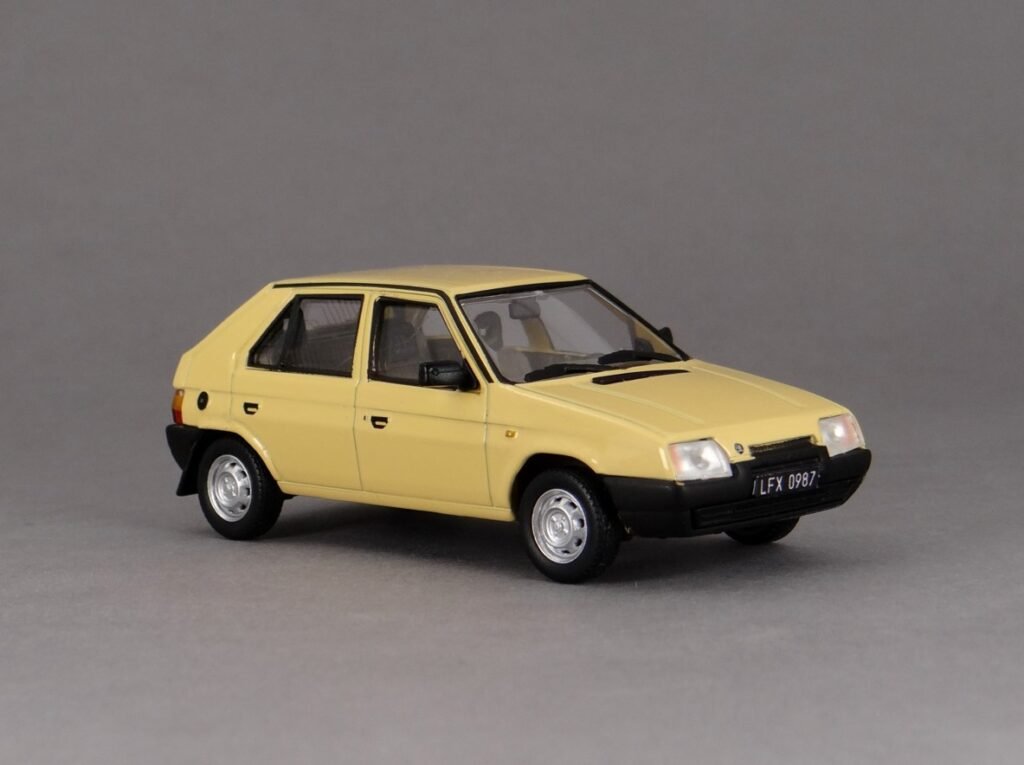
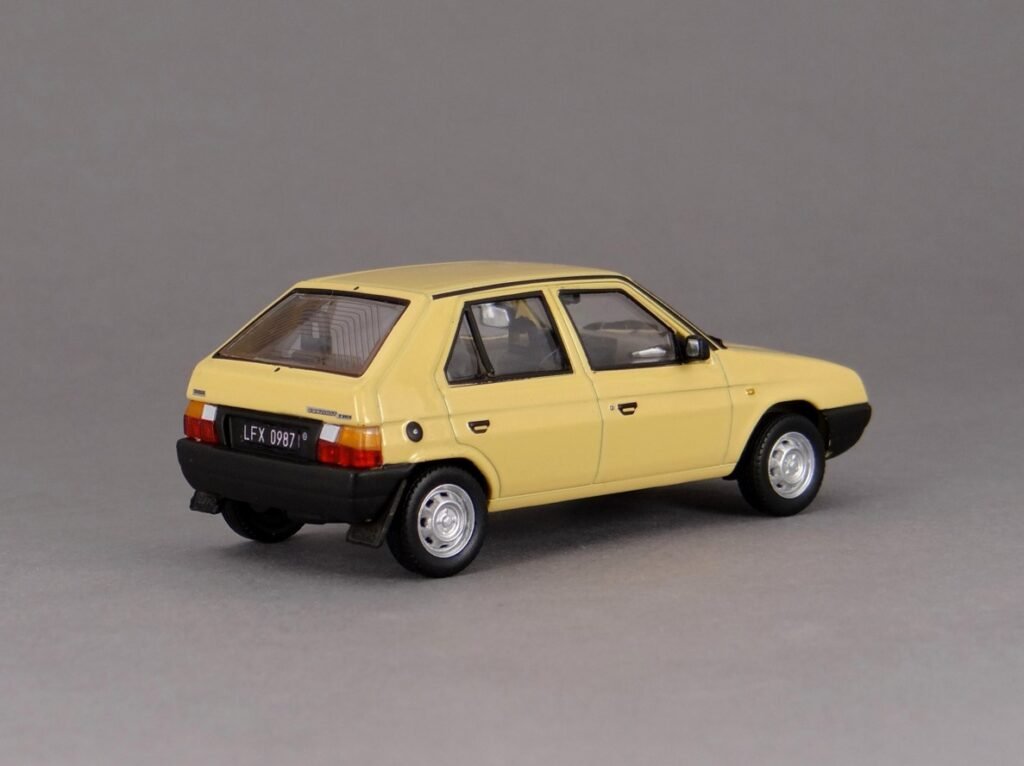
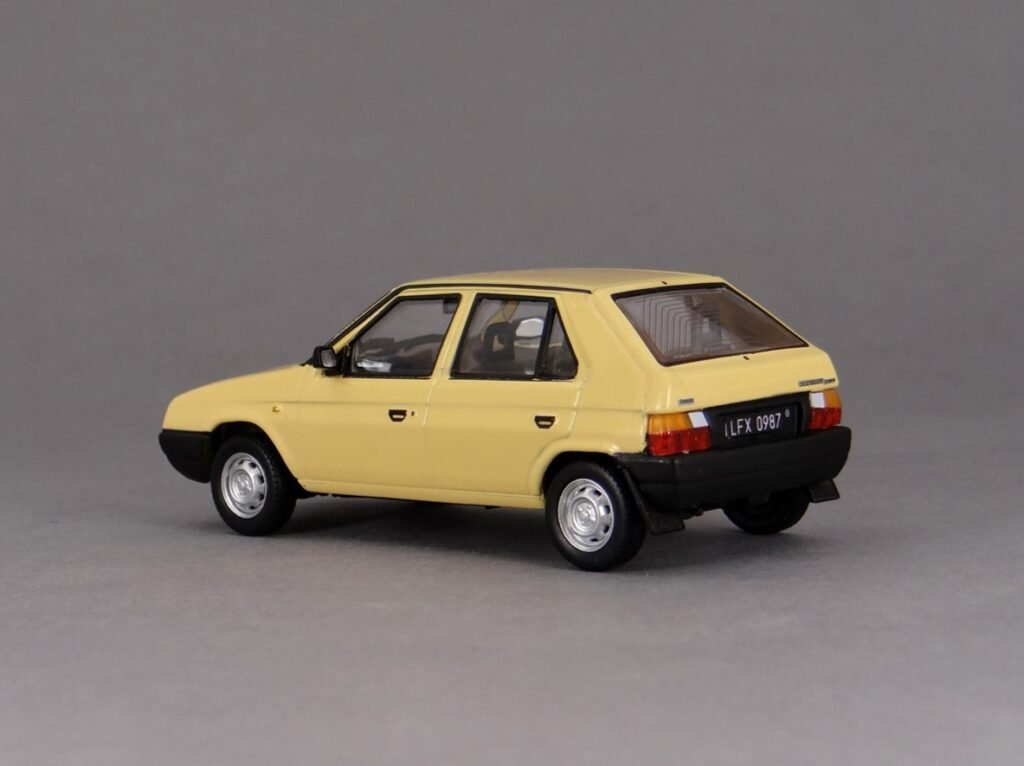
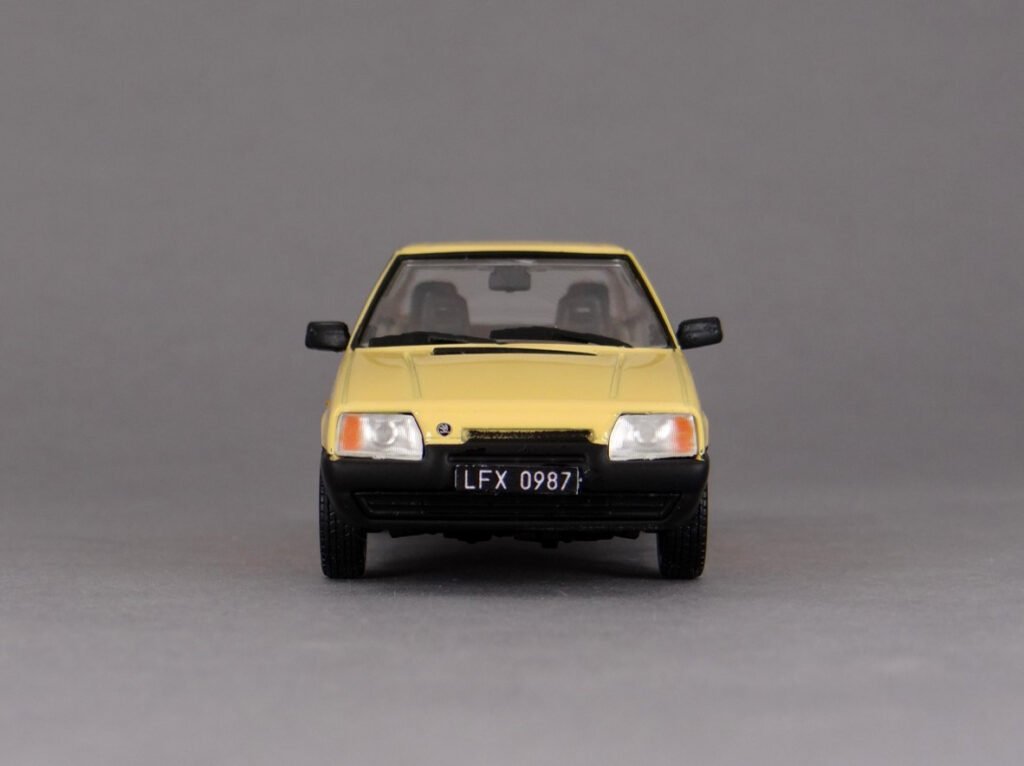
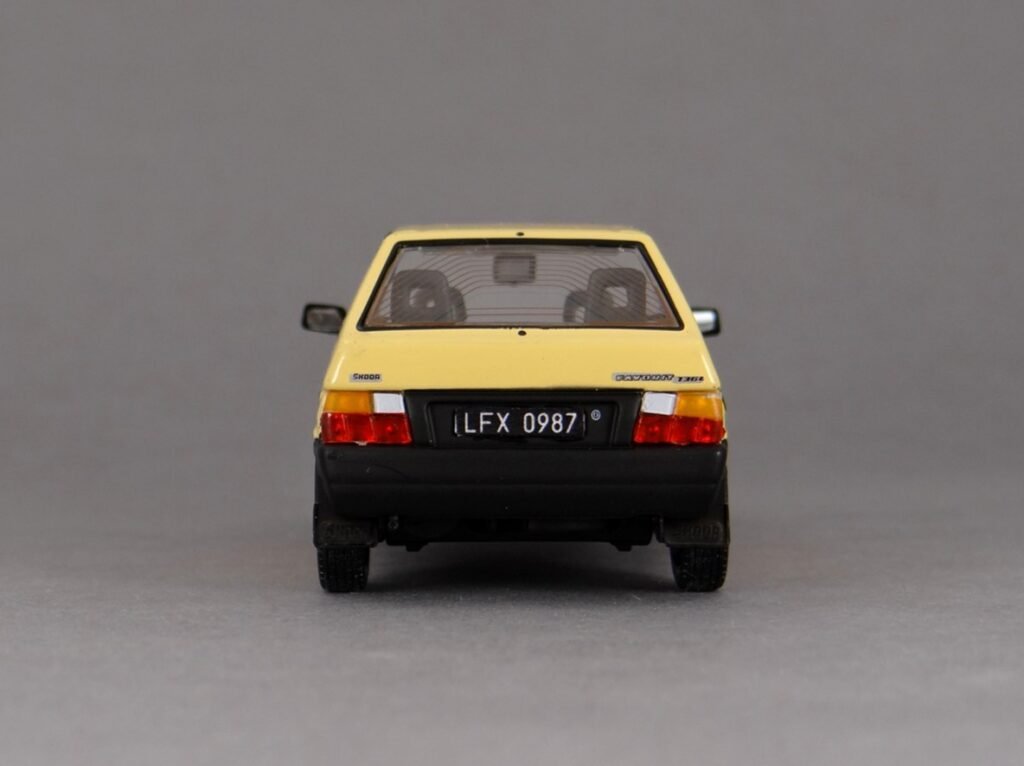
Skoda Favorit w skali 1/43 od Abrexa jest z nami już od przynajmniej piętnastu lat i wciąż wygląda świetnie! Odkąd kilka lat temu IXO-PCT wypuściło swój model, nie jest to już jedyna miniatura Favority w skali 1/43, ale stary odlew Abrexa absolutnie nie stoi na straconej pozycji.
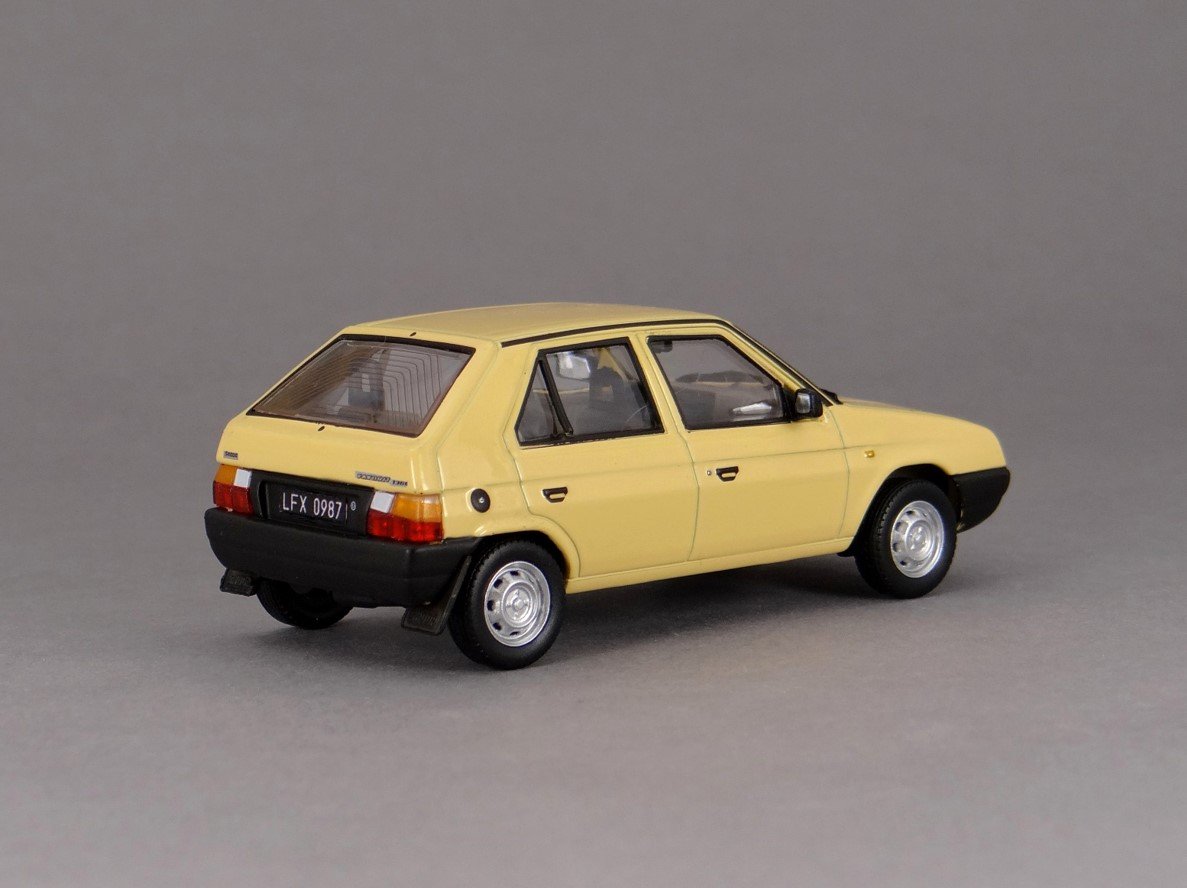
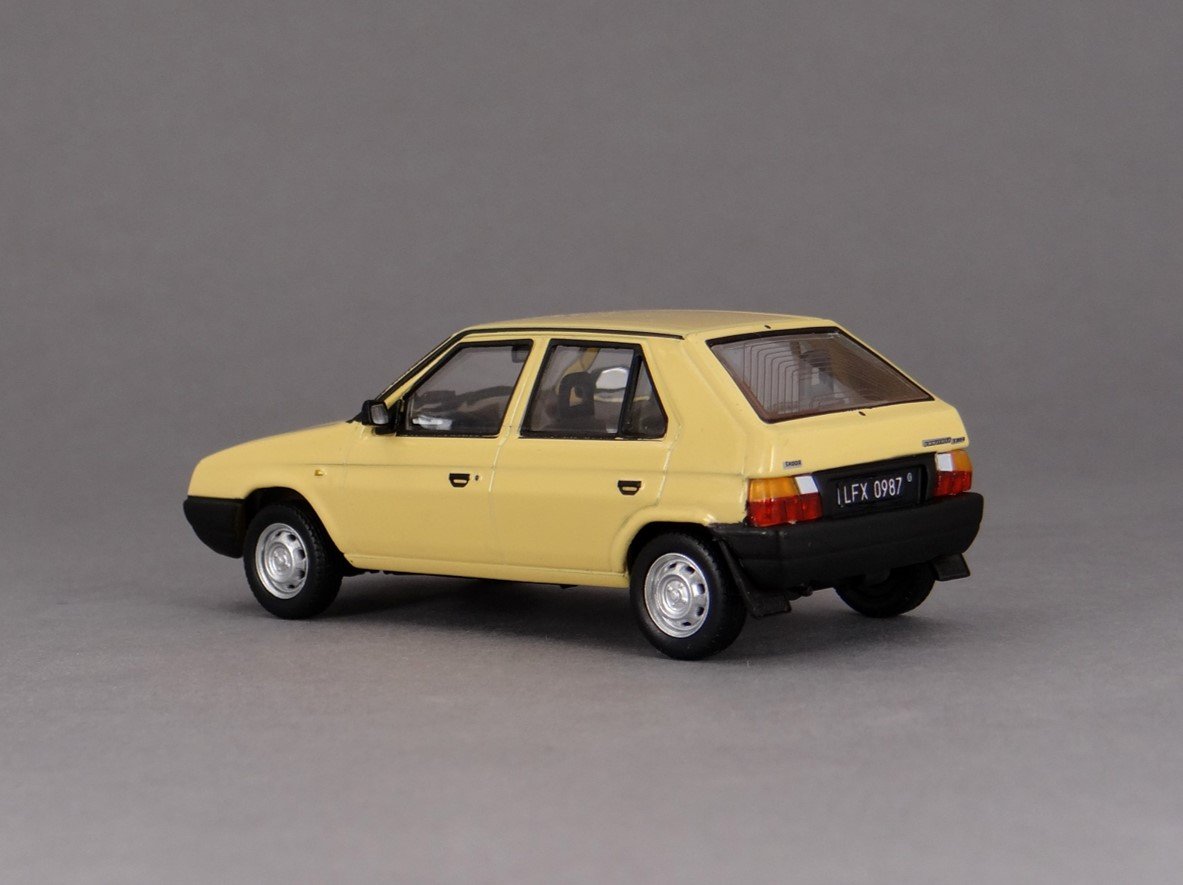
Model czeskiego producenta ładnie odwzorowuje prawdziwy samochód. Jego mocną stroną są detale. Logo producenta na bocznych lusterkach i napis “Skoda” na chlapaczach bez wątpienia dodają charakteru. Szkoda jedynie, że tylne światła są częściowo malowane, a nie wykonane z przezroczystego plastiku. W moim egzemplarzu prawa tylna lampa jest na dodatek krzywa. To psuje trochę odbiór skądinąd bardzo dobrej miniatury.
Typowo dla siebie, Abrex oferuje Skodę Favorit w szerokiej gamie kolorów. Dostępne są chyba wszystkie lakiery których używano w prawdziwym samochodzie, więc każdy może znaleźć coś dla siebie. Biorąc pod uwagę jak wiele osób ma wspomnienia związane z Favoritką, to marketingowy strzał w dziesiątkę.
Ja wybrałem kolor żółty Mimosa ze względów sentymentalnych. Kiedy byłem mały, jedna z naszych sąsiadek miała Favoritę właśnie w takim kolorze. Przyznam jednak, że ostatnio korci mnie aby dokupić jeszcze Favority w kilku innych odcieniach. Całkiem prawdopodobne więc, że rodzina Favoritek będzie się szybko powiększać. Wszystko pokażę oczywiście tutaj na blogu.
Tymczasem, zapraszam do prezentacji Skody Favorit w kolorze żółty Mimosa oraz do odwiedzenia profili MiniAutomobili na Facebooku i Instagramie!
*** ENGLISH ***
The Skoda Favorit is undoubtedly one of the most important cars in the history of the Czech brand. It is also likely the best car ever built in the socialist bloc. Without the Favorit, Skoda wouldn’t be the brand it is today.
In 1987, the Favorit opened an entirely new chapter in Skoda’s history, becoming the company’s first front-wheel-drive model with a transversely mounted front engine. The move reflected Skoda’s ambitions to compete in Western markets, where this layout had been the standard for superminis and compact cars since the 1970s. The Czechs paired this contemporary mechanical layout with a modern design by Bertone. As a result, the Skoda Favorit not only outclassed other Eastern Bloc cars, but also established a decent foothold in the Western markets. In fact, its success played a key role in convincing Volkswagen to invest in the Czech brand, making the Favorit a symbol of Skoda’s revival.
Need for change
From the very beginning, Skoda remained committed to rear-wheel drive. Combined at first with a front-mounted engine, but since 1964 and the Skoda 1000 MB, paired with a rear-mounted engine. A layout, which was actually fairly popular among European cars at the time. However, it came with several disadvantages including poorer handling, higher fuel consumption and severely limiting the range of body styles that could be developed. By the 1970s, most major manufacturers recognised these limitations and began turning to the now-familiar front-engine, front-wheel-drive configuration.
Skoda also recognized the need for change. However, political constraints and a very limited budget made it impossible to develop a new design quickly. The Czech manufacturer began collaborating with the East German automakers Wartburg and VEB Sachsenring Automobilwerke, the producer of Trabant cars. The three firms intended to cooperate on the development and production of a new vehicle. Their efforts resulted in the Skoda 760 project, but the partnership was abandoned in 1979, once again for political and economic reasons.
The Czechs’ next idea was to pursue licensed production in cooperation with the Soviet Union. To this end, in the early 1980s Zaporozhets prototypes built at the Ukrainian ZAZ factory were shown to Czech representatives at the Soviet Embassy in Prague. However, they failed to impress the Czech decision-makers, and so the co-operation with the Soviets never even began.
A new approach
Following the failure of several cooperation projects, the Czechoslovak government decided, that the country would have to develop the new car independently. In 1982, it gave Skoda the green light to begin work on an entirely new model intended to replace the outdated 105/120 series. The government’s guidelines immediately imposed a tight schedule: development was to be completed by 1985, with mass production scheduled to begin in 1987.
Codenamed 780, the new project was initially headed by engineer Jaroslav Kindl. Four prototypes were completed within a matter of months. Despite this, in March 1983 the programme was handed over to Petr Hrdlička and its working designation changed to Skoda 781. Hrdlička’s team faced an almost impossible task for the era—developing a completely new production-ready car in just two and a half years.
This, of course, created a number of challenges. While Skoda could tackle the technical aspects in cooperation with the Czechoslovak Motor Vehicle Research Institute, designing a body that met Western standards within such a short timeframe required outside expertise. Realising this, Hrdlička secured government approval to attend the Geneva Motor Show in search of a design partner to help with the project. Bold and determined, he went straight to some of the industry’s leading design studios. However, talks with Italdesign Giugiaro, Pininfarina and Chausson failed to produce the desired outcome.
Italian style
In the end, Skoda chose the Bertone design studio, which agreed to design the new car in five body styles—hatchback, saloon, estate, coupé and a light commercial vehicle. The contract, worth 28 million Czechoslovak korunas (CZK), was negotiated with surprising speed and signed in June 1983, less than three months after talks had begun.
At the time of signing, the Italians already presented finished sketches of the new car. The Czechs however, had their own ideas and requirements. For example, they wanted to retain some elements from the original Skoda 781 project. The Italian designers also had to contend with the limited capabilities of local component suppliers, which imposed significant constraints on the design. Petr Hrdlička personally negotiated every detail with the Italian studio. Despite these challenges, the project moved ahead at an impressive pace, and the first hatchback prototype was completed in early 1984.
In line with the agreement, the Italians also prepared prototypes of the saloon (Skoda 782), coupé (Skoda 783), panel van (Skoda 784), estate (Skoda 785) and pick-up (Skoda 787). However, due to financial constraints, only the estate and pick-up ultimately entered production.
Czech technology
Owing to the limited budget, the Czechoslovak government had stipulated from the outset that the new model was to use the existing engine from the Skoda 120/130. In the meantime, however, Western Europe introduced stricter emissions regulations, which the old engine could no longer meet. As a result, Skoda was forced to carry out a comprehensive redesign of its power unit.
The Czech engineers adapted the engine to run on unleaded petrol, while also reducing its fuel consumption and exhaust emissions. Skoda even enlisted the help of Porsche engineers during the engine’s development!
Skoda also addressed one of the engine’s biggest weaknesses—its durability. Seven running prototypes (a tiny number by today’s standards) covered hundreds of thousands of kilometres during the testing programme. Once the test data had been evaluated and the final adjustments completed, the Skoda 781—now officially known as the Favorit—was ready to make its debut.
Official debut
The Skoda Favorit officially made its debut on 16 September 1987 at the trade fair in Brno. Both the date and the venue were chosen for political reasons, but the decision was later criticised as premature. Firstly, Skoda’s main production plant at Mlada Boleslav was not yet ready for full-scale production of the Favorit. Secondly, the early unveiling blunted the impact of the Favorit’s international debut at the Amsterdam Motor Show in January 1988, depriving it of its novelty.
Regardless of the doubts, the Skoda Favorit’s debut in Brno generated enormous excitement across Czechoslovakia. For the first time in years, here was a genuinely new car from the country’s own manufacturer, designed with the help of one of Italy’s most respected styling houses. Compared with its predecessor, the Skoda 120/130, the improvement was enormous. No longer did it feel like a relic from a museum. The Favorit was a reasonably modern, contemporary-looking car that fitted perfectly into the automotive trends of its time. The Czechs were proud and had every reason to be.
Skoda Favorit hits the road
At first, production volumes were so low that the Favorit was reserved exclusively for government departments and state organisations. This also allowed Skoda to identify and address any early teething problems before the car reached private customers. Official sales did not begin until mid-1988, once the main assembly line at the Mlada Boleslav plant had been upgraded.
The Favorit range was rather modest. Buyers had a choice of just one 1,289 cc four-cylinder petrol engine, but available in two power outputs: 58 hp (marketed as the 135) and 63 hp (marketed as the 136). There were also only two trim levels: L (de Luxe) and LS (de Luxe Super).
On the domestic market, the Skoda Favorit 136 L was initially priced at 84,600 CZK, equivalent to around 27.5 average monthly salaries. Despite its relatively high price, the Favorit quickly won over the hearts of drivers and soon became a familiar sight on the roads of Czechoslovakia.
The Favorit also fared quite well on foreign markets. It was particularly successful in Poland—certainly helped by its assembly in Poznań—but also in Germany and the United Kingdom. Of course, its perception depended very much on where it was sold. In the Eastern Bloc, many saw the Skoda Favorit as a dream car and the pinnacle of automotive aspiration, while in the West, it was simply one of the cheapest ways to get a new set of wheels.
The car’s positive image was certainly helped by its success in motorsport. Between 1991 and 1994, rally versions of the Favorit won their class in the famous Monte Carlo Rally four times and in 1994 they also claimed victory in the FIA Formula 2 World Cup.
A leap into a new reality
Soon after launching the Favorit, Škoda encountered an even more significant challenge — the political and economic transformation. The introduction of free-market rules placed further pressure on Skoda’s already difficult financial situation. To survive, Skoda had to find a strategic Western partner. The potential of the Favorit certainly made this task easier. Skoda entered discussions with several manufacturers, but ultimately Volkswagen emerged as the successful partner, acquiring a stake in the Czech automaker. In the spring of 1991, Skoda officially joined the Volkswagen Group.
Volkswagen’s takeover allowed Skoda to introduce necessary upgrades to the Favorit. The first revision in 1991, was largely symbolic and limited to moving the Skoda badge to the centre of the radiator. Further improvements followed, including better-quality materials, engineering upgrades and enhancements to safety and standard equipment.
Between the start of production in 1987 and the end of its run in 1994, Skoda produced 783,167 examples of the Favorit. Including the Forman estate and the various commercial versions, total production reached 1,077,126 vehicles by 1995. Succeeded by the Skoda Felicia, the Favorit has since become an icon of its era and a nostagia-evoking classic.
About the miniature – Skoda Favorit
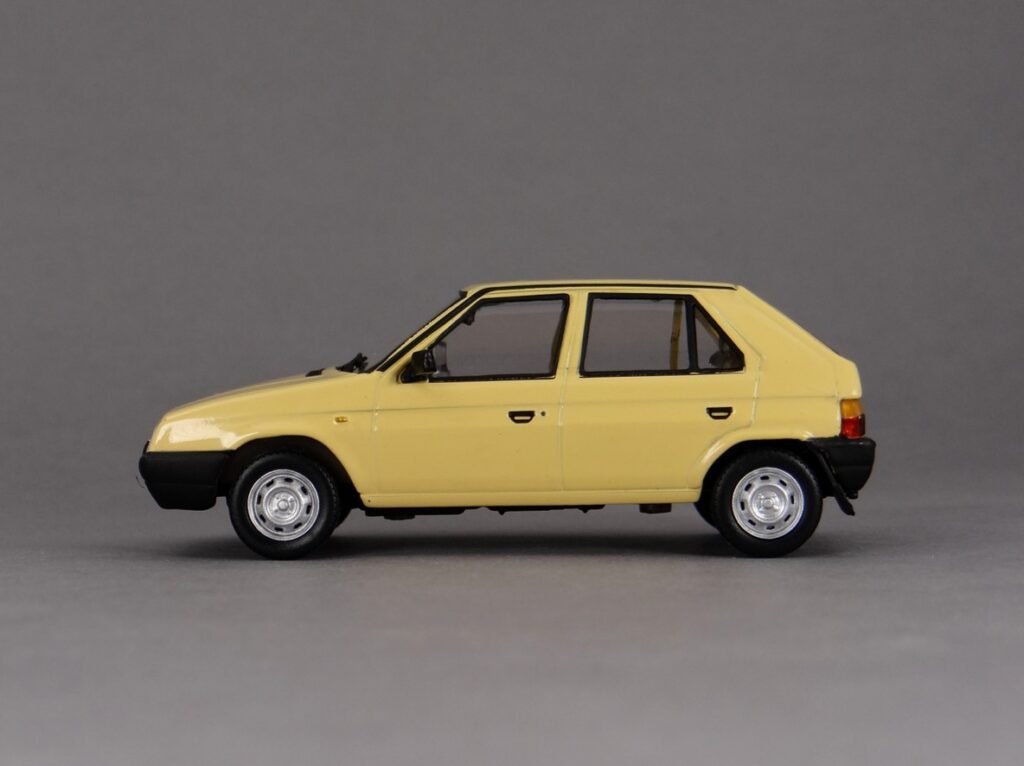
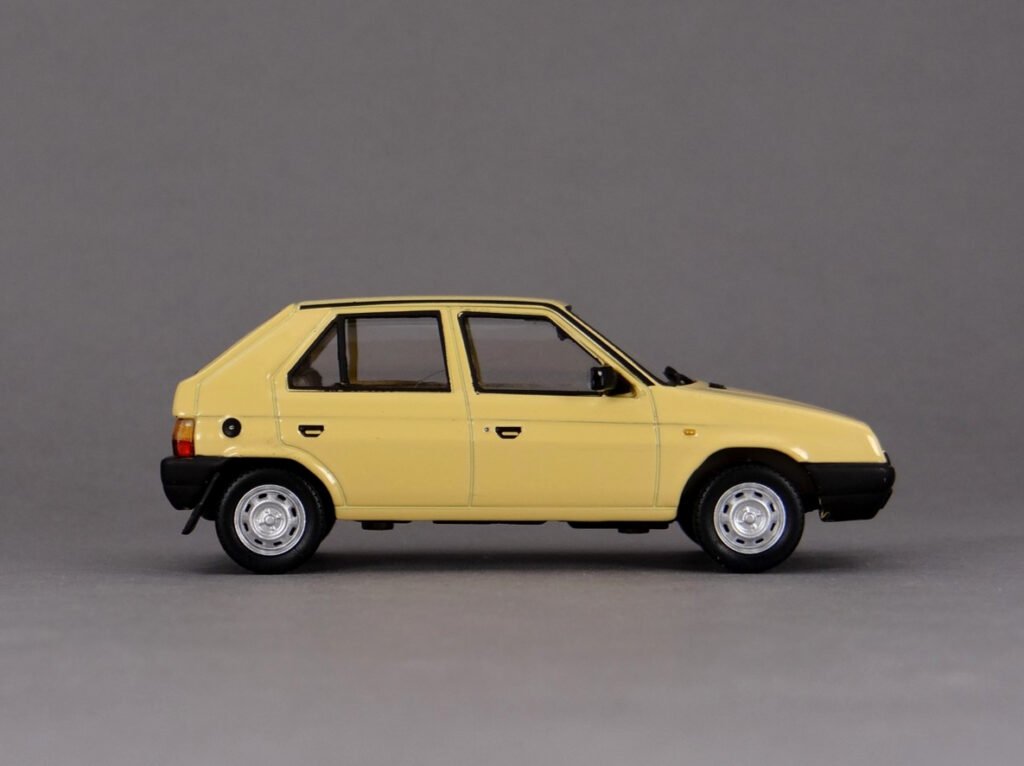
The Skoda Favorit in 1/43 scale by Abrex has been around for at least fifteen years and still looks great! Since IXO-PCT released its own model a few years ago, it’s no longer the only Favorit miniature in 1/43 scale, but the old Abrex cast it certainly not at a loss!
The model of the Czech manufacturer nicely replicates the real car. Detailing is its strength. The manufacturer’s logo on the side mirrors and the “Skoda” lettering on the mud flaps undoubtedly add character. The only downside is that the rear lights are partially painted rather than made from transparent plastic. On my example, the right rear light is also crooked. That slightly spoils an otherwise very good scale model.
Typically for Abrex, it offers the Skoda Favorit in a wide range of colours. Virtually every paint finish available on the real car appears to have been reproduced, ensuring there’s something for everyone! Given how many people have fond memories of the Favorit, that’s a brilliant marketing move.
I opted for Mimosa Yellow, purely for sentimental reasons. One of our neighbours owned a Favorit in this very shade, when I was a child. I must admit, though, that I’ve recently been tempted to pick up a few more Favorits in different colours. There’s a good chance then, that my little Favorit family will very soon expand. Of course, I’ll be showcasing them all here on the blog.
In the meantime, check out the Skoda Favorit in Mimosa Yellow and be sure to visit MiniAutomobile on Facebook and Instagram!