
Po fenomenalnej Alfie 156, oczekiwania względem Alfy Romeo 166 były ogromne. Niestety, sukces ją ominął.
Od momentu debiutu w 1997 roku, Alfa 156 rozkochała w sobie motoryzacyjny świat. Piękna, wyrzeźbiona sylwetka, dobre prowadzenie i nowoczesne silniki zachwycały wszystkich, a sprzedaż tylko to potwierdzała. Naturalnie więc, perspektywa nowego, flagowego modelu Alfy wydawała się niezwykle kusząca nie tylko dla prawdziwych “Alfisti”.
Alfa rozpoczęła wczesne prace nad następcą udanego, ale starzejącego się modelu 164 już w 1990 roku. Pierwotny plan zakładał wykorzystanie podzespołów starszego modelu w zupełnie nowym nadwoziu. Jednak decyzja Alfy o przyspieszeniu prac nad mniejszym modelem 156 definitywnie przekreśliła początkowe założenia. Szybko okazało się bowiem, że mechanika z modelu 164 będzie już przestarzała gdy nowe auto w końcu trafi na rynek. A flagowiec nie może być przecież przestarzały. Włosi musieli więc szybko pomyśleć nad planem B.
Plan B był prosty i logiczny. Dyrekcja zdecydowała, że nowa Alfa musi bazować na nowej platformie E koncernu, z której korzystała również Lancia Kappa. Zmiany zachodziły też w projekcie nadwozia. Zrezygnowano z pierwotnego projektu Pininfariny, na rzecz wewnętrznego zespołu Centro Stile Alfa kierowanego przez Waltera de Silvę. Ten sam zespół projektował też model 156, więc oba auta projektowano niejako “obok siebie”, ale kierownictwo mocno faworyzowało mniejszy model. W efekcie, prace nad flagową Alfą ciągle grzęzły.
Ostatecznie, nowa Alfa Romeo 166 pojawiła się w roku 1998, rok po mniejszym modelu. Nowy model nie otrzymał jednak aż tak ciepłego przyjęcia. Przeważało rozczarowanie, szczególnie w kwestii wyglądu. Auto nie wyglądało tak świeżo, jak mniejsza siostra. Oczywiście, Alfa Romeo 166 nadal była bardzo eleganckim samochodem, ale brakowało jej tego czaru który towarzyszył 156. Najwięcej kontrowersji budziła przednia część auta, z malutkimi reflektorami które nadawały jej wręcz smutny wyraz.
Pytany przez dziennikarzy o jej wygląd Walter de Silva odpowiadał, że 166 celowo zaprojektowano spokojniej, bo grupą docelową byli starsi klienci. Duże prawdopodobieństwo, że była to jednak tylko dobra mina do złej gry. Lata później de Silva miał bowiem wspomnieć, że finalnie 166 miała wyglądać inaczej, ale szefostwo firmy kazało wykorzystać wcześniejszy projekt.
Znacznie więcej ciepłych słów można było powiedzieć natomiast o wnętrzu Alfy Romeo 166. Stylowy kokpit, wygodne siedzenia i ładna tapicerka wprowadzały przyjemny włoski klimat. W najbogatszych wersjach z drewnianymi wstawkami, jasną skórą i elektronicznymi gadżetami, wrażenie luksusu było pewne. Zastrzeżenia można było mieć tylko do jakości wykonania która odbiegała od niemieckich konkurentów.
Żadnych zastrzeżeń nie było już do inżynierii Alfy Romeo 166. Choć dzieliła płytę podłogową z Lancią Kappą, inżynierowie całkowicie przeprojektowali jej zawieszenie. Alfa otrzymała podwójne wachacze poprzeczne z przodu oraz układ wielowahaczowy z tyłu, aby osiągnąć jak najlepsze prowadzenie pasujące do limuzyny o sportowym charakterze.
Gama silników pasowała do takiego charaktery i stanowiła zbiór jednostek z Alfy 156 i Lancii Kappy. Rolę podstawowego motoru pełnił czterocylindrowy 2.0 Twin Spark (155 KM). Wszystkie pozostałe benzyniaki miały już sześć cylindrów: 2.0 turbo (205 KM), 2.5 V6 (190 KM) oraz flagowy 3.0 V6 (226 KM). W ofercie był też pięciocylindrowy turbodiesel 2.4 JTD (136 KM) z nowoczesnym jak na tamte czasy wtryskiem common rail.
Pomimo wielu zalet, Alfa Romeo 166 nie zdołała przekonać do siebie klientów. Znalazła się w pułapce z której nie było wyjścia. Klienci chcący Alfę wybierali bowiem model 156 a ci szukający limuzyny klasy wyższej wybierali niemieckich konkurentów. Lifting z 2003 roku upodabniający 166 do 156 niewiele tu pomógł. Produkcja skończyła się w 2007 roku. W sumie z taśm fabryk w Rivalcie i Mirafiori zjechało 99 987 egzemplarzy, a Alfa Romeo 166 nie doczekała się następcy.
O miniaturze – Alfa Romeo 166
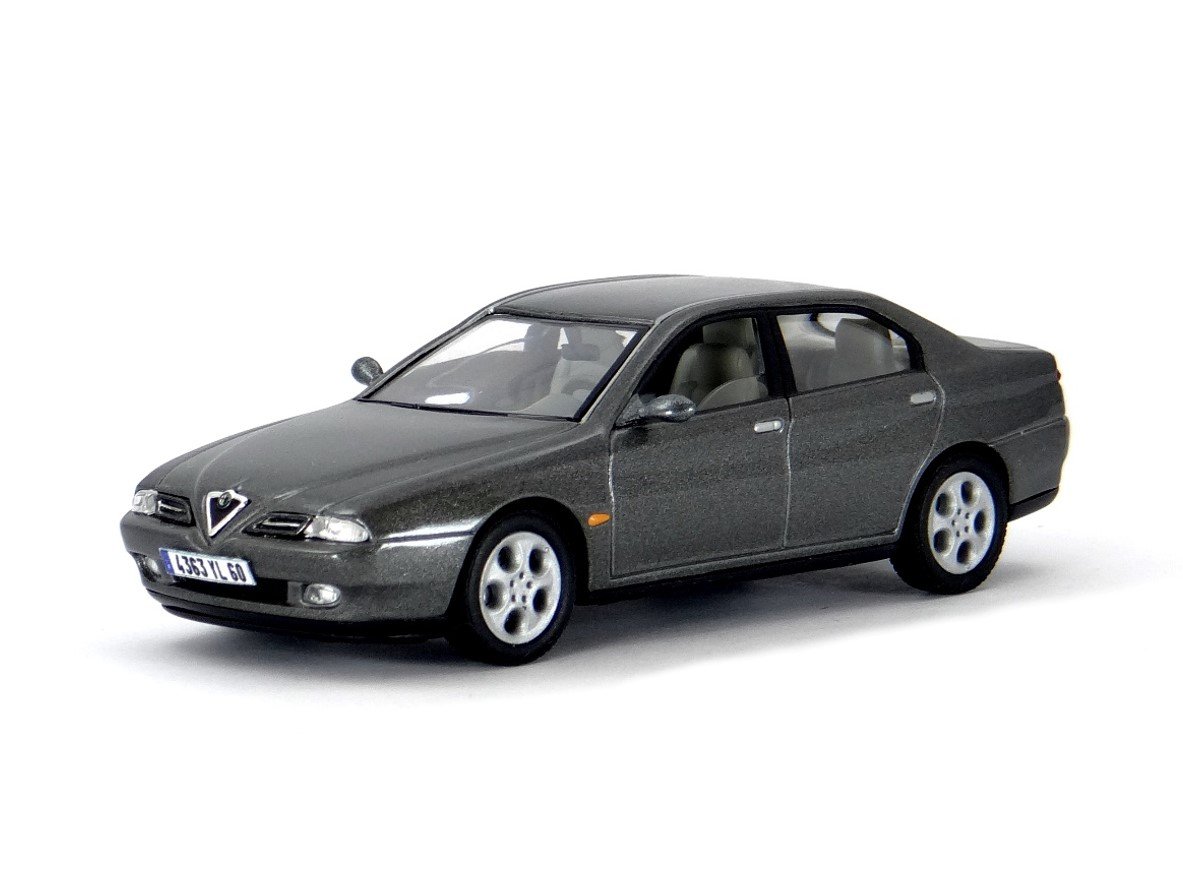
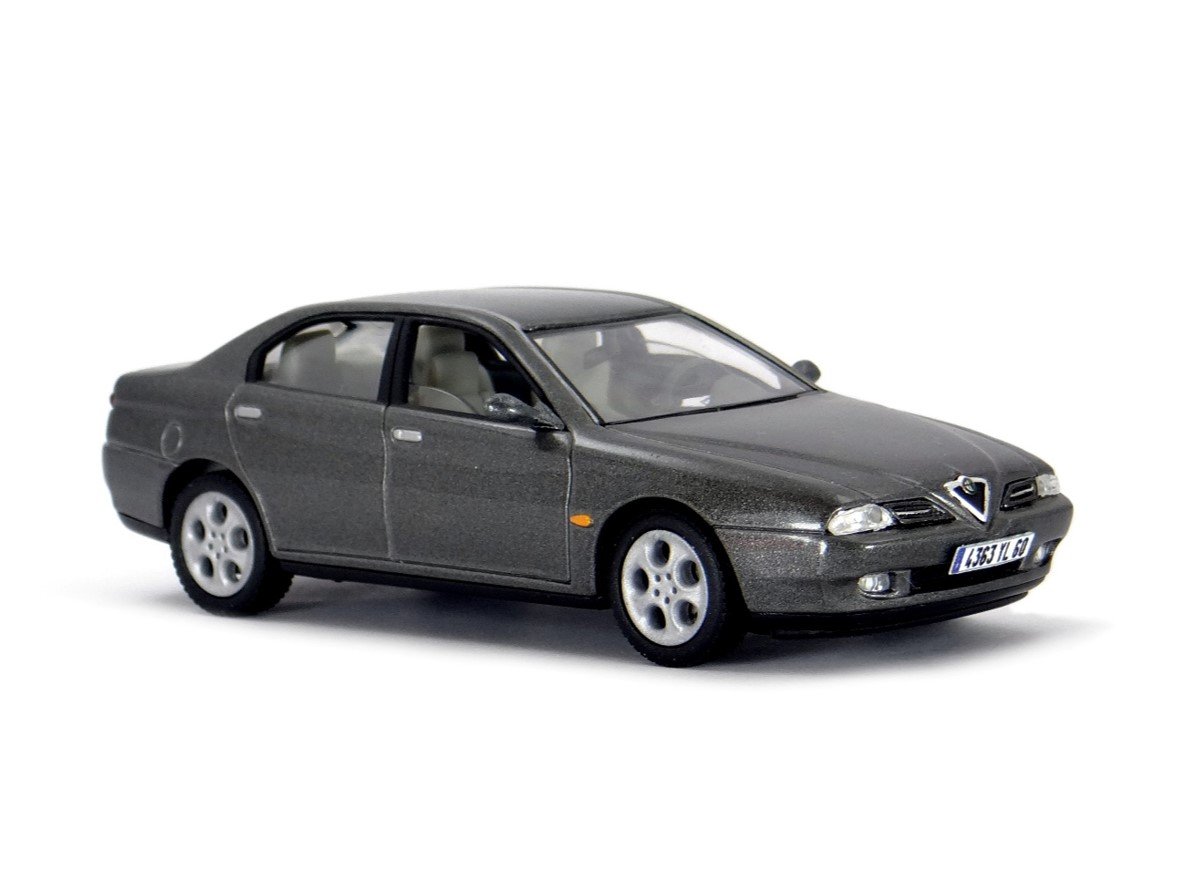
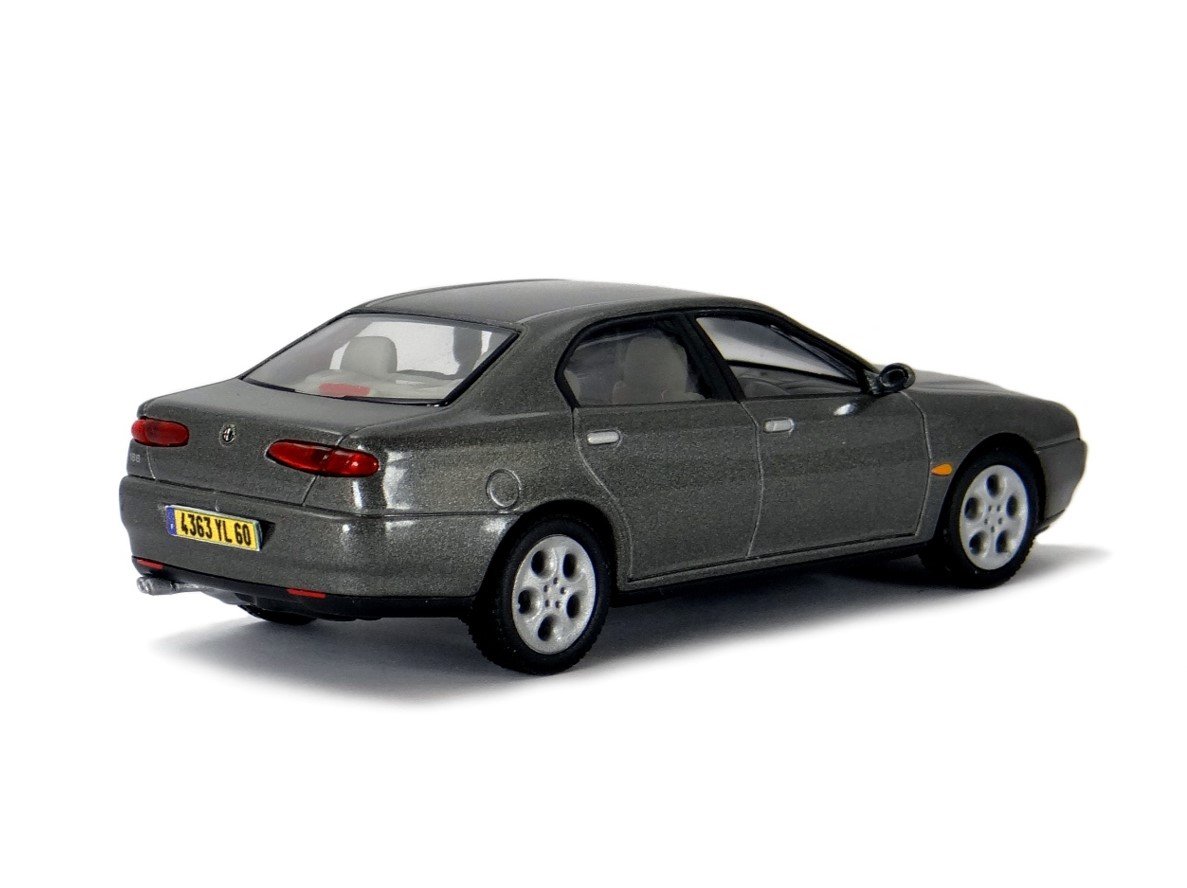
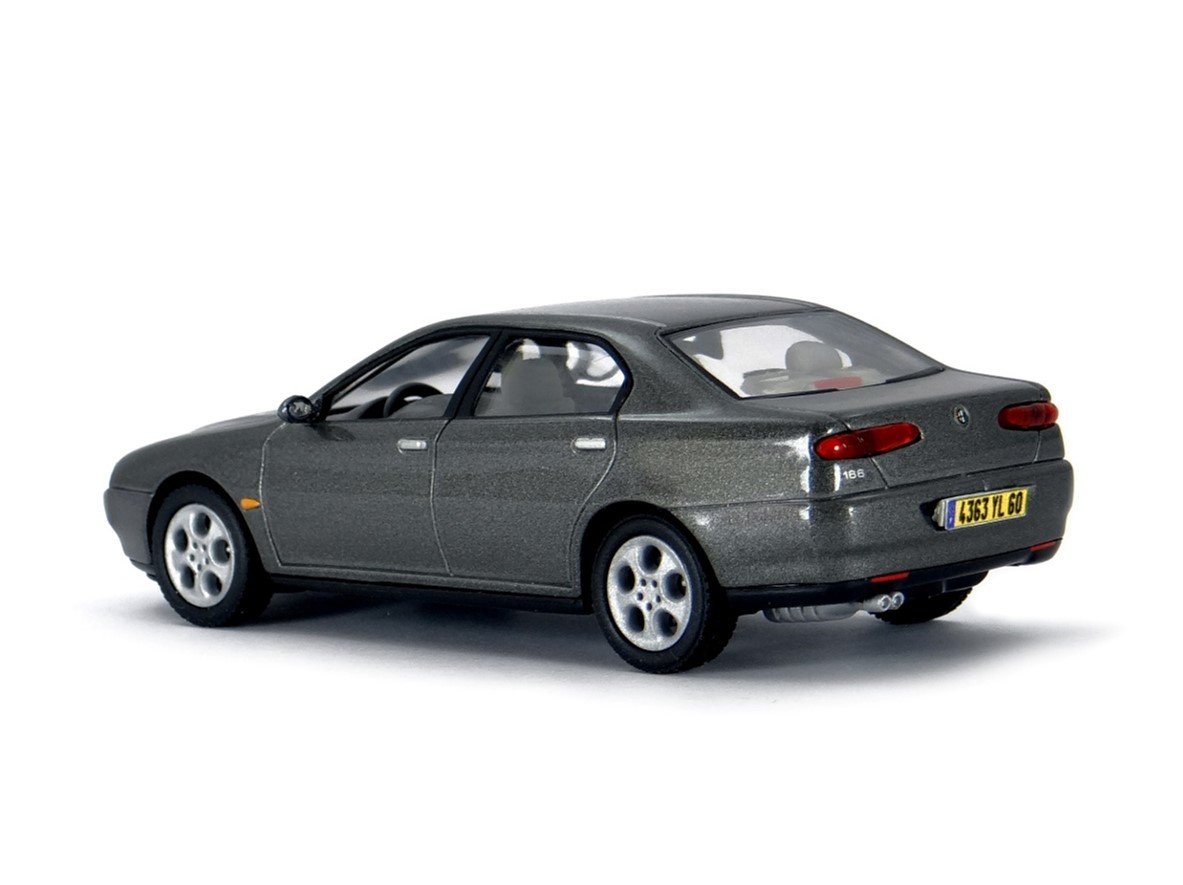
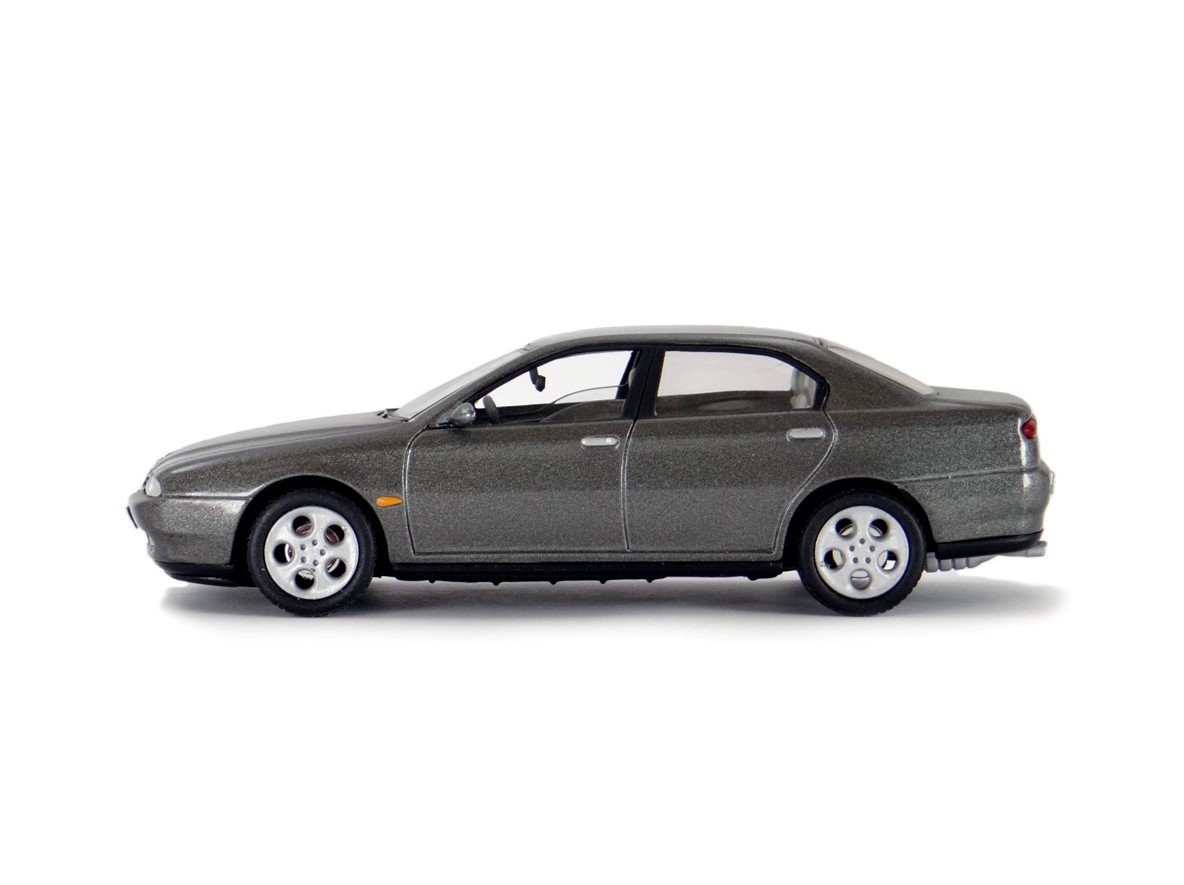
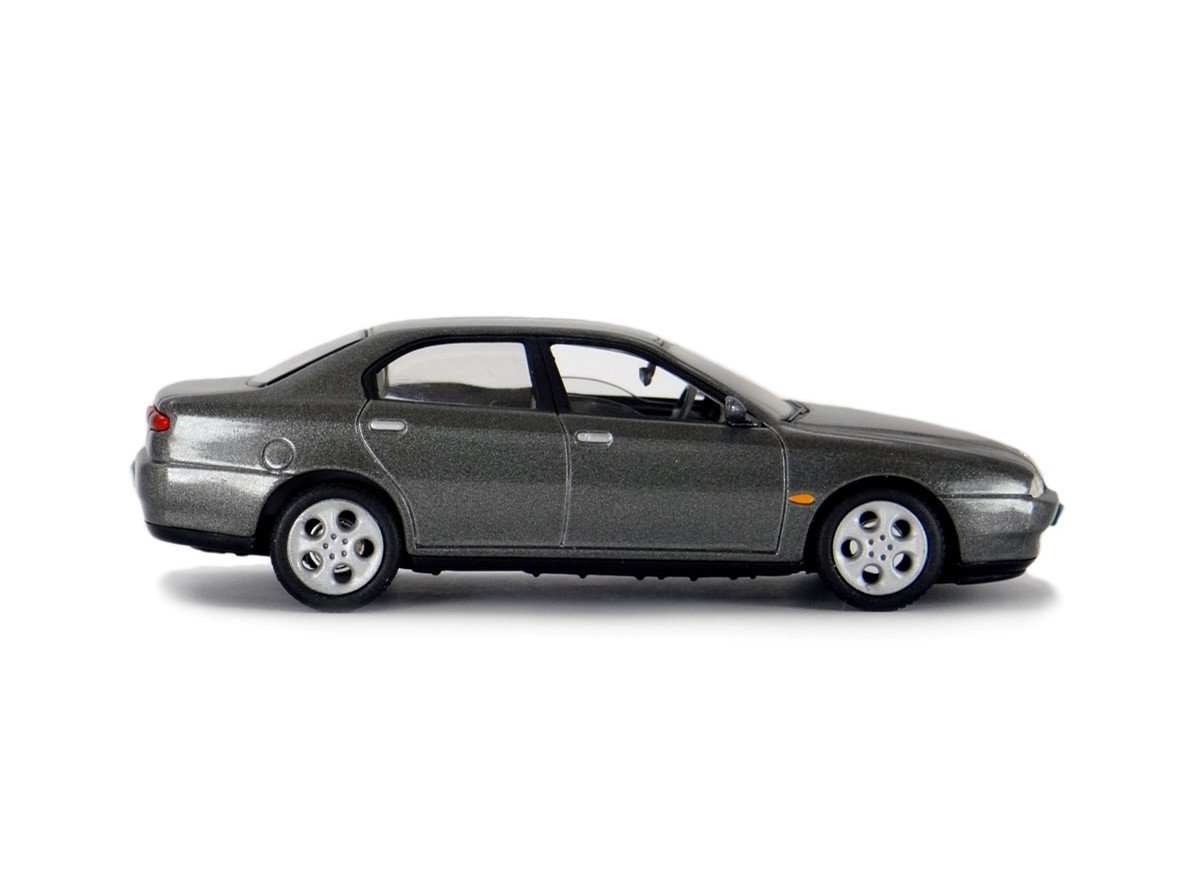
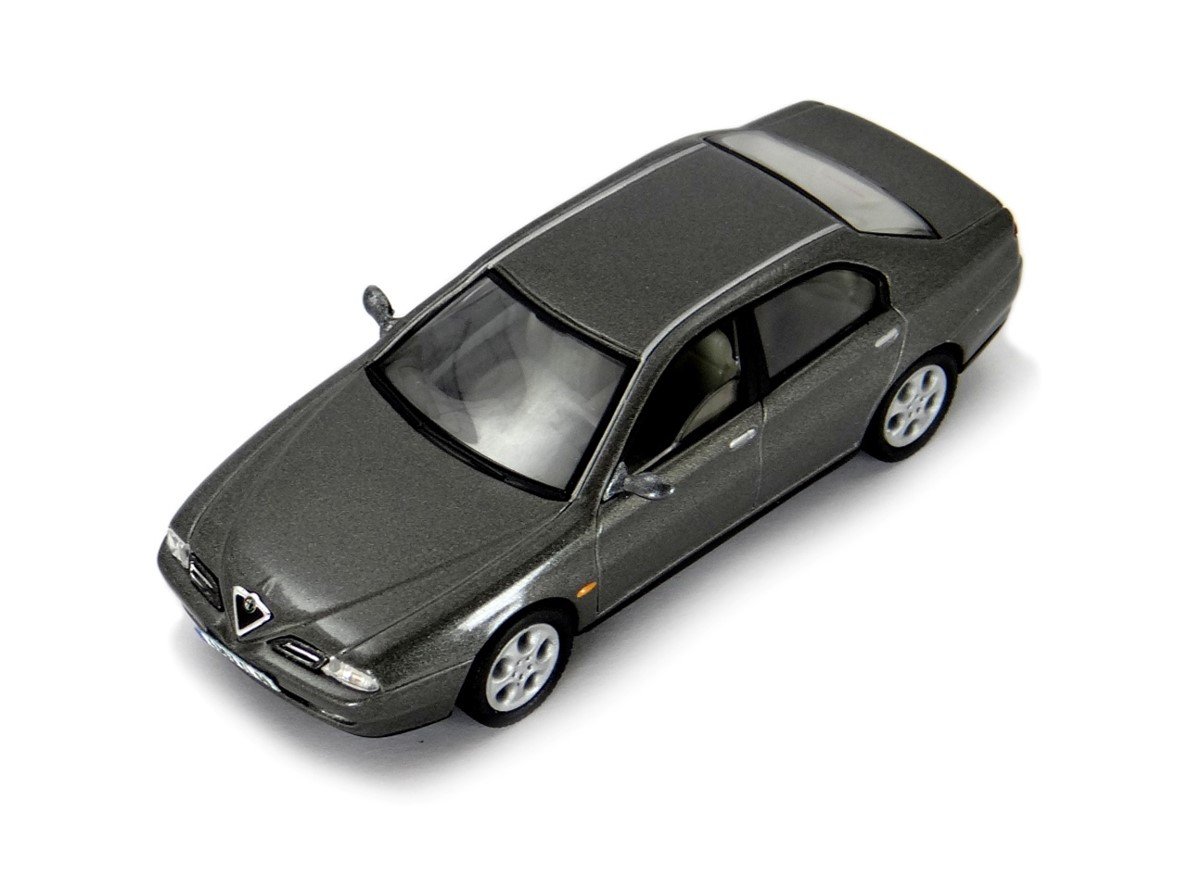
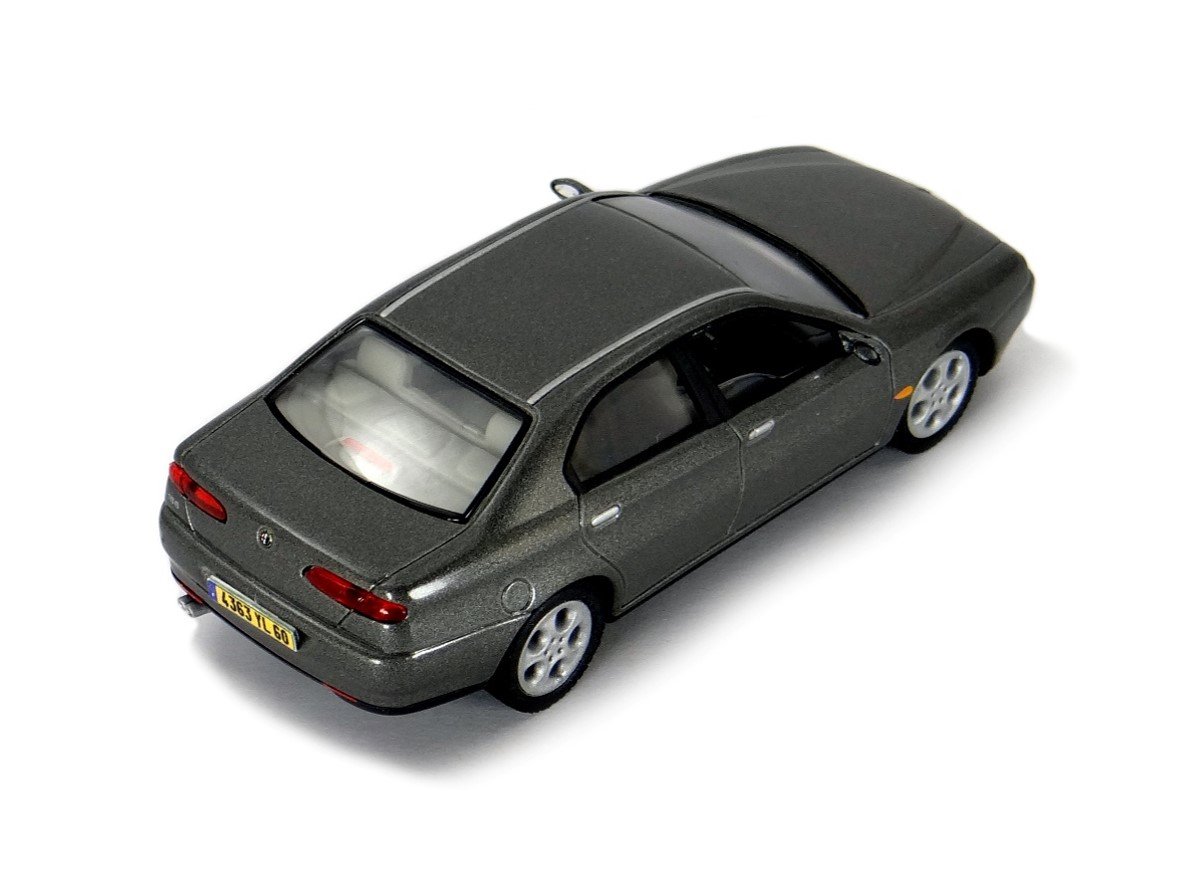
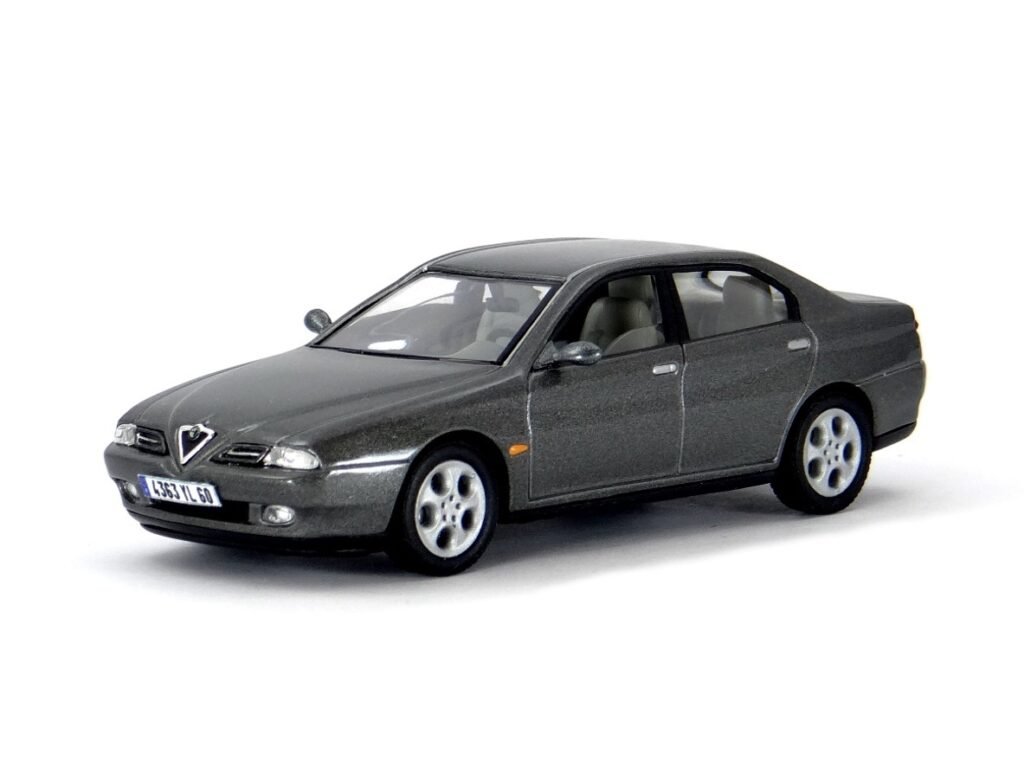
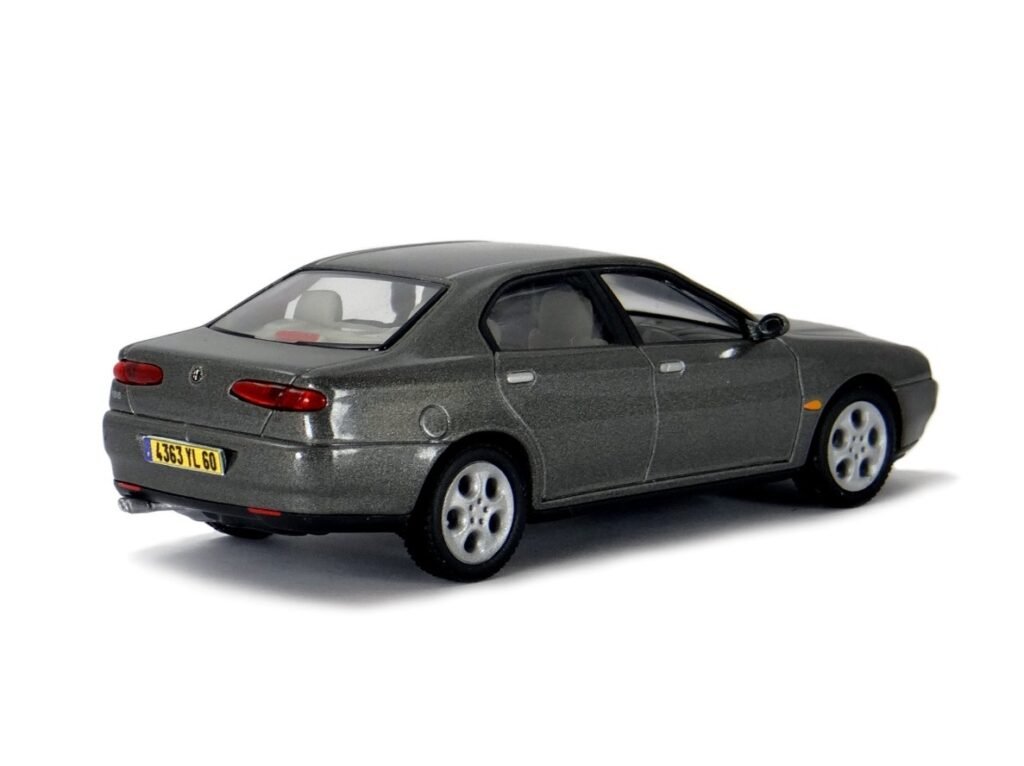
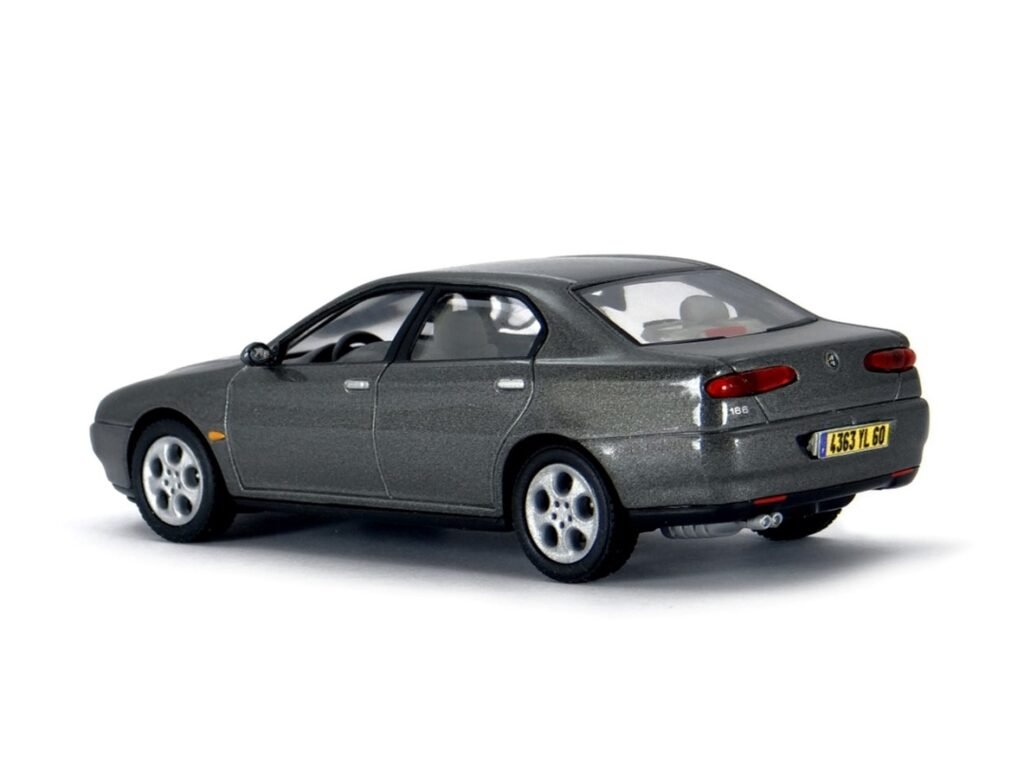
Modelik Alfy Romeo 166 pochodzi od Solido i wydano go najprawdopodobniej w 1999 roku. Podobnie jak w prezentowanej przeze mnie niedawno Alfie Romeo 156 od tego samego producenta, także tutaj odlew dobrze zniósł upływ czasu. Nadal wygląda dobrze! Ładny, metaliczny lakier jest równo i czysto położony a ogólny poziom odwzorowania jest dobry. Cieszy to, że w modelu Alfy 166 Solido odpowiednio odwzorowało felgi (w 156 był z tym problem).
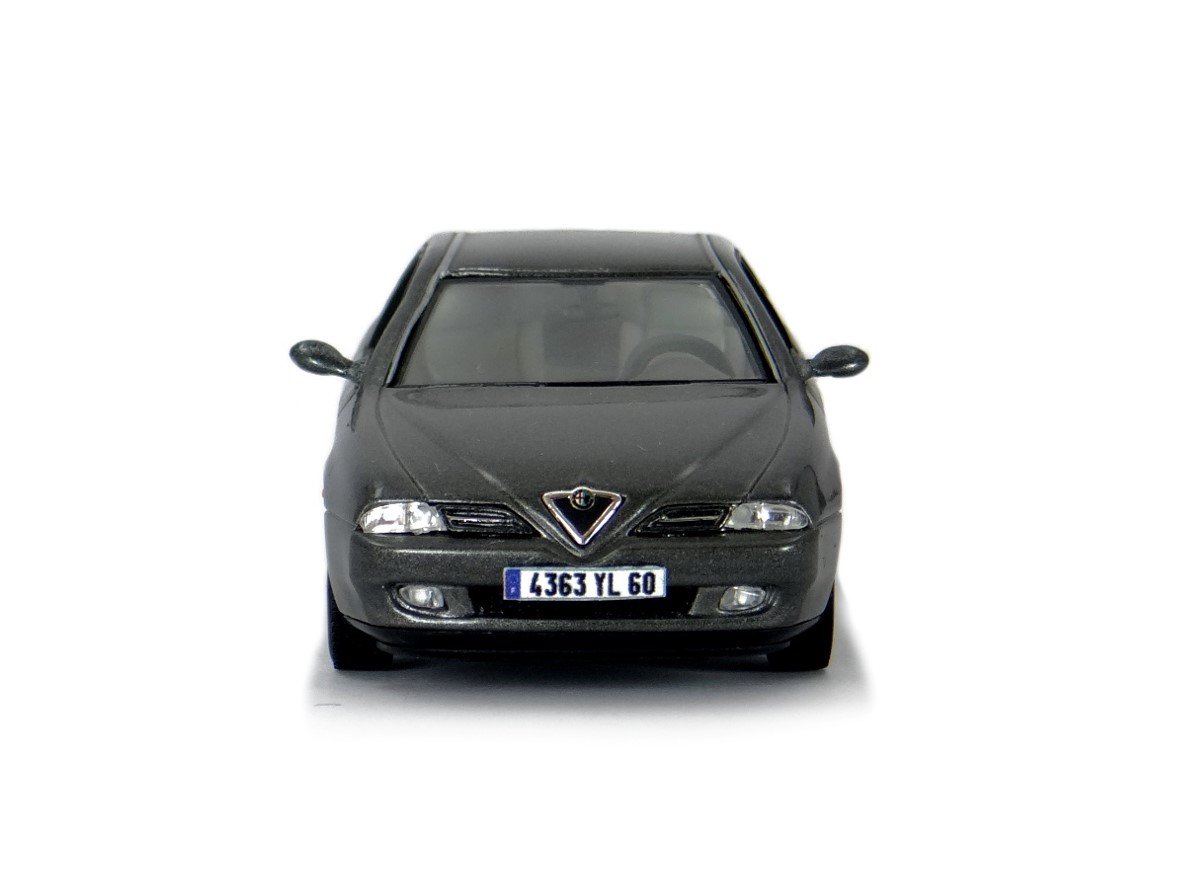
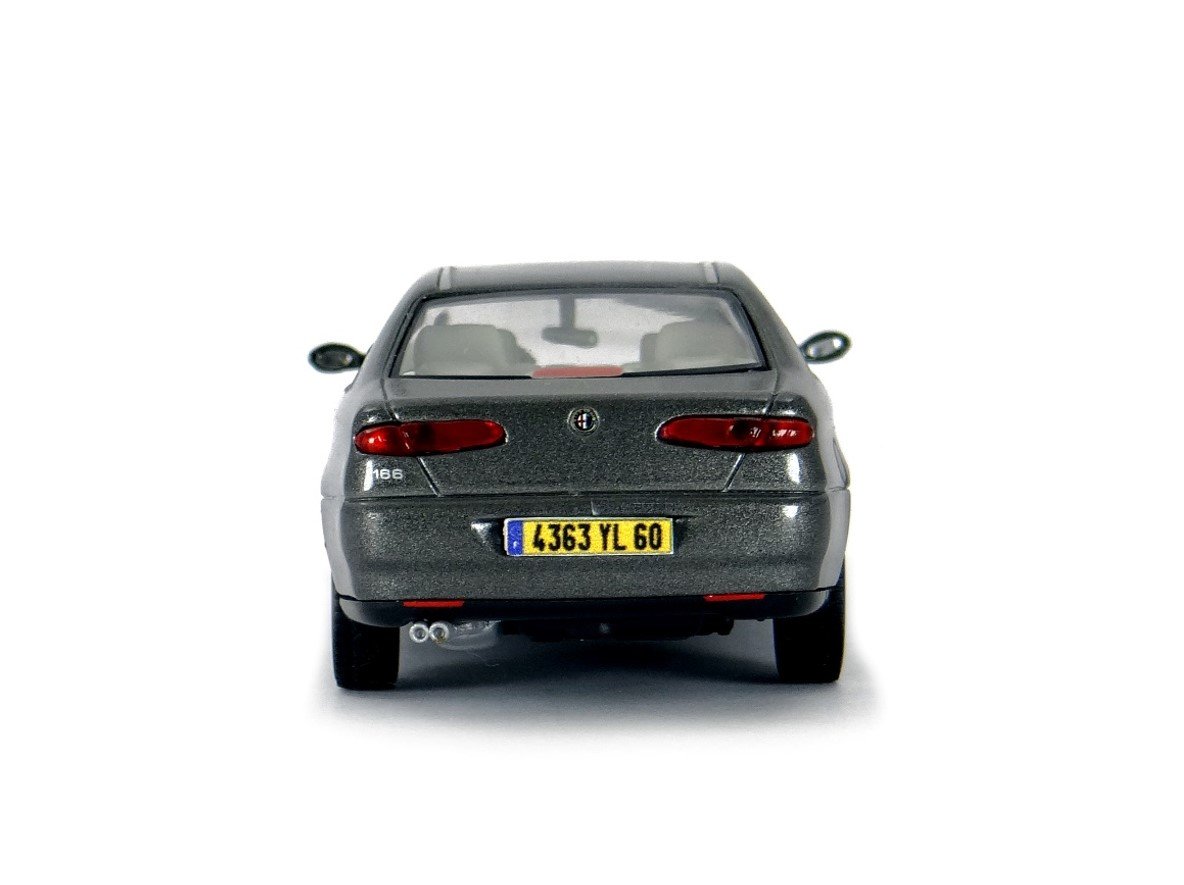
Zastanawia tylko czemu producent pominął przednią rejestrację. Tylna jest na miejscu, przedniej niestety brak. To jednak niewielki problem, bo można dodać je łatwo we własnym zakresie, tak jak to uczyniłem w moim modelu.
Dla ciekawych, Solido wypuściło Alfę Romeo 166 w kilku różnych kolorach: srebrnym, ciemnozielonym i dwóch odcieniach szarego. Dostępne były też dwie “serie”; zwykła w pudełkach Solido oraz dealerska w czerwonych metalowych pudełkach z logo Alfy Romeo.
Jak zwykle, zapraszam Was do galerii oraz profili MiniAutomobili na Facebooku i Instagramie!
*** ENGLISH ***
After the phenomenal Alfa 156, hopes for the Alfa Romeo 166 were enormous. Unfortunately, success passed it by.
Since its 1997 debut, the automotive world fell in love with the Alfa 156. Its beautiful, sculpted silhouette, good handling and modern engines thrilled everyone—and the sales backed it up. Naturally, the prospect of a new Alfa flagship was incredibly tentalising, even beyond the die-hard “Alfisti”.
Alfa began early work on a successor to the successful but aging 164 as early as 1990. The initial plan was to reuse the underpinnings from the old model and give them a new body. However, Alfa’s decision to speed up development of the smaller 156 put a definitive strike through those plans. It soon became apparent that the 164’s mechanicals would be outdated by the time the new car finally reached production. And you can’t have an outdated flagship. So, the Italians had to quickly come up with a plan B.
Plan B was simple and logical. The executives decided that the new Alfa would need to be based on the group’s new E platform, also used by the Lancia Kappa. Changes also occurred in the external design. The original Pininfarina design was dropped in favour of an in-house concept from Alfa’s Centro Stile team led by Walter de Silva. The same team was simultaneously working on the 156, meaning both cars were effectively developed in parallel. Although the management clearly prioritised the smaller model, which resulted in work on the flagship Alfa stalling repeatedly.
At last, the new Alfa Romeo 166 arrived in 1998, a year after its smaller sibling. However, the new model didn’t get as warm a welcome. Disappointment prevailed, particularly regarding its styling. The car didn’t look as fresh as the smaller model. Of course, the Alfa Romeo 166 was still a very elegant car, but it lacked the charm that accompanied the 156. The front end proved most controversial, with its small headlights giving the car a rather sad expression.
When asked by journalists about its styling, Walter de Silva responded that the 166 had been intentionally styled in a more subdued way, as its target audience consisted of older customers. In all likelihood, however, this was simply a diplomatic explanation for a less-than-ideal situation. Years later, de Silva reportedly admitted that the 166 was originally meant to look different, but that management insisted on adopting an earlier design.
There was much more praise to be found in the interior of the Alfa Romeo 166. A sylish cockpit, comfortable seats and tasteful upholstery all contributed to a pleasant Italian ambience. In the highest-spec versions, with wood trim, light leather and electronic gadgets, the sense of luxury was undeniable. The only criticism concerned build quality, which lagged behind its German rivals.
There were however no concerns about the engineering of the Alfa Romeo 166. Although it shared its platform with the Lancia Kappa, its suspension was entirely reworked by the engineers. The Alfa received double wishbones at the front and a multi-link setup at the rear in order to achieve the best possible handling for a saloon with a sporting character.
The engine range matched this character and consisted of units taken from the Alfa 156 and Lancia Kappa. The entry-level engine was the four-cylinder 2.0 Twin Spark (155 hp). All other petrol engines were V6 units: a 2.0 turbo (205 hp), a 2.5 V6 (190 hp), and the flagship 3.0 V6 (226 hp). The range also included a five-cylinder 2.4 JTD turbodiesel (136 hp), featuring a then-advanced common-rail injection system.
Despite its many strengths, the Alfa Romeo 166 failed to win over customers. It found itself in a trap there was no escape from. Buyers wanting an Alfa chose the 156, while those looking for an executive saloon opted for German rivals. The 2003 facelift, which made the 166 more closely resemble the 156, did little to change its fortunes. Production ended in 2007. In total, 99,987 units rolled off the assembly lines in Rivalta and Mirafiori, and the Alfa Romeo 166 never saw a successor.
About the miniature – Alfa Romeo 166
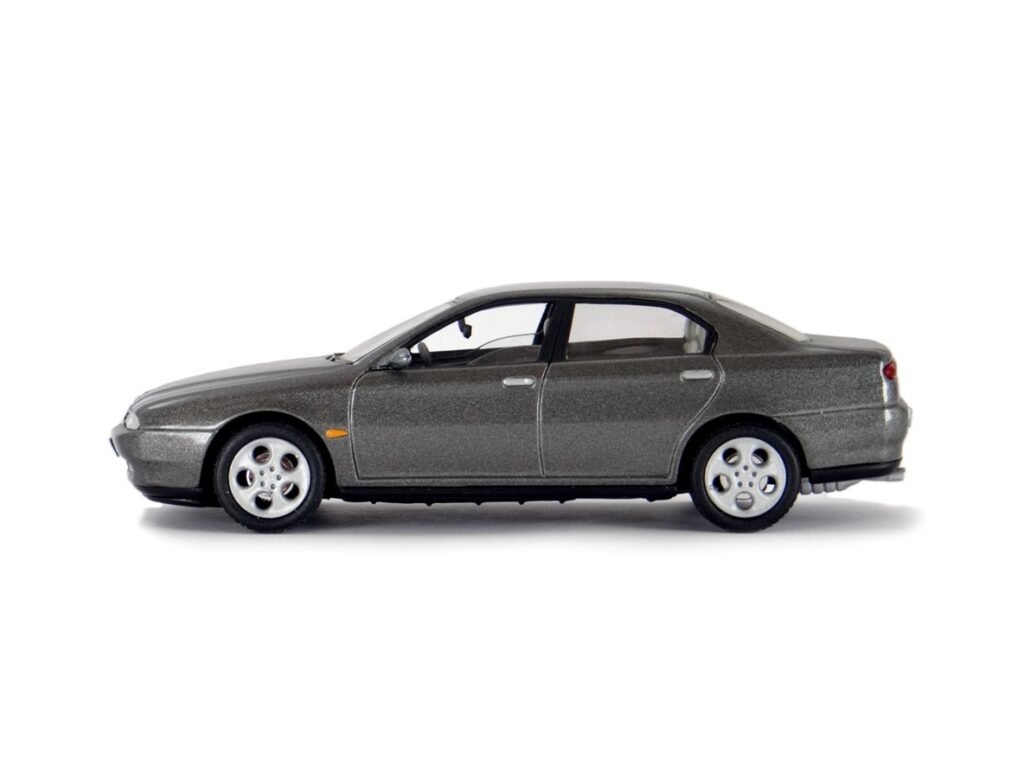
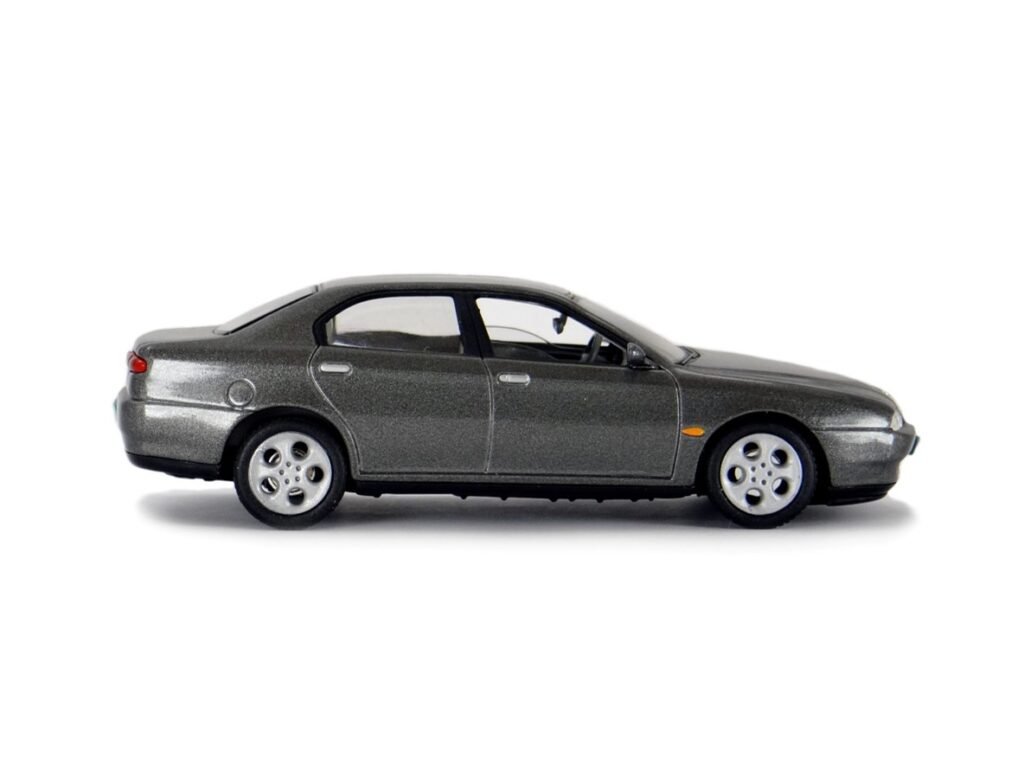
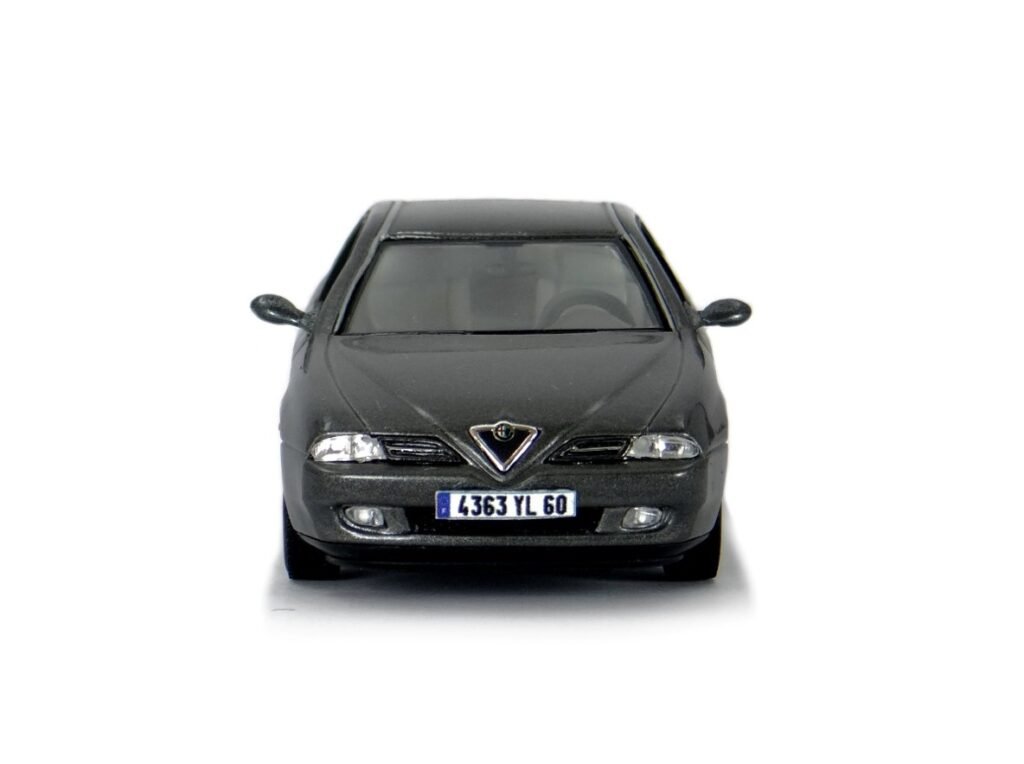
This Alfa Romeo 166 comes from Solido and was most likely released in 1999. Similarly to the Alfa Romeo 156 from the same manufacturer I presented recently, the cast here also stood the test of time well. It still looks good! The metallic finish is pretty, smooth and evenly applied, while the overall detailing is of a good standard. It’s also good to see that Solido got the wheels right on the Alfa 166 model (unlike the 156, which had some issues in that area).
The only puzzling thing is why the manufacturer left out the front license plate. The rear plate is present, but the front is unfortunately missing. Still, it’s a minor issue, as it can be easily added yourself, just like I did with my own model.
For the curious ones, Solido released the Alfa Romeo 166 in a few different colours: silver, dark green and 2 shades of grey. There were also 2 “series” available; a standard one in Solido branded boxes and a dealership one in red metal boxes with Alfa Romeo logo.
As always, check out the gallery and MiniAutomobile profiles on Facebook and Instagram!