
Citroën C3 czwartej generacji zrywa z charakterem swoich poprzedników. To nadal mały hatchback, ale powstał według zupełnie innej receptury.
Odkąd Citroën przedstawił model C3 w 2002 roku, auto stało się filarem jego oferty. Przez 24 lata francuska firma sprzedała ponad 5,6 miliona egzemplarzy wszystkich generacji, co czyni z C3 najpopularniejszy model w historii Citroëna, wyprzedzający nawet legendarne 2 CV. To nie lada wyczyn. O dziwo, francuska firma zdecydowała się zmienić formułę swojego bestsellera, co wywołało sporo kontrowersji.
Nowe porządki Stellantisa
Citroën od 2021 roku jest częścią równie wielkiego, co przedziwnego koncernu Stellantis. Nie ma w nim ogromnej siły przebicia, więc skazany jest na odgórne decyzje zarządu. A ówczesny zarząd, ze znienawidzonym przez wielu Carlosem Tavaresem na czele, postanowił, że Citroën zostanie zdegradowany do roli budżetowej marki. Konkurenta dla np. Dacii.
Czwarta generacja Citroëna C3 jest pierwszym owocem tej strategii. Dlatego też, nie jest spokrewniona z Peugeotem 208 jak moglibyśmy tego oczekiwać. W zamian, bazuje na archtekturze Smart Car. Pochodnej platformy CMP, ale współtworzonej z indyjską Tatą, specjalnie dla modeli na rynki rozwijające się. Citroën oczywiście odpowiednio zaadoptował projekt do europejskich wymogów i gustów, zarówno technicznie jak i stylizacyjnie. Niemniej jednak, czwarta generacja C3 jest bardzo blisko spokrewniona z modelem C3 na rynek indyjski i południowoamerykański. Po raz pierwszy w historii modelu
Nowy styl
Nowa generacja zbudowana według nowych założeń, prezentuje też zupełnie nowy kierunek designu Citroëna i nowe logo, pierwszy raz pokazane na prototypie Oli. Dotychczas, wszystkie C3 były pełne obłości. Nowa generacja z tym zrywa. Teraz przybiera kanciasty, pudełkowaty kształt, ewidentnie inspirowany SUV-ami.
Podwyższony prześwit, relingi dachowe oraz plastikowe nakładki na zderzakach i nadkolach nadają C3 wygląd mini-SUVa, choć Citroën twierdzi, że to nadal miejski hatchback. To właściwie prawda, bo z długością 402 cm, szerokością 176 cm i rozstawem osi wynoszącym 254 cm, C3 czwartej generacji jest niewiele większe od poprzednika. Jedyna znaczna różnica jest na wysokość, gdzie nowy model urósł aż o 10 cm, do 157 cm.
Środek też przeszedł metamorfozę. Jest bardziej kanciasty od poprzednika i o wiele bardziej użytkowy w charakterze. Choć C3 zalicza się teraz do modeli budżetowych, to na szczęście w kabinie nie ma wrażenia taniości. Jak w każdym współczesnym samochodzie, centralne miejsce kokpitu zajmuje dotykowy ekran, tu o średnicy 10,2-cali. Aby uprzyjemnić atmosferę w kabinie, Citroën zadbał o miękkie kawałki tkanin na ogólnie twardym kokpicie i boczkach drzwi oraz wszyte metki z pozytywnymi frazami jak “have fun” czy “be cool”. Bardzo dużo kabinie daje też przyjemna, jasna kolorystyka, tak rzadka we współczesnych samochodach.
Stary, dobry Citroën
Biorąc pod uwagę kierunek w jakim skręcił Citroën, może zaskakiwać fakt, iż w kilku aspektach czwarta generacja C3 bardzo przypomina stare modele producenta. Pierwszy, to wspomniany już użytkowy charakter wnętrza, który paradoksalnie może przywodzić na myśl czasy spartańskiego AX-a czy Saxo. Drugi to miękkie, wygodne fotele. Citroën wyposażył nowego C3 w bardzo miękkie fotele, które kiedyś były domeną francuskich aut.
Ostatni i chyba najważniejszy aspekt to zawieszenie. Citroën zasłynął z superkomofrtowego zawieszenia hydropneumatycznego, ale nawet jego tańsze modele bez tego rozwiązania mogły pochwalić się w przeszłości ponadprzeciętnym komfortem. W pewnym momencie Citroën to utracił, ale miło że Francuzi wracają już do korzeni. Citroën C3 wykorzystuje bowiem w zawieszeniu system “Advanced Comfort”, zastosowany wcześniej w większych modelach firmy. Technologia ta wykorzystuje progresywne ograniczniki hydrauliczny, pomagające w wybieraniu nierówności. Dzięki temu rozwiązaniu, C3 zapewnia zaskakująco wysoki komfort jazdy jak na tak małe auto.
Napęd dla każdego
Citroën przedstawił czwartą generację w październiku 2023 roku, początkowo tylko w wersji elektrycznej ë-C3 i taka też wersja trafiła najpierw do sprzedaży. Wyposażony w akumulator litowo-żelazowo-fosforanowy (LFP) o pojemności 44kWh, elektryczny wariant legitymizował się mocą 113 KM i zasięgiem do 320 kilometrów. Nawet w budżetowym wydaniu, tak mały elektryk był dla wielu zbyt drogi, więc w lutym 2024 roku, Citroën odpowiedział na zapotrzebowanie rynku i zaprezentował C3 w wersjach spalinowych.
Bazowa wersja korzysta ze 100-konnego silnika 1.2 PureTech, sparowanego z 6-biegową manualną skrzynią biegów. Druga opcja wykorzystuje ten sam silnik, ale w układzie miękkiej hybrydy, z 6-biegową dwusprzęgłową skrzynią automatyczną. To pozwoliło znacznie obniżyć ceny C3, przez co na wielu rynkach stało się nawet tańsze od poprzednika. To z kolei pozytywnie wpłynęło na wyniki sprzedaży.
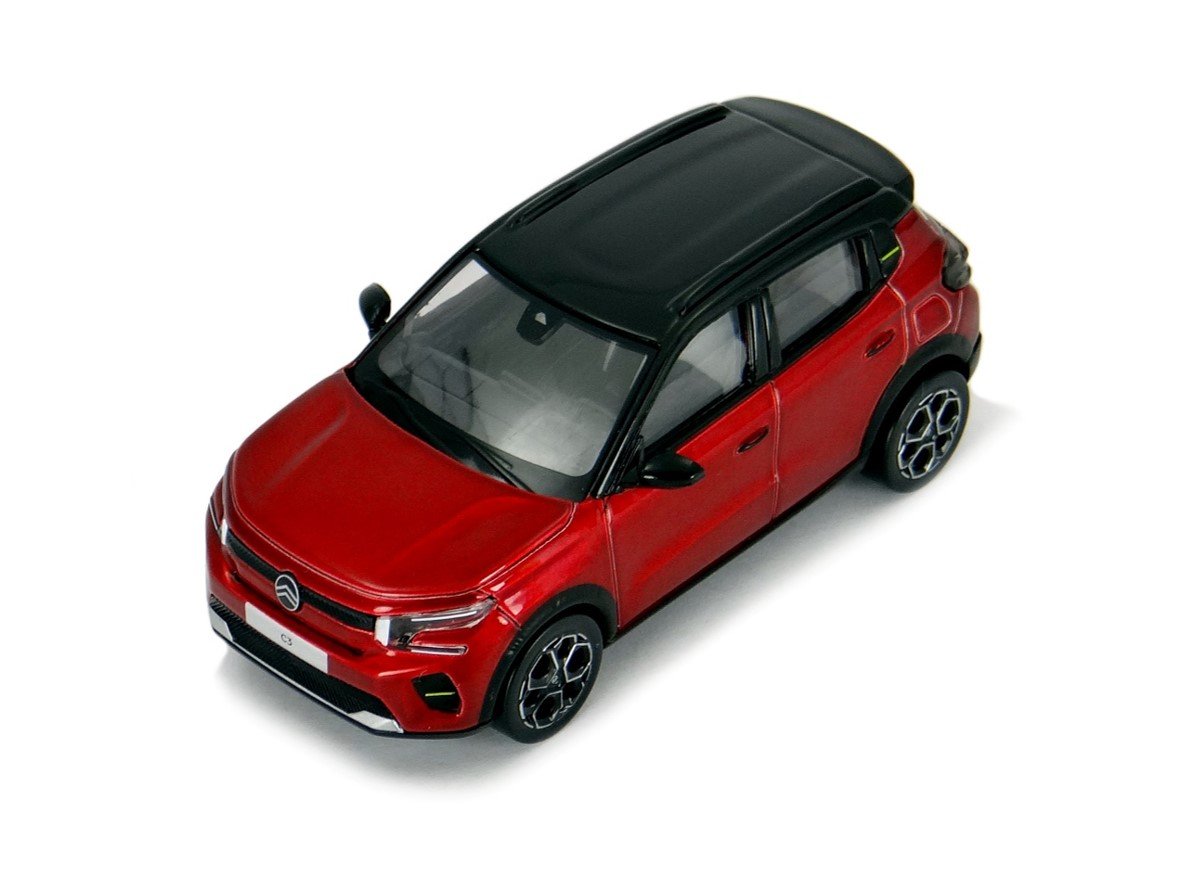
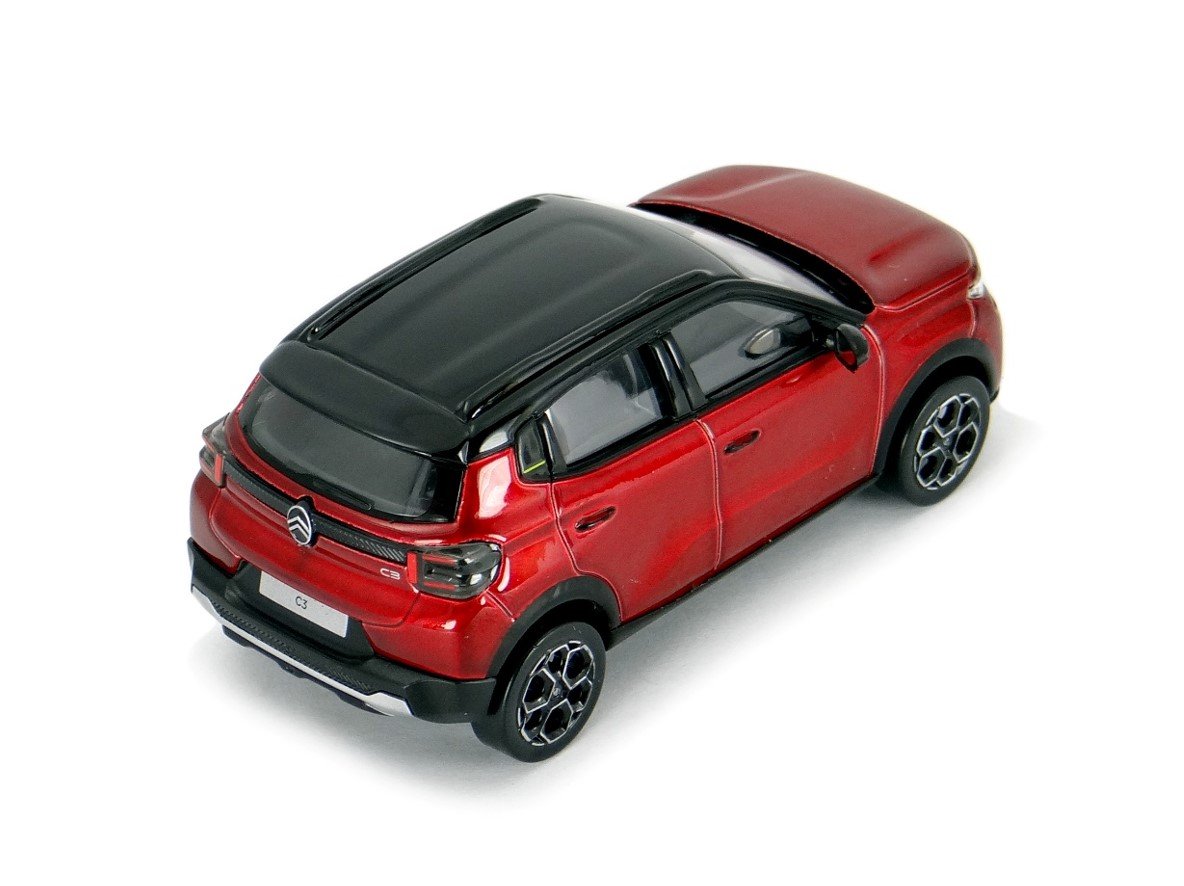
O miniaturze – Citroën C3 IV 2024
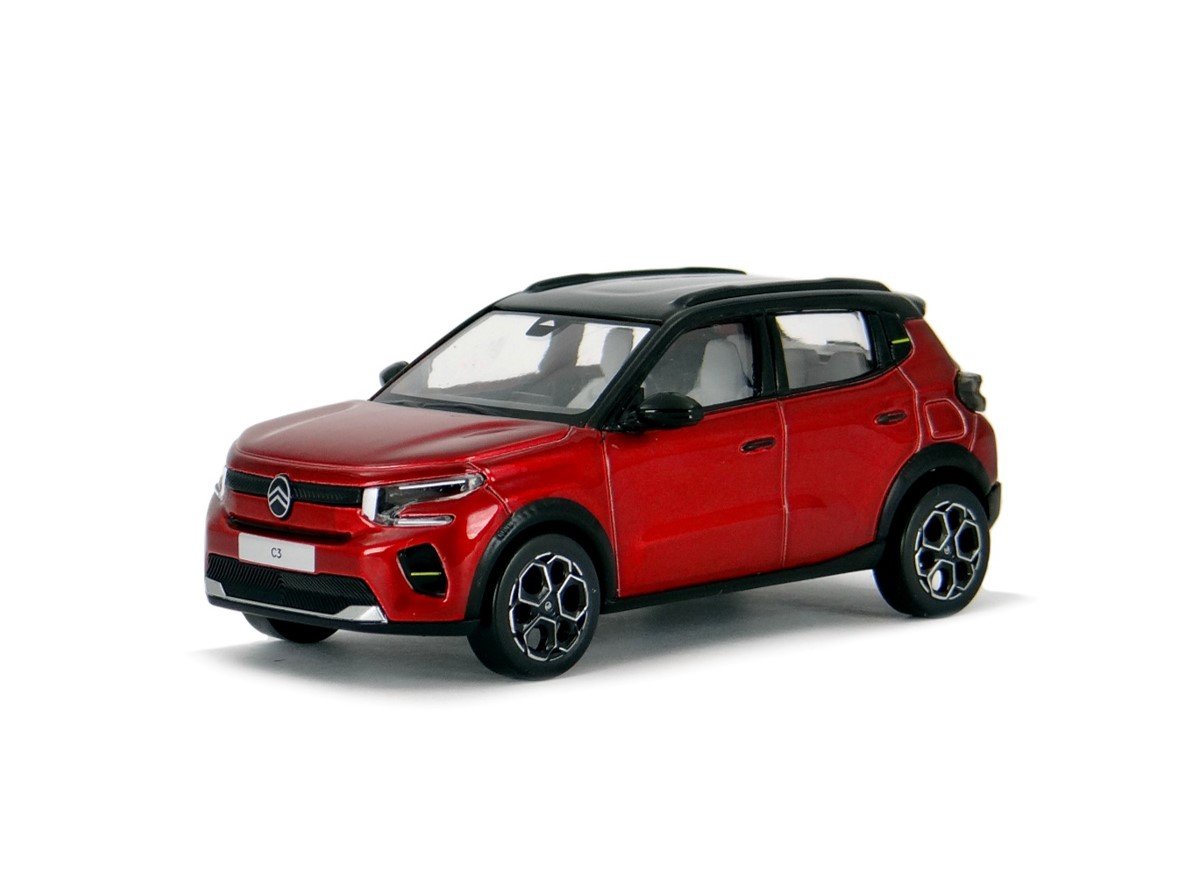
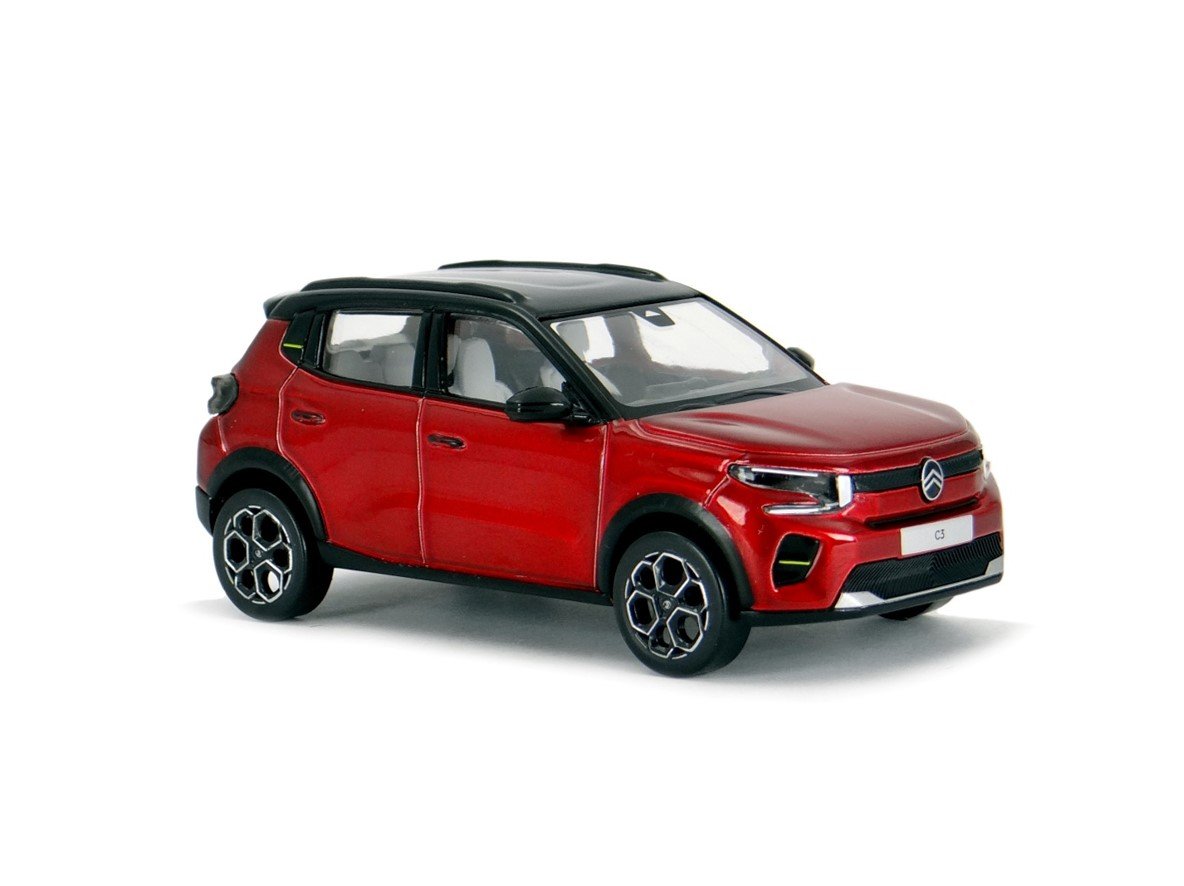
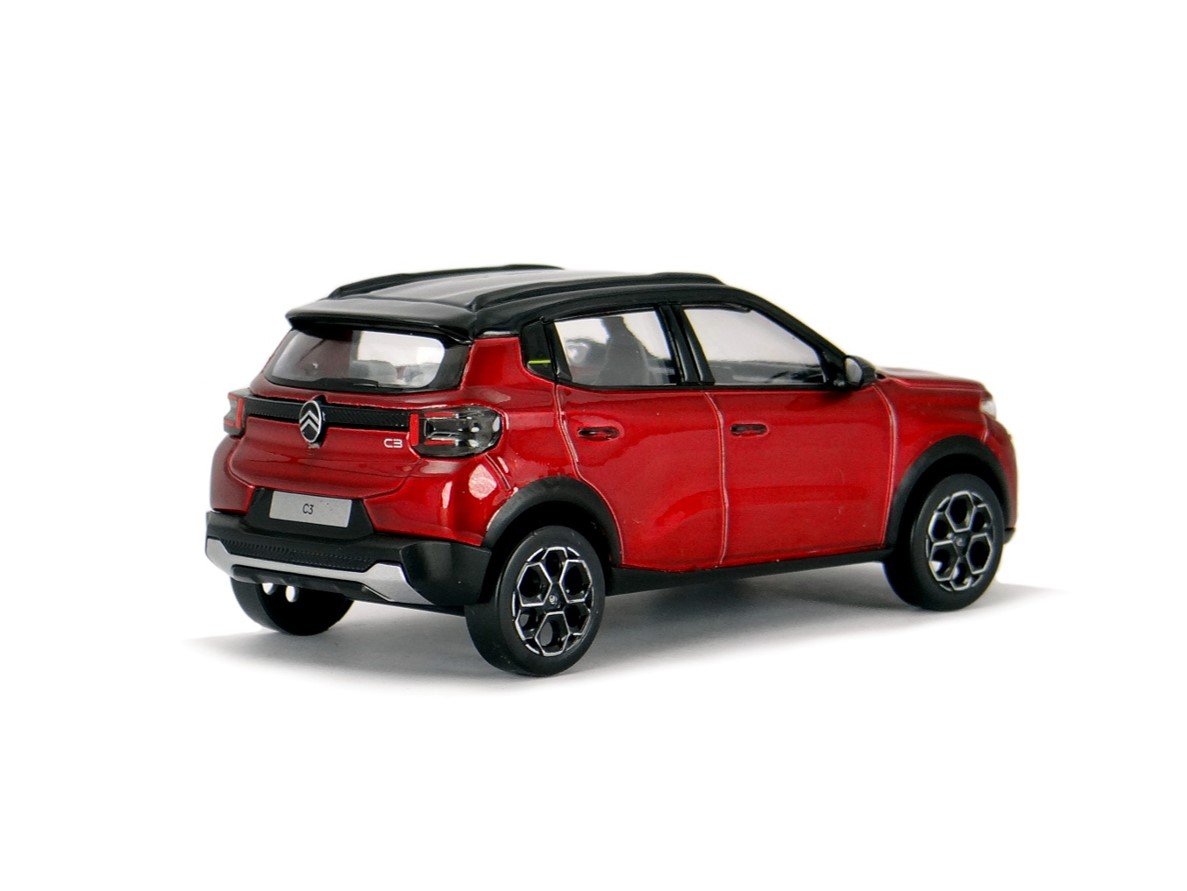
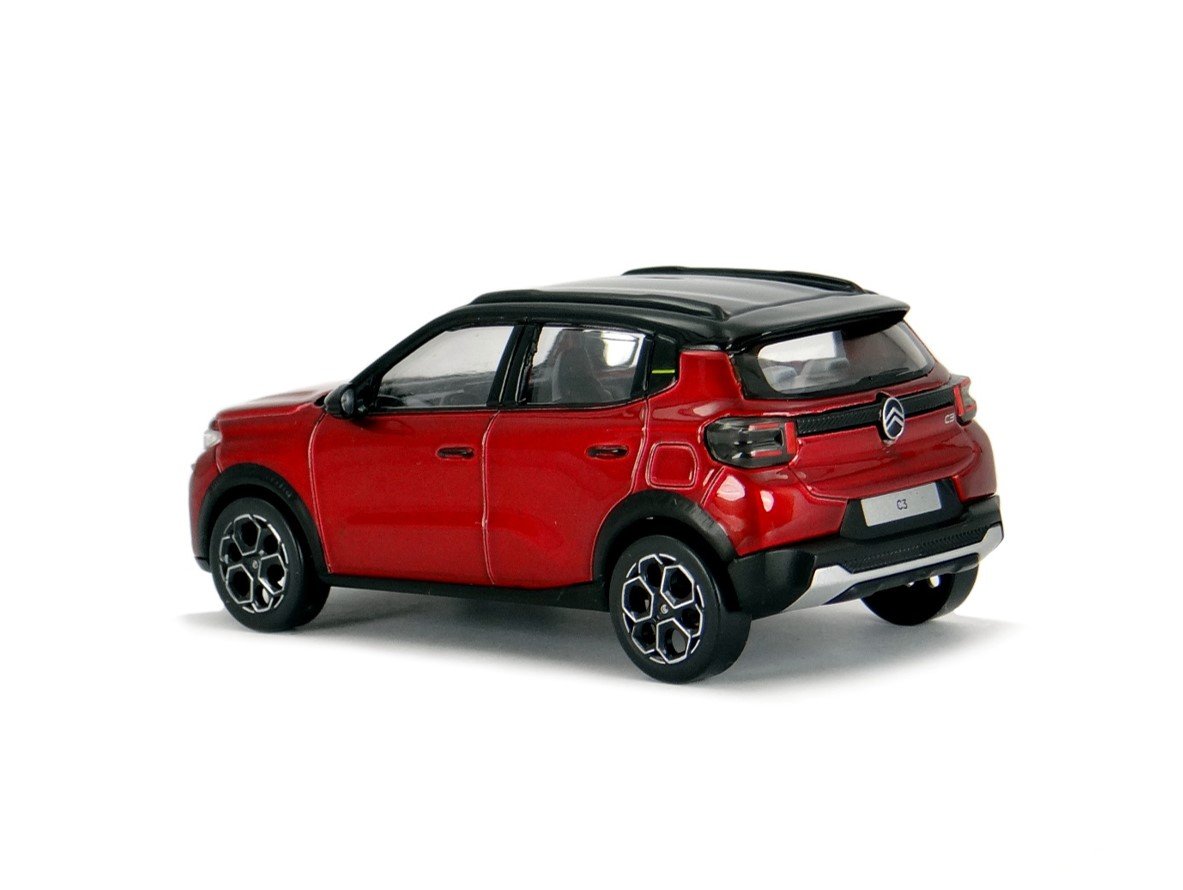
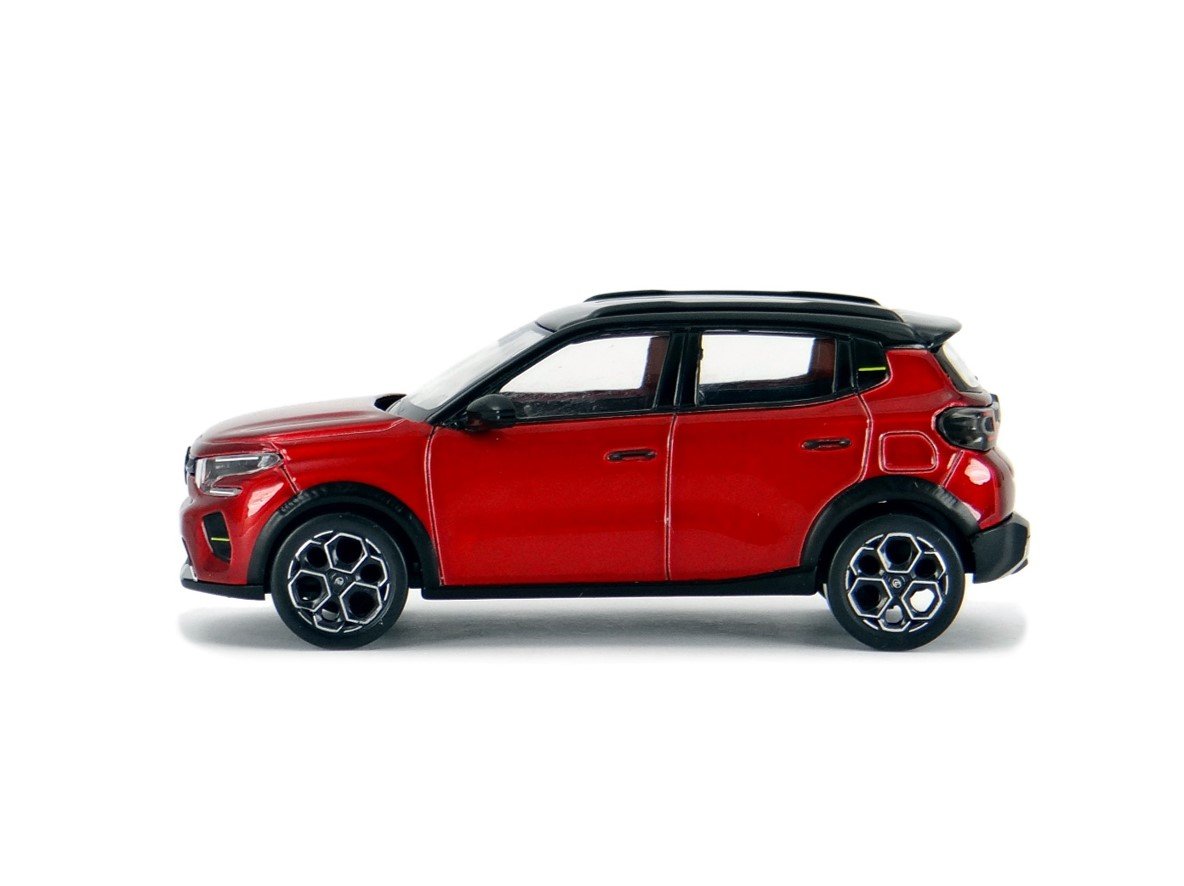
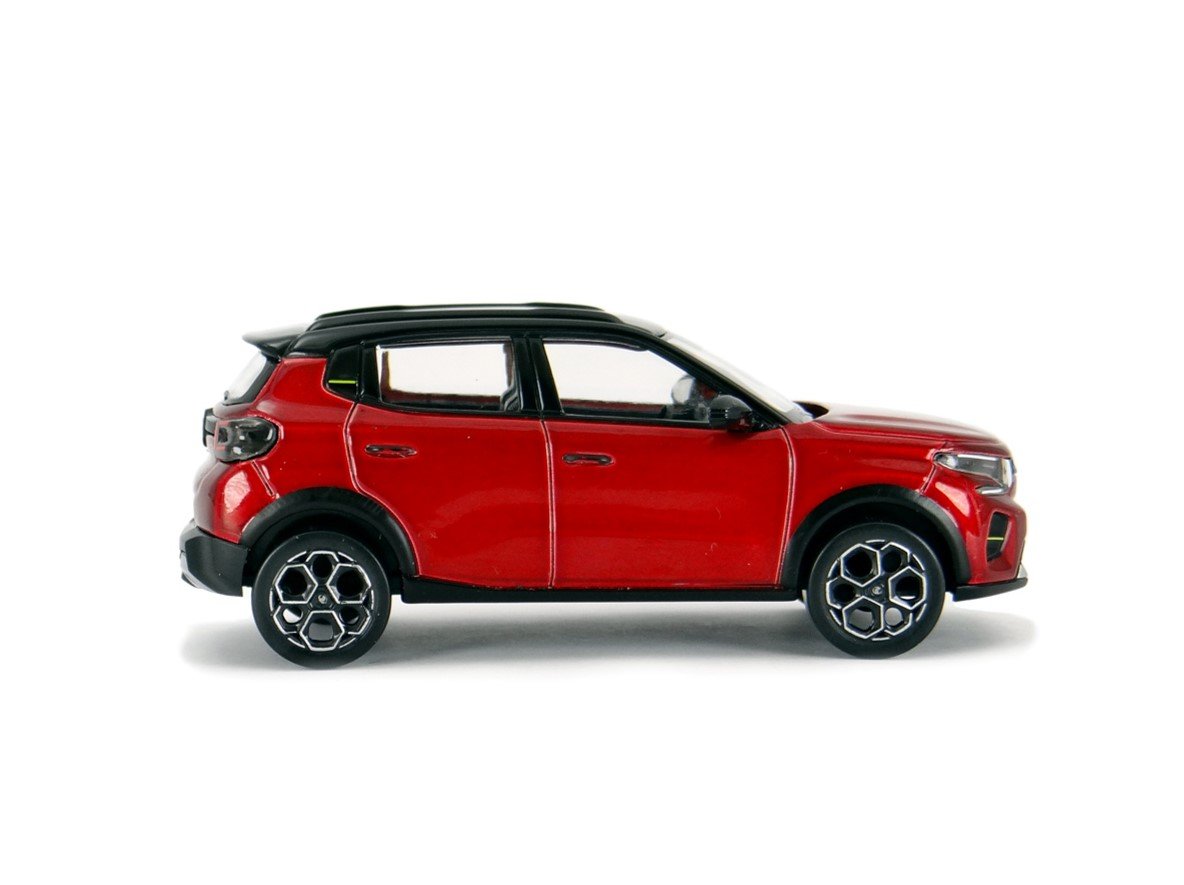
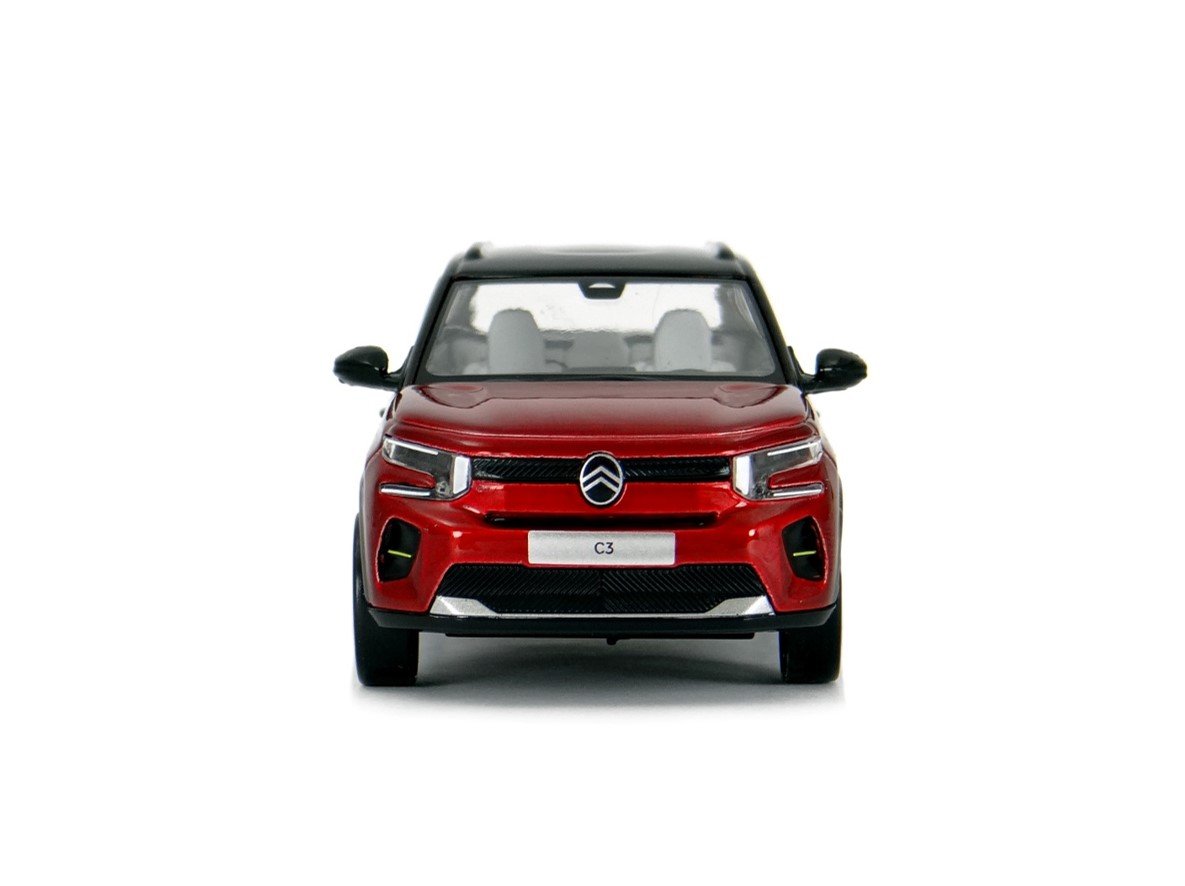
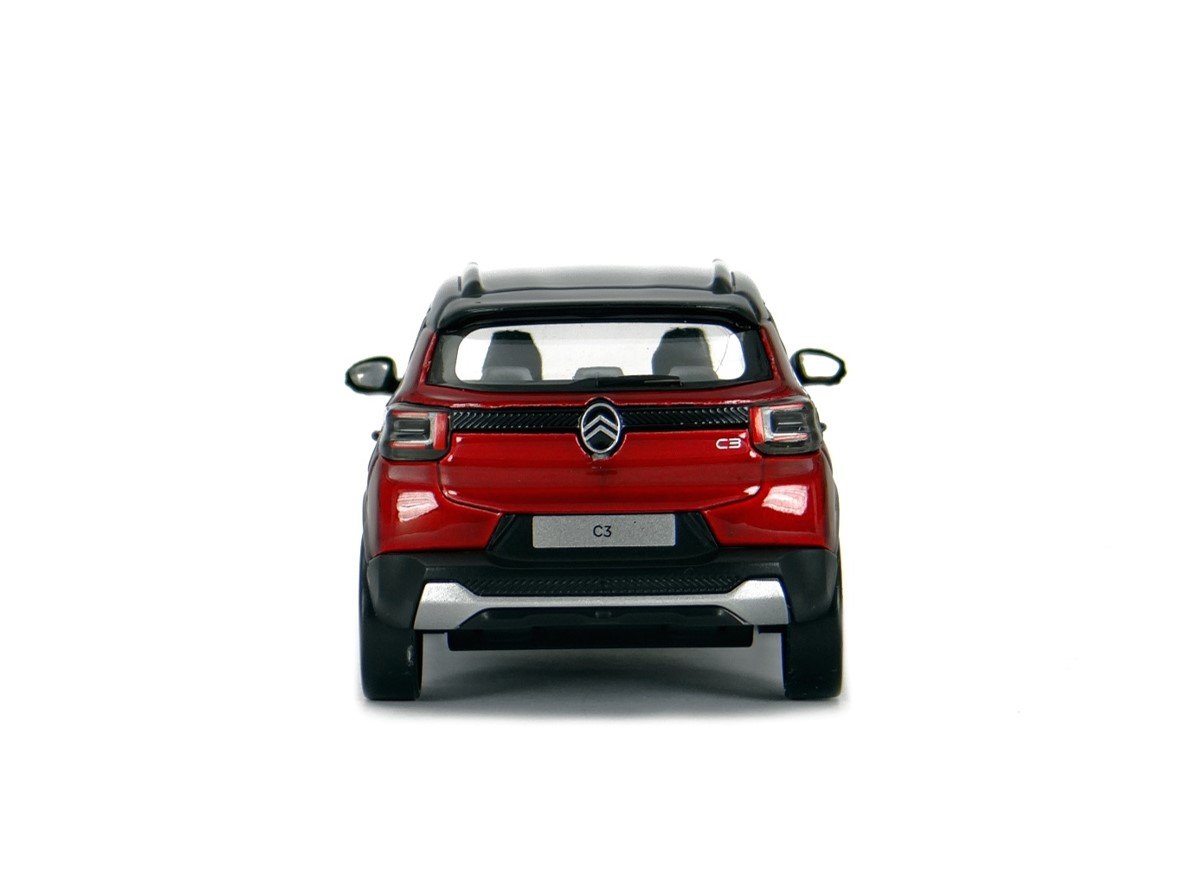
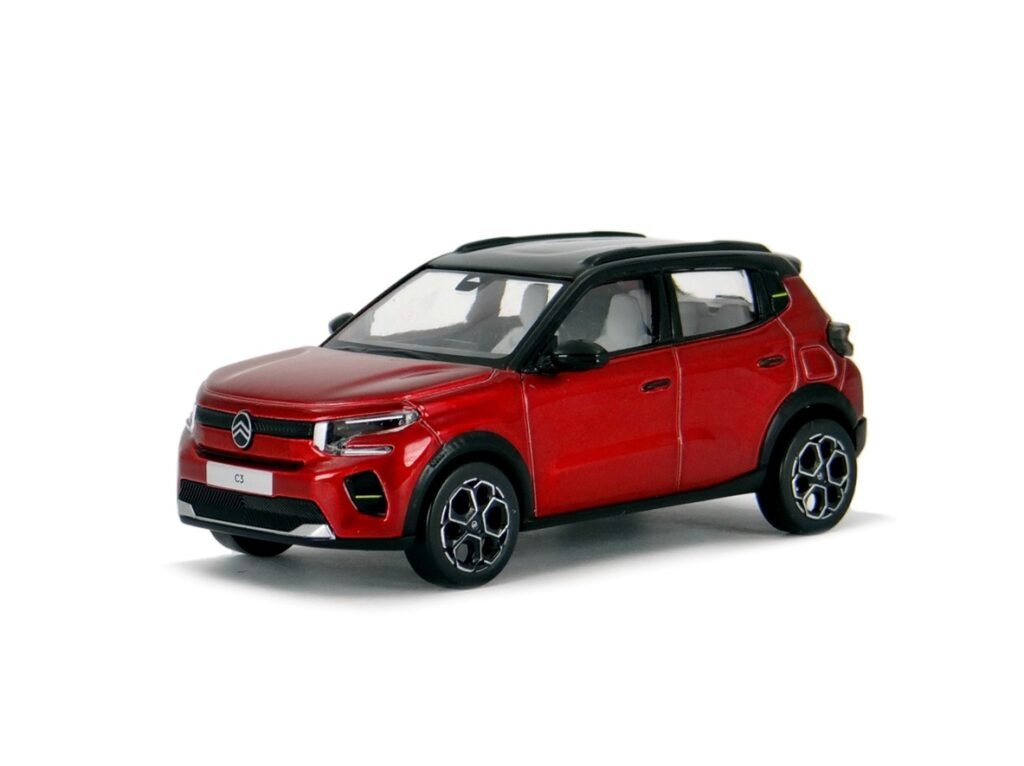
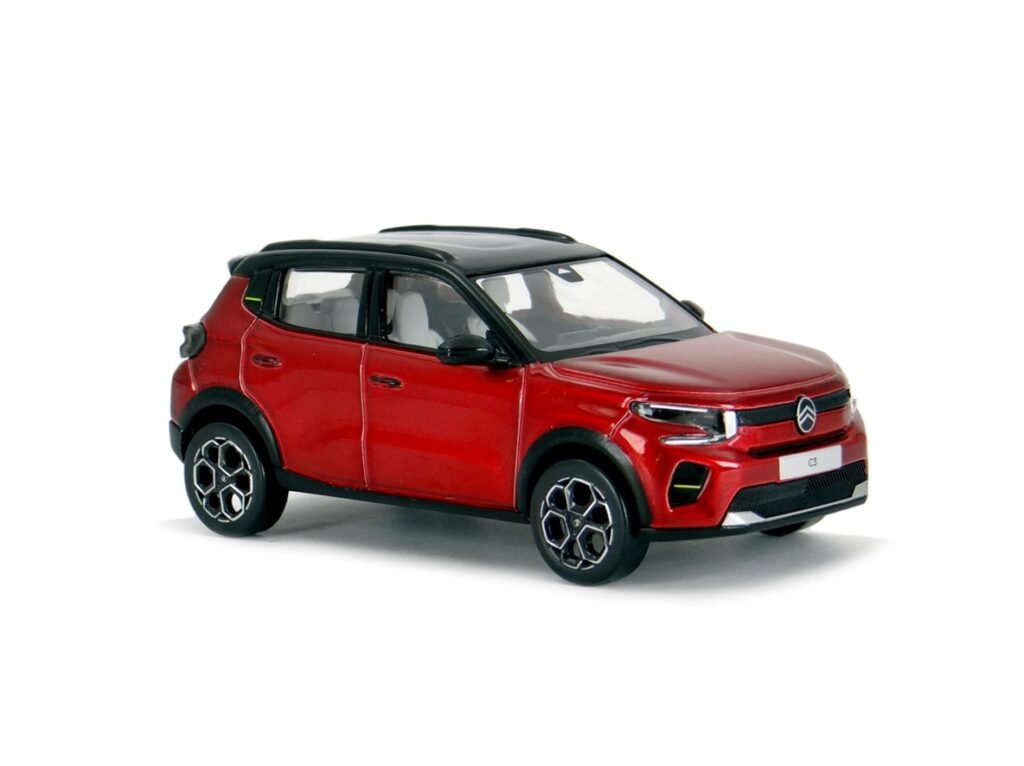
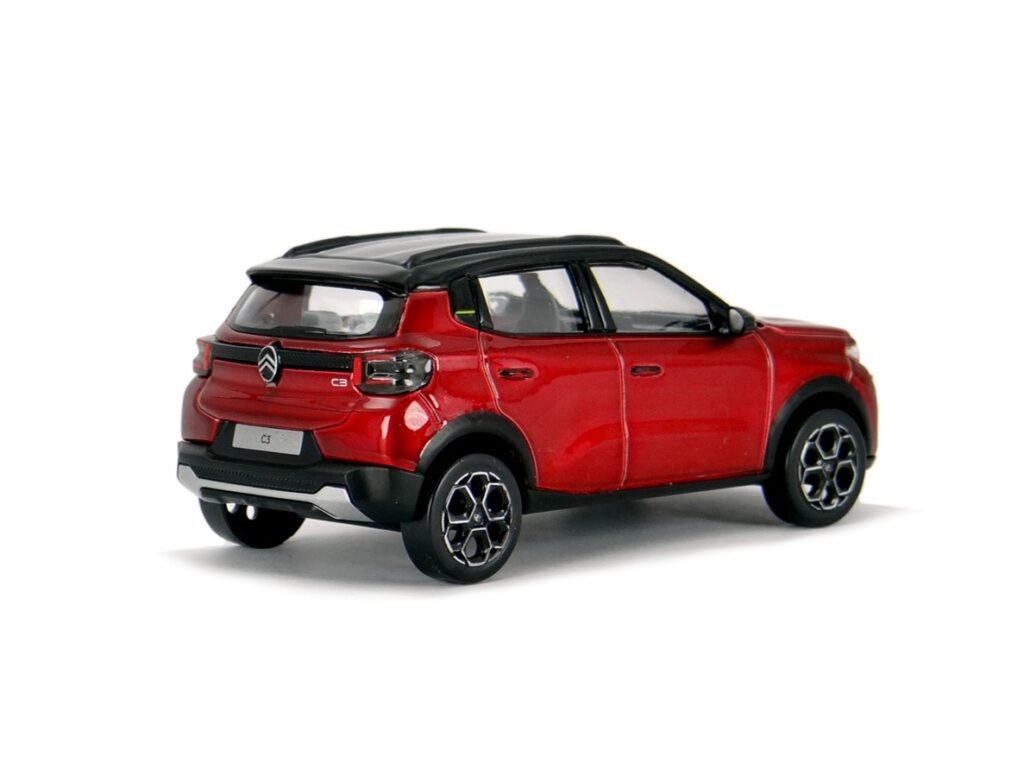
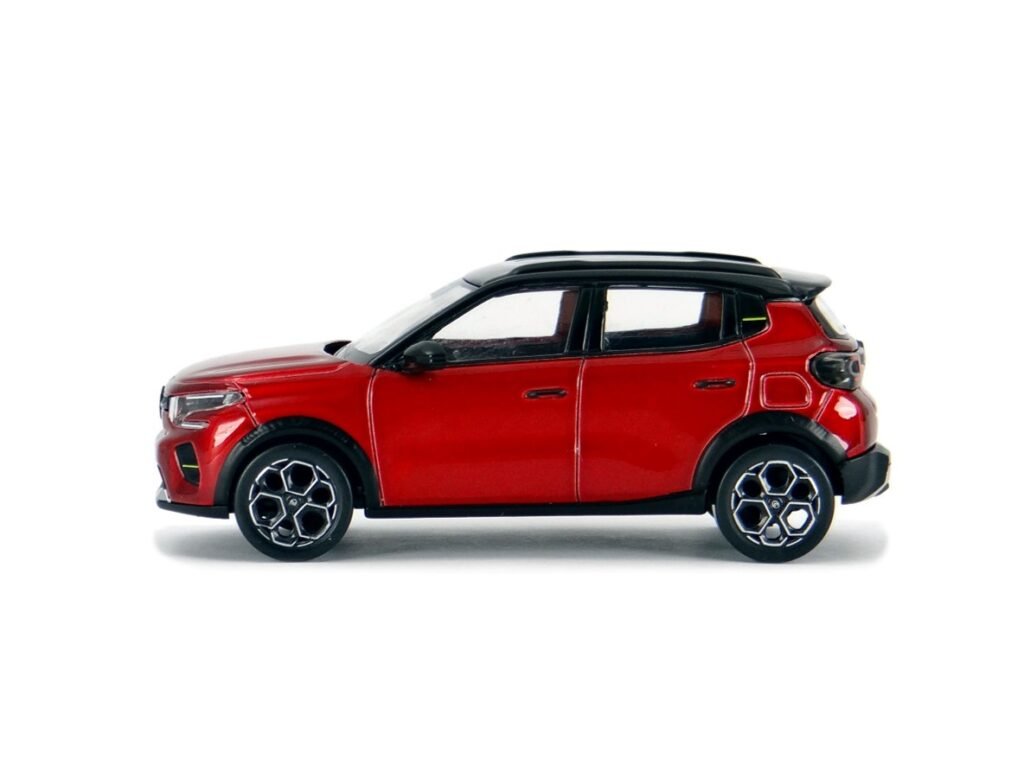
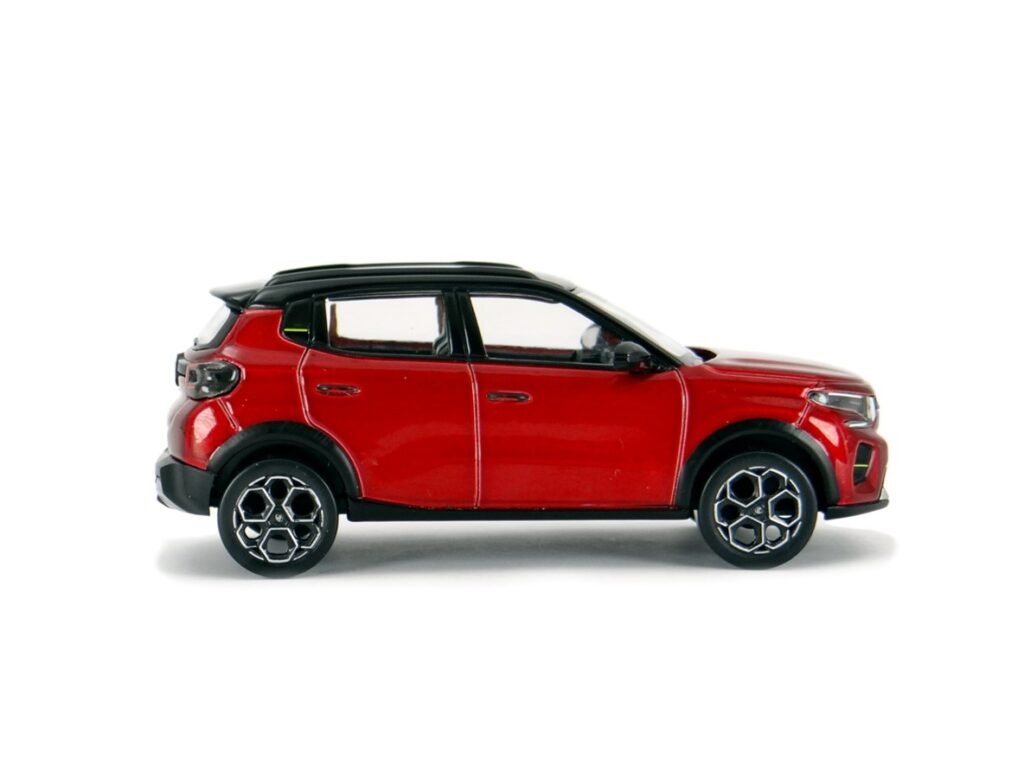
Citroën C3 2024 w kolorze czerwony Elixir to oczywiście wypust Noreva. Ogólnie, prezentuje się dobrze, pomimo że ma plastikowe kółka, jak wiele modeli współczesnych samochodów pochodzących od Noreva. Nie wiem czemu Norev uparcie stosuje to rozwiązanie. Mogę się tylko domyślać, że to czyste skąpstwo, ale takie zabawkowe kółka na prawdę nie przystoją modelowi kolekcjonerskiemu.
Co ciekawe, w przeciwieństwie do ostatnich modeli Renault które niedawno opisywałem na blogu, Norev dał Citroënowi C3 barwione wnętrze. Całe szczęście, bo to znacznie poprawia prezencję modelu. Przyznam jednak, że naprawdę nie rozumiem tej polityki Noreva. Czy to chęć zaoszczędzenia, czy Renault zapłaciło mniej za licencję? Nigdy się nie dowiemy.
Pomijając pewne wady, Citroën C3 2024 w kolorze czerwony Elixir ogólnie wygląda ładnie. Zapraszam do galerii jego zdjęć oraz odwiedzania MiniAutomobili na Facebooku i Instagramie!
*** ENGLISH ***
The fourth-generation Citroën C3 breaks away from the character of its predecessors. It’s still a small hatchback, but follows a completely different recipe.
Since Citroën introduced the C3 in 2002, the car has become a mainstay of the brand’s lineup . Over those 24 years, the French company sold more than 5.6 million examples across all generations, making the C3 the best-selling model in Citroën’s history, even surpassing the legendary 2CV. That is no mean feat. Yet, somewhat surprisingly, Citroën chose to reinvent the formula behind its best-seller, a decision that has attracted plenty of controversy.
Stellantis’ new orders
Since 2021, Citroën has been a part of Stellantis, a corporation as huge as it is bizarre. With relatively little influence within the group, Citroën has to follow decisions handed down by senior management. It just so happened, that the management led by the (universally hated) Carlos Tavares at the time, decided to relegate Citroën to the role of a budget brand. Putting it in direct competition with the likes of Dacia.
The fourth-generation Citroën C3 is the first product of this strategy. As a result, it doesn’t share its underpinnings with the Peugeot 208, as we might have expected. Instead, it is built on the Smart Car architecture, a derivative of the CMP platform co-developed with Indian manufacturer Tata for vehicles aimed primarily at emerging markets. Of course, Citroën adapted the design to meet European regulations and tastes, both mechanically and visually. Nevertheless, the fourth-generation C3 remains closely related to the C3 sold in the Indian and South American markets. A first in the model’s history.
A new look
Built according to an entirely new philosophy, the latest C3 also marks a radical change in Citroën’s design language, complete with a new logo, all first seen on the Oli concept. Until now, every C3 was round. The new generation breaks away from that tradition. It adopts a much more angular, boxy shape, clearly inspired by SUVs.
The raised ground clearance, roof rails and plastic cladding on the bumpers and wheel arches give the C3 the appearance of a mini-SUV, although Citroën insists it is still a city hatchback. That might as well be true, because at 402 cm in length, 176 cm in width and with a 254 cm wheelbase, the fourth-generation C3 is only marginally larger than its predecessor. The only significant difference is in its height: the new model is a full 10 cm taller, standing 157 cm high.
The interior has undergone a transformation as well. It is more angular than its predecessor and more utalitarian in character. Although the C3 is now positioned as a budget model, thankfully, the cabin doesn’t feel cheap. As in any modern car, the centrepiece of the dashboard is the touchscreen, measuring 10.2 inches here. To make the cabin feel more welcoming, Citroën has added soft fabric inserts to the otherwise hard dashboard and door panels, along with sewn-in labels featuring positive phrases such as “have fun” and “be cool”. Much of the cabin’s appeal also comes from its pleasant, light-coloured interior, a refreshing rarity in today’s cars.
A good, old Citroën
Given the direction Citroën has taken, it may seem surprising that the fourth-generation C3 is, in several ways, reminiscent of the brand’s older models. The first is the utalitarian character of the interior mentioned earlier, which paradoxically, echoes those of the AX and Saxo. Then there are the soft, comfortable seats. The new C3 features wonderfully plush seats—a characteristic that was once something of a trademark of French cars.
The final, and perhaps most important, aspect is the suspension. Citroën became famous for its exceptionally comfortable hydropneumatic suspension, but even its more affordable models without this technology were once renowned for their above-average ride comfort. At some point, Citroën lost that quality, so it’s nice to see the French brand returning to its roots. The Citroën C3 features the company’s Advanced Comfort suspension system, previously used in its larger models. The technology employs progressive hydraulic bump stops to help absorb road imperfections. As a result, the C3 delivers surprisingly high levels of ride comfort for such a small car.
A powertrain for everyone
Citroën unveiled the fourth-generation C3 in October 2023, initially only in the electric ë-C3 version, which was also the first variant to go on sale. Equipped with a 44 kWh lithium iron phosphate (LFP) battery, the electric version produced 113 hp and offered a range of up to 320 kilometres. But even as a budget offering, an electric car of this size proved too expensive for many customers. In response to market demand, Citroën introduced internal-combustion versions of the C3 in February 2024.
The entry-level version is powered by a 100-hp 1.2 PureTech engine paired with a six-speed manual gearbox. The second option uses the same engine but adds a mild-hybrid system and a six-speed dual-clutch automatic transmission. This helped significantly reduce the price of the C3, making it even cheaper than its predecessor in many markets. That, in turn, had a positive impact on sales.
About the miniature – Citroën C3 IV 2024
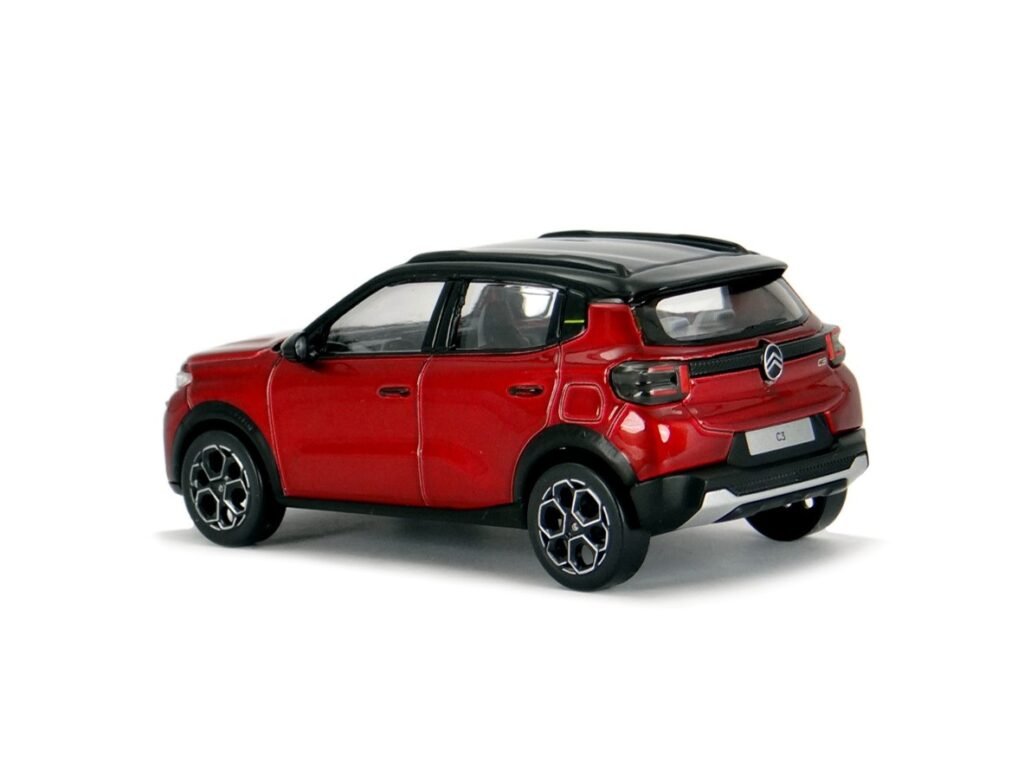
The 2024 Citroën C3 in Elixir Red is, of course, made by Norev. Overall, it’s a good-looking model, despite the plastic wheels that Norev seems to fit to so many of its contemporary releases. I honestly don’t understand why the company persists with this approach. One can only assume it’s a cost-cutting measure, but these toy-like wheels are simply not appropriate for a collector’s model.
Interestingly, unlike the recent Renault models I’ve covered on the blog, Norev has given the Citroën C3 a coloured interior. Thankfully, because it makes a significant difference to the model’s overall appearance. Although, I have to admit, that once again I really don’t understand Norev’s policy here. Is it simply an attempt to cut costs, or did Renault pay less for the licence? We’ll probably never know.
Despite a few flaws, the 2024 Citroën C3 in Elixir Red looks good overall. Go and check it out in the photo gallery and of course follow MiniAutomobile on Facebook and Instagram!