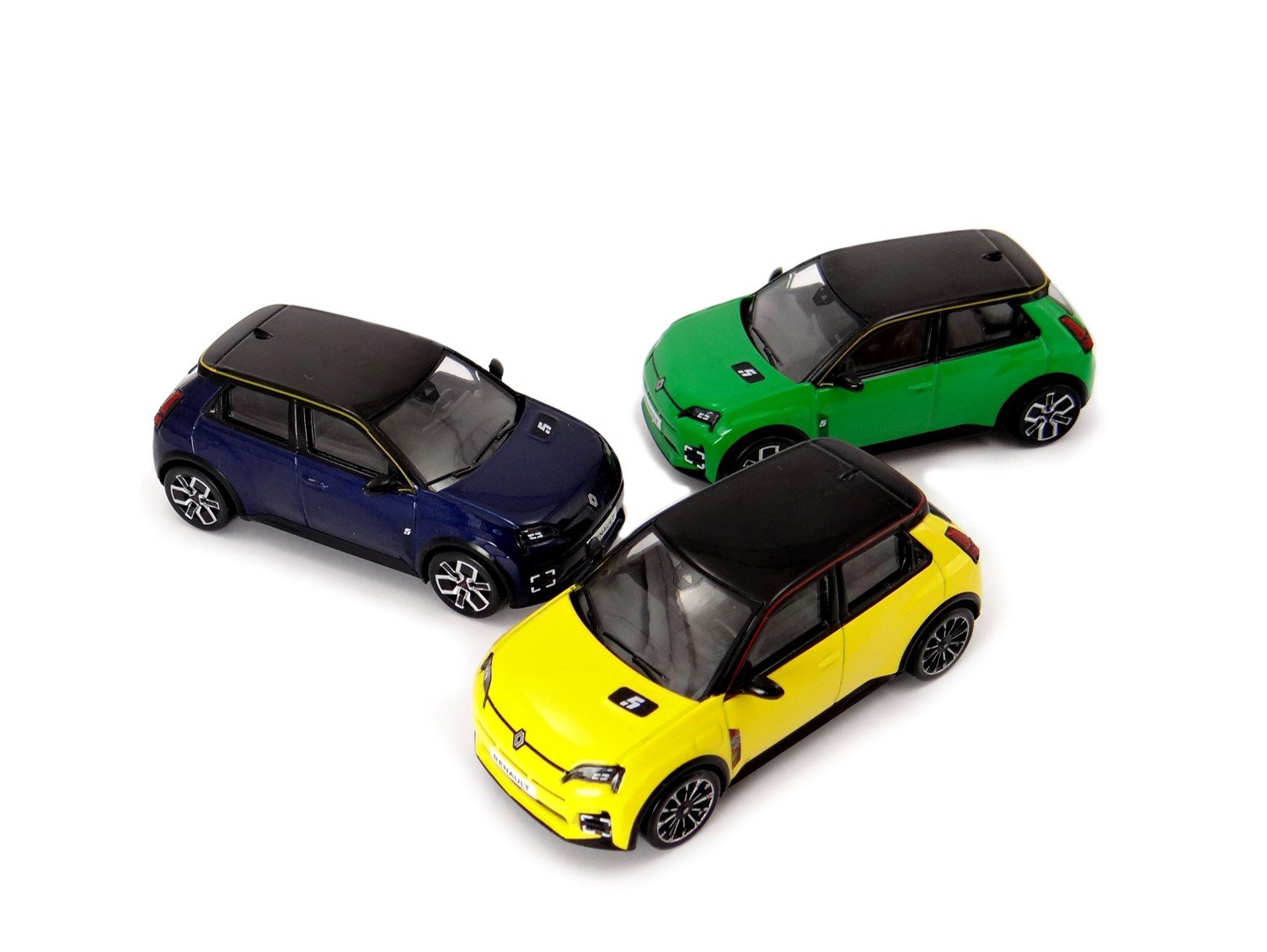

Pierwsze Twingo stało się już kultowym samochodem, więc Renault zdecydowało że 2026 rok to idealny moment na jego współczesną interpretację.
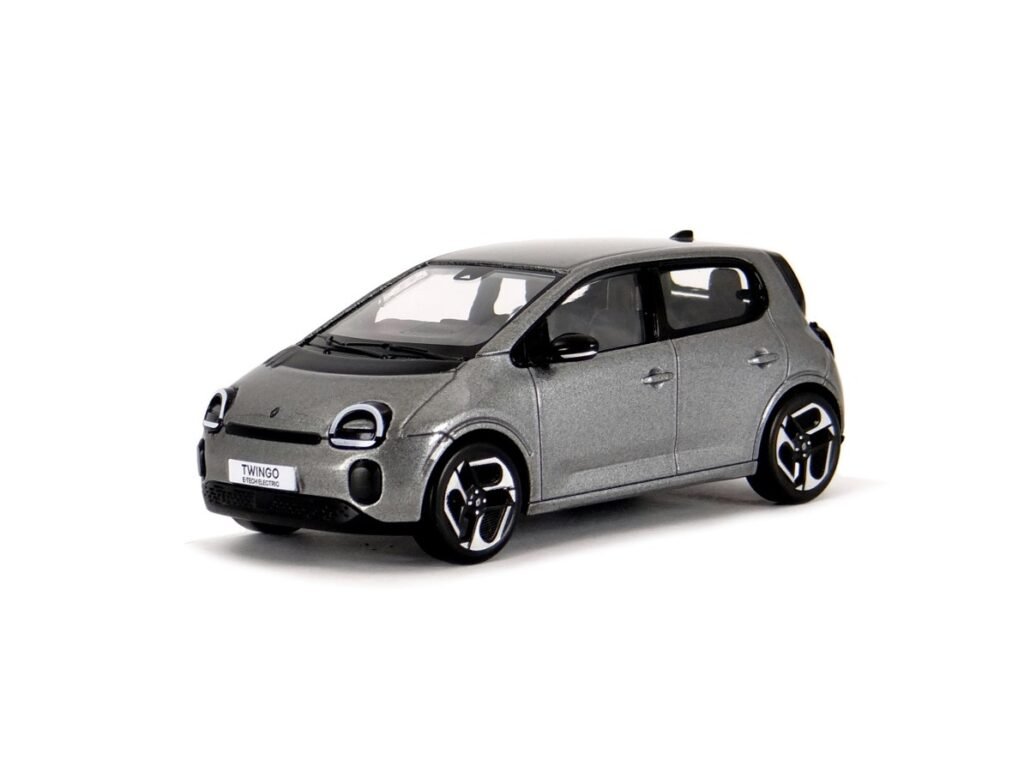
Kiedy Renault po raz pierwszy pokazało Twingo w 1992 roku, auto wywołało furorę. Jednobryłowe nadwozie, przestronne wnętrze i wesoły charakter były niespotykanym wówczas połączeniem w klasie miejskich samochodów. Twingo szybko zaskarbiło sobie sympatię i przez 14 lat produkcji znalazło ponad 2,5 miliona szczęśliwych użytkowników. Teraz, Renault chce powrócić do udanej formuły i wskrzesza legendę segmentu A jako pojazd elektryczny.
Cukierek na kołach
Renault zapowiedziało nowe Twingo w 2023 roku, prototypem Twingo Legend. Kiedy Francuzi pokazali produkcyjną wersję modelu 6 listopada zeszłego roku w Paryżu, stało się jasne, że poza kilkoma detalami, prototyp w prawie niezmienionym kształcie przeistoczył się w auto gotowe do produkcji. Jedno spojrzenie na auto nie pozostawia już żadnych wątpliwości – to na pewno Twingo.
Odniesienia do pierwowzoru z 1992 roku są tutaj oczywiste. Od charakterystycznej bryły nadwozia z uśmiechniętą buźką, przez kształt wyłupiastych świateł LED aż do charakterystycznych atrap wlotów powietrza na masce. Tak jak pierwowzór, Renault Twingo AD 2026 jest niezwykle urocze. Szef biura stylizacyjnego Renault, Laurens van der Acker, idzie nawet dalej i twierdzi, że Twingo ma proporcje jak cukierek który chciałbyś zjeść.
Radosny, cukierkowy charakter samochodu podkreślają też wesołe kolory, które Renault do niego proponuje. Żółty, czerwony i zielony przyciągają wzrok i jednocześnie nawiązują do początkowej palety barw pierwszej generacji Twingo.
Zmyślnym detalem zdobiącym model jest nawet sam napis „Twingo”. Wykorzystuje specjalnie zaprojektowaną czcionkę, gdzie literka „g”, ma formę znacznika, doskonale wszystkim znanego z map online. To powinnno trafić szczególnie do najmłodszych klientów, wychowanych już całkowicie w erze cyfrowej.
Optymalizacja kluczem do sukcesu
Twingo miało być nie tylko najtańszym modelem w gamie Renault, ale też jednym z najtańszych elektrycznych aut na rynku. Faktycznie, Renault dowiozło tą obietnicę i we Francji ceny nowego Twingo startują od 19 490 euro za podstawową wersję Evolution, przed wliczeniem rządowych dopłat. Po ich uwzględnieniu, cena może spaść nawet do pułapu 14 720 euro, co czyni z Twingo bardzo atrakcyjną ofertę. Takie ceny w przypadku elektryków były jeszcze niedawno nie do pomyślenia. Aby to osiągnąć, Francuzi musieli maksymalnie zoptymalizować proces tworzenia modelu.
Twingo zbudowano na uproszczonej wersji platformy AmpR Small z Renault 5. Zamiast wielowachaczowego zawieszenia, mamy tu prostszą belkę skrętną z Captura. Dzięki temu, Twingo jest tańsze i szybsze w produkcji oraz o 7 kilogramów lżejsze.
W obniżaniu kosztów i przyspieszeniu prac, pomogła też współpraca z chińskimi firmami w kwestii akumulatorów i układu napędowego. Twingo to pierwsze Renault które korzysta z baterii litowo-żelazowo-fosforanowych (LFP) zamiast znacznie droższych ogniw z niklem i kobaltem. Zastosowana technologia pozwoliła obniżyć koszty produkcji o ok. 20 procent.
Dzięki współpracy z chińskimi firmami w kwestii technologii i zmyślnemu wykorzystaniu już istniejących komponentów, Renault mogło opracować elektryczne Twingo E-Tech w ekspresowym tempie. Francuzi twierdzą, że to najszybciej opracowany model w historii firmy – cały proces trwał tylko 100 tygodni, czyli niewiele ponad 2 lata.
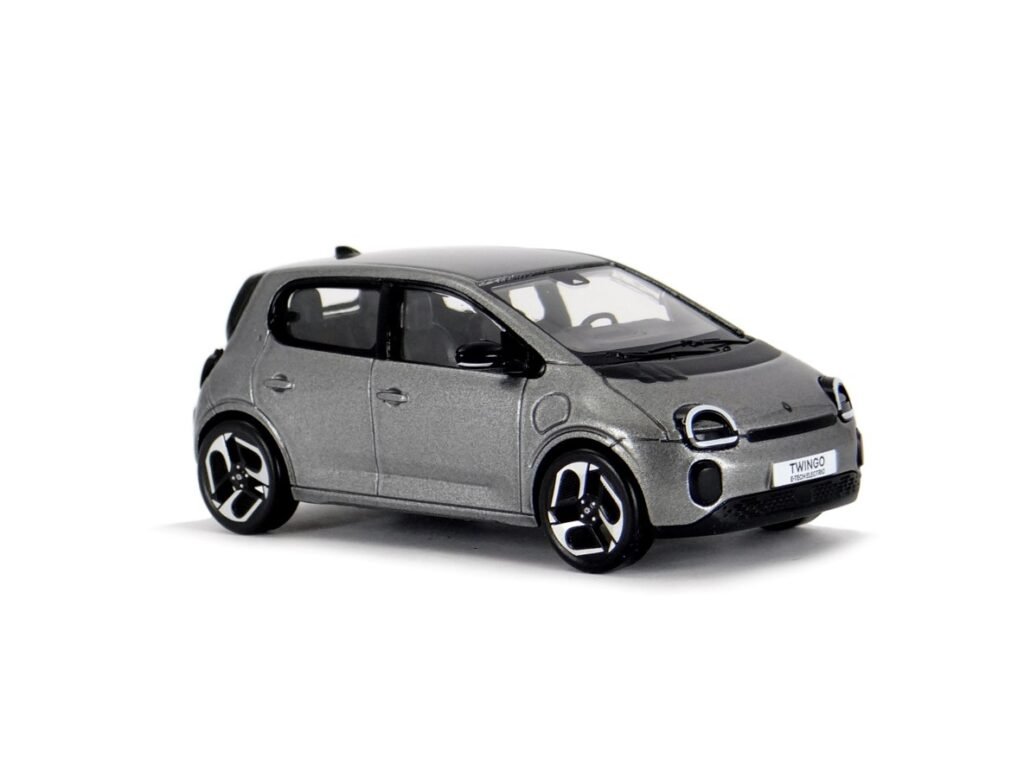
Renault Twingo z wnętrzem AD 2026
W środku nawiązań stylistycznych do pierwszego Twingo tak dużo już nie ma, ale to może akurat dobrze. Spartańskie wnętrze pierwowzoru raczej nie przyjęłoby się w dzisiejszych czasach.
To, co Francuzi przeszczepili do najnowszego Twingo to możliwość aranżacji wnętrza. Wzorem modelu z 1992 roku, dwa osobne fotele z tyłu można przesuwać w zakresie 17 cm, co pozwala regulować między przestrzenią z tyłu a pojemnośćią bagażnika (260 – 360 litrów). Jak na auto o długości 379 cm, kabina jest zaskakująco przestronna – tak jak w pierwowzorze!
Aby rozweselić wnętrze, Renault wyposaża auto w dywaniki w kolorowe wzory, wstawki na desce rozdzielczej i boczkach drzwi kolorze nadwozia i podsufitkę z “alfabetem Twingo”. Jest też dźwignia do zmiany biegów w kolorowe, malowane wzory wzięta z 5 E-Tech. Szkoda tylko, że Francuzi nie zdecydowali się na kolorową tapicerkę, tak jak w Twingo z 1992 roku, albo nowym 5 E-Tech.
Są za to wirtualne zegary o przekątnej 7 cali, oraz 10-calowy ekran systemu informacyjno-rozrywkowego wyposażone w wesołe, kolorowe grafiki. System multimedialny ma być zresztą oferowany w dwóch odmianach. Podstawowej, umożliwiającej tylko połączenie ze smartfonem, oraz pełnej znanej już z innych Renault, opartej na oprogramowaniu Android Automotive z wbudowanymi usługami Google.
Jeden silnik
Jako że Renault Twingo E-Tech ma być podstawowym modelem w gamie producenta, dostępne będzie tylko w jednym wariancie napędu. To bateria o pojemności 27,5 kWh połączona z motorem o mocy 82 KM. Auto z takim zestawem rozpędza się do 130 km/h, a prędkość 100 km/h osiąga po 12,1 s od startu. To przeciętne wartości, ale w mieście niezbyt istotne. Znacznie ważniejsze jest rozpędzanie się do 50 km/h, a to Twingo zrobi w raptem 3,85 s! Dynamiczna jazda po mieście nie będzie więc żadnym problemem.
Zasięg WLTP określono na 263 km. To niewiele, ale Renault podeszło do tego bardzo pragmatycznie. Twingo jest w końcu tylko samochodem miejskim, a w miastach nikt większego zasięgu nie potrzebuje. Bardziej liczy się zużycie energii a to ma być niewielkie, średnio 12,2 kWh/100 km.
Skazany na sukces?
Renault sporo obiecywało po najnowszym Twingo, ale trzeba przyznać że dotrzymało słowa. Nowe wcielenie francuskiego mieszczucha wygląda fantastycznie i budzi same pozytywne emocje. Ma też zaskakująco przestronne i funkcjonalne wnętrze. Co najważniejsze jednak, ma konkurencyjną cenę którą obiecywało Renault. Francuzi wyprzedzili tym największych europejskich rywali, jednak w tej klasie cenowej mocną konkurencję stanowią chińskie auta. Pomimo to, szansę na sukces są duże, bo Renault Twingo ma to, czego inni nie mają – urok i wdzięk.
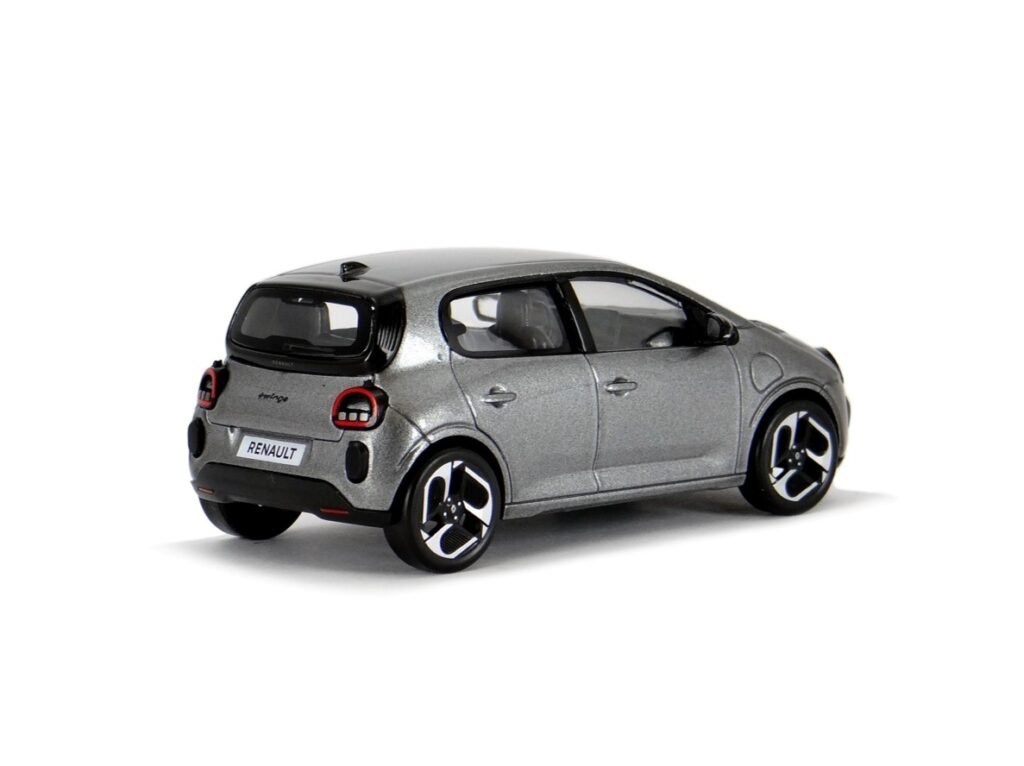
O miniaturze – Renault Twingo E-Tech 2026
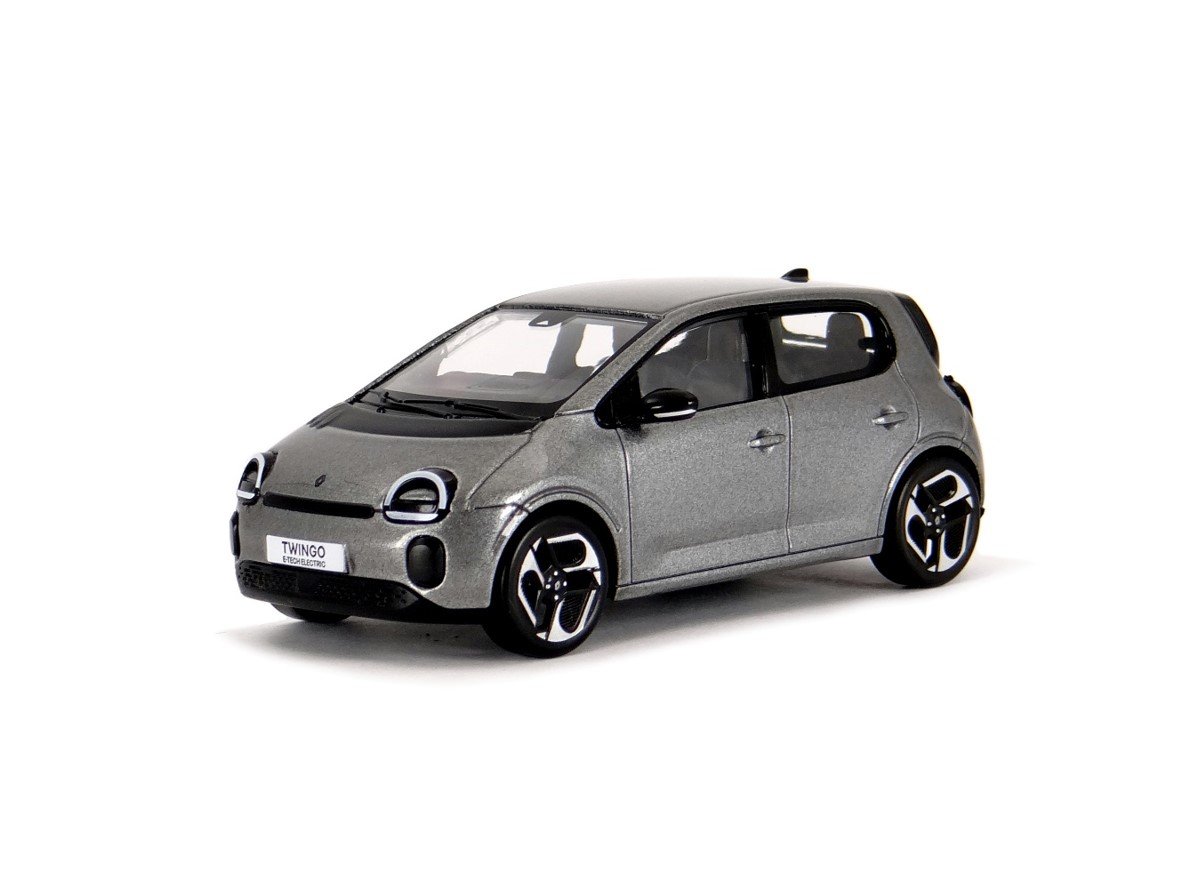
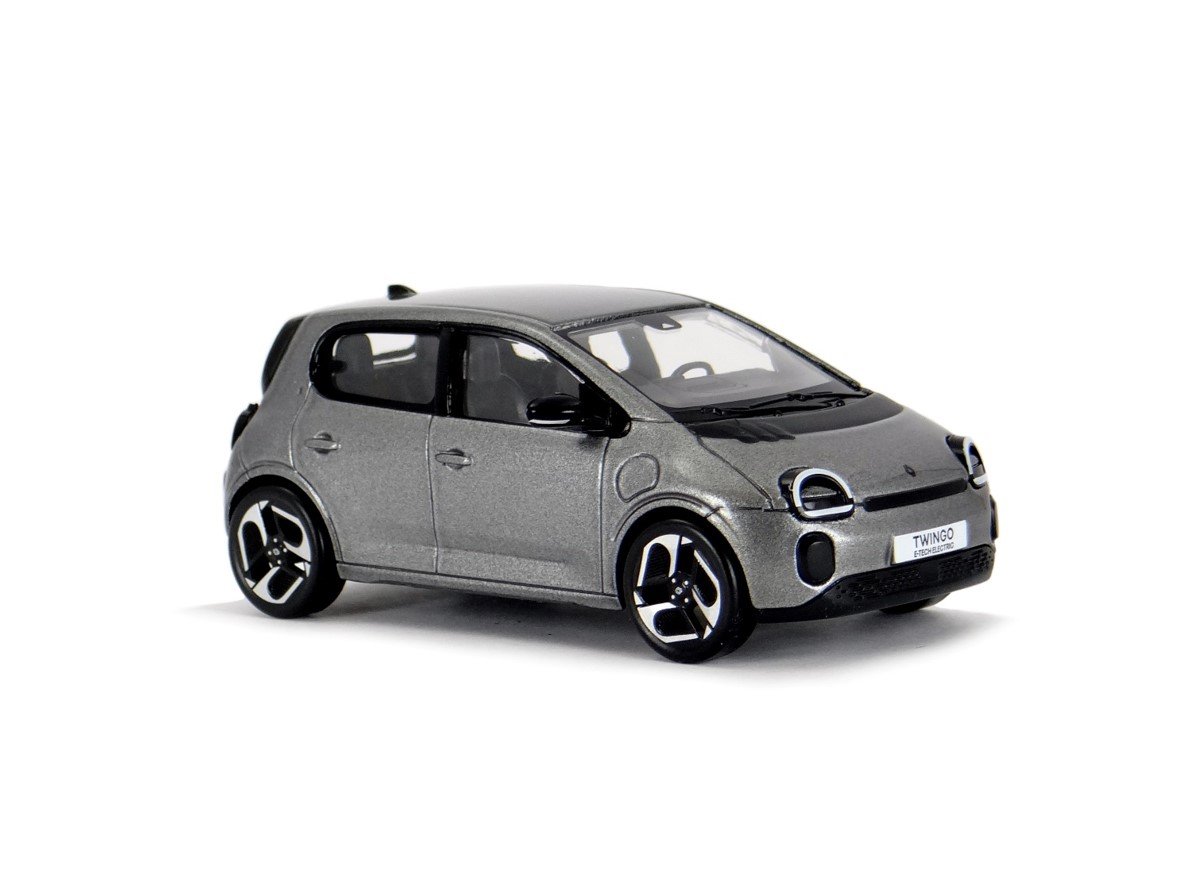
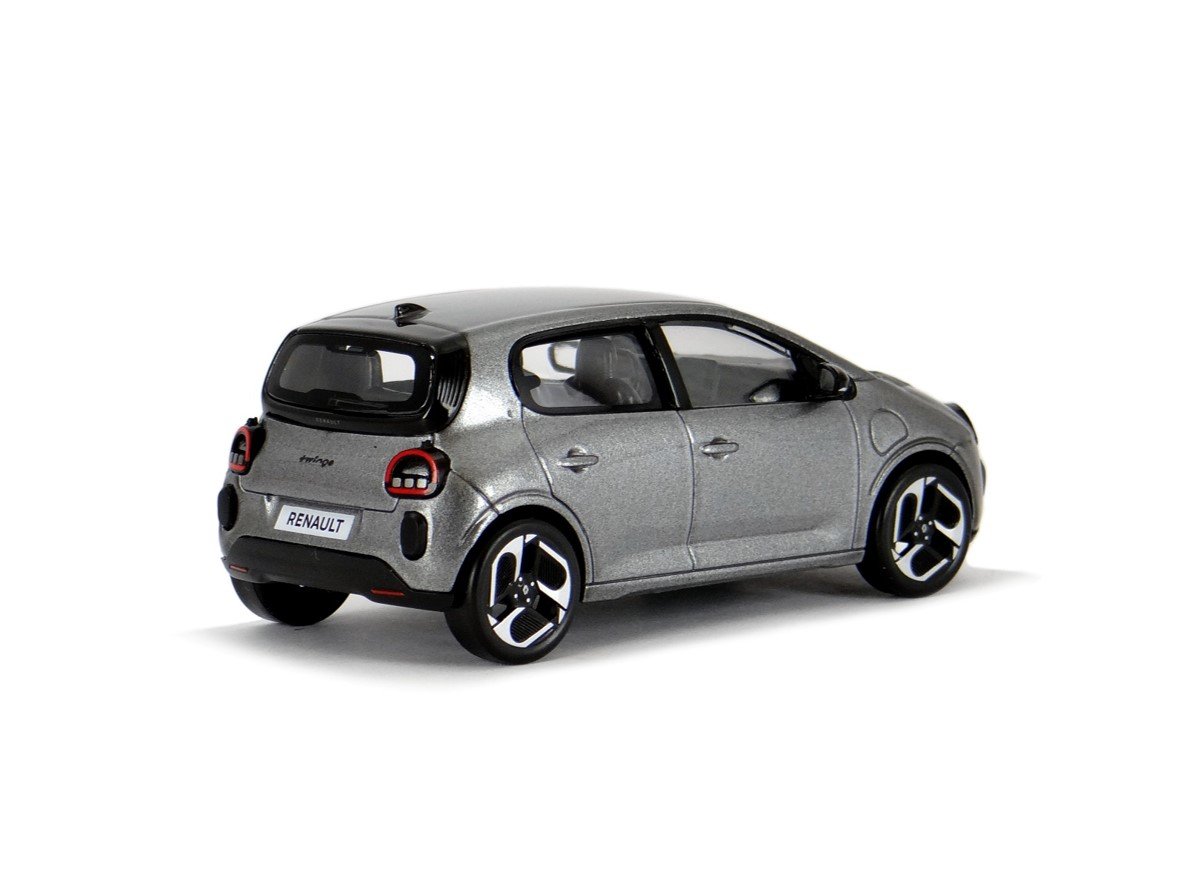
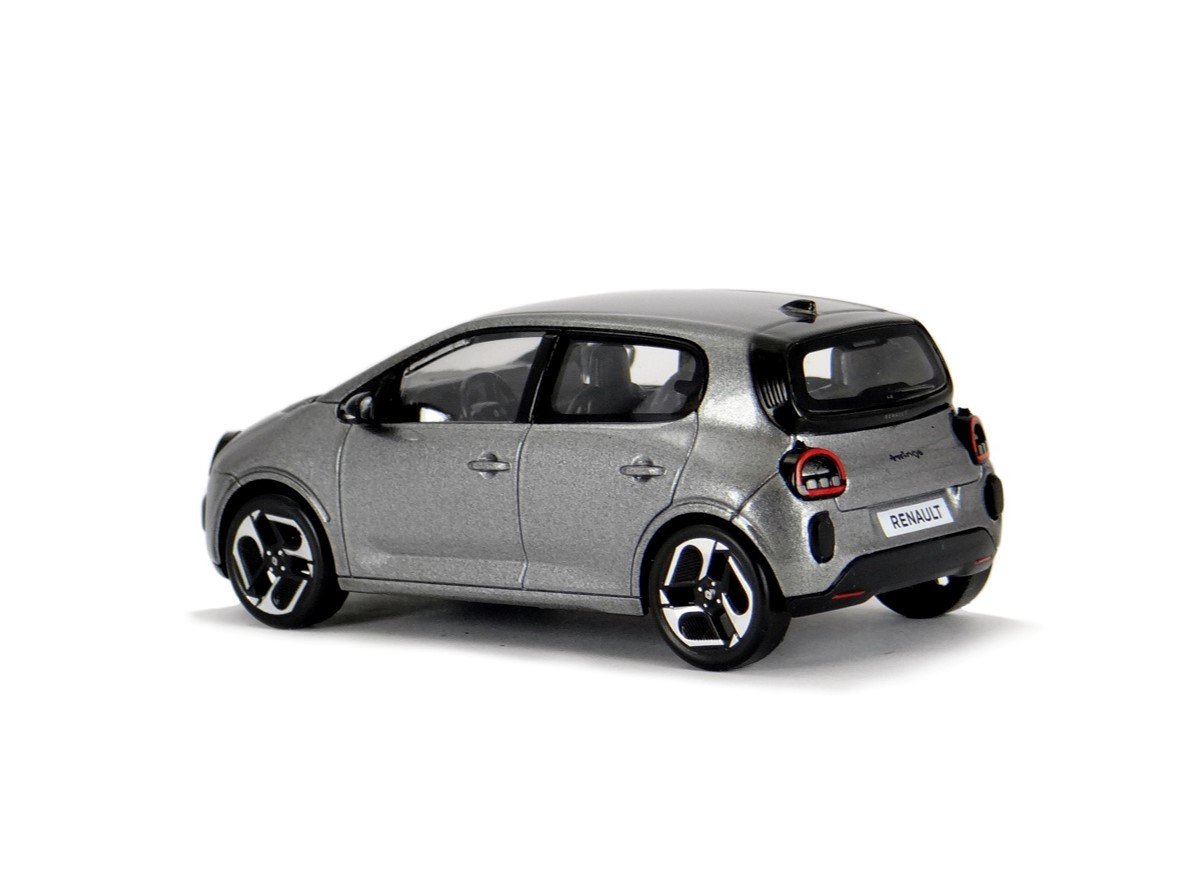
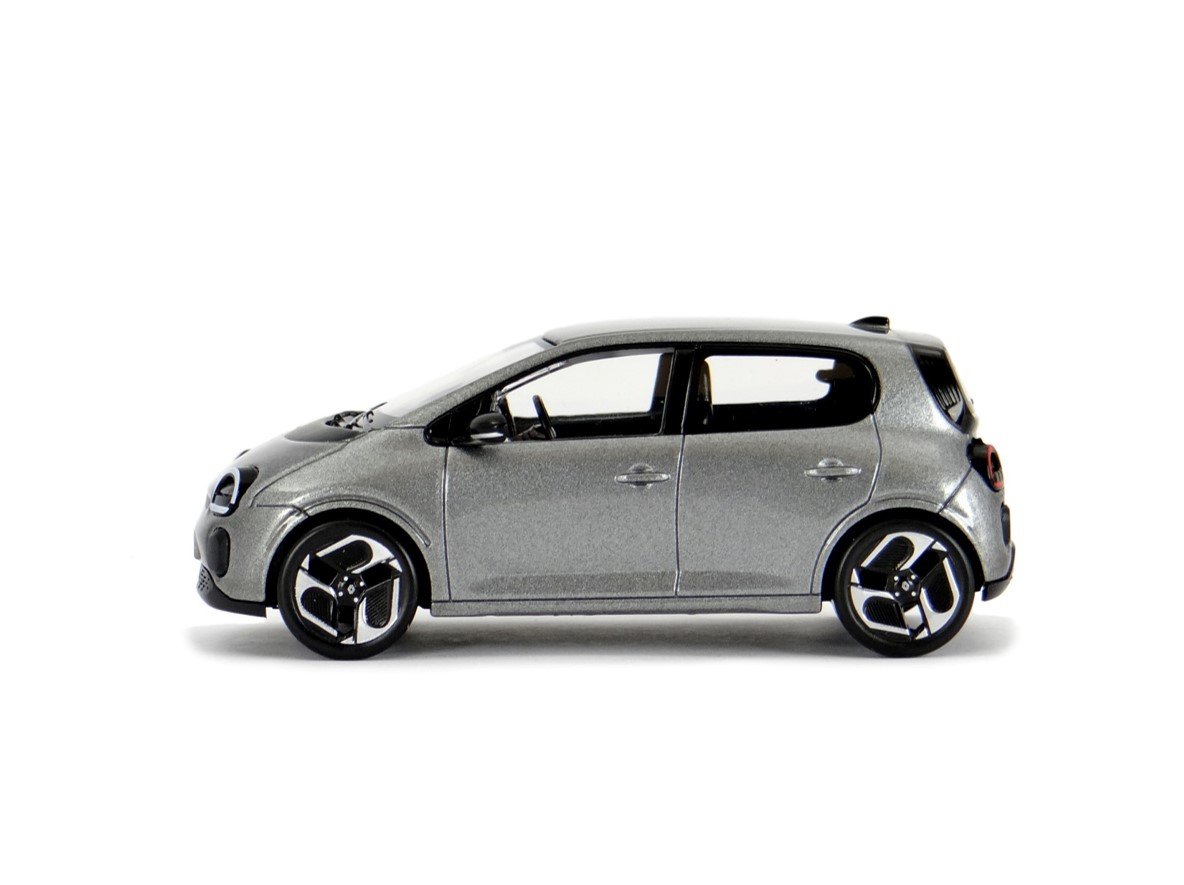
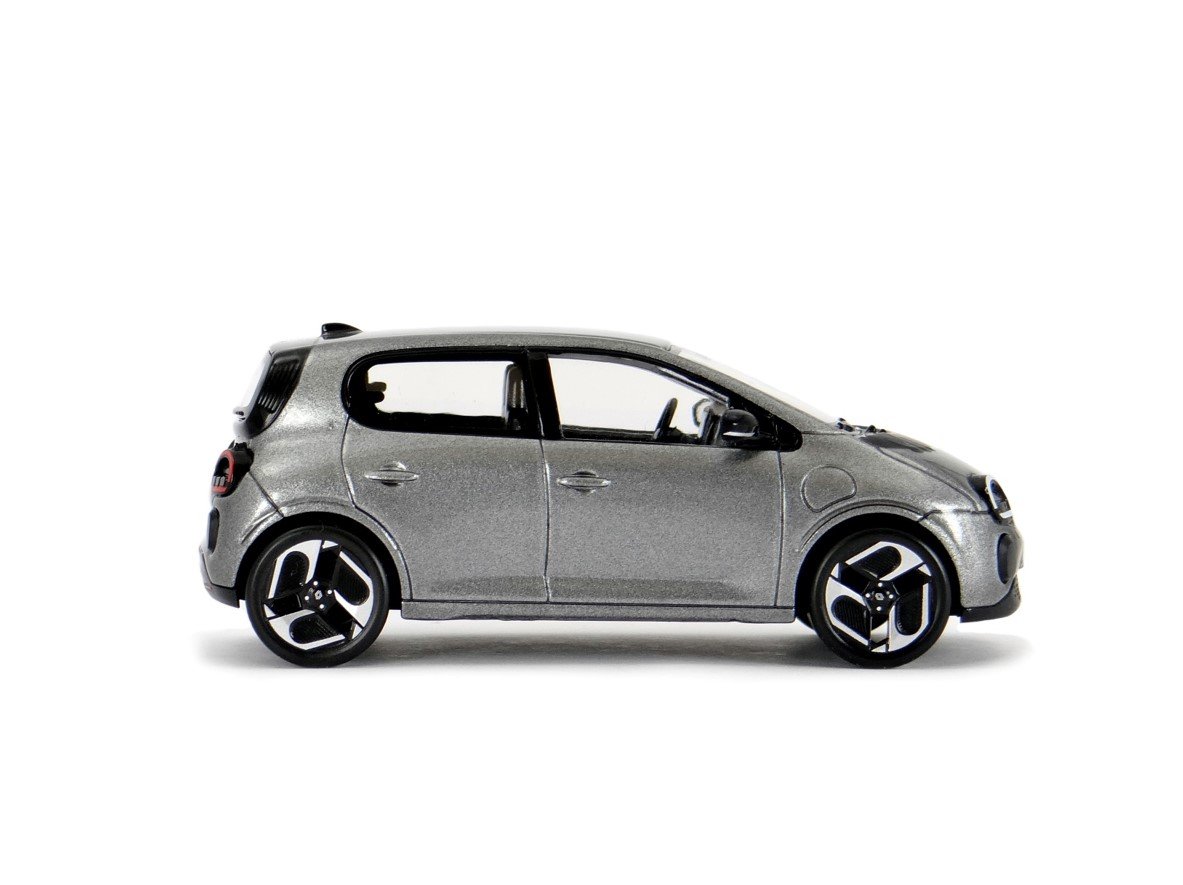
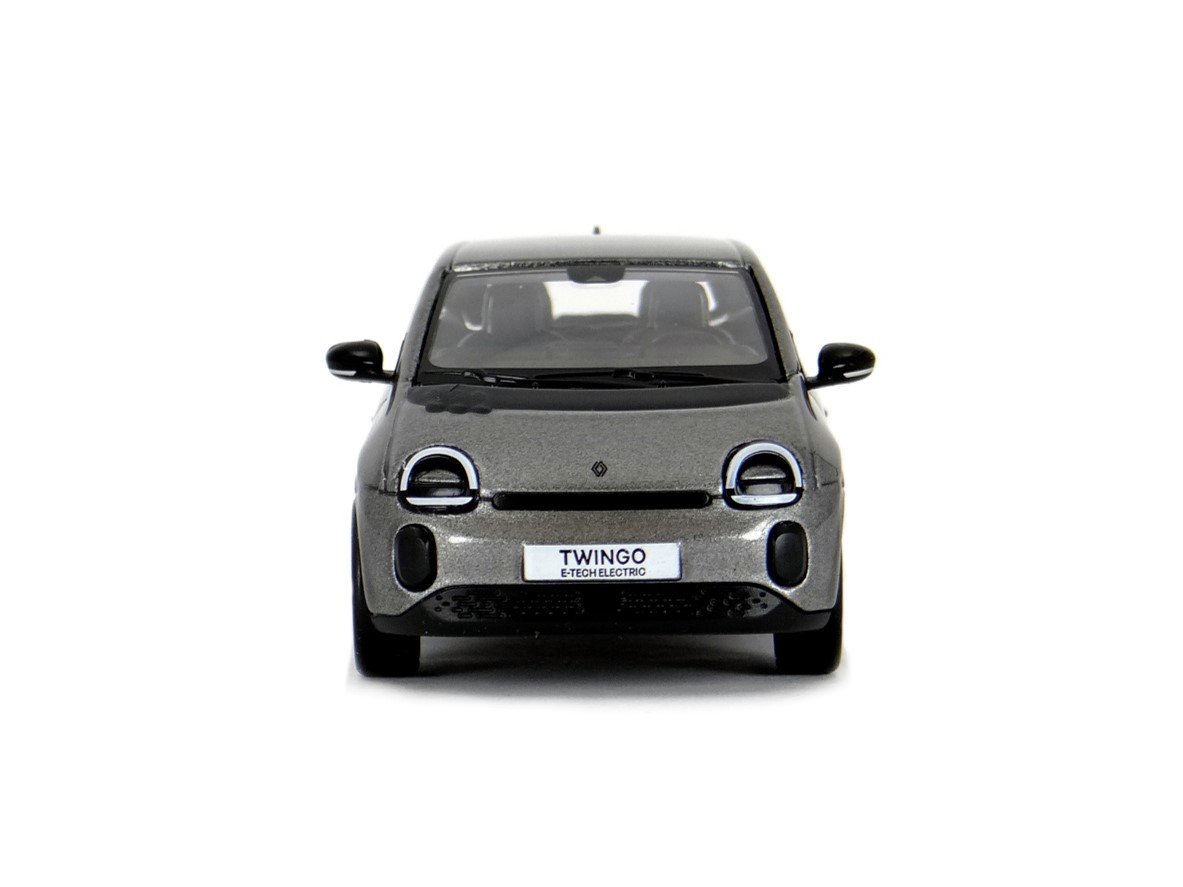
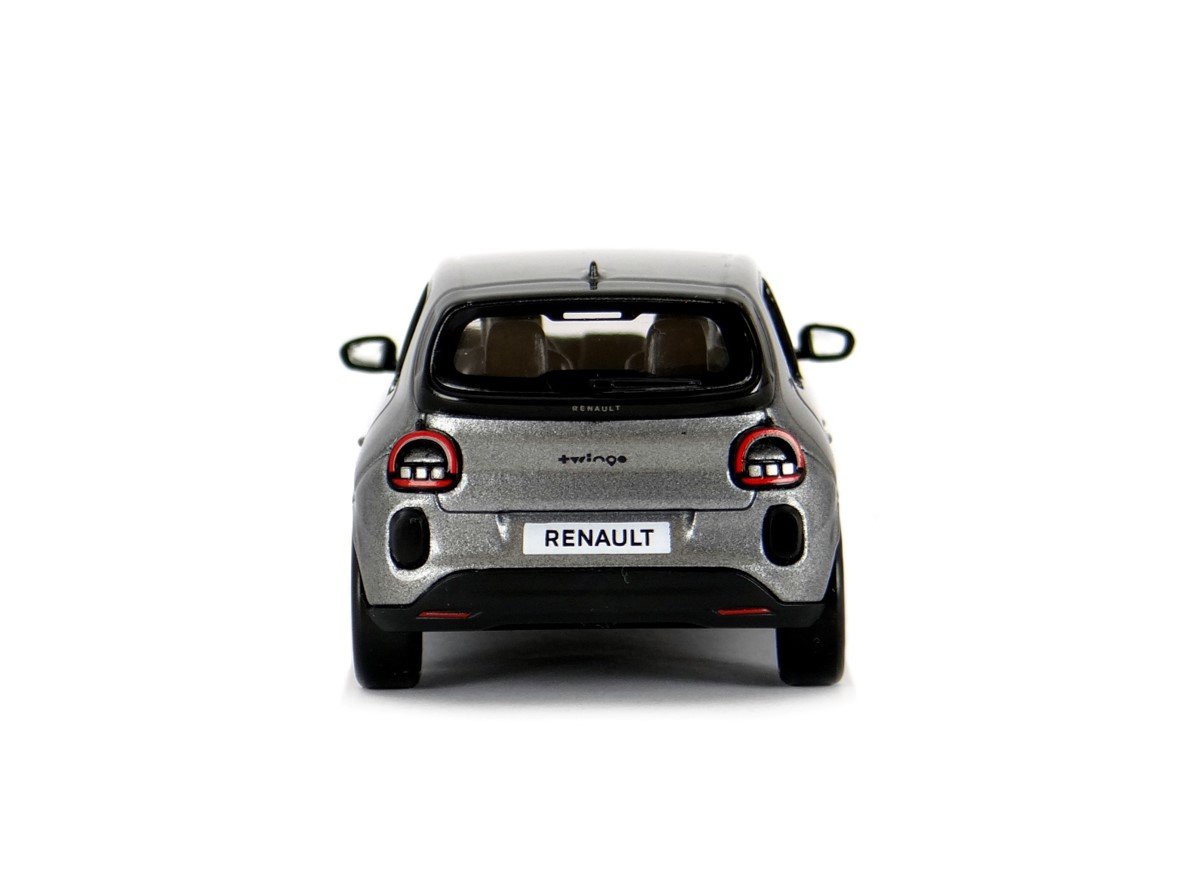
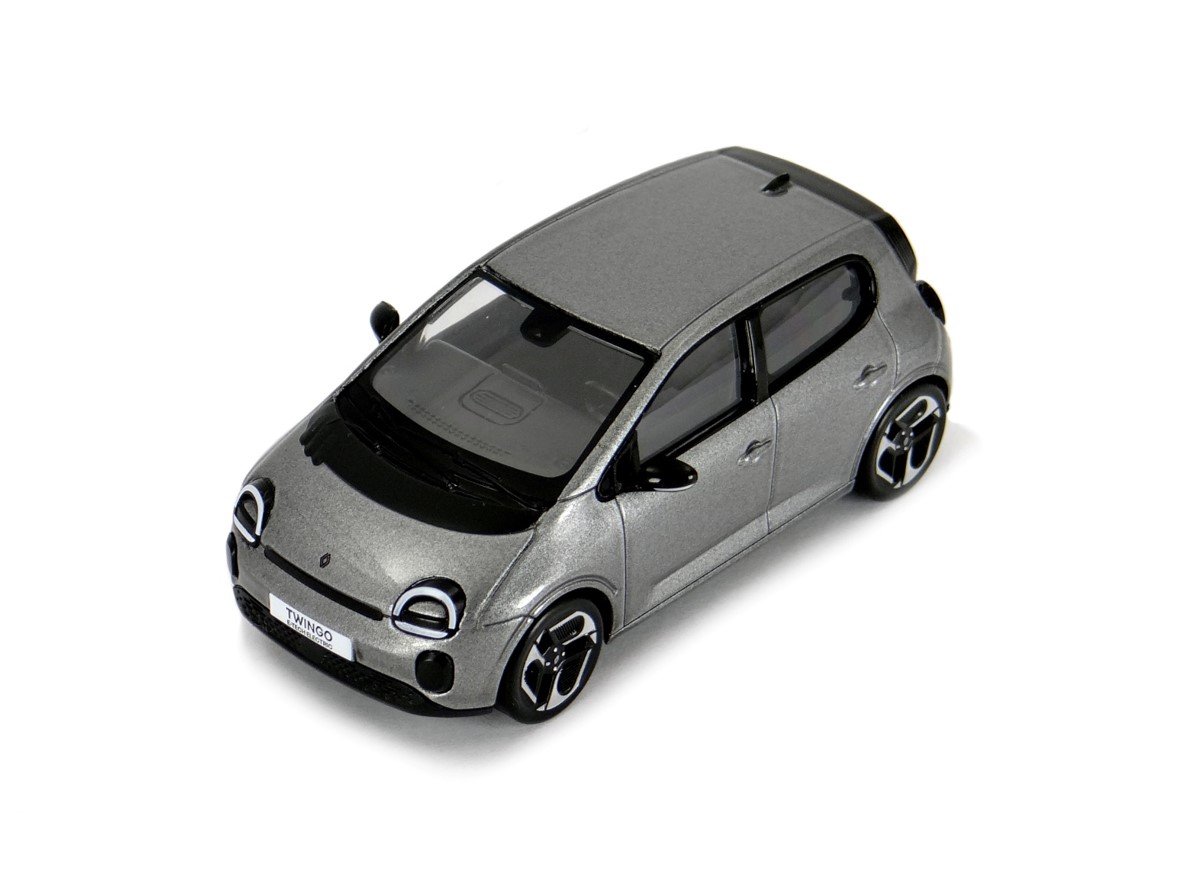
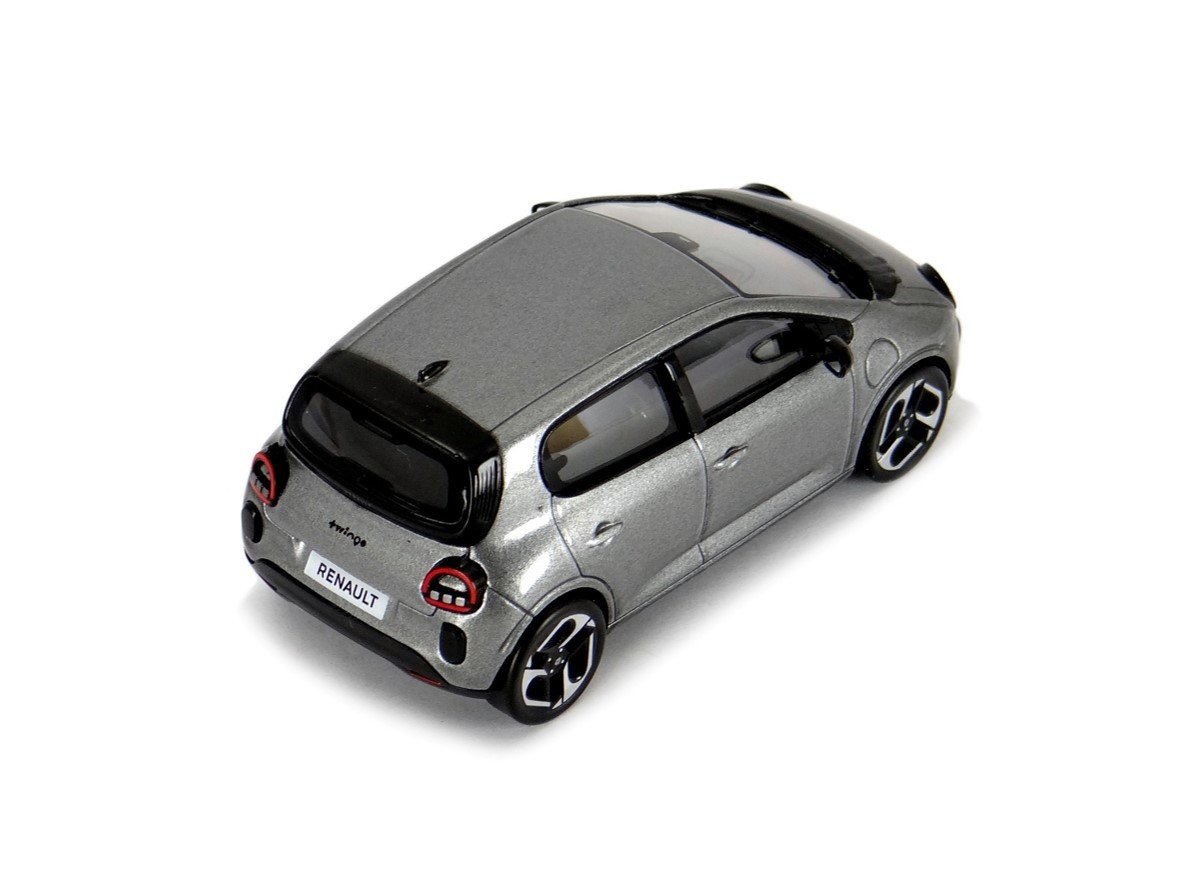
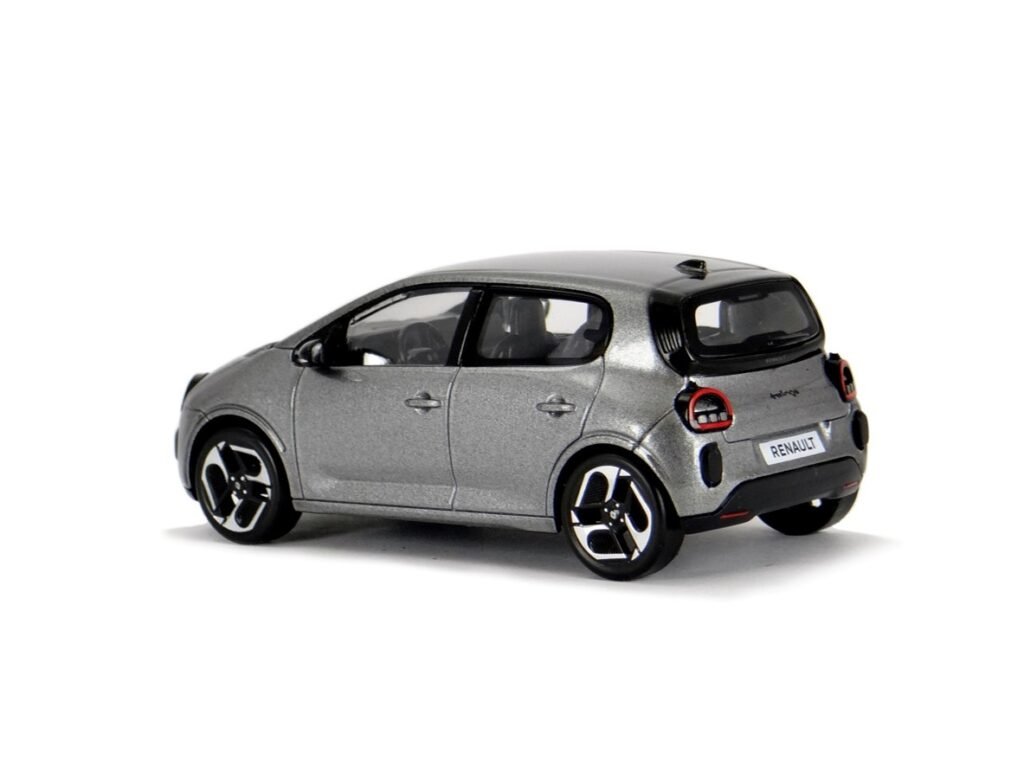
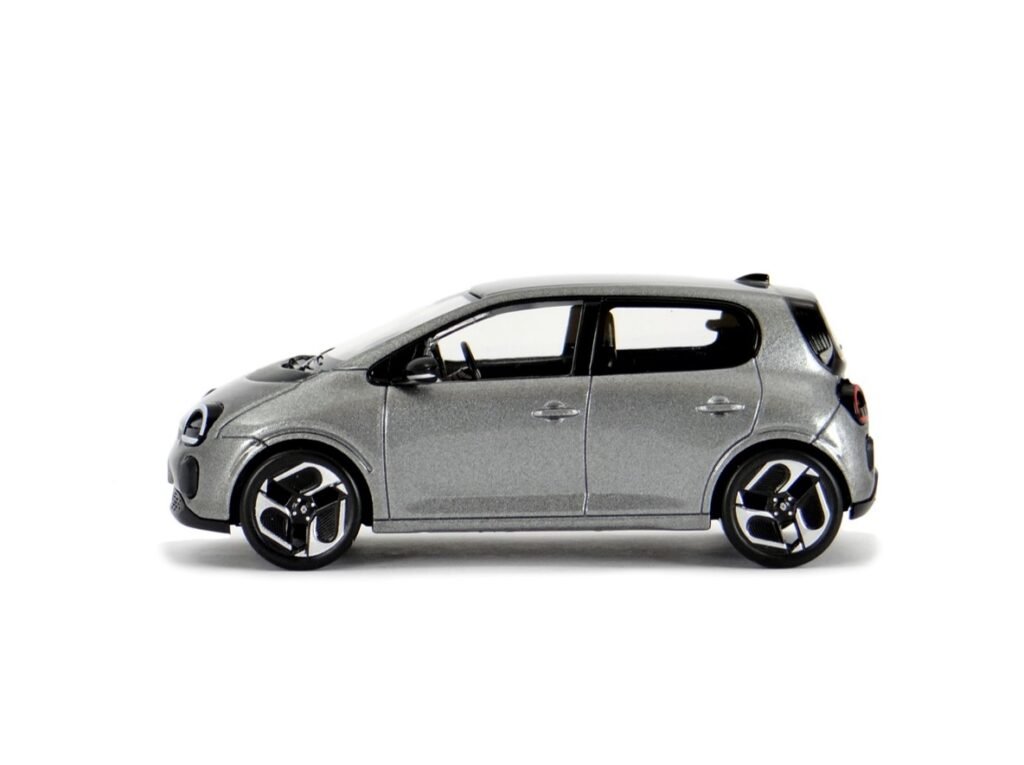
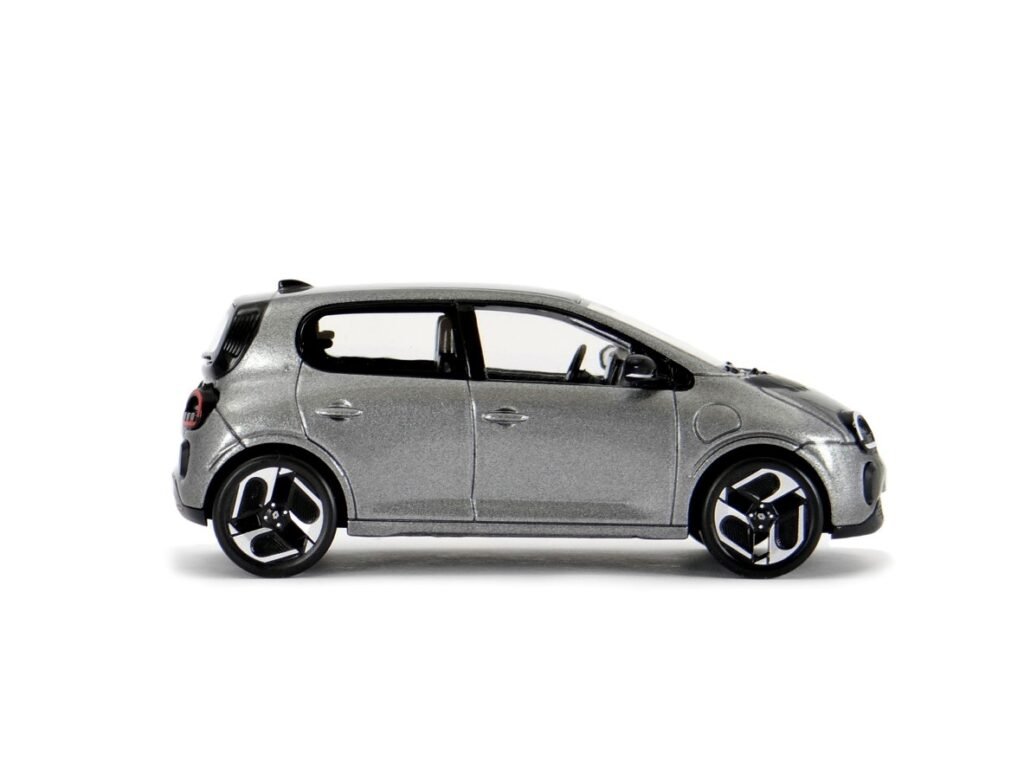
Pierwsze miniaturki nowego Renault Twingo w kolorze czerwonym i zielonym pojawiły się na stronie Renault Originals w dniu jego oficjalnej premiery, czyli 6 listopada zeszłego roku. Kwestią czasu było, kiedy Norev wypuści kolejne warianty kolorystyczne. Stało się to 24 lipca. Na stronie Norev pojawiły się modele Twingo w kolorze żółty Mango i szary Schiste. Kupiłem oczywiście oba, ale dzisiaj przyjrzymy się bliżej szaremy Twingo.
Forma jest oczywiście taka sama, jak w przypadku wcześniejszych modeli. Ozancza to, że poziom odwzorowania też jest na takim samym poziomie. Modelik ogólnie sprawia dobre wrażenie, choć typowe oszczędności Noreva plastikowe oponki, brak odwzorowania hamulców, czarne wnętrze czy brak lusterka wstecznego trochę drażnią. Z nimi, miniaturka Renault Twingo 2026 wyglądałaby fantastycznie.
Chciałem pomalować wnętrze modelu, aby poprawić jego prezencję, niestety okazało się to prawie niemożliwe. Tylna śrubka mocująca podłogę częściowo chowa się bowiem pod tylnym zderzakiem, więc nie można się do niej dostać śrubokrętem. Może wycięcie tego fragmentu zderzaka by pomogło, ale bałem się że może go to w efekcie złamać. Postanowiłem więc nic nie ruszać i zostawić modelik taki jakim jest.
Zapraszam do obejrzenia galerii zdjęć oraz odwiedzania MiniAutomobili na Facebooku i Instagramie!
*** ENGLISH ***
The first Twingo is already a classic, so Renault decided that 2026 is the perfect time for its modern day interpretation.
When Renault first unveiled the Twingo in 1992, it caused a sensation. Its one-box design, spacious interior and cheerful character were unlike anything else in the city-car segment at the time. unprecedented in the city-car class at the time. The Twingo quickly gained popularity and, during its 14-year production run, found more than 2.5 million happy owners. Now, Renault wants to return to that winning formula and bring the A-segment legend back to life.
A bonbon wheels
Renault announced the new Twingo back in 2023 with the Twingo Legend concept. When the French automaker unveiled the production car in Paris on November 6 last year, it was clear that
the concept had made it into production virtually unchanged, save for a handful of details. One look at the car leaves no doubt — it is definitely a Twingo.
The references to the original 1992 model are obvious here. From the distinctive body shape with its smiling face, through the design of the bulbous LED lights, to the characteristic air-intake details on the bonnet, it is a Twingo through and through. bonnet. Just like the original, the Renault Twingo AD 2026 is incredibly adorable. Laurens van den Acker, Renault’s Head of Design, goes even further, saying that the Twingo has the proportions of a bonbon that you’d just want to eat.
The car’s cheerful, bonbon-like character is further emphasised by the vibrant colours Renault offers for it. Yellow, red and green immediately catch the eye while also paying homage to the original colour palette of the first-generation Twingo.
Even the “Twingo” logo itself is a clever design touch. It features a specially designed font, in which the letter “g” takes shape of the location pin from online maps. It’s a playful detail likely to appeal especially to younger, digitally native customers.
Optimisation: the key to success
Twingo was meant to be not only the cheapest model in Renault’s range, but also one of the most affordable electric cars on the market. Renault delivered on that promise; in France, prices for the new Twingo start at €19,490 for the basic Evolution trim, before government grants are taken into account. With the available subsidies, the price can drop as low as €14,720, making the Twingo a very attractive offering. Until recently, such prices for an EV were almost unthinkable. To achieve this, Renault had to optimise virtually every aspect of the car’s development.
The Twingo uses a simplified version of the AmpR Small platform, also found on the Renault 5. Instead of a multi-link suspension setup, it uses a simpler torsion-beam rear axle borrowed from the Captur. This makes the Twingo cheaper and quicker to produce, while also reducing its weight by 7 kg.
Partnering with Chinese companies on the battery and powertrain also helped reduce costs and speed up development. The Twingo is the first Renault to use lithium iron phosphate (LFP) batteries instead of the significantly more expensive nickel- and cobalt-based cells. This technology has helped reduce production costs by around 20 percent.
Thanks to working with Chinese companies and the clever reuse of existing components, Renault was able to develop the Twingo E-Tech at remarkable speed. The French brand claims that it is the fastest-developed model in Renault’s history, with the entire process taking just 100 weeks—barely more than two years.
The Renault Twingo with a 2026 interior
There are fewer styling cues inspired by the first-gen Twingo in the cabin, but that’s perhaps no bad thing. The original’s rather spartan interior probably wouldn’t cut it in today’s market.
What Renault did carry over from the original, is its clever interior layout. Just like the 1992 model, the two individual rear seats can slide back and forth by 17 cm, allowing you to choose between more rear-seat space and greater boot capacity (ranging from 260 to 360 litres). Despite being only 379 cm long, the Twingo is remarkably roomy inside—just like the original!
To brighten up the cabin, Renault offers floor mats with colourful patterns, body-coloured trim on the dashboard and door panels, and a headliner featuring the “Twingo alphabet.” There’s also a colourful, painted gear selector borrowed from the 5 E-Tech. It’s just a shame that Renault didn’t go for colourful upholstery, as it did with the 1992 Twingo and the new 5 E-Tech.
There is however a 7-inch digital instrument cluster and a 10-inch infotainment screen, both featuring cheerful, colourful graphics. The multimedia system will come in two versions: basic option with smartphone connectivity only and the full system found in other Renault models, based on Android Automotive and featuring built-in Google services.
One engine
As Renault’s entry-level EV, the Twingo E-Tech will be available with just one powertrain: a 27.5 kWh battery and an 82-hp motor. It tops out at 130 km/h and takes 12.1 seconds to reach 100 km/h. Neither figure is particularly impressive, but that’s hardly important in an urban environment. What matters far more is the 0–50 km/h sprint, which takes just 3.85 seconds. That means the Twingo should have no trouble keeping up with city traffic.
The WLTP range stands at 263 km. It’s not a huge figure, but Renault has taken a pragmatic approach here. After all, the Twingo is a city car and nobody really needs longer ranges in the cities. What matters more is energy consumption, and that is expected to be impressively low, at an average of just 12.2 kWh/100 km.
Bound for success?
Renault made some big promises with the latest Twingo, but to its credit, it delievered. The latest iteration of the French city car car looks fantastic and is guaranteed to put a smile on your face. It also offers a surprisingly spacious and practical interior. Most importantly, however, it comes with the competitive price Renault promised. The French brand has already beaten its biggest European rivals. Chinese models represent strong competition in this price territory, but that shouldn’t be a problem. After all, the Renault Twingo has something they don’t – charm and character.
About the miniature – Renault Twingo E-Tech 2026
The first miniatures of the new Renault Twingo, in red and green, appeared on the Renault Originals website on the day of its official launch, on 6th November last year. It was only a matter of time, when Norev will relase other colour options and that happened on 24th July. Twingo models in Mango Yellow and Shadow Grey appeared on their website. I bought both of course, but today we’ll focus on the grey Twingo.
Naturally, the cast is the same as on the previous models, which means the level of detail is also unchanged. Overall, the model makes a good impression, although some of Norev’s typical cost-cutting measures are a little annoying: the basic plastic tyres, lack of brake detailing, completely black interior and absence of a rear-view mirror. With those details added, the 2026 Renault Twingo miniature could have looked fantastic.
wanted to paint the interior to improve the model’s appearance, but unfortunately that proved almost impossible. The rear screw securing the base is partially hidden beneath the rear bumper, making it impossible to reach with a screwdriver. Cutting away that section of the bumper might have solved the problem, but I was worried that doing so could damage or even break it. In the end, I decided not to interfere with the model and leave it as it is.
Go and check out the photo gallery and of course be sure to visit MiniAutomobile on Facebook and Instagram!